

This is the Bloedel Reserve, a 150 acre country estate and botanical garden on Bainbridge Island, Washington State. Separated from Seattle by Puget Sound and only accessible by the State ferry, Bainbridge Island has been able to retain its woodsy, bucolic vibe despite being within visual range of downtown Seattle. Historically, it was a favorite place for the city’s elite to build weekend houses or retirement pads. The Bloedel Reserve was originally a country retreat known as Collinswood for Angela Collins, the widow of Seattle’s fourth mayor. Ms. Collins built the 10,000 square foot Scandinavian-style manor house, designed by J. Lister Holmes, in 1931. In 1951, the estate was purchased by Prentice and Virginia Bloedel, both members of prominent northwest timber families. Prentice was an executive for many years with his family’s wood products company, MacMillan Bloedel Limited (since merged with Weyerhaeuser). When the Bloedels bought the estate, the surrounding land had been repeatedly logged and was in poor condition. The Bloedels dedicated the better part of their remaining lives to rehabilitating the land and creating a botanical garden that blended a woodland garden with elements of Japanese garden design. The San Francisco landscape architect, Thomas Church, had a major role in the overall design but Prentice himself was also a big creative influence. Thomas Church’s other commissions included designs for Stanford University and UC Berkeley. To realize the vision, the Bloedels doubled the acreage, created ponds, a reflecting pool, a Japanese garden and tea house, a waterfall, a moss garden and a rhododendron glen. The Bloedels called the property Agate Point Farm after a nearby geographic feature.

In 1970, the Bloedels gifted the property to the University of Washington but continued to live at Agate Point Farm until 1984 when they moved to their house in Seattle. In 1974, the property was renamed The Bloedel Reserve. In 1986, ownership was transferred to the Arbor Fund and two years later the property was opened to the public. Virginia Bloedel passed away in 1989 and Prentice Bloedel in 1996. Their former country estate is now regarded as one of the most innovative and beautiful woodland gardens in the world.

The Bloedels were also significant art collectors and patrons of the Seattle Art Museum. In 1997, it was discovered that a Matisse that had hung at the estate and at the Museum had been stolen by the Nazi regime in France in 1940. After a period of negotiation, the painting was restored to the heirs of the original owner in 1999. The Bloedel’s daughter, Virginia Wright, was also a major patron of the arts in Seattle. Her husband, Bagley Wright, was famous for being the developer of the Space Needle, Seattle’s answer to the Eiffel Tower.
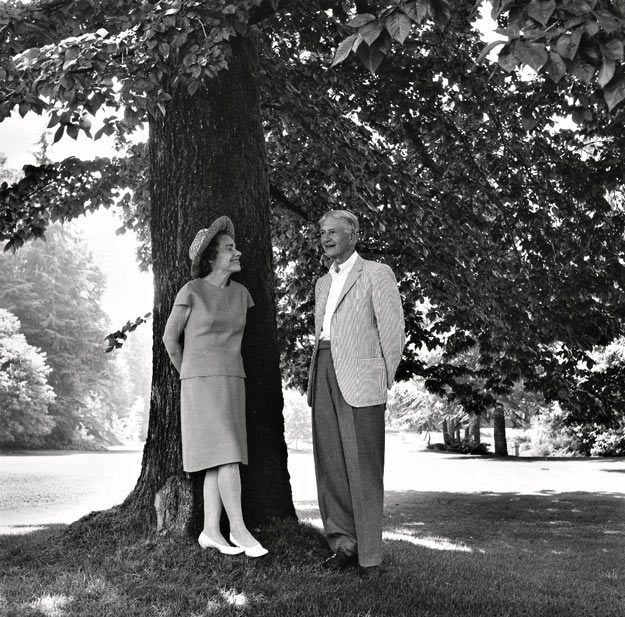
The Bloedel Reserve is now open to the public and the residence is a house museum that is little changed from when the Bloedels lived there. Click here for more information on the Reserve or here for a short YouTube video showing the property.
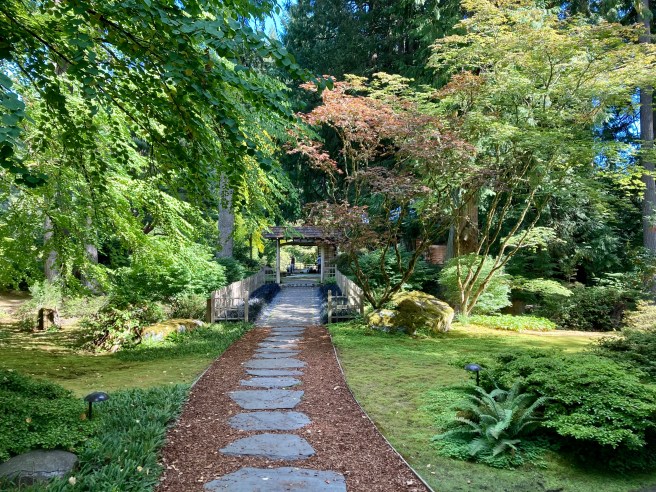
Entrance to the Japanese Garden

Reflecting pool. The final resting place of both Prentice and Virginia Bloedel is at the far end of the pool.

Northeast facade of the house overlooking Puget Sound
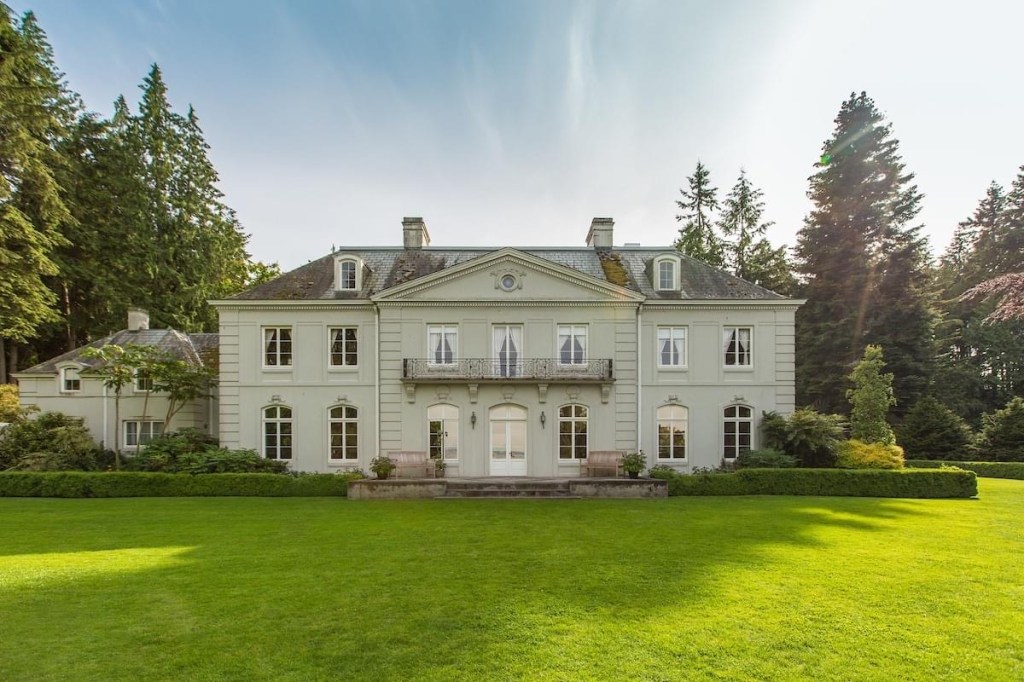
Northeast facade of the house

 North American Country Estates