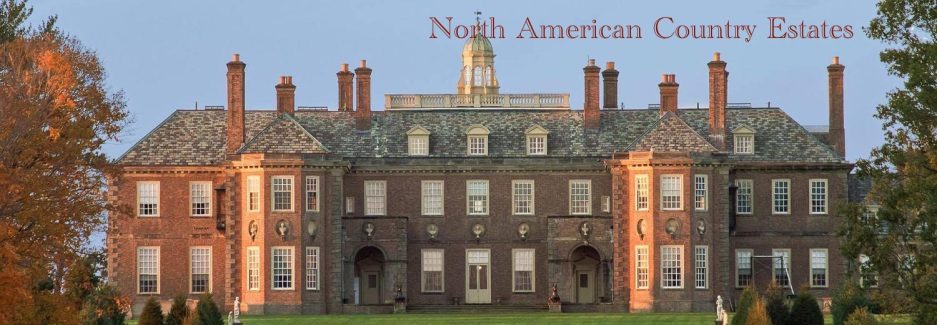
Top 10 country houses in North America

This post presents the top 10 country houses and their landscapes in North America as selected by our panel of experts. There aren’t that many true country houses in North America that embody the tradition that originated in Europe or were designed with those old-world classical architectural styles. In a contest that also encompassed Europe, the Top 10 would be dominated by architectural treasures like Chambord or Azay-le-Rideau in France or Castle Howard in England. But North America isn’t Europe. We have had different traditions and history regarding land ownership and political and economic structures so the built environment is going to look different. Plus we just don’t have as much history, period. But that doesn’t have to minimize the accomplishments of the gifted designers and enlightened owner/builders on this side of the Atlantic. Overall, North America doesn’t compare to Europe but it’s nothing to sneeze at either.

In addition to actually being in the countryside rather than the suburbs, judging criteria included aesthetically pleasing architectural design both in the house and the surrounding landscape, including proportion and scale, curb appeal (even though none of these properties are on a curb), decorative elements, how the curated landscape (i.e., gardens) complements the house and how the landscape blends with the surrounding environment. So without further ado, here are the top 10 country properties in North America.

10th Place – Domaine Sagard

Domaine Sagard being on the ballot triggered arguments among the judges that almost resulted in fisticuffs. According to some of the judges, the remote and little-known Domaine Sagard, the only true palace in North America, clearly violated a key criteria that a country estate blend in with, and complement, the surrounding environment. Others said that while Domaine Sagard does stick out like a sore thumb in its current setting in Quebec, if you picked up Domaine Sagard, its formal gardens and out buildings and plopped it down in Virginia or somewhere else more sympathetic to its design, it would be a contender for 1st place. At any rate, the landlady got tired of the shouting and told us to shut up so Domaine Sagard, which isn’t located near anything, squeaked into 10th place as a compromise. For more on Domaine Sagard, click here.

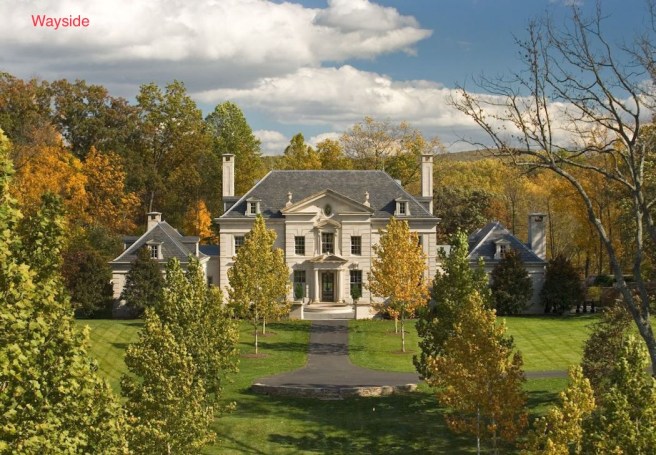
9th Place – Wayside Manor

One of three recent builds on this list, Wayside Manor sits in Virginia’s Hunt Country near Middleburg. Judges liked the new-classicism lines and symmetry of the house, with the flanking tall chimneys, the double pediment in the central bay topped by an oculus and the projecting central block providing visual interest. The sympathetic landscaping placed this house squarely in Virginia’s bucolic countryside. They tried to ignore the asphalt driveway. For more on Wayside, click here.

8th Place – Bloedel Reserve

Judges were so enthralled by the world-class gardens of the Bainbridge Island, Washington-situated Bloedel Reserve that it was an easy choice for 8th Place. The simple, clean classical lines of the faintly Scandinavian-influenced house is just the icing on the cake. For more on the Bloedel Reserve click here.

7th Place – Lochiel

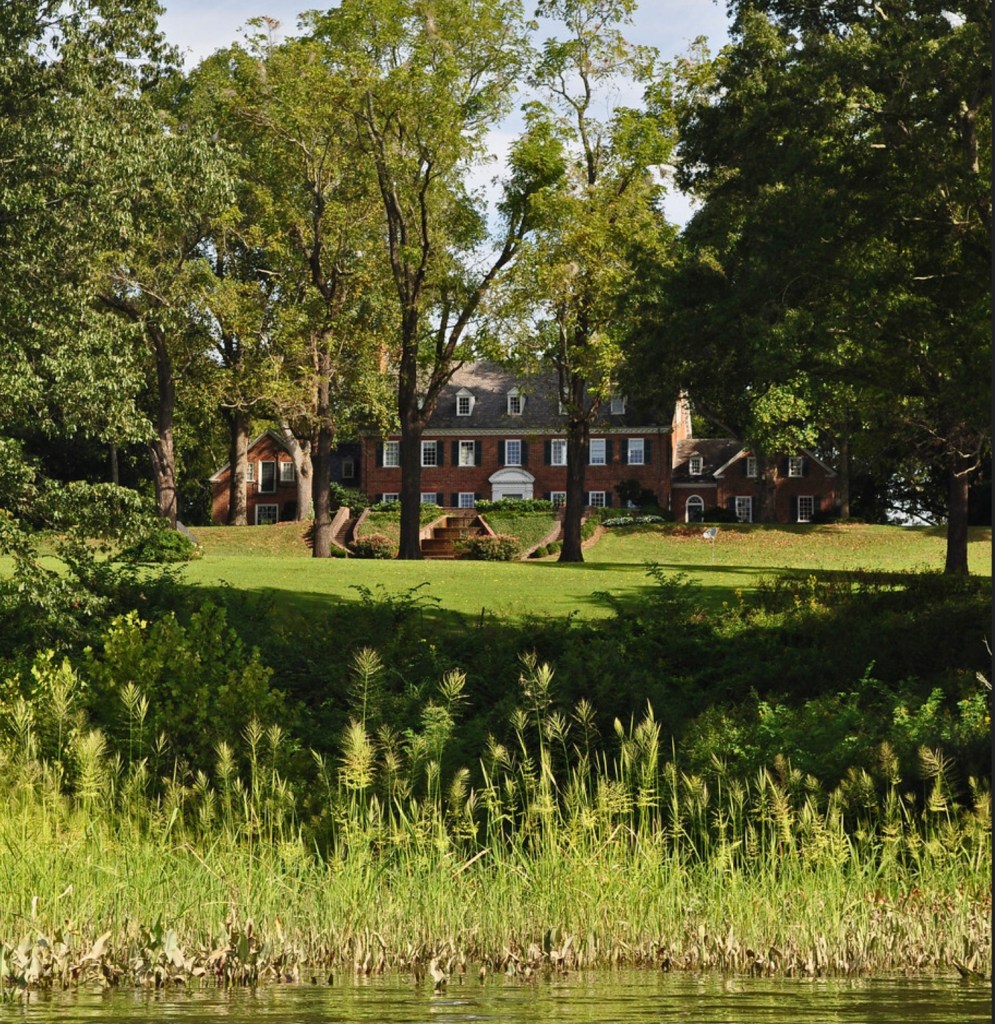
When Lochiel, which is just outside Gordonsville, Virginia, appeared on the ballot, most of our judges had never heard of it. However, little-known Lochiel won them over with its nice proportions and scale, restrained yet good-looking Georgian details such as the keystones over the windows, mellow brick construction, the row of dormers, and the beautiful setting. For more on Lochiel, click here.
6th Place – Twin Maples

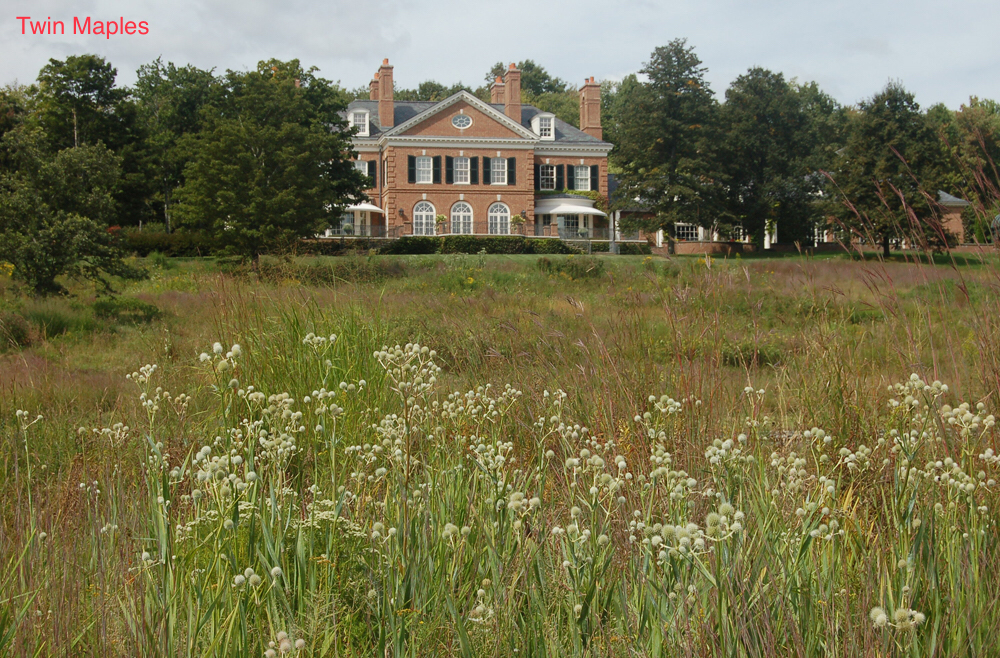
The Georgian-revival design of the house at Twin Maples ticked all the boxes especially the nice proportions, the ground floor arched windows, the brick quoins and other decorative elements. The incredible gardens and landscaping which stretch for many acres around the house such as the curated wildflower meadow make this house easy on the eyes. Bonus points for being situated in northern Litchfield County, Connecticut near the impossibly cute town of Salisbury, an area so beautiful it should be illegal. For more on Twin Maples, click here.
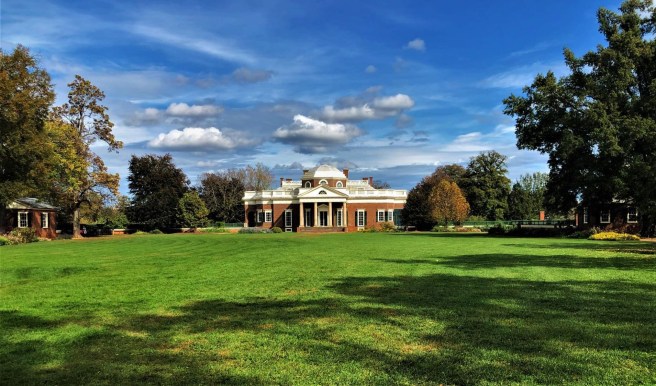
5th Place – Monticello

Monticello still made the ballot as a country “house” even if no one has lived in it since the 1920s. If any of you still remember when you went through the house as a kid during a family vacation, it looks exactly like it would have when Thomas Jefferson lived there. A unanimous selection for the top 10, Monticello scored well for its unique fusion of Palladian and Neo-classical design, mountain-top setting, arguably the coolest vegetable garden in North America and the fact that it’s the only house which is featured on American money. For more on Monticello, click here.
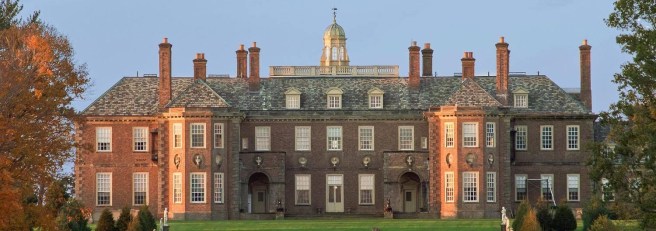
4th Place – Crane Estate

What’s not to like about the Crane Estate (AKA Castle Hill) which is just outside Ipswich, Massachusetts. It won unanimous praise from the judges for its English Baroque design, nice symmetry and the cupola crowning the house was called out as a particularly nice touch. The house also features a tree-lined, grassy grand allee which frames a view of the Atlantic Ocean from the garden front of the house. The gardens at the Crane Estate continue to undergo restoration by the non-profit that owns the house so we’re thinking it may move up even higher in future contests. For more on the Crane Estate, click here.

3rd Place – Westover

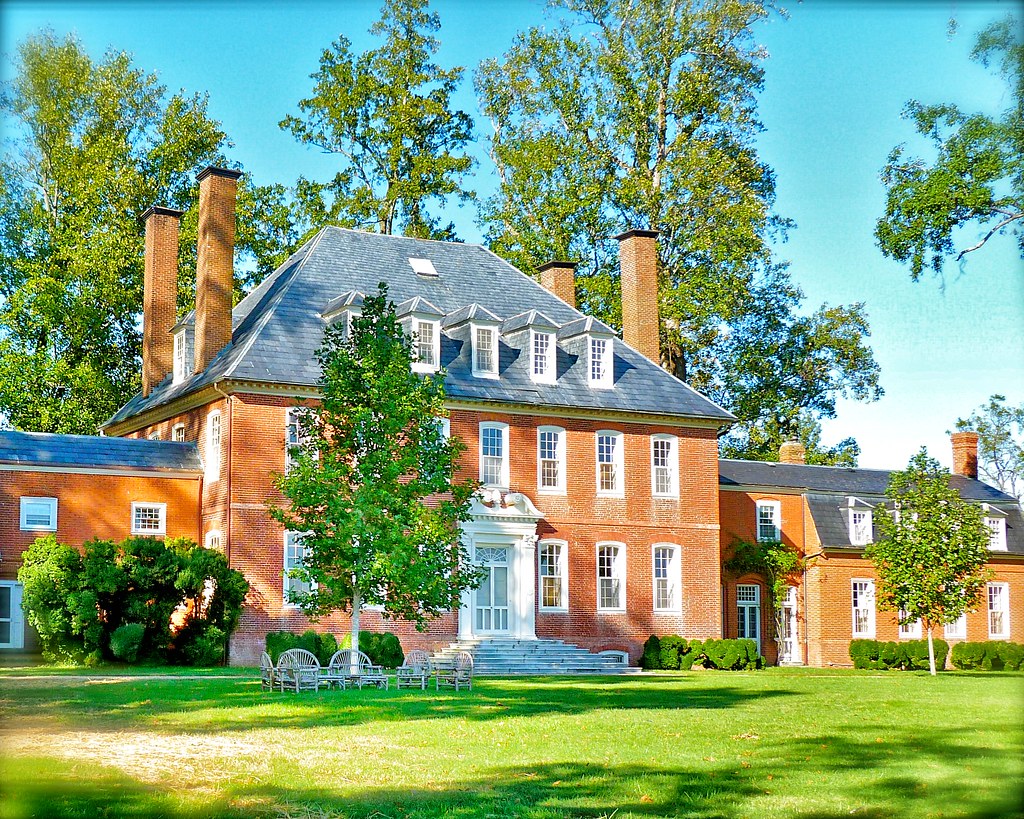
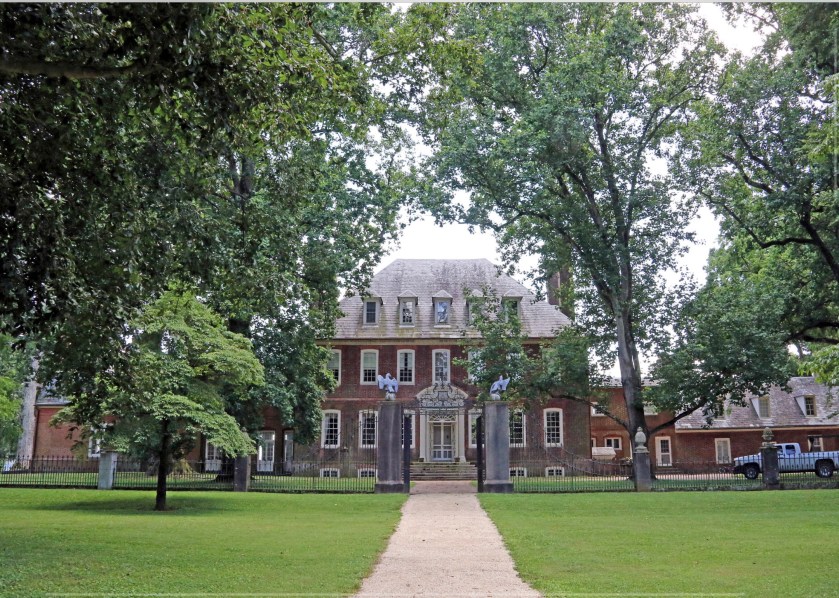
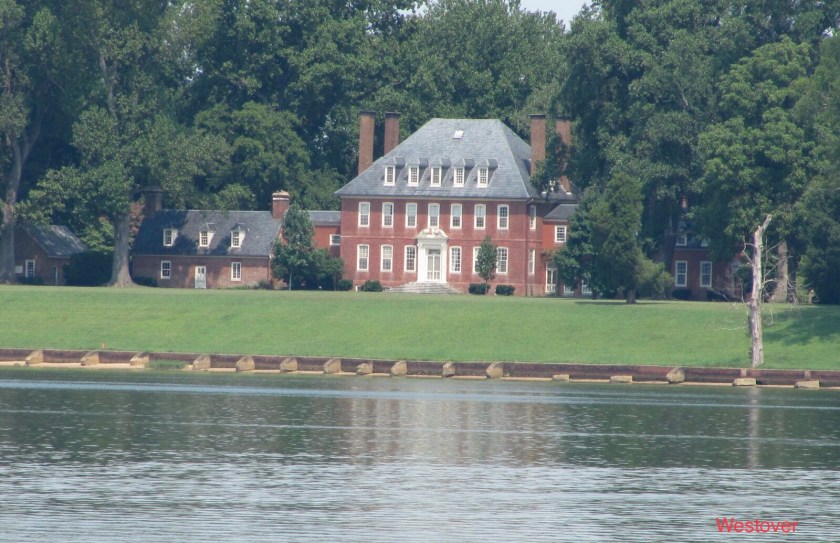
The oldest house to make the Top 10 (and also the longest lived-in house at 260+ years), Westover, which sits on the James River east of Richmond, Virginia, is frequently cited as the most beautiful house in America so it’s not just our panel of judges who say so. The list of compliments thrown at Westover is long. It’s hard to design a house this big and also make it elegant, light and welcoming but the perfect proportions of Westover do just that. This is all the more remarkable when you consider that no one knows who the architect was and some suspect it was William Byrd II, who owned the property in the mid-18th century, but was not a trained architect (although it was his son that actually built the house). For more on Westover, click here.
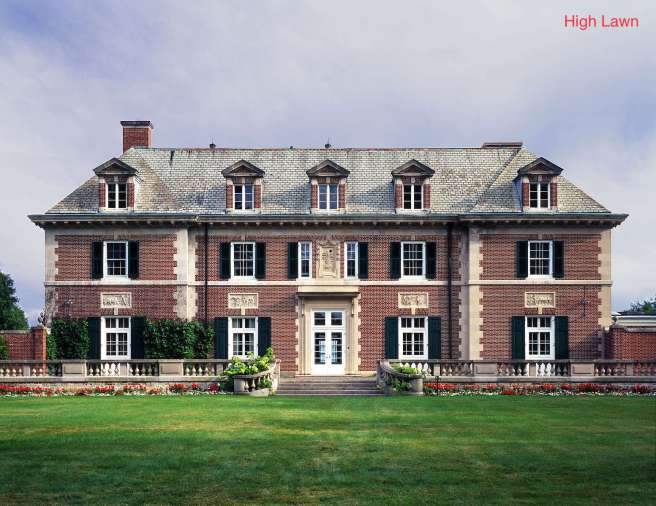
2nd Place – High Lawn

High Lawn, near Lee, Massachusetts, is a “Vanderbilt Mansion” that is uniquely lived in by actual Vanderbilts although after 6 or 7 generations they might not look much like the original, Cornelius Vanderbilt, nor do they carry the name. Nevertheless, this branch of the Vanderbilt family created this beautiful, nicely-scaled Georgian revival house in the Berkshire hills. Our judges liked the scale of the house (much more humane than ponderous Vanderbilt colossuses such as The Breakers or Biltmore), the elegant row of dormer windows, the bas-relief sculptures on each bay in the facade, and the contrasting red brick and limestone quoins and stringcourse that break up the facade. High Lawn earned bonus points for the delicious dairy treats available from the High Lawn dairy store on the property. For more on High Lawn, click here.

1st Place – Scoville Estate

First place voting was extremely close between Scoville Estate and High Lawn (only 40 minutes apart by car). It was a tie after the first three rounds of balloting but what pushed this exquisite French Norman-design house near Salisbury, Connecticut to the title was the lovely country setting in northern Litchfield County, the beautiful but understated design elements, and the authenticity of the design (you would guess it was really in Normandy if you didn’t know better). And who wouldn’t want a real, authentic, two-tone brick turret in their courtyard? More than its competitors, this house simply exudes a relaxed, countrified yet sophisticated charm. A worthy champion. For more on Scoville, click here.

So this year’s Top 10 contest is in the books. If you disagree with the results or want to nominate another house that we don’t know about for next year, please leave a comment.
Evelynton

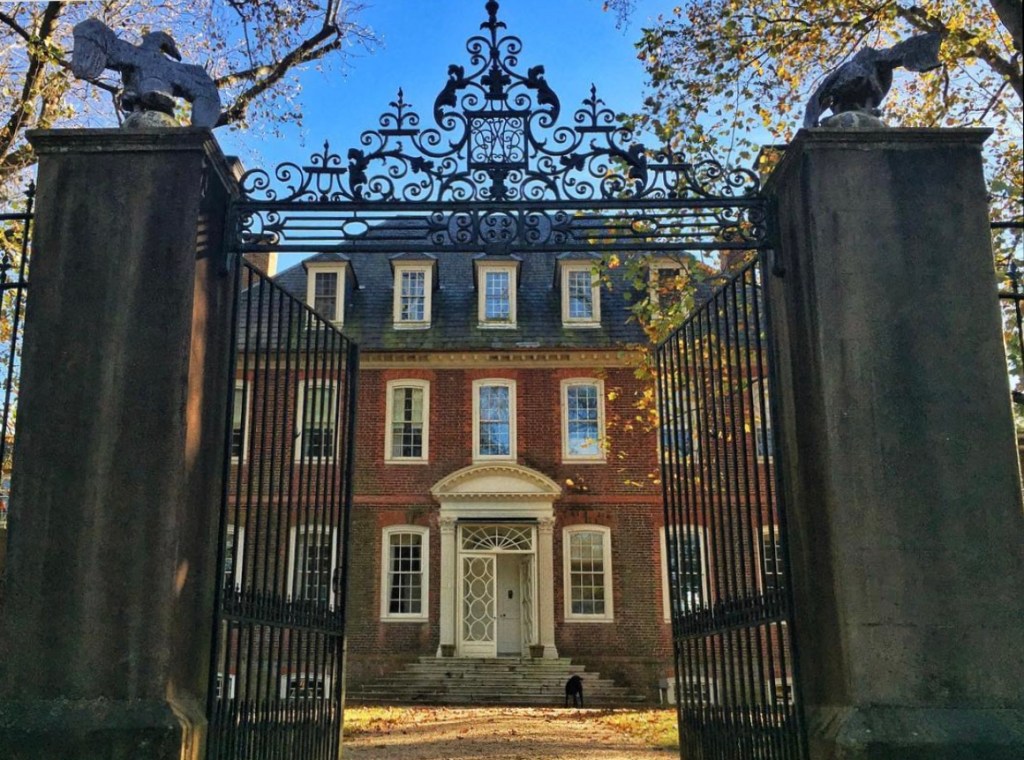
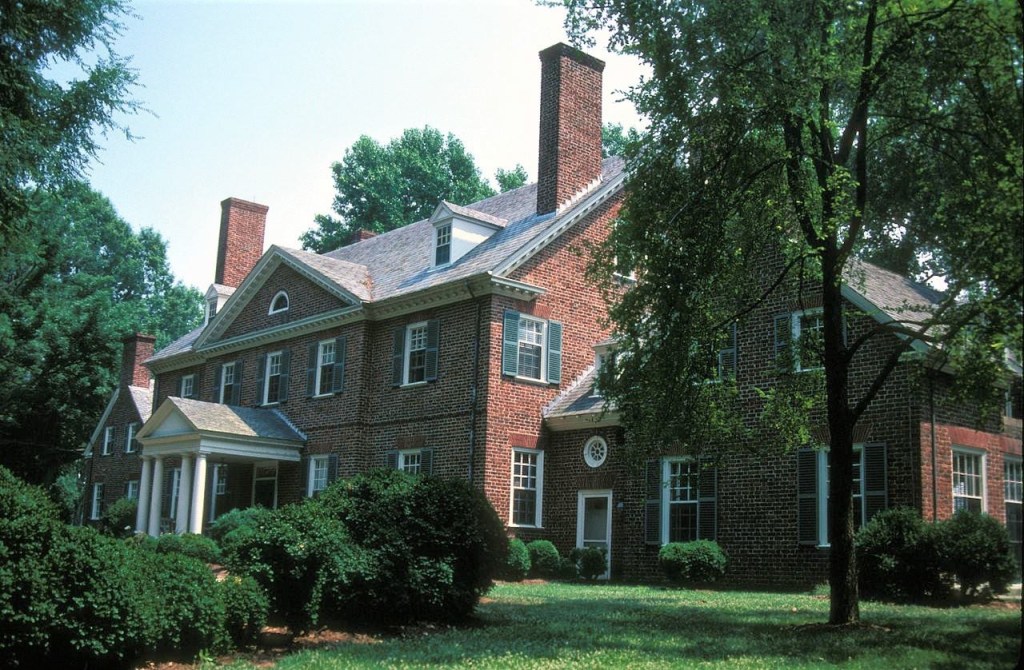
Evelynton Plantation is a 2,500 acre agricultural estate situated on a tributary of the James River in Charles City County, Virginia.  Originally a part of the nearby Westover Plantation, Evelynton was carved out and sold to settle the debts of Westover’s profligate master, William Byrd III. After passing through numerous hands, the plantation was purchased at auction in 1847 by Edmund Ruffin, Jr., a member of the aristocratic Ruffin family that traced their history in the Virginia tidewater to the 17th century. Mr. Ruffin named his estate after Evelyn Byrd, the daughter of William Byrd II, the owner of Westover during the early 1700s. The portion of Westover that would become Evelynton had been intended as a dowry for Evelyn when she married. However, Evelyn’s parents were displeased with her choice of husband (a CATHOLIC!!!!!) and refused to allow the marriage. Evelyn retaliated by refusing to marry anyone and she died before the age of 30, some say of a broken heart. Evelyn Byrd is currently a friendly ghost that is occasionally seen at Westover.    

Evelyn Byrd, the namesake of Evelynton

Edmund Ruffin’s father, Edmund Sr. was a noted agronomist who pioneered techniques for renewing agricultural land that had been exhausted by decades of tobacco cultivation.  Ruffin Sr., a die-hard slave owner and secessionist, fought in the Civil War for the Confederacy while in his sixties.  According to contemporary accounts, his outspoken views on slavery and secession were so extreme that they made his fellow Virginia soldiers uncomfortable and he was asked to join another State’s regiment, the South Carolinians.  Despondent about the confederate surrender, he wrapped himself in a Confederate flag and shot himself but not before proclaiming his “….unmitigated hatred to Yankee rule and to all political, social and business connections with Yankees, and to the perfidious, malignant and vile Yankee race.” [He might have found solace living amongst Boston Red Sox fans but the historical record is silent on whether he tried that.]  Adding insult to injury, his son’s house and plantation buildings at Evelynton were burned by Union forces in 1862. Other than land cultivation, nothing happened at Evelynton for the next seven decades.

The plantation stayed in Ruffin family ownership after the war and in 1937, Edmund Ruffin Jr.’s grandson, John Augustine Ruffin and his wife, Mary Saunders Ruffin, flush with an inheritance from Mary’s family, commissioned Duncan Lee, a Richmond architect noted for his expertise in Georgian revival and Colonial designs, to build the handsome manor house that stands on the site today. John Ruffin passed away in 1945 and Mary opened up Evelynton to public tours in the 1950s to help pay the bills. Mary then passed away in 1967 and the house was taken over by their son, Archer Harrison Ruffin. Archer continued to farm Evelynton until his death in 1976 whereupon his brother, Edmund Saunders Ruffin, took over the estate. Edmund was active in the container business in Richmond but retired at Evelynton for the last years of his life. His daughter, Elizabeth Ruffin Harrison, lived nearby and opened the house for tours and events in the mid 1980s so the public could marvel at the Ruffin’s magnificent collection of 18th century American and English furniture and decorative arts. After Edmund passed away in 2002, Elizabeth became the last of the Ruffins at Evelynton when the estate was sold in 2008 closing the door on 161 years of family ownership.

The estate was purchased by John and Jeanine Hinson of Key Biscayne, Florida. John had been a successful real estate investor in the South. The Hinsons lived at Evelynton and continued to lease out the agricultural land for cultivation. Tragically, John Hinson was killed in an automobile accident in September 2021 and the future status of Evelynton is unclear. Although Evelynton has been open for tours intermittently in the last few decades, it is currently a private home and not open to the public.

Westover

This house is one of my favorites. Something about the proportions of the central block is so satisfying to the eye not to mention the house’s lovely location on the banks of the James River.  It’s not often when an architect and their client hit on the perfect combination of design, materials and execution but the unknown architect of Westover nailed it.  Westover is located in Charles City County, Virginia, halfway between Williamsburg and Richmond. Westover is just one of several historic plantation homes in the area which date back to the 18th century. Some of these homes have never been sold and are still owned by the descendants of the builder. US presidents have been neighbors of Westover.

The Westover Plantation got its start in 1637 when the governor of the Virginia Colony granted 2,000 acres on the left bank of the James River to Thomas Pawlett who then sold to Theodorick Bland. The Blands subsequently sold to William Byrd I in 1688. It was William’s grandson, William Byrd III, who built the handsome Georgian style house that sits there today.  The year when the house was completed is lost in the fog of history but it’s believed to be in the 1750s. The name Westover is a tribute to Henry West, 4th Baron De La Warr (where we get the name of Delaware) who was the son of the Colonial Governor of Virginia in 1610.  The Byrd family is famous in Virginia for founding the capital city of Richmond and remained a force in Virginia politics right through the latter half of the 20th century. The Westover Plantation economy was built around tobacco cultivation partially fueled by slave labor up until the Civil War.

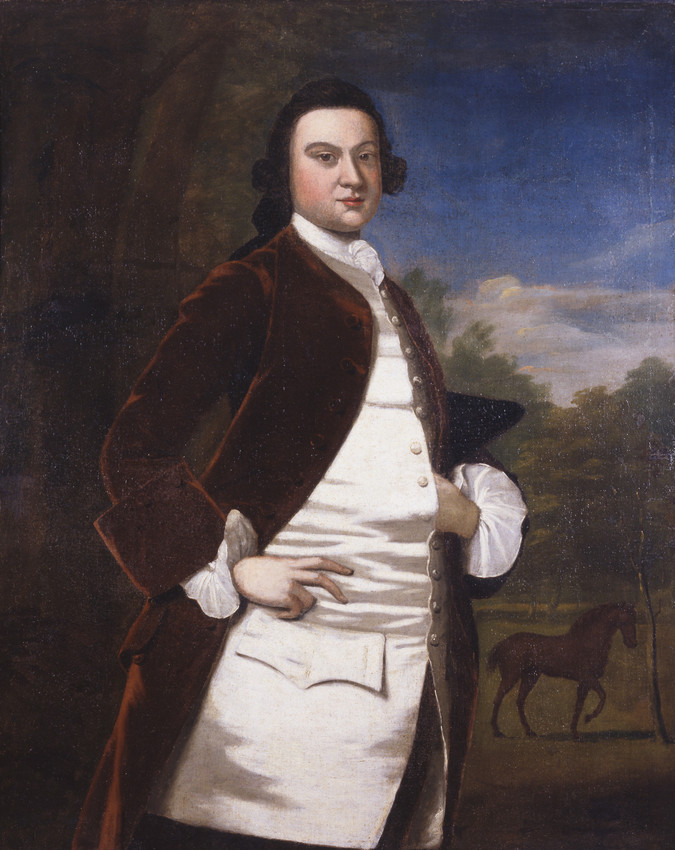
William the third lived a prodigious and imprudent life. In addition to building the mansion at Westover, he fathered 15 children and loved to gamble. It was these extravagances that eventually left him broke and despondent and he committed suicide in 1777. His widow, Mary, was forced to sell off family property in Richmond to cover expenses. During the American Revolution Mary tried to stay neutral but this only resulted in harassment from both sides. Westover was also the scene of further drama during the war when notorious traitor Benedict Arnold landed at Westover with a contingent of British troops bent on raiding nearby Richmond in 1781. General Arnold, whose wife was related to Mary, allegedly barged through the front door of Westover on his horse and hacked out a piece of the stairway bannister with his sword. The damage can still be seen today.

William Byrd III, the builder of Westover

Mary Byrd continued to live at Westover until her death in 1814 after which the plantation was sold off by her children. Over the next 107 years, Westover went through several owners, typically members of other prominent Virginia dynasties such as the Seldens and the Carters. For a time, it was even back in Byrd family ownership in the personage of Claris Sears Ramsey. Ms. Ramsey was instrumental in rehabilitating Westover. The house had been in the path of the Union Army during the Civil War’s 1862 Peninsula Campaign and one of the two dependencies, containing the library, was hit by a cannon shell and burned to the ground. Ms. Ramsey rebuilt the dependency and connected both of them to the central block creating the continuous structure we see today.

By the way, for those readers unfamiliar with Tidewater Georgian architecture, dependencies were supplementary structures situated around the main residence.  The dependencies were typically used for domestic functions that were unsuitable for the main living area such as cooking which was considered a fire hazard at the time.  The dependencies could be connected to the main block of the house by enclosed hallways or breezeways (called hyphens) so that servants could transit between the residence’s main block and the service areas.  In many traditional Georgian houses, there would two identical dependencies on either side of the main block connected by two hyphens, a design called a “five part Georgian home.” 

Ms. Ramsey sold Westover to Richard Crane and his wife, Ellen Bruce Crane, in 1921. Mr. Crane was a scion of the Crane Company famous for its plumbing fixtures. Ellen’s family had lived on another Virginia plantation, Berry Hill. Mr. Crane was a philanthropist and diplomat and was the US ambassador to Czechoslovakia after the First World War. Alas, like the original builder of Westover, tranquility eluded Mr. Crane and he took his life at Westover in 1938. However, the third generation of his and Ellen’s descendants continue to live at Westover to the present day and the house has become a happier family home. Other than the Byrds themselves, the current period of family ownership is the longest in the estate’s history at 103 years and even exceeds the Byrds tenure if you just count ownership of the house.

Today, Westover Plantation continues to operate as an agricultural estate of more than 1,000 acres (although the agricultural land is leased out), hosts weddings and is occasionally used as a filming location. Although the house is a private home, the gardens can be visited at any time and the house itself can be toured by reservation or during certain weekends in the summer (click here for more info). Surrounding the house are several acres of gardens, various Colonial-era outbuildings (including a subterranean tunnel for avoiding Indian attacks), and a parish church and cemetery which hold the remains of several previous owners including various members of the Byrd family. A meditative YouTube video showing scenes from Westover can be viewed here.

Notable nearby estates include Evelynton, which was originally a part of the Westover Plantation (click here for more on Evelynton), Berkeley Plantation and Shirley Plantation. Richard Crane’s uncle built another notable and architecturally significant estate covered in this blog, the Crane Estate (AKA Castle Hill) in Ipswich, Massachusetts (click here for more info).

The distinctive design of Westover has been copied many times over the years but the copies are never as good as the original. Westover Plantation has had its ups and downs in its 270 year existence including an unfortunate connection to slavery prior to the Civil War but it remains arguably the preeminent example of Georgian residential architecture in the United States, a national treasure of design and aesthetic.