Whilst this blog mostly concerns itself with actual houses the true mark of a distinguished home design is as much about how the home complements the surrounding environment and vice versa. Stick a well-designed home in the middle of a blank lawn with a few arbor vitae plants thrown around and you won’t have much to look at. But hire a landscape architect to accentuate that house with a well-designed landscape that also blends the property into the surrounding environment and you’ve really got something. All the best homes discussed in this blog have as much attention to detail devoted to the landscape as they do to the house itself. Gardens and curated landscapes are an extension of the house with the whole composition integrated into a singular creation.
This post presents the top of the class when it comes to country house landscapes in North America. Many of these designs borrow heavily from British ideas about landscape architecture where the art form of gardening is a national obsession and where some of the best examples of landscape architecture in the world can be found today. Others lean more towards an American ideal of landscape architecture which pays homage to the less domesticated landscape of North America and the wilderness, at least historically that was the case. Still others draw inspiration from the formal, geometric designs that were perfected in France in the 17th century. So here are, in no particular order, the top ten country house gardens in North America.

Les Quatre Vents
Frank Cabot, a Boston brahmin whose ancestors settled in the Massachusetts Bay Colony in 1700, spent the better part of four decades developing the gardens of Les Quatre Vents (the four winds), his family’s country place overlooking the St. Lawrence River in Quebec. It is a private garden and only open to the public (by reservation) a few days each year so it’s not well known but it does have an international reputation among serious gardeners and horticulturalists. Frank was a committed plant hunter and introduced specimens from around the world to Les Quatre Vents. He also engaged distinguished architects to build various follies and features in the gardens such as the moon bridge shown above. For more about the history of Les Quatre Vents, click here. If you want to visit (good luck with that btw) then click here for more info. Finally, a fascinating and high quality documentary about the Cabots and their garden was produced in 2018 and is available on YouTube here (requires payment).
Filoli
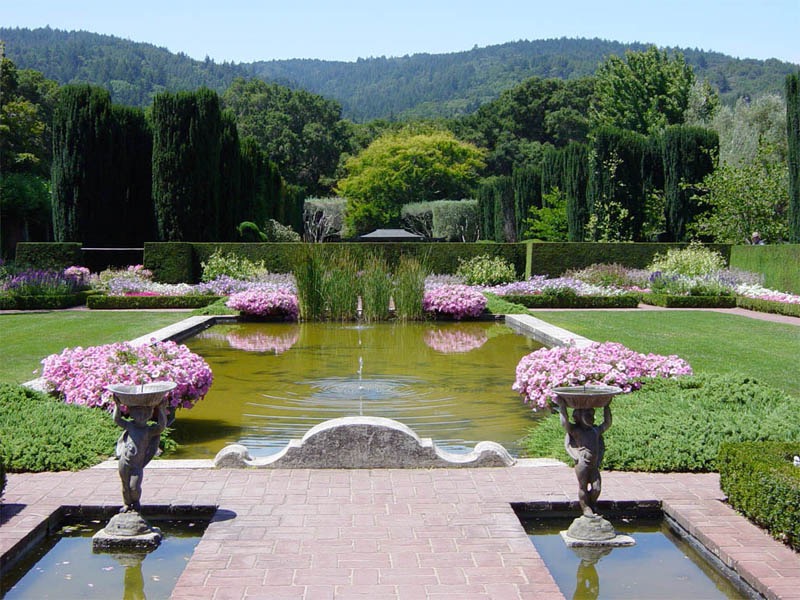
Filoli was the California country estate of William Bourn II who was involved in gold mining and private water and electric utilities in the Bay Area. Starting in 1915 he and his wife, Agnes, built Filoli mansion and the surrounding gardens on their estate near Woodside. While the house itself isn’t particularly impressive the gardens are one of the best formal landscapes in the U.S. Formal gardens are known for their geometric rigidity, sight lines and symmetrical forms as opposed to landscape gardens which are more naturalistic and unstructured. Highlights of Filoli include the sunken garden (shown above), a knot garden and a yew allee. For those of you who are old enough to remember the 1980s you might recognize Filoli as it was used in the opening credits of the hit TV show, Dynasty. Filoli is now owned by the National Trust for Historic Preservation and is open to the public. For information on visiting Filoli, click here.
Bloedel Reserve
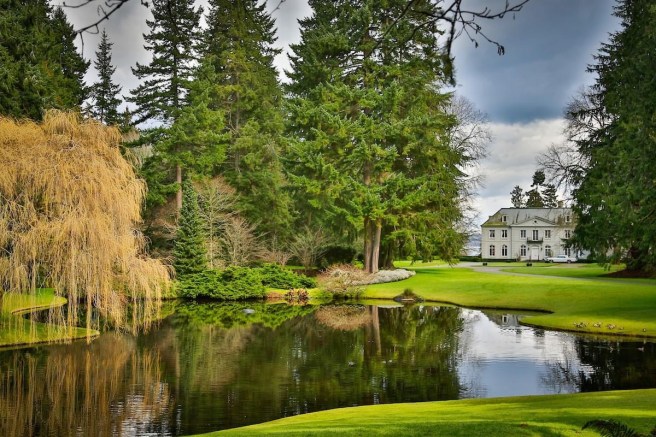
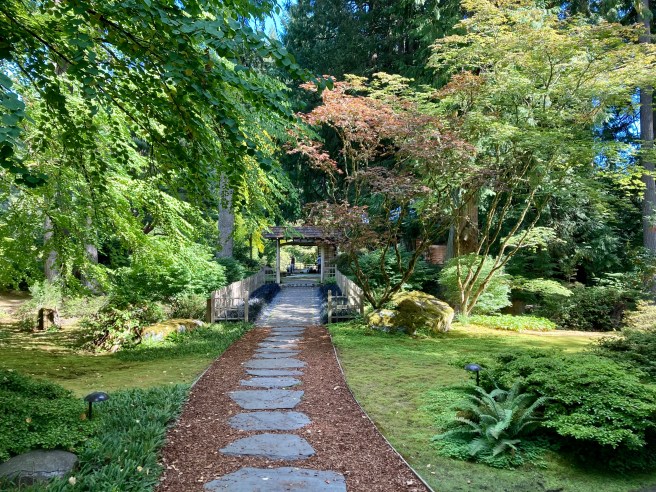
Prentice and Virginia Bloedel both came from Seattle timber baron families. Their families made fortunes from clear cutting the forests of the Pacific Northwest and converting trees into lumber, paper and plywood. Whether as a form of atonement or to satisfy latent artistic impulses they purchased a mansion on Washington’s Bainbridge Island in 1951. The house had fine views of Puget Sound but was surrounded by degraded woodland that had been repeatedly harvested. The Bloedels spent the next 30 years rehabilitating the land, adding acreage and developing one of the most innovative woodland gardens in the world, the Bloedel Reserve. The Bloedels and their architects borrowed Japanese gardening techniques and adapted them to a forest environment, added ponds and waterfalls, a Japanese rock garden and a mesmerizing reflecting pool. By 1996 both had passed away but not before creating a non-profit foundation to preserve their creation for the benefit of the public which has been visiting since 1988. The Reserve can be visited by reservation (easily obtainable from the website here). For more about the history of the Bloedel Reserve click here. For a melodic and enchanting YouTube video on the Bloedel Reserve click here.
Oak Spring Farm
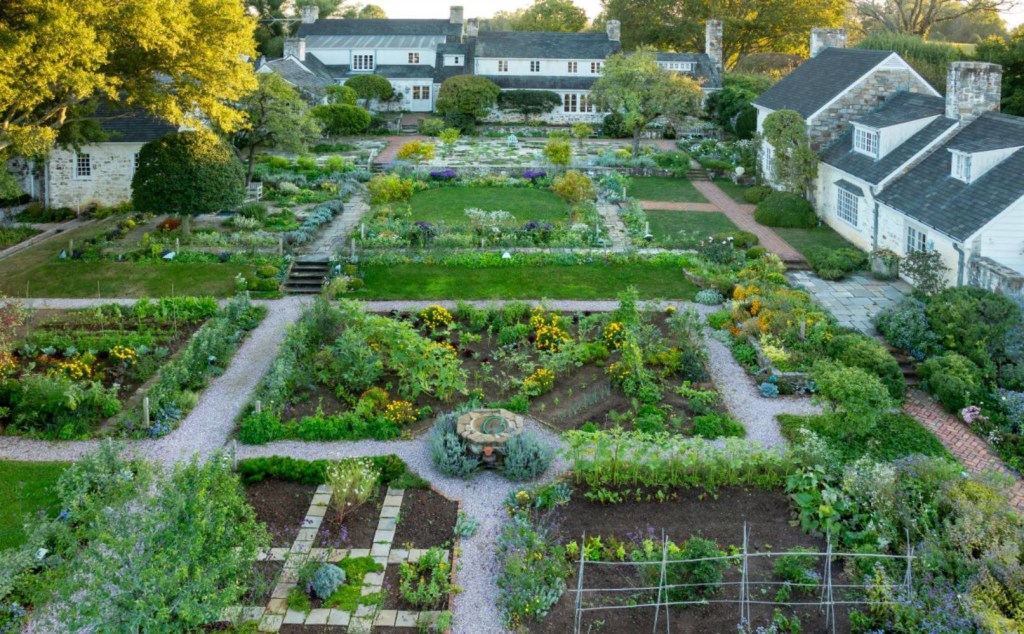
Oak Spring was a five decade labor of love for Rachel Lambert “Bunny” Mellon and her husband Paul Mellon. Bunny’s family had made their fortune by starting Warner-Lambert, a New Jersey pharmaceutical company best know for Listerine mouthwash. Paul Mellon was a member of Pittsburgh’s Mellon family, one of the wealthiest and most influential gilded age industrial dynasties in U.S. history. During his life, Paul was the largest benefactor of art, time and money to the National Gallery in Washington D.C. and he had a knack for raising race horses. Starting in the late 1940s, the Mellons developed Oak Spring Farm near Upperville in Virginia’s hunt country into a world class thoroughbred breeding operation and garden that also included a private airstrip to more conveniently jet off to their homes in the Caribbean, NYC, Nantucket and Paris. Bunny had no formal training in landscape architecture but nevertheless became a sought after authority on the subject and her commissions included the White House rose gardens which she designed for her friend, First Lady Jackie Kennedy. After Bunny passed away in 2014, Oak Spring Farm was turned into a foundation and retreat for visiting writers, artists, landscape architects and researchers. It is not open to the public. For more on Oak Spring, click here.

Twin Maples
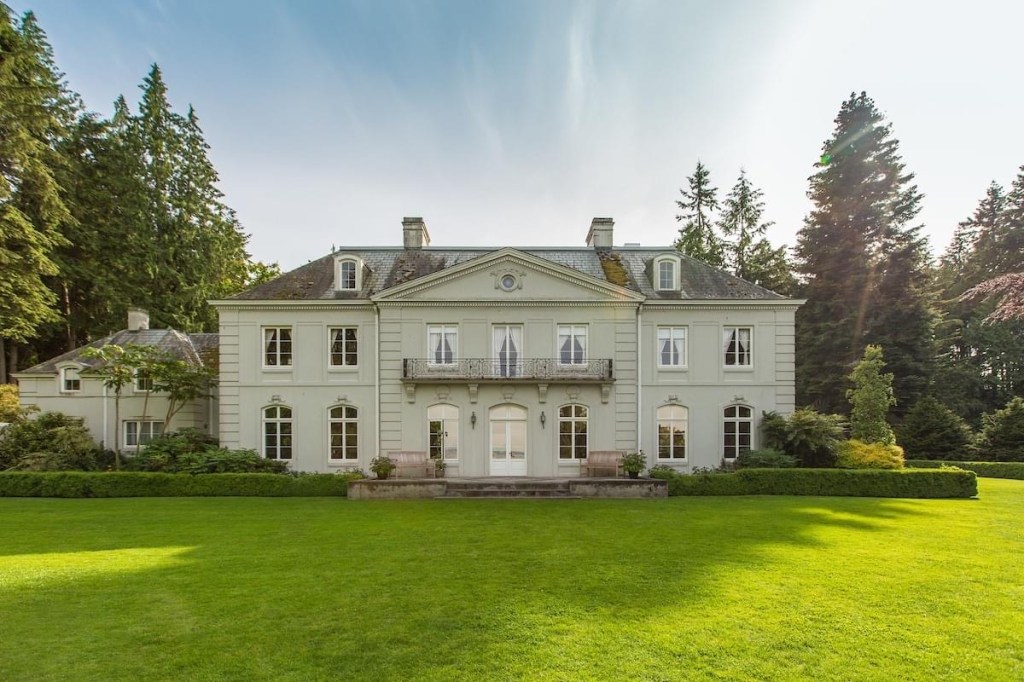
Twin Maples, located near Salisbury, Connecticut, is the creation of two art benefactors and opera buffs from New York and Boston, Douglas Thomas and her husband Wilmer. Started in the late 1990s, Twin Maples is a collaboration of the Thomas’ and a small group of landscape architects and gardeners who still look after the property. Twin Maples includes a cultivated wildflower meadow that covers 40 acres, formal gardens next to the gorgeous Georgian house and woodland gardens to the north. There is even a winter garden inside the house itself. The entire ensemble seamlessly blends together into a stunning landscape that is then complemented by distant views of the Berkshires. The gardens have been recognized by the Smithsonian Institution and the Garden Conservancy. Twin Maples is a private home and not open to the public although the gardens are occasionally included on garden tours in the Berkshires. For more on Twin Maples, click here.
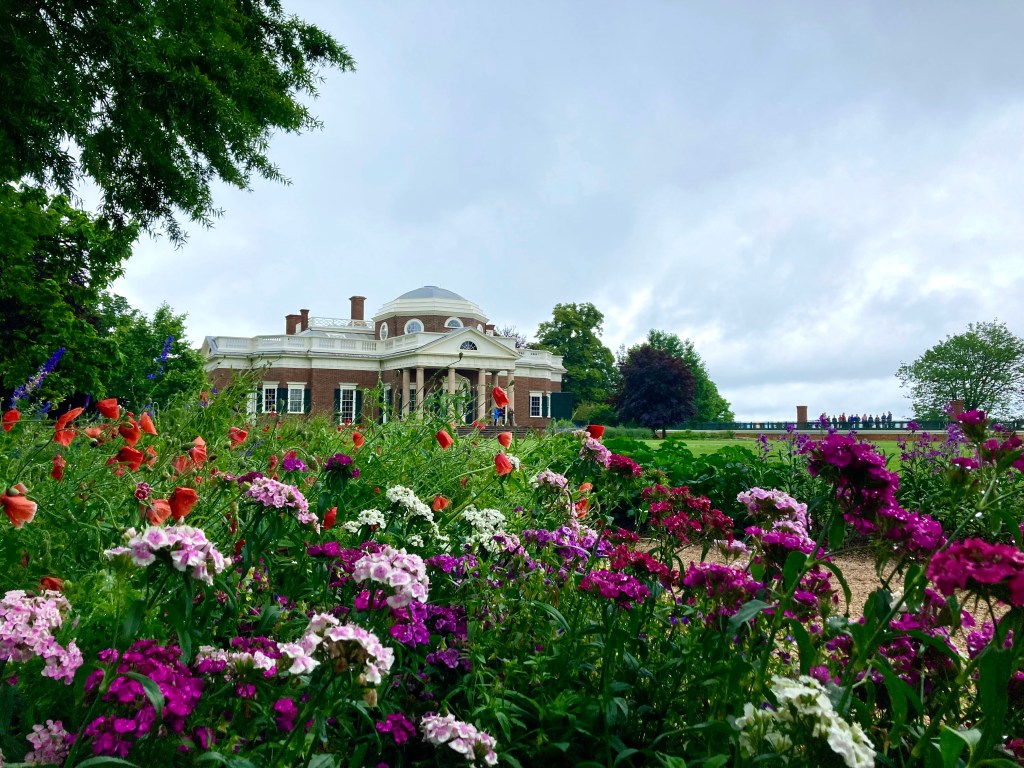
Monticello
In his spare time when Thomas Jefferson wasn’t starting new countries or universities, schmoozing the King of France, being President of the United States, advising George Washington, designing world class houses, pondering the complexities of statehood or creating gourmet meals he was a gardener. Now recognized as one of the greatest landscape architects in U.S. history, Jefferson was one of the first Americans who grasped the concept of designing a house and its surrounding landscape into an integrated holistic design although it took him about 40 years of tinkering to get to that integrated design. He was also a plant hunter who collected specimens during his service in Europe and planted them at Monticello. His kitchen garden is regarded as one of the best and most innovative of its kind in North America. The Thomas Jefferson Foundation, which now owns Monticello, has spent a fortune and many years bringing the landscapes back to their former glory (and then some). For more about Monticello (including the bits about slavery), click here. For information on visiting Monticello, click here. For a short symphonic YouTube video about Monticello, click here.
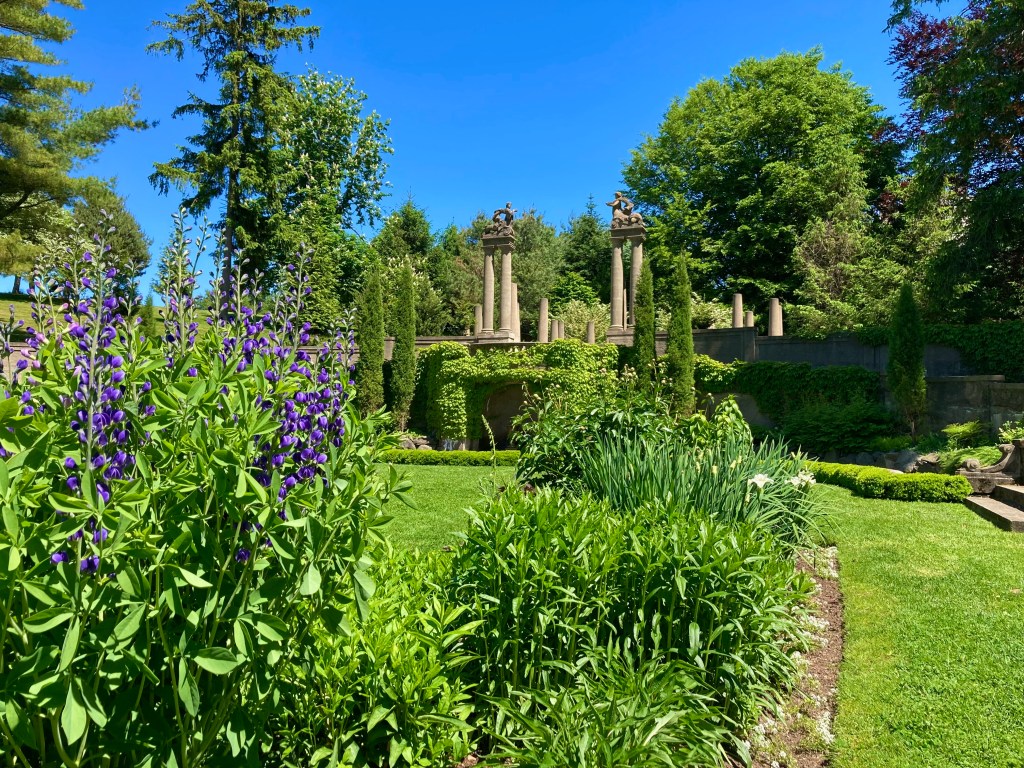
Crane Estate
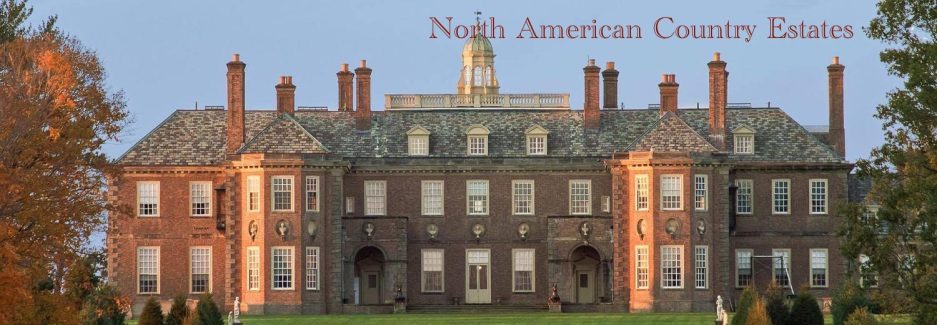
The Crane Estate (AKA known as Castle Hill) would not have made this list a few years ago. Located near Ipswich, Massachusetts, the Olmsted Brothers-designed gardens around the beautiful Georgian house had gone to seed over the decades since the house had been lived in. However, the Trustees of Reservations, the non-profit that owns the Crane Estate, got their act together and have been steadily rehabilitating the Italianate gardens to the west of the house so that, today, they are some of the finest examples of the genre found in North America. The sunken garden, shown above, is particularly striking with the surrounding “roman ruins” adding structural and sculptural interest to the plantings and water features. The estate also features a famous and photogenic tree-lined, grassy grand allee which frames a view of the Atlantic Ocean from the garden front of the house. Work continues to bring the landscapes of the estate back to good knick. For more about the history of the Crane Estate and the family that built it, click here. For information on visiting click here. Click here for a mesmerizing YouTube video with drone shots of the house and grounds.

Manor House Gardens
From Ipswich we head back to Connecticut for the work of another Bunny. Manor House Gardens is the creation of New York City interior designer and home decor maven, Bunny Williams. Born as Bruce Boxley Blackwell (giving upper class girls in the south boys names seems to be a thing) in Charlottesville, Bunny has built a successful home decor company and is a nationally recognized interior and landscape designer and author. In 1980 she bought a 19th century farmhouse in Canaan, Connecticut and set out to develop the stunning gardens that seamlessly transition from formal boxwood parterres to a sunken garden, orchards and woodland gardens. The gardens are open to the public a couple days a year, click here for more info. For info on Bunny’s home decor business, click here (not sponsored).

Domaine Sagard
If you want to visit Versailles but can only afford Quebec then not to worry. About a hundred miles north of Quebec City sits Domaine Sagard, the creation of plutocratic Canadian businessman, Paul Desmarais. While not quite up to the same standard of design and execution of famous French formal gardens such as Versailles or Vaux le Vicomte, Domaine Sagard is really unique for North America especially with a baroque palace attached. As discussed elsewhere in this blog, some people (including this blogger) may find fault with trying to blend the formality of the landscape with the surrounding rough, rocky wilderness. However, it is still quite an accomplishment and Mr. Desmarais deserves credit for having such an ambitious vision for both the house and the landscaping and making it a reality. And you can visit Domaine Sagard provided you run in the same circles as ex-presidents and prime ministers or industrial oligarchs. Otherwise….no. For more info on the history of this property, click here.
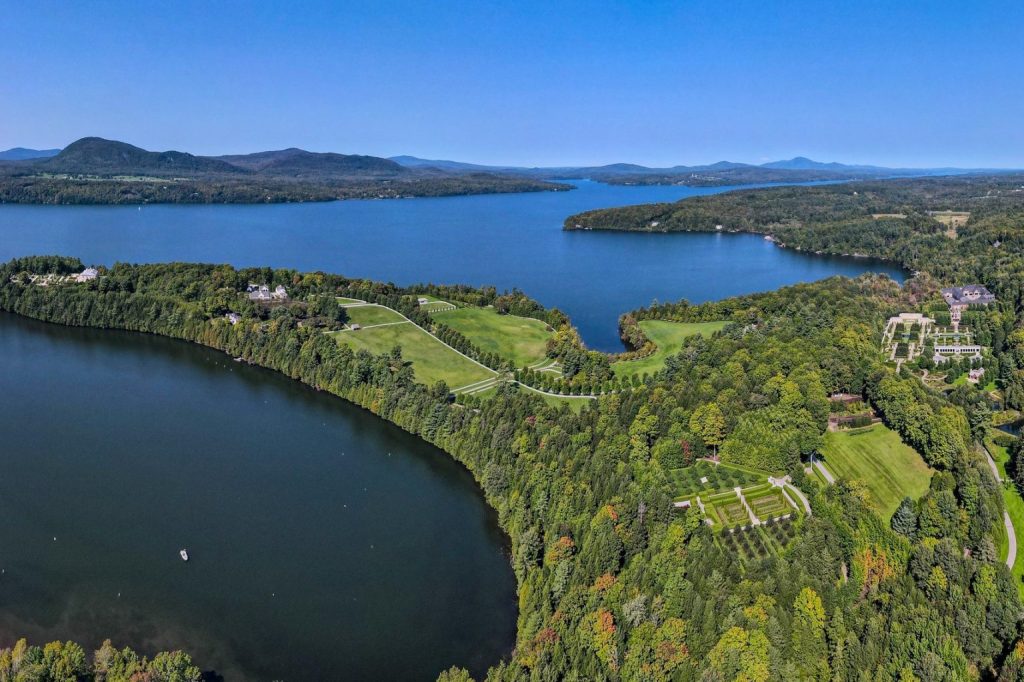
Belmere
Robert Gratton is the former CEO of the Power Corporation of Canada, the $50 billion company that Paul Desmarais (of Domaine Sagard – see above) started from scratch. Not to be outdone by his former boss, Mr. Gratton developed his own palace on a private peninsula sticking out into Lake Memphremagog on the Quebec/Vermont border. Almost nothing is known publicly about Belmere other than it’s been a work in progress for almost 20 years and includes (probably) the most extensive garden complex in North America. In fact, there are three separate formal gardens on this 163 acre estate plus a separate landscape garden with several ponds and numerous accessory dwellings and maintenance buildings. Even by the excessive standards of 17th Century France or 18th century Russia, Belmere is a major project. One can hope that, someday, the public will get a look. For now we have to be content with drone shots made by curious Quebecois. For more info on Belmere, click here.
Hopefully you’ve found this post educational or even inspiring for the next time you pull into your driveway and look at your house. Please leave a comment with any thoughts or recommendations on additional properties that should be included.





 North American Country Estates