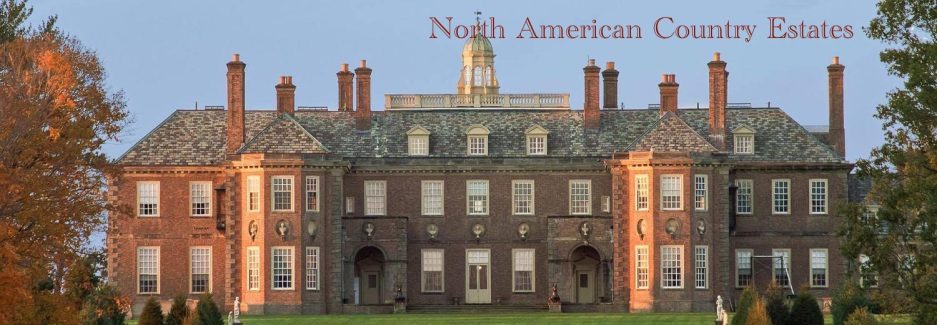
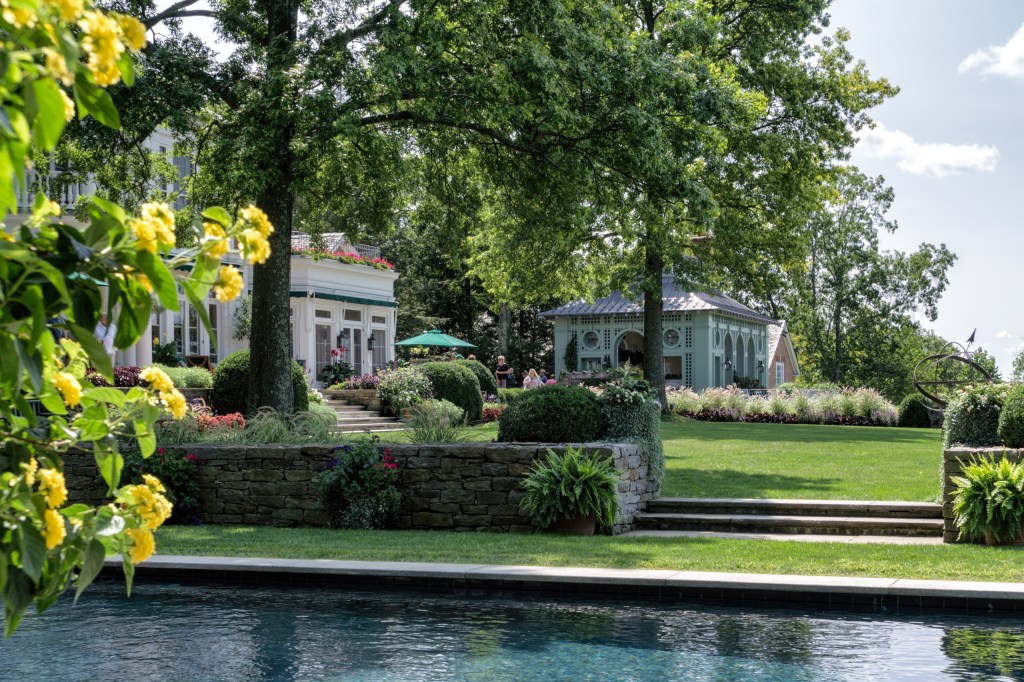
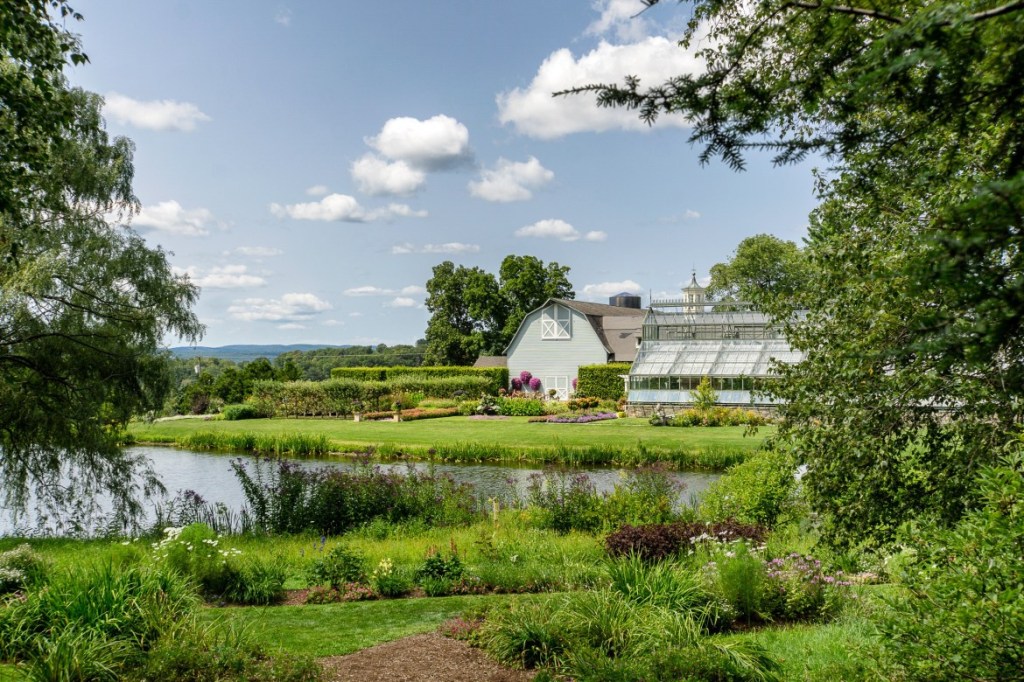
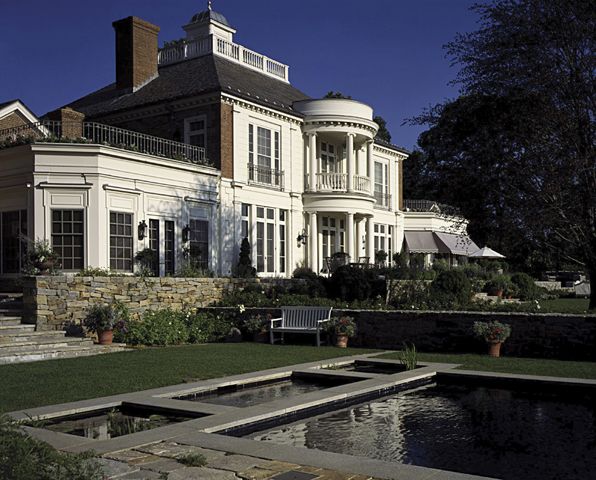
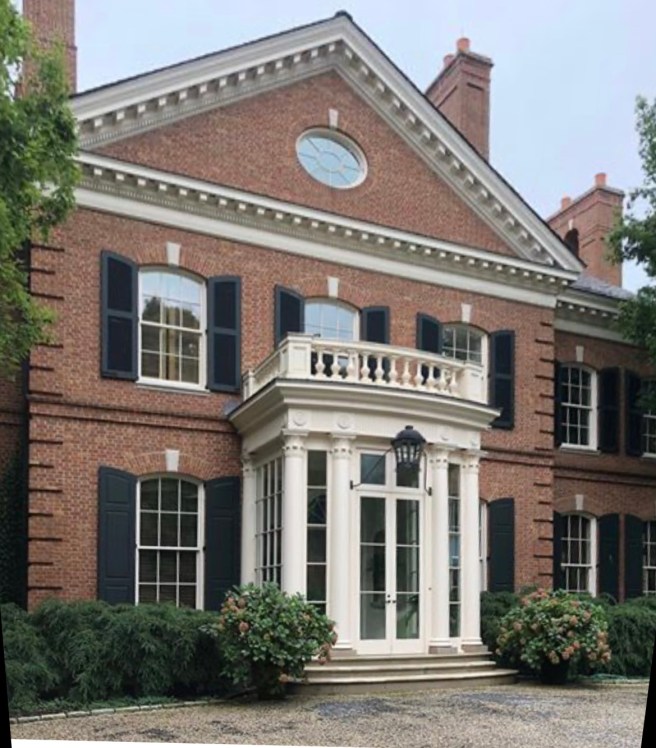
Maywood is a 50 acre estate outside Bridgewater, Connecticut in Litchfield County. The Georgian/neo-classical style home on the property was designed by the firm of Ferguson and Shamamian and completed in 2000 and is owned by Peter and Leni May. Peter has degrees from the University of Chicago and is a private equity investor along with partner, Nelson Peltz. Their firm, Triarc, has either had major share holdings in or been involved in restructurings of Snapple, Wendy’s, Pepsi Co., Family Dollar and several other major corporations. Maywood is also a working organic farm producing eggs, wines, produce, honey and maple syrup which can be bought at the Bridgewater Village Store. The house and gardens are not open to the public although the gardens are opened up one day per year with the proceeds benefitting the Garden Conservancy. For more information about Maywood, click here. A YouTube video showing the beautiful grounds can be viewed here.
Entrance frontGarden sceneGarden frontgarden sceneInterior sceneGarden front
This house and its surrounding gardens is known as Twin Maples. The house was built in 1996 and is situated on a 325 acre estate near Salisbury, Connecticut. It is the creation of a couple who were active in the arts in New York and Boston.
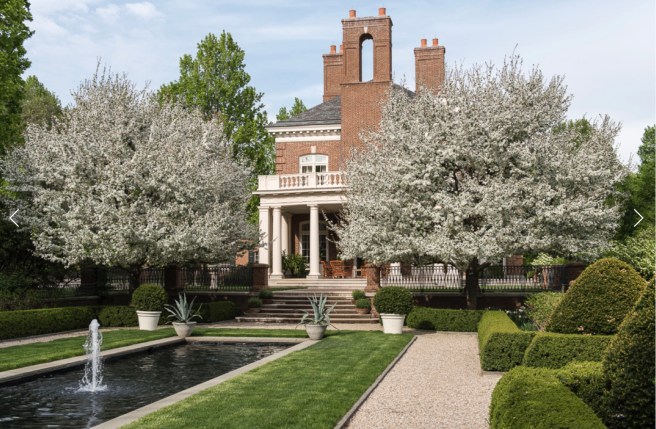
Twin Maples was originally part of a 1740 land grant by King George II of England to the Selleck family and, incredibly, the property has only been sold twice since then. The Sellecks hung on to it for over two hundred years. The name Twin Maples refers to two maple trees that grew at the site of a former house on the property. The Georgian style house was designed by New York architect David Easton who also designed Albemarle House near Charlottesville (click here for more on the infamous Albemarle House).
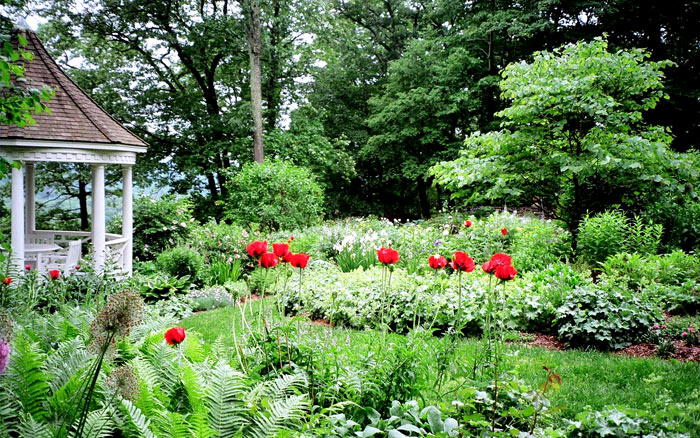
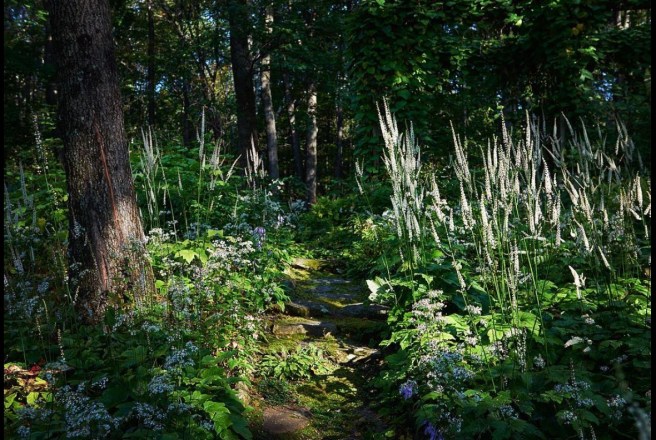
The house is gorgeous but it is the gardens at Twin Maples that really set this property apart. They include a formal garden next to the house which transitions to woodland gardens and a wildflower meadow. There is even a winter garden inside the house itself. The gardens are the work of landscape architect Rodney Robinson and plantswoman Deborah Munson. Successfully cultivating a wildflower meadow is one of the most difficult things to pull off in gardening but this meadow, designed by Larry Weaner, along with the other gardens has won multiple awards. The entire garden ensemble has also been recognized by the Smithsonian Institution.
Twin Maples is still a private home and is not open to the public although the gardens are occasionally included on local garden tours. A few miles to the north is another significant country estate, the Scoville Estate covered in this blog here.
Castles are dotted all over western and Central Europe. Originally designed to defend the lord of the castle and his subjects from marauders, castles eventually were converted to strictly residential purposes and many of Europe’s castles still serve as private homes to this day. Many assorted dreamers and loonies in North America have attempted to build authentic looking castles but most attempts have failed to replicate the aesthetic and construction values of the castles of Europe.
Charlotte Bronson Hunnewell Martin, the first mistress of Hidden Valley Castle
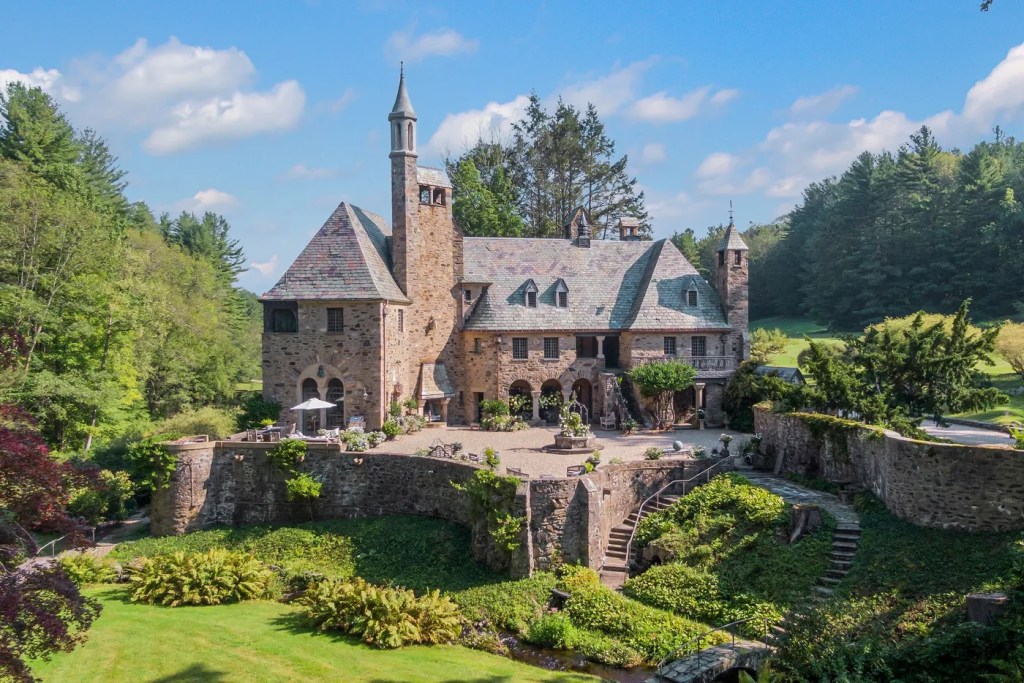
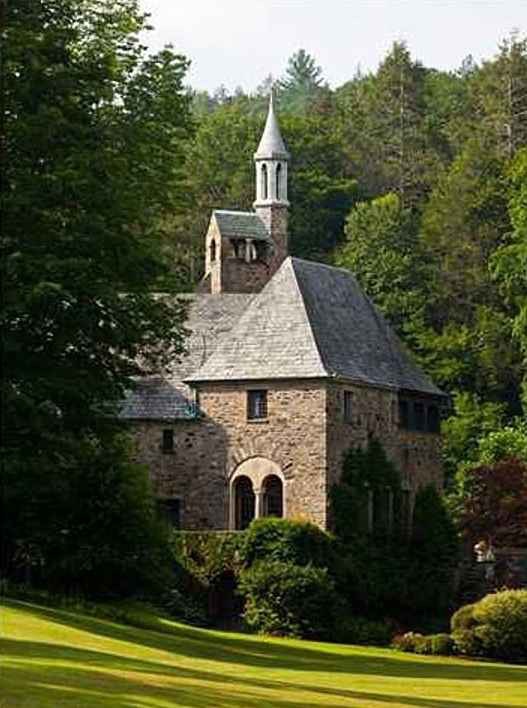
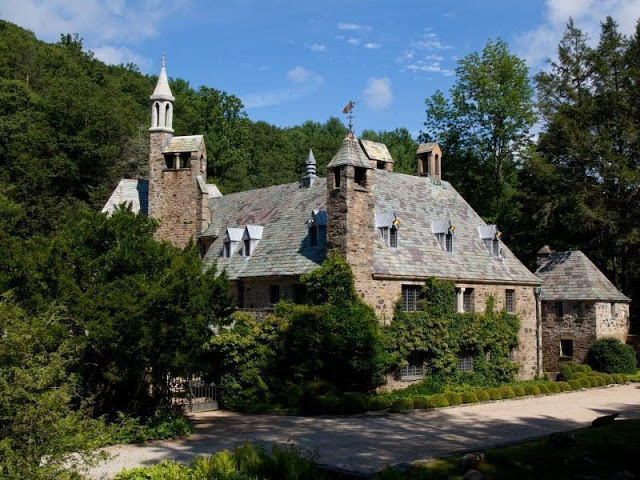
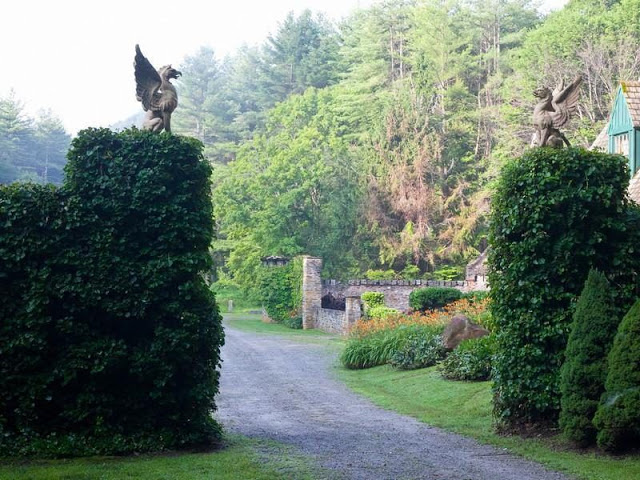
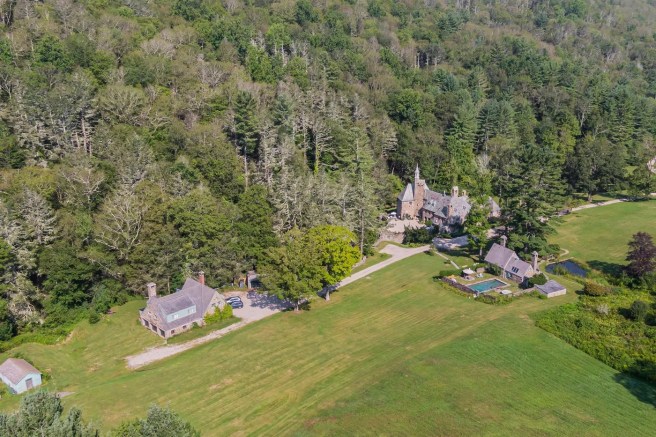
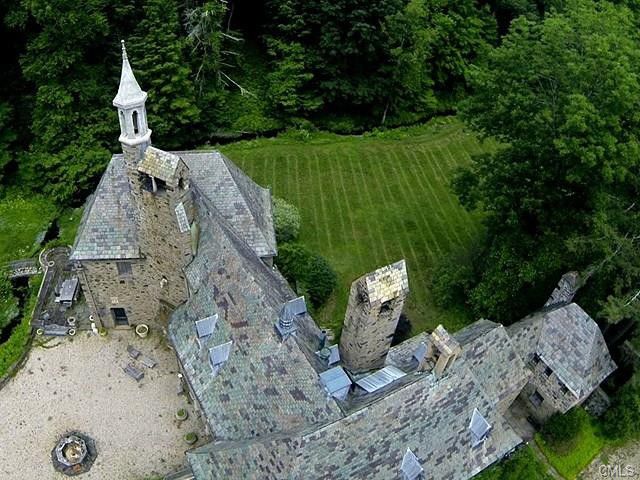
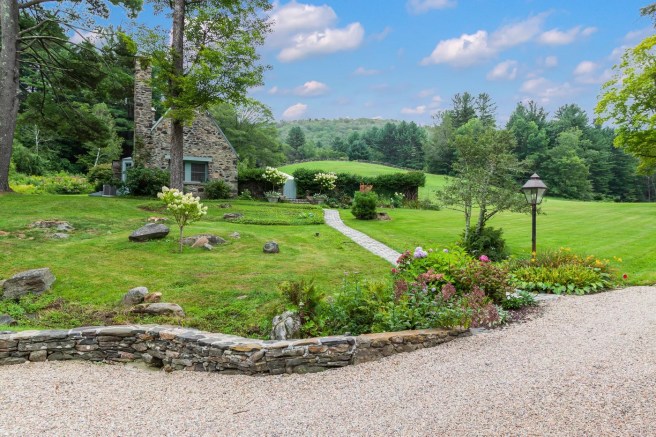
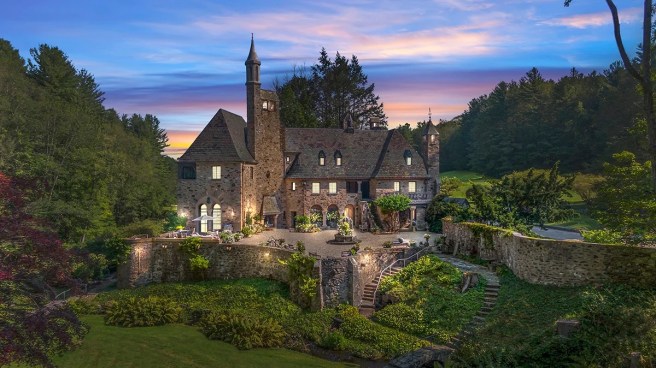
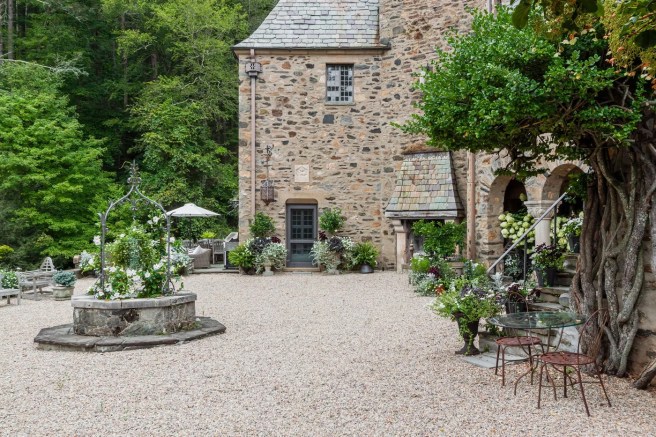
One of the rare exceptions is a home known as Cornwall Castle located near Cornwall, Connecticut in the Litchfield Hills (AKA Hidden Valley Castle). The castle was designed by the architect, Edward Dean, and completed in 1925 for wealthy New York socialite Charlotte Bronson Hunnewell Martin and her husband, Dr. Walton Martin, a surgeon. The castle sits on 275 acres of woodland and streams and includes several outbuildings. Charlotte came from old Massachusetts railroading and banking money and loved the concept of European nobility so much that she and the doctor built the house in a storybook castle style. The doctor completed the illusion by occasionally riding around the estate on a white horse wearing a red cape. In addition to the castle, Charlotte also developed a set of row houses with a shared garden in Manhattan known as Turtle Bay Gardens. Residents of Turtle Bay have included Katherine Hepburn, composer Stephen Sondheim, famous twin Mary-Kate Olsen and the author of Charlotte’s Web, E.B. White, who allegedly named the spider after his landlord. Dr. Martin passed away in 1949 and Charlotte in 1961. Charlotte cut her only child out the will and the castle was subsequently sold.
The castle has had a series of lords since then including financier Saul Steinberg, a flashy New York financier from the 1980s era of junk bonds. Mr. Steinberg sold the castle in 1983 complaining about the bugs and insects that lived in the woods and fields around the castle and retreated back to his Manhattan co-op. Next up was former Macy’s executive, Joseph Cicio, who tried to renovate the castle, ran short of money and sold in 1988.
In 2001, Alphonse ‘Buddy’ Fletcher bought the castle. Mr. Fletcher was a New York hedge fund manager who burned through $212 million of his client’s money before declaring bankruptcy and being investigated by the SEC. Judges and officials involved in the investigations hailed from places like the Cayman Islands and Bermuda throwing a further whiff of suspicion and disrepute onto the affairs of the one-time lord of Cornwall Castle. In 2014, his lordship also fell behind on the mortgage payments and the castle was foreclosed upon in 2015.
In 2019 the castle and estate were purchased by a local Litchfield County builder and his wife for $1.6 million. They did extensive renovations and flipped it for $3.7 million in late 2022. The castle is still a private home and is not open to the public. A video describing the property can be viewed here. Hopefully, the new lord or lady of Cornwall Castle can provide the stability and commitment that it richly deserves as potentially the preeminent example of storybook and castle architecture in North America.













 North American Country Estates