Omega

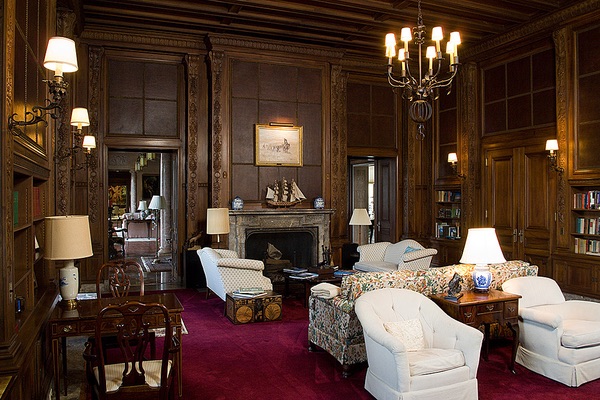
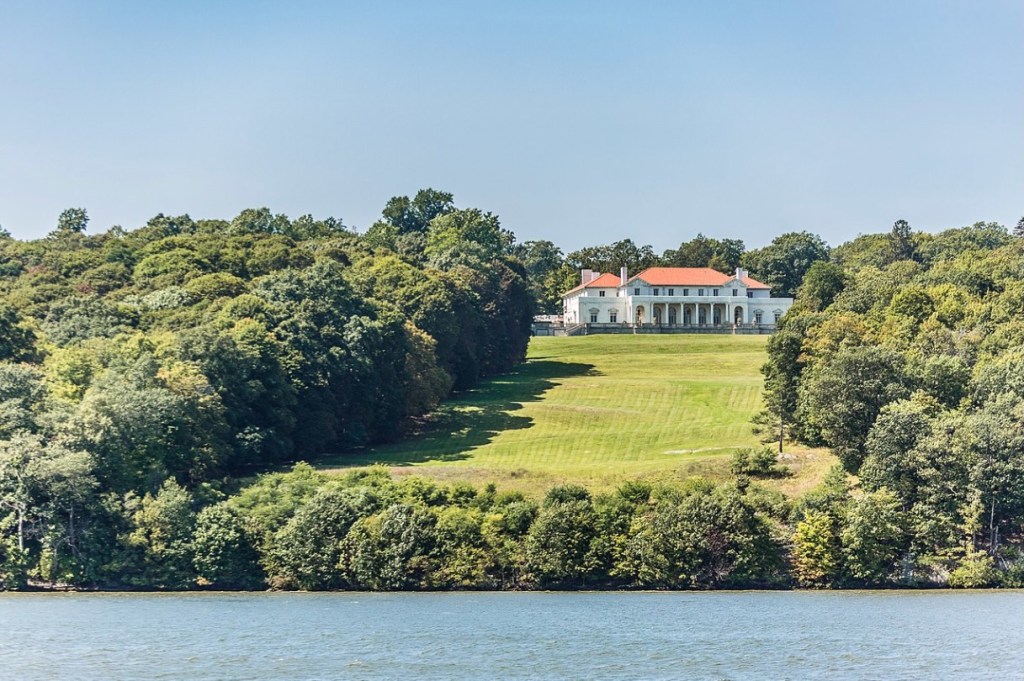
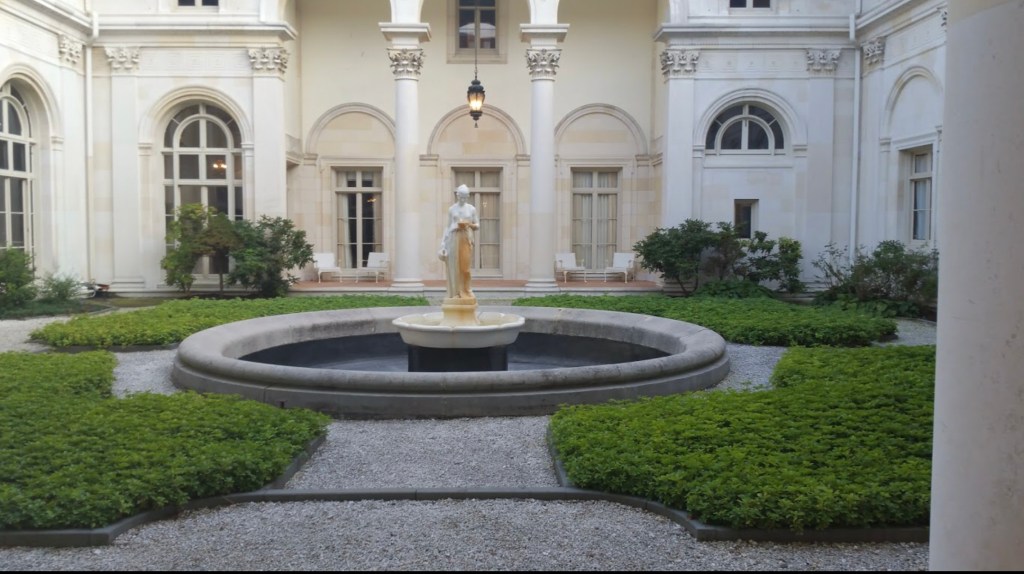
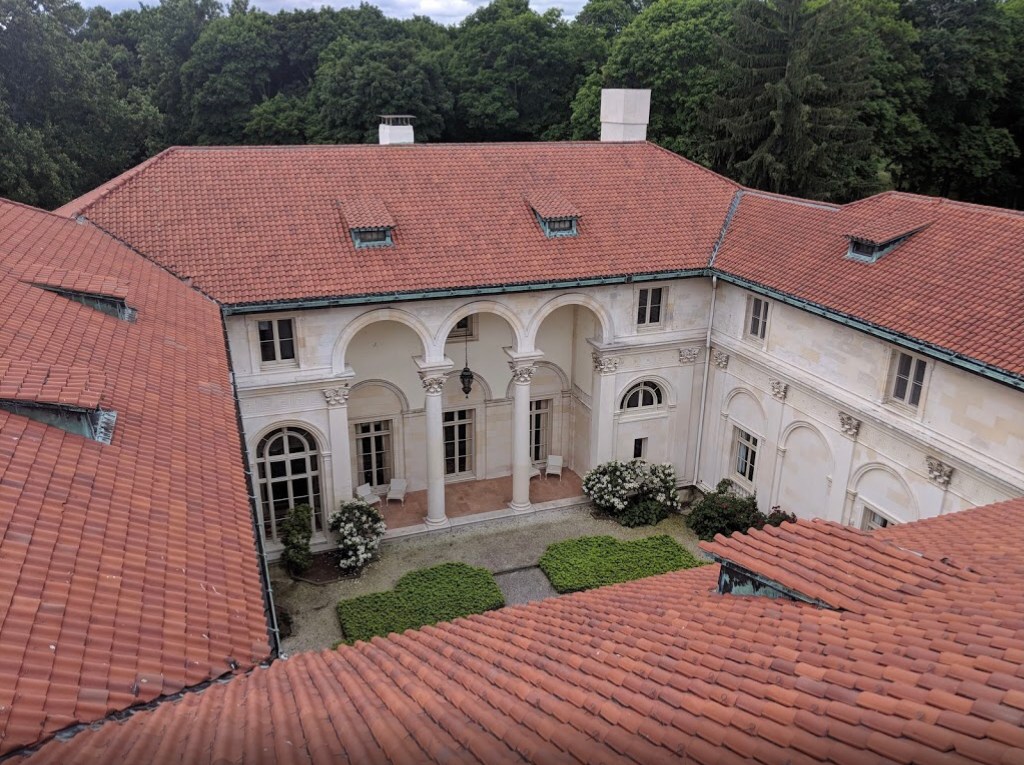
This is the Omega estate (AKA the Payne Estate) on the west bank of the Hudson River near Esopus, New York. The Beaux Arts style house was designed by Thomas Hastings of the New York architecture firm, Carrere & Hastings. The 42,000 square foot house was completed in 1911 and is sited on a 60 acre estate. The estate that eventually became Omega had three previous owners including John Jacob Astor III of the prominent Astor family and Omega was built on the site of an earlier house named Waldorf. Omega was the creation of Standard Oil executive Oliver Hazard Payne (1839-1917).
John D. Rockefeller, the founder of Standard Oil, had this tactic whereby he would calculate the value of a rival’s oil refinery assuming he had undercut their pricing and taken their market share and then Rockefeller would make the rival refiner an offer to buy their assets based on that assumed value. If the rival refused the offer, Rockefeller and the Standard Oil would simply undercut their prices, take their market share and drive them out of business. While this may seem similar to the choice that Latin American drug lords offer rivals and other troublemakers (“plata o plomo?” meaning “which do you want? silver or lead?”) it is actually quite humane given the rough and tumble business tactics that prevailed at the time. More often than not, the rival would take the offer and then be given a position within Standard Oil commensurate with their business acumen and degree of ruthlessness. Some of these one-time rivals became obscenely rich in their own right by joining the Standard Oil trust. Oliver Hazard Payne was one such rival who ended up doing just fine.

Oliver Hazard Payne was born into a politically prominent Ohio family and attended Phillips Academy Andover and Yale University. His mother was a relative of Navy admiral Oliver Hazard Perry who is famous for coining the phrase “Don’t give up the ship!” When the Civil War started, Oliver enlisted in the Army rather than avoiding conscription by paying someone to take his place as most wealthy young men were allowed to do. He was promoted to Colonel and commanded the 124th Ohio Infantry Regiment and served until the end of the war during which he was seriously wounded at the Battle of Chickamauga. After the war, Mr. Payne entered business starting up a refinery in Cleveland competing with Rockefeller’s Standard Oil. After selling out to Standard in 1872, Mr. Payne served as treasurer of the company and was also a company lobbyist. Back in those days, state and federal government in the United States was a hotbed of corruption, far worse than it is today. Bribery and kickbacks on behalf of gilded age corporate interests was pervasive and Mr. Payne was twice indicted on bribery charges but was not convicted. By the time he died in 1917 he was worth $190 million (several billion in today’s money).

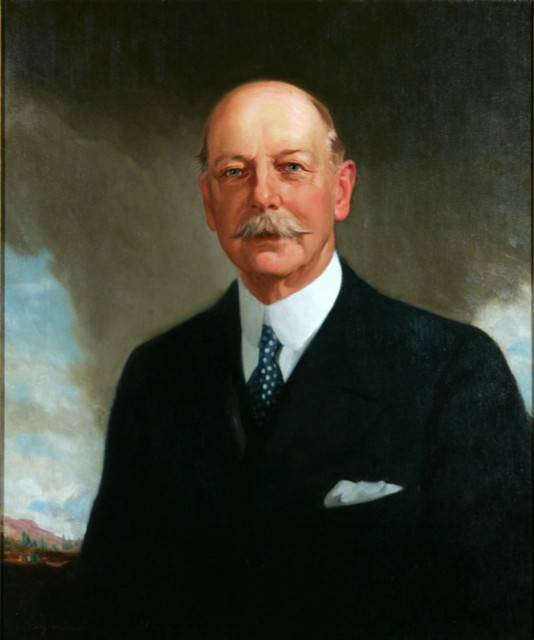
Oliver Hazard Payne, the builder of Omega

Payne never married nor had any children and he left Omega to his nephew, Harry Payne Bingham. Mr. Bingham’s life was typical of second-generation gilded age industrial families (e.g., Corporate directorships, trusteeships, Park Avenue, NY Yacht Club, Palm Beach, Piping Rock Club, “scientific” yachting expeditions, Knickerbocker Club). Mr. Bingham got to use Omega for 16 years, a longer period of time than his uncle Oliver (who died only six years after its completion). After trying to sell Omega for several years, Mr. Bingham donated the property in 1933 to the New York Protestant Episcopal Mission Society which operated a convalescent home at the property. By 1937 the home had failed and in 1942 the estate was sold to Marist Brothers, a private liberal arts college and religious order in nearby Poughkeepsie for use as a high school for prospective brothers.
In 1986, the estate was purchased by businessman, Raymond Rich. Mr. Rich grew up in Iowa and started his working career in the engine room of a tramp freighter in 1930. After college he served in the Second World War in the pacific as a Marine. A born salesman and natural leader he was a professional CEO for most of his career and headed up several corporations. Mr. Rich loved nice homes and in addition to owning and extensively renovating Omega, he also owned castles in Scotland, Austria and France. He passed away in 2009 and left Omega, by now referred to as the Payne Estate, back to Marist College for use as the Raymond A. Rich Institute for Leadership Development.

Raymond Rich and friend at Omega

For more information on Omega and the institute, click here and here. YouTube has a video showing scenes from the estate taken during the dedication of the Institute and can be seen here. Omega is almost directly across the Hudson River from another significant country estate covered in this blog, Hyde Park (click here for more).

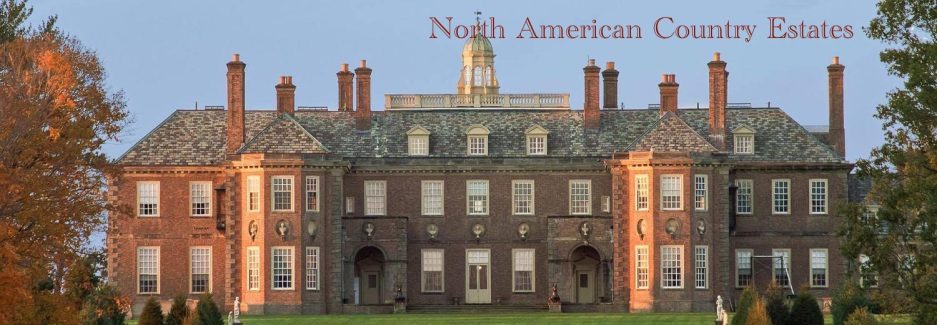
Hyde Park

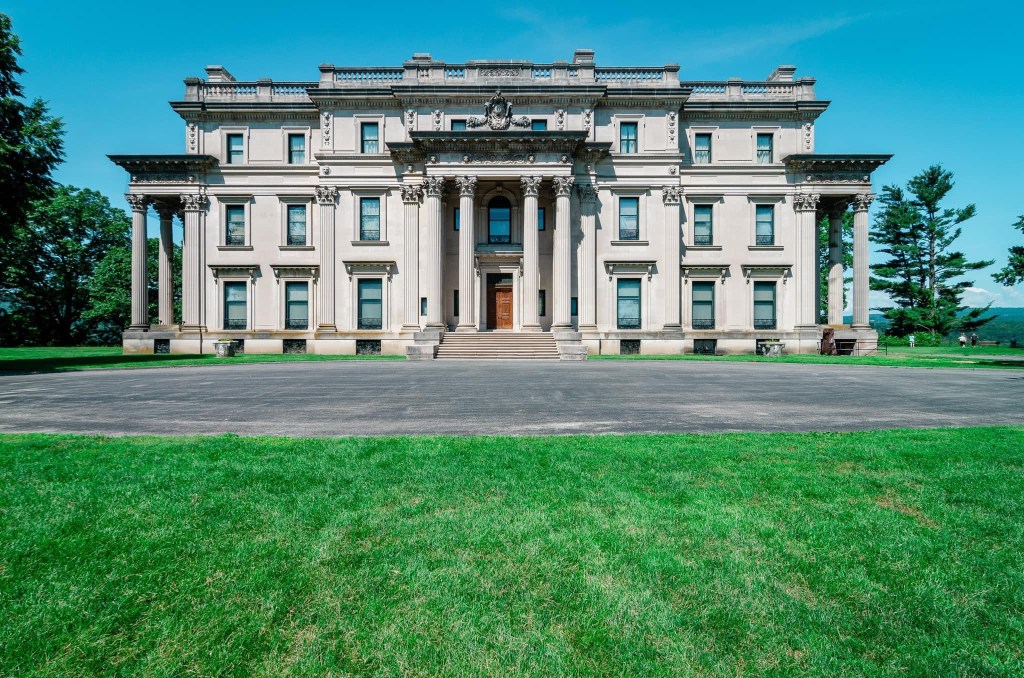
Hyde Park was the country estate of Frederick William Vanderbilt (1856-1938). Frederick was the grandson of “the Commodore”, Cornelius Vanderbilt, the steamship and railroad tycoon who was the richest person in the United States during the middle part of the 19th Century. Despite having little education, Cornelius built up a fortune of $105 million ($150-200 billion in today’s money depending on who’s counting). Cornelius had an insatiable love of money but spent very little on himself (or his long-suffering wives) and had a remarkable mind for numbers. He kept very few accounting records and managed his vast enterprise mostly in his own head. When Cornelius passed away in 1877 he left nearly everything to his eldest son, William Henry Vanderbilt. Cornelius had 13 children and considered all of them to be idiots but thought that William Henry might have some glimmer of hope. Despite this lack of confidence in his potential, William Henry proved to be a competent financier and railroad executive and doubled his inheritance before passing away in 1885. However, he was the last Vanderbilt to add to his inheritance rather than just spending it (Anderson Cooper may be the one exception). Although he enjoyed his fortune more than the Commodore did, William Henry’s Fifth Avenue house in New York was only a small sign of what was to come from the Vanderbilts.

Frederick William Vanderbilt, the proprietor of Hyde Park

William Henry and his wife, Maria Louisa Kissam Vanderbilt, had nine children, eight living to adulthood. These eight children took their inheritances and cut loose, unleashing a deluge of home building that eclipsed anything that the royal houses of Europe had accomplished in such a short period of time. The houses either bought or built (nearly all built) by this generation of Vanderbilts is listed below:

That’s 32 mansions for 8 people (plus dependents) or four mansions per Vanderbilt. This is even more remarkable considering the size of these houses. Of the 25 largest homes ever built in the United States, six are on this list including the largest of them all, Biltmore, weighing in at 179,000 square feet. Biltmore is also the only one of these houses that is still owned by a Vanderbilt (though it is not used as a residence). Click here for more on Biltmore. Shelburne Farms is now a non-profit educational center, hotel and working farm focused on sustainability with Vanderbilt descendants still involved in the management.

Coffered ceiling in the dining room of Hyde Park

Emily Thorn Vanderbilt also built one additional notable house not on this list, High Lawn, for her daughter, Lila Vanderbilt Sloan. High Lawn is the only Gilded Age Vanderbilt mansion that is still lived in by a Vanderbilt and is covered in this blog (click here). Most of the houses on this list are either long gone, have been overrun by suburban development or, in the case of the Newport “cottages”, are really more of a luxury subdivision, not true country houses. But Hyde Park is unique in that it still retains the form of a country estate although it hasn’t been lived in for 83 years.

Hyde Park has been used as a country estate and retreat since the early 18th century when it was granted to Pierre Fauconnier in 1705 by the colonial Governor of New York, Edward Hyde, the Viscount Cornbury. In fact, the mansion we know as Hyde Park is the third house to stand on the site which is on a bluff overlooking the Hudson River and the Catskill Mountains to the west. In 1840 the estate was purchased by John Jacob Astor the Manhattan fur and real estate tycoon for his daughter, Dorothea. She and her husband, Walter Langdon, built the second house but soon afterwards Walter died and Dorothea moved to Europe. Her son, Walter Jr., took over in 1852 and expanded the estate to 600 acres. A few miles north of Hyde Park is Marienruh, another Astor house built in the 1920s.

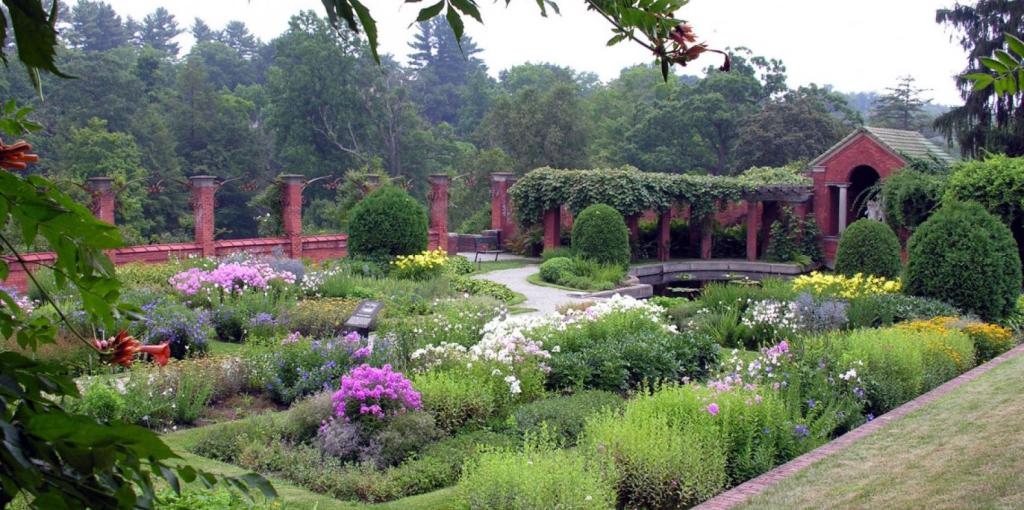
Walter Jr. died without heirs in 1894 and the estate was bought by Frederick William Vanderbilt and his wife Louise . Their initial inclination was to simply make additions to the Langdon house but their architect, Charles McKim of McKim, Mead and White, discovered severe dry rot in the structure and advised a complete rebuild. McKim designed the 50,000 square foot Neo-classical structure and construction was completed by 1899. The estate was attractive to the Vanderbilts for a couple of reasons. First, the railway that ran just below the house along the Hudson River happened to be the New York Central, which was the flagship of the Vanderbilt industrial empire. Frederick was a Director of the NY Central for 61 years although he did not pull rank when traveling between Hyde Park and New York City, preferring to sit in a regular coach rather than a private railway car as most gilded age millionaires would have done. Reserved and scholarly by nature, Frederick was the only one of his siblings to graduate from college, earning a degree from Yale University in Horticulture. He indulged his interest in horticulture at Hyde Park and devoted considerable attention to improving the landscaping that prior owners had installed at the estate. Frederick was responsible for developing the italianate formal gardens that still flourish today (thanks to the efforts of local volunteer-gardeners). The house itself was not universally admired. Some critics thought it more resembled a public library than a stately home and criticized its heavy and ponderous design elements. This didn’t seem to bother the Vanderbilts though. Of their many properties they seemed to prefer Hyde Park above the others.

On the grounds of Hyde Park

Louise Vanderbilt died in 1926 and this seemed to make the reserved Frederick even more shy. He lived as a virtual recluse at Hyde Park for the rest of his life, only seeing family and close friends, rarely speaking to the Hyde Park staff and spending his time puttering in the grounds and gardens. Frederick and Louise did not have children and when Frederick passed away in 1938 the house was left to Louise’s niece, Margaret “Daisy” Post. Daisy already had her hands full managing mansions in Newport and the south of France and wanted nothing to do with the cost and hassle of running Hyde Park as well but couldn’t find a buyer in the depths of the Depression so she approached the owner of a nearby estate, President Franklin D. Roosevelt, for advice. FDR grew up and still resided part of the year at his ancestral estate of Springwood a couple miles south of Hyde Park and he had been an occasional guest of the Vanderbilts at Hyde Park. It was FDR who suggested donating the estate to the National Park Service and opening it up to the public. Daisy agreed and by 1940, Hyde Park was open to the public (except when FDR was staying at Springwood when his aides and secret service detail would temporarily take up residence at Hyde Park).

Formal gardens at Hyde Park

If you want to visit Hyde Park, it can be reached by car or train (transferring to a bus in Poughkeepsie) from either Albany or New York City. Additional information can be found here. Leave time in your schedule for visiting nearby Springwood, the home of FDR. In addition to the final resting place of FDR and Eleanor Roosevelt, Springwood has educational and quite moving exhibits about the life and times of FDR and the challenges the the country faced during the Great Depression and the Second World War. Info regarding Springwood can be found here. Finally, almost directly across the Hudson River from Hyde Park is another notable country estate, Omega, covered in this blog (click here).