Hyde Park

Hyde Park was the country estate of Frederick William Vanderbilt (1856-1938). Frederick was the grandson of “the Commodore”, Cornelius Vanderbilt, the steamship and railroad tycoon who was the richest person in the United States during the middle part of the 19th Century. Despite having little education, Cornelius built up a fortune of $105 million ($150-200 billion in today’s money depending on who’s counting). Cornelius had an insatiable love of money but spent very little on himself (or his long-suffering wives) and had a remarkable mind for numbers. He kept very few accounting records and managed his vast enterprise mostly in his own head. When Cornelius passed away in 1877 he left nearly everything to his eldest son, William Henry Vanderbilt. Cornelius had 13 children and considered all of them to be idiots but thought that William Henry might have some glimmer of hope. Despite this lack of confidence in his potential, William Henry proved to be a competent financier and railroad executive and doubled his inheritance before passing away in 1885. However, he was the last Vanderbilt to add to his inheritance rather than just spending it (Anderson Cooper may be the one exception). Although he enjoyed his fortune more than the Commodore did, William Henry’s Fifth Avenue house in New York was only a small sign of what was to come from the Vanderbilts.
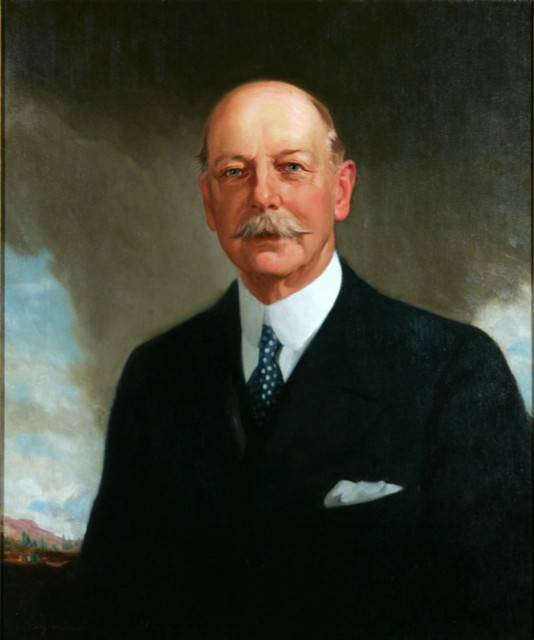
Frederick William Vanderbilt, the proprietor of Hyde Park

William Henry and his wife, Maria Louisa Kissam Vanderbilt, had nine children, eight living to adulthood. These eight children took their inheritances and cut loose, unleashing a deluge of home building that eclipsed anything that the royal houses of Europe had accomplished in such a short period of time. The houses either bought or built (nearly all built) by this generation of Vanderbilts is listed below:

That’s 32 mansions for 8 people (plus dependents) or four mansions per Vanderbilt. This is even more remarkable considering the size of these houses. Of the 25 largest homes ever built in the United States, six are on this list including the largest of them all, Biltmore, weighing in at 179,000 square feet. Biltmore is also the only one of these houses that is still owned by a Vanderbilt (though it is not used as a residence). Click here for more on Biltmore. Shelburne Farms is now a non-profit educational center, hotel and working farm focused on sustainability with Vanderbilt descendants still involved in the management.

Coffered ceiling in the dining room of Hyde Park

Emily Thorn Vanderbilt also built one additional notable house not on this list, High Lawn, for her daughter, Lila Vanderbilt Sloan. High Lawn is the only Gilded Age Vanderbilt mansion that is still lived in by a Vanderbilt and is covered in this blog (click here). Most of the houses on this list are either long gone, have been overrun by suburban development or, in the case of the Newport “cottages”, are really more of a luxury subdivision, not true country houses. But Hyde Park is unique in that it still retains the form of a country estate although it hasn’t been lived in for 83 years.
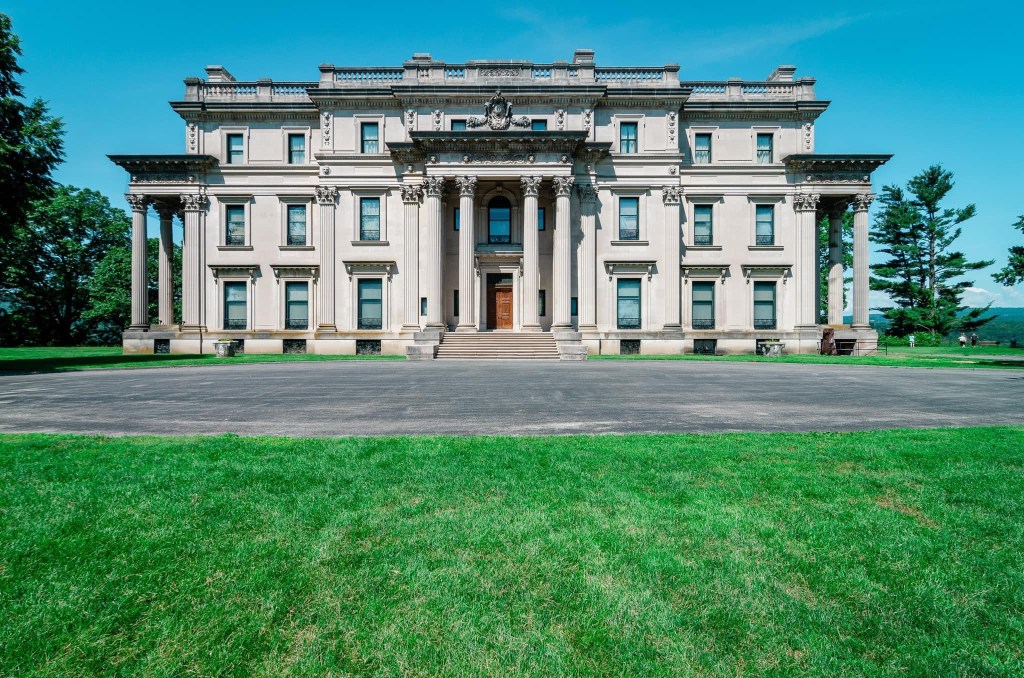
Hyde Park has been used as a country estate and retreat since the early 18th century when it was granted to Pierre Fauconnier in 1705 by the colonial Governor of New York, Edward Hyde, the Viscount Cornbury. In fact, the mansion we know as Hyde Park is the third house to stand on the site which is on a bluff overlooking the Hudson River and the Catskill Mountains to the west. In 1840 the estate was purchased by John Jacob Astor the Manhattan fur and real estate tycoon for his daughter, Dorothea. She and her husband, Walter Langdon, built the second house but soon afterwards Walter died and Dorothea moved to Europe. Her son, Walter Jr., took over in 1852 and expanded the estate to 600 acres. A few miles north of Hyde Park is Marienruh, another Astor house built in the 1920s.

Walter Jr. died without heirs in 1894 and the estate was bought by Frederick William Vanderbilt and his wife Louise . Their initial inclination was to simply make additions to the Langdon house but their architect, Charles McKim of McKim, Mead and White, discovered severe dry rot in the structure and advised a complete rebuild. McKim designed the 50,000 square foot Neo-classical structure and construction was completed by 1899. The estate was attractive to the Vanderbilts for a couple of reasons. First, the railway that ran just below the house along the Hudson River happened to be the New York Central, which was the flagship of the Vanderbilt industrial empire. Frederick was a Director of the NY Central for 61 years although he did not pull rank when traveling between Hyde Park and New York City, preferring to sit in a regular coach rather than a private railway car as most gilded age millionaires would have done. Reserved and scholarly by nature, Frederick was the only one of his siblings to graduate from college, earning a degree from Yale University in Horticulture. He indulged his interest in horticulture at Hyde Park and devoted considerable attention to improving the landscaping that prior owners had installed at the estate. Frederick was responsible for developing the italianate formal gardens that still flourish today (thanks to the efforts of local volunteer-gardeners). The house itself was not universally admired. Some critics thought it more resembled a public library than a stately home and criticized its heavy and ponderous design elements. This didn’t seem to bother the Vanderbilts though. Of their many properties they seemed to prefer Hyde Park above the others.

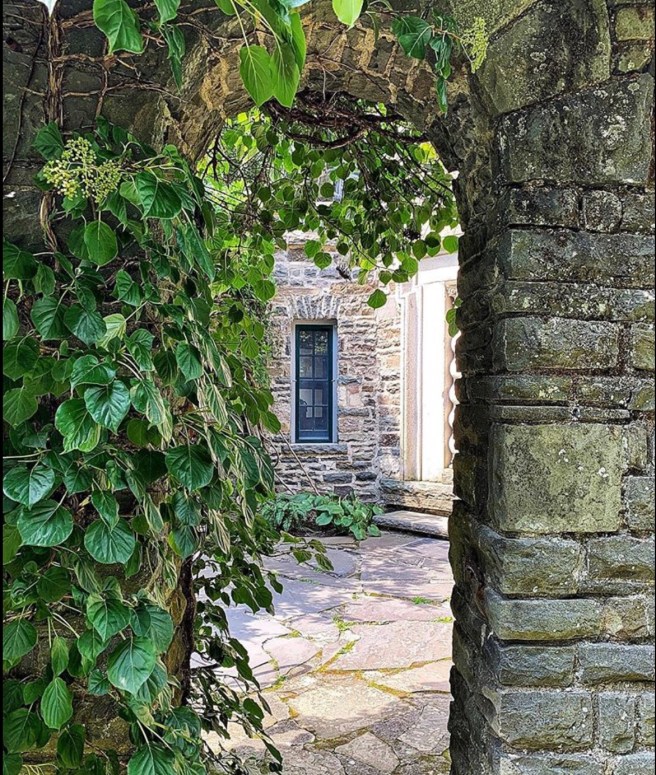
On the grounds of Hyde Park

Louise Vanderbilt died in 1926 and this seemed to make the reserved Frederick even more shy. He lived as a virtual recluse at Hyde Park for the rest of his life, only seeing family and close friends, rarely speaking to the Hyde Park staff and spending his time puttering in the grounds and gardens. Frederick and Louise did not have children and when Frederick passed away in 1938 the house was left to Louise’s niece, Margaret “Daisy” Post. Daisy already had her hands full managing mansions in Newport and the south of France and wanted nothing to do with the cost and hassle of running Hyde Park as well but couldn’t find a buyer in the depths of the Depression so she approached the owner of a nearby estate, President Franklin D. Roosevelt, for advice. FDR grew up and still resided part of the year at his ancestral estate of Springwood a couple miles south of Hyde Park and he had been an occasional guest of the Vanderbilts at Hyde Park. It was FDR who suggested donating the estate to the National Park Service and opening it up to the public. Daisy agreed and by 1940, Hyde Park was open to the public (except when FDR was staying at Springwood when his aides and secret service detail would temporarily take up residence at Hyde Park).
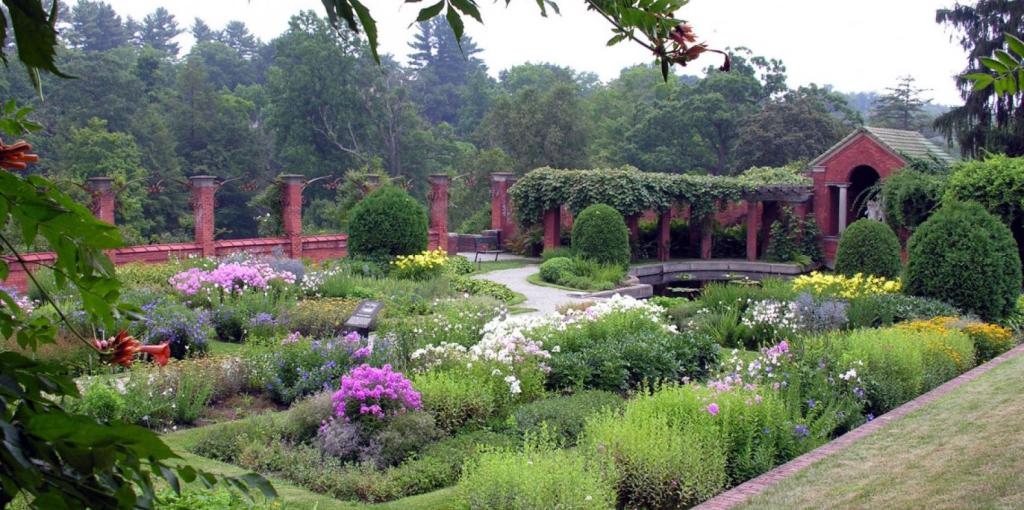
Formal gardens at Hyde Park

If you want to visit Hyde Park, it can be reached by car or train (transferring to a bus in Poughkeepsie) from either Albany or New York City. Additional information can be found here. Leave time in your schedule for visiting nearby Springwood, the home of FDR. In addition to the final resting place of FDR and Eleanor Roosevelt, Springwood has educational and quite moving exhibits about the life and times of FDR and the challenges the the country faced during the Great Depression and the Second World War. Info regarding Springwood can be found here. Finally, almost directly across the Hudson River from Hyde Park is another notable country estate, Omega, covered in this blog (click here).

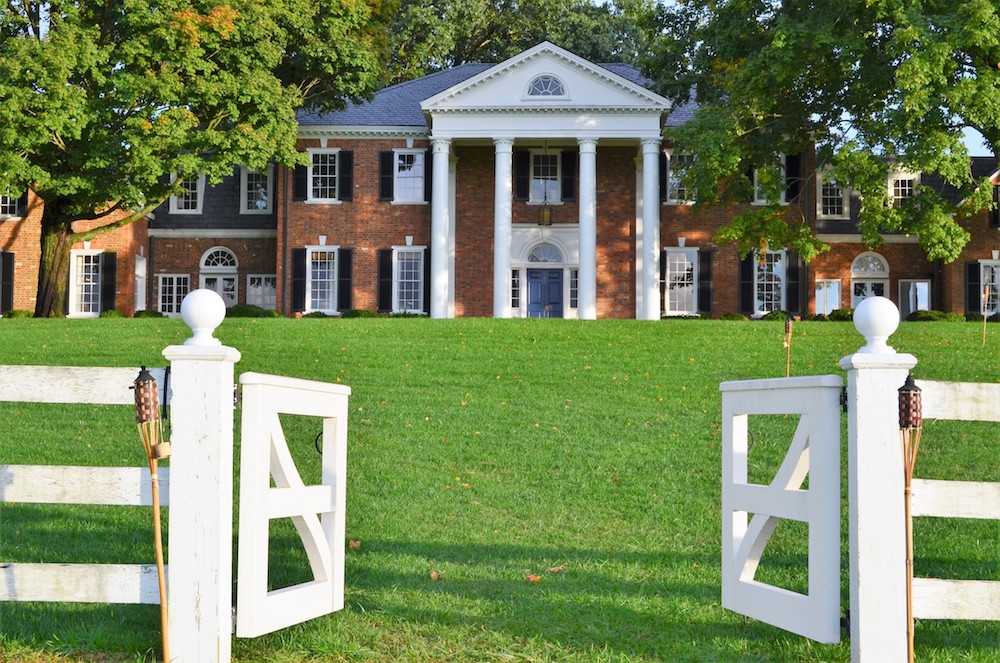
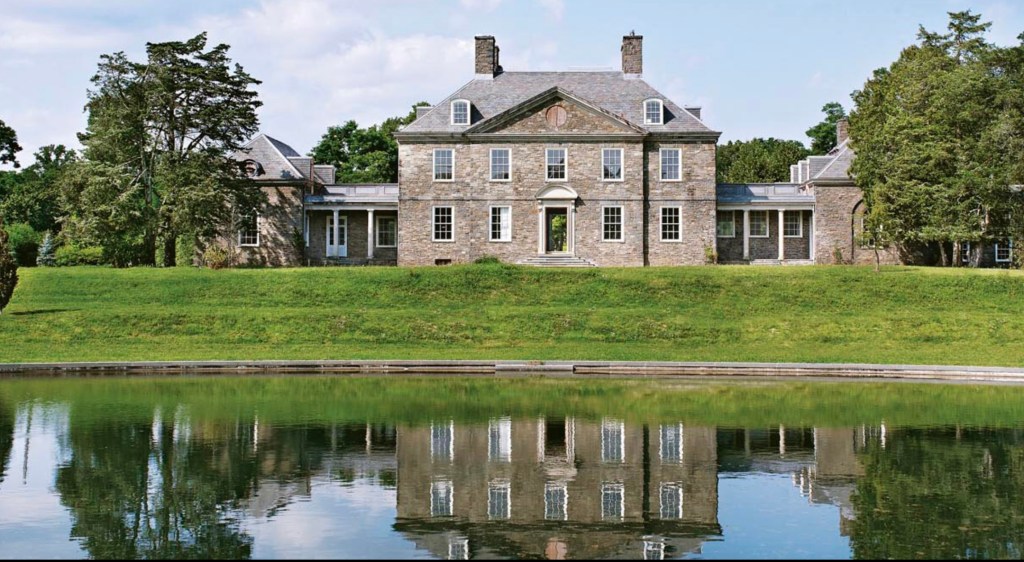
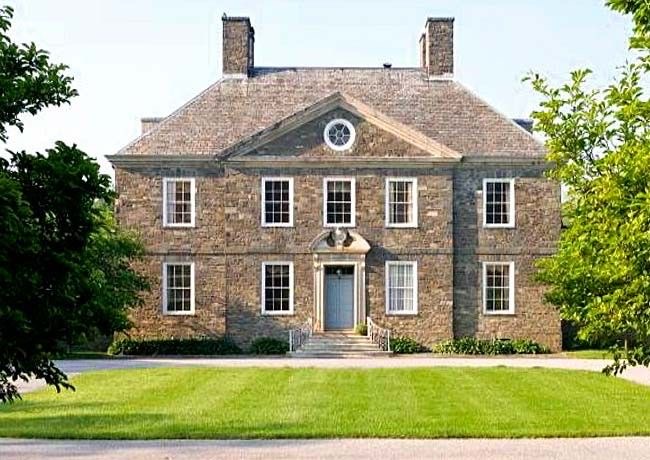
Verulam

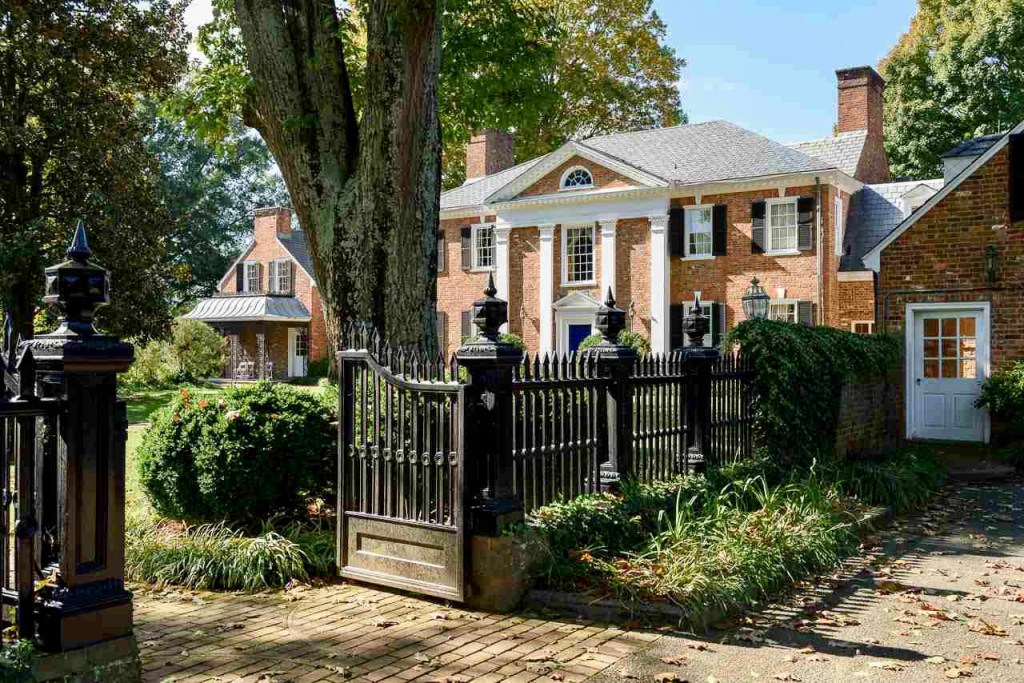
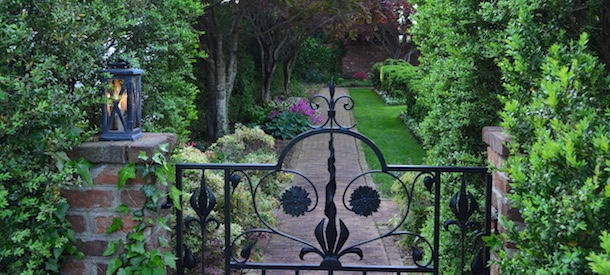
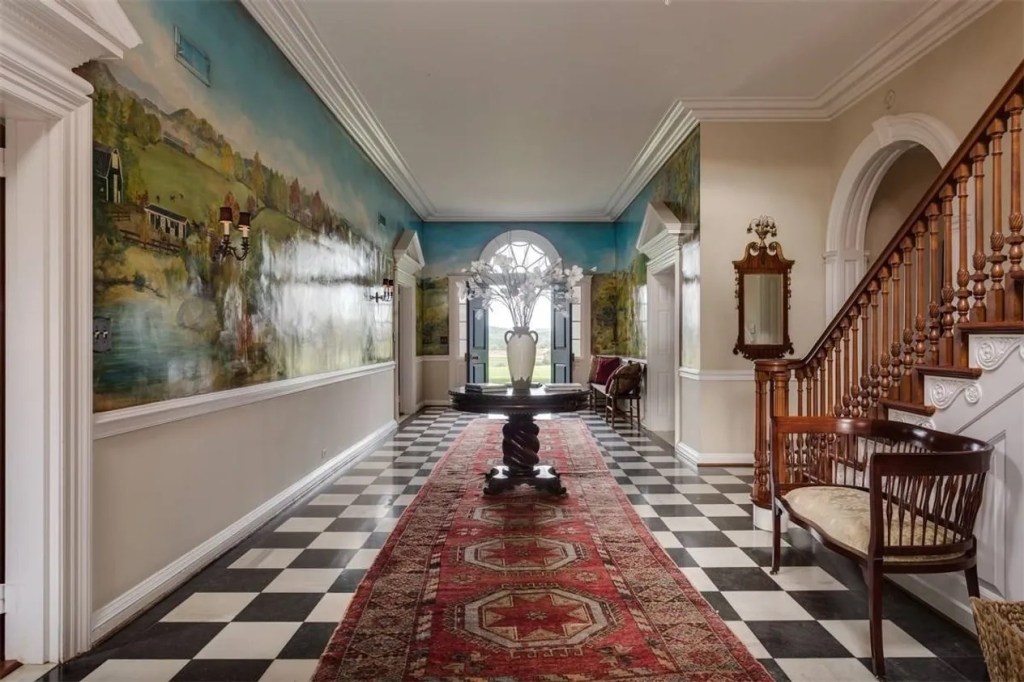
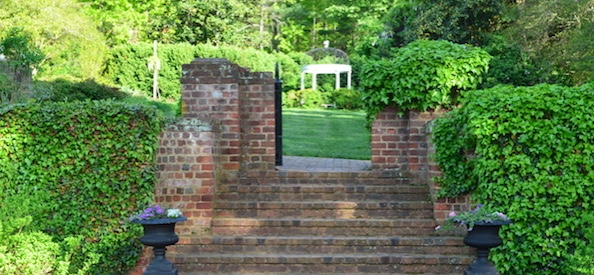
Verulam (VAIR-u-lem) is a 12,000 square foot Georgian-revival manor house sited on a 500 acre estate of the same name a few miles west of Charlottesville, Virginia. The house was the creation of New York attorney Courtland Van Clief and his wife, Eleanor. Courtland descended from Virginia horse country gentry and Eleanor’s family was involved in the lumber business in Waco, Texas. The Van Cliefs retained the Virginia-based architect Marshall Wells and landscape designer Charles Gillette to design the house and grounds. Mr. Gillette was particularly renown for developing a formal style of garden that well-suited and accentuated the Georgian, colonial and neo-classical homes dotted around Virginia. Other examples of his work can be found at Lochiel (also covered in this blog here) and Tiverton (click here). Verulam was completed in 1946 and the Van Cliefs lived here and raised thoroughbred horses until 1962 when Courtland passed away.

Courtland and Eleanor made national headlines during their 1929 wedding in Buffalo, New York when nine armed robbers crashed a pre-wedding dinner at gunpoint and stole everyone’s jewelry and cash making off with $400,000 in loot. In news reports of the time the wedding guests chalked up the robbery to “dope fiends” which just shows that things haven’t changed much since the 1920s. The Van Cliefs were no strangers to nice houses. Courtland’s brother, Ray, bought and renovated the Rosecliff mansion in Newport, Rhode Island but was killed in an auto accident on his way to have dinner and spend his first night at the newly refurbished mansion.

The next proprietors of Verulam were John and Jane “Kitchie” Ewald. John and Kitchie met while they were both working for the Virginia Youth for Eisenhower in 1952. John was well schooled at Phillips Exeter Academy, Yale University and the University of Virginia Law School. Kitchie also attended law school at Georgetown University. The two legal eagles bought the estate in 1969 and, like the Van Cliefs, the Ewalds raised thoroughbred horses at Verulam and were well regarded in the Charlottesville community for their Christmas and children’s parties. During this time, Interstate 64 was completed through this section of Albemarle County effectively splitting up the Verulam estate and reducing its size from 1,700 acres to the present 500. Unfortunately, I-64 now drones away less than a quarter mile from Verulam.

John Ewald passed away in 1979 and Kitchie remarried in 1982 and then sold Verulam in 1986 to Peter Nielsen. Mr. Nielsen was a part-time resident and gentleman farmer who was in the software business. He, in turn, sold Verulam in 2002 to Melton McGuire and his wife, Heather. The McGuires were in the microbrewery business in Alexandria and raised Friesian horses at Verulam, worked at restoring the gardens and developed a party barn on the property to host weddings and other events. At some point, the McGuires split up but Melton stayed on a Verulam until 2021 when he tragically passed away at age 57. Verulam was then on the market for a few years finally selling for $6 million in February 2024 to a local attorney. The listing can still be viewed here. An upbeat YouTube video showing scenes from Verulam can be viewed here.

Footnote: The ring leader of the wedding party armed robbery was a Canadian named George Duke. Rather than a “dope fiend,” Mr. Duke was just a common criminal on the run from Canadian authorities. Mr. Duke and the rest of the robbers were caught and Duke spent 12 years in prison and was then deported back to Canada. Apparently scared straight, he found work as a lawnmower salesman, got married and eventually built up a major lawn mower distribution company in Ontario and grew wealthy enough to build a lakefront house near Toronto. Alas, the temptations of easy money, booze, guns and whoring were too strong to resist and Duke was eventually involved in the infamous heroin smuggling operation known as the French Connection that was later the subject of an Oscar-winning movie starring Gene Hackman.

Marienruh

This beautiful Palladian/Georgian-revival house is known as Marienruh (MARY-en-roo).  It is sited on a 100 acre estate north of the  bucolic village of Rhinebeck, NY overlooking the Hudson River.  It was designed by the gilded age architect Mott Schmidt and completed in 1926. The house was a wedding present from Vincent Astor to his sister, Ava Alice Muriel Astor (who went by Alice), and her new husband, Prince Serge Obolensky. Alice was the great great granddaughter of John Jacob Astor. Astor was the first American multi-millionaire (tens of billions in today’s money) who grew rich in the early 19th century fur trade, with his agents often trading liquor to the natives for furs. Blessed with amazing foresight, Astor plowed his fur profits into Manhattan real estate (mostly woods and farms back then) and became even wealthier as these lots were converted into tenements housing the immigrants that flooded into New York City during the 19th century. On his deathbed, Astor’s only regret was that he hadn’t bought up even more of Manhattan Island. His descendants were prominent members of New York City society during the 19th and 20th century. In the early 1890s, as a result of a feud between two of the female Astors over who was more important socially, a branch of the Astor family decamped to England and has been turning out aristocrats and prominent politicians in the UK ever since. The American branch of the Astor family, in contrast, has faded into relative (but comfortable) obscurity.

Marienruh was on the grounds of the larger Astor estate, called Ferncliff Farm, that was established by Alice’s grandfather in the 1850s. In the 19th century, Astor estates and homes sprawled along the left bank of the Hudson between Rhinebeck and Barrytown (where they transitioned to the Livingston family estates that went even further north – click here for more on the Livingston estates). One such Astor estate, Rokeby, is still owned by Astor descendants.

At one time, Ferncliff was 2,800 acres but after the death of Alice’s brother, Vincent Astor, the estate was parceled out with a portion becoming a forest preserve, another portion becoming a nursing home and other portions converted to private residences. Chelsea Clinton was married at Astor Courts, a one-time sports pavilion on the estate. Another portion of the former Ferncliff estate is the home of famous photographer Annie Leibovitz.

Alice Astor, age 14

Alice Astor’s father was John Jacob Astor IV, who perished with the Titanic in April 1912. Initially, he was unperturbed about the ship striking an iceberg and was last seen having a smoke on the starboard side, a half hour before the ship disappeared beneath the waves. Afterwards, Alice was raised in England by her mother. Alice was a bit of an eccentric and claimed that she was the reincarnation of an ancient Egyptian princess. To bolster her claim, she often wore a necklace that had been among the treasures found in the tomb of Pharaoh Tutankhamun.

194
The Ferncliff mansion on the estate of the same name established by Alice Astor’s grandfather, William Backhouse Astor Jr. Demolished in the 1940s.

Alice’s husband, Prince Serge Obolensky, wasn’t a real prince of the Romanov dynasty that ruled Russia for three centuries although he was descended from another princely dynasty that preceded the Romanovs. Instead, he was married for a few years to an illegitimate daughter of Tsar Alexander II, Princess Catherine Alexandrovna Yurievskaya, before his marriage to Alice. A raconteur and bon vivant of the first order, Prince Serge was tall, handsome, smart, charming and a good dancer.

Prince Serge and Alice met at a costume ball in London where he was working as a stockbroker. Initially, Alice’s mother objected to her marrying what she considered to be a penniless, exiled Russian prince but Alice soon turned 21 and married him anyway. She and Prince Serge had three weddings in England: an Anglican ceremony, a civil ceremony, and a third in a Russian Orthodox cathedral. After honeymooning in France they began their married life of yachting, posh hotels and first class travel.

Prince Serge Obolensky and Alice Astor (1932)

Apparently, Prince Serge’s charm and dancing skills failed to keep the spark alive and he and Alice divorced in 1932 after just eight years of marriage (seven if you subtract the extra-marital affairs – on both sides). After the divorce, Alice kept Marienruh and she remarried three times: 1) an Austrian writer, 2) an English writer, and 3) an English architect. She died single in 1956 at age 54 from a stroke. She was a patron of the arts during her life and was a big supporter of the New York City Ballet company.

Although Prince Serge’s history with Marienruh was brief, his post-divorce life merits a mention. He volunteered for service in World War II and was part of the Office of Strategic Services (OSS), the forerunner of the CIA. In that role, he parachuted into Sardinia and France on missions at the age of 54. Postwar, he had a long and successful career in the New York hotel business and was a high-class lounge lizard in Manhattan, squiring around and dancing with the likes of Jackie Onassis and actress Joan Fontaine. Legend has it that he invented everyone’s favorite hangover cure, the bloody mary. He passed away in 1978 while wearing black tie, holding a martini and chatting up the nurses (I’m guessing).

After Alice Astor’s death, Marienruh was sold and used variously as a church camp, a home for unwed mothers, a drug rehab center and an event center.  The home, by then in very poor condition, was purchased in 2006 for $7 million by a writer and Columbia University professor.  The new owner has been restoring Marienruh to its former glory ever since. Marienruh serves as a private home and is not open to the public however another country estate covered in this blog is just a few miles south in Hyde Park. Frederick Vanderbilt’s Hyde Park estate (click here) is open to the public as is Springwood, the nearby home of FDR.

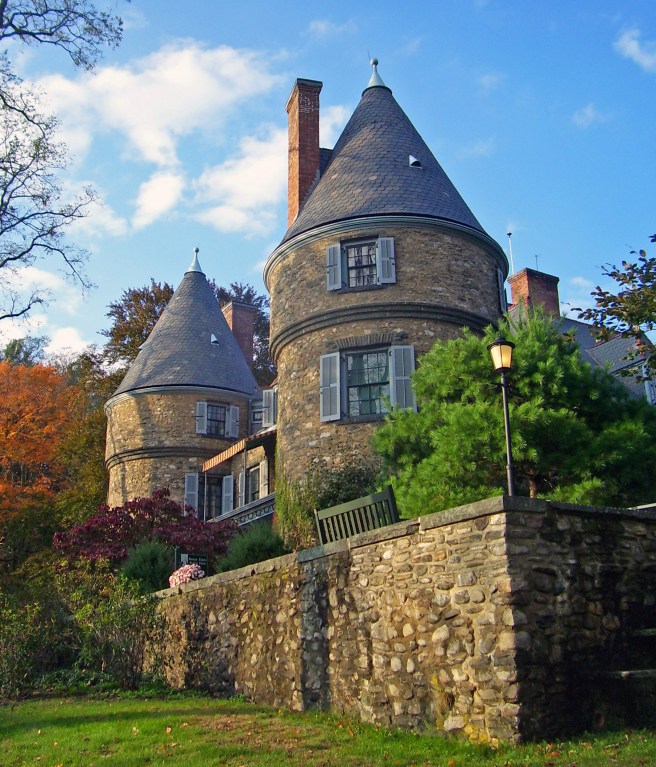
Grey Towers

This French Norman-style house is Grey Towers.  It sits on a 102 acre estate outside Milford, Pennsylvania.  It was built in 1886 by James Pinchot, a successful New York City wallpaper merchant and his wife, Mary. James grew up in Milford and moved back after retiring from business to raise his family.  The house was designed by Richard Morris Hunt (who designed many gilded age mansions such as Biltmore) and the grounds included contributions by Frederick Law Olmsted, the most influential American landscape architect of the 19th century.  

The Pinchots lived at Grey Towers for many years before James passed away in 1908 followed by Mary in 1914. The Grey Towers estate was split between their sons, Amos and Gifford with the latter taking the house. Gifford was a graduate of Yale University with a degree in forestry and also studied forestry in France. His first job after returning from France was managing the forests on the Biltmore Estate, the North Carolina home of George Washington Vanderbilt. He attracted the attention of Presidents William McKinley and Theodore Roosevelt who appointed him as the first head of the U.S. Forest Service. In this role, Pinchot was a staunch conservation advocate and fought against the industrial forestry practices that characterized the Forest Service during most of the 20th century.

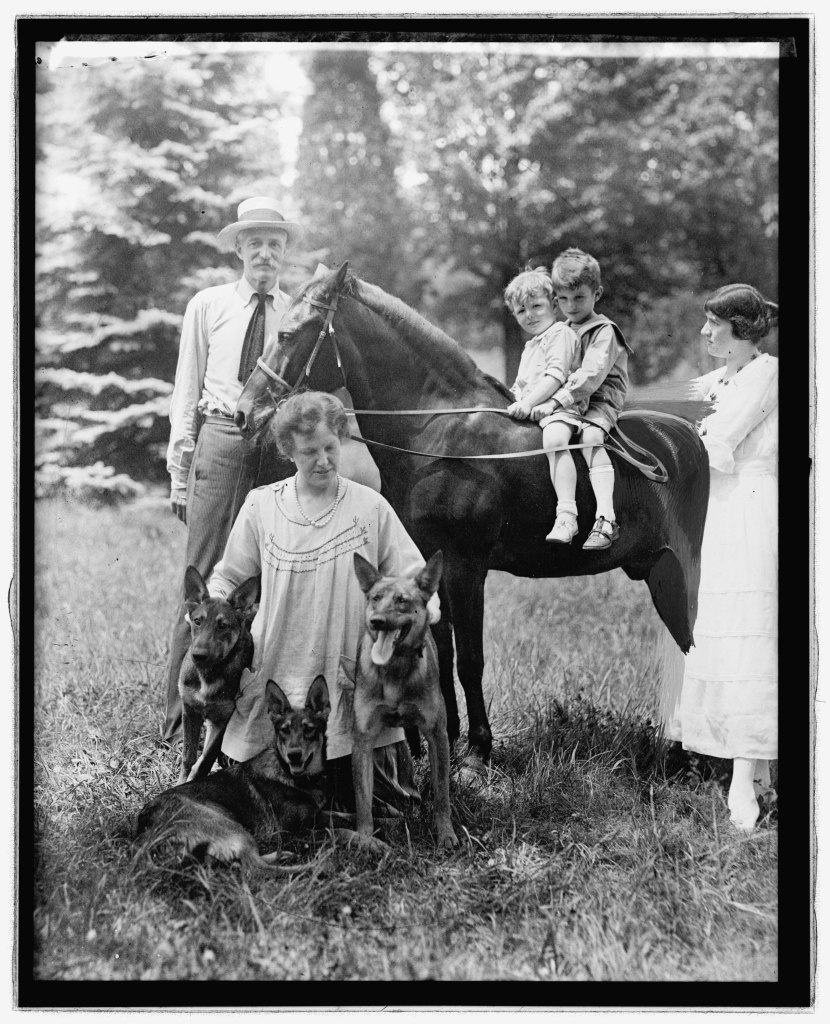
The Pinchots at Grey Towers, 1921

After leaving the Forest Service in 1910, Gifford served as Governor of Pennsylvania for two terms. Cornelia was active in the women’s suffrage movement and was a major donor to the NAACP. She was a close friend of Teddy Roosevelt and shared his passion for progressive causes. She also tried her hand at politics but was unsuccessful in runs for Congress and the Pennsylvania Governorship. The Pinchot family used Grey Towers mostly as a summer home. Gifford passed away in 1946 followed by Cornelia in 1960. Their son, Gifford Jr., donated Grey Towers to the U.S. Forest Service as a house museum and a conference/educational center focusing on conservation. Grey Towers is the only non-forest asset managed by the Forest Service. The house and gardens are open to the public on a daily basis. Click here for more info on Grey Towers or here for a YouTube video showing scenes from Grey Towers.

Gifford Pinchot’s legacy of forest stewardship lives on today. The Gifford Pinchot National Forest in Washington State is named after him along with several other natural and geographic features around the U.S. The Giffords son, Gifford Jr., helped found the Natural Resources Defense Council (NRDC), one of the preeminent environmental legal advocacy organizations in the U.S. today.

High Lawn

The Vanderbilt family is famous for incalculable wealth, gilded age mansions, blue jeans and Anderson Cooper. Many fans of gilded age mansions know about those that were built by members of the Vanderbilt clan such as the Biltmore Estate in North Carolina, The Breakers in Newport, RI or Hyde Park in New York (click here for more on Hyde Park). Most people assume that the Vanderbilt mansions have long since been converted into museums and that the Vanderbilt descendants now live like the rest of us mere mortals. Although some Vanderbilt descendants have done well in business, the arts or academia or are minor members of the English aristocracy others lead decidedly middle class lives.

The Vanderbilt fortune that was built up in the 19th century through astute investments in steamships and railroads has been so diluted through inheritance and multiple divorces or squandered on fine living throughout the decades that most contemporary Vanderbilts are merely comfortable, not filthy rich. By way of example, one of the bigger chunks of contemporary Vanderbilt money is in the hands of someone with no Vanderbilt blood at all (and potentially has never even met a Vanderbilt). A certain John Hendrickson had been working as a government official in Alaska and living in a two-bedroom condo in Anchorage when he met and married former actress and horse breeder Marylou Whitney. Marylou, in turn, had previously been the fourth and final wife of Cornelius Vanderbilt Whitney and inherited $100 million when C.V. died in 1992. When Marylou (who was 40 years older than John) died in 2019, the former Alaska government employee inherited her fortune.

Due to these sorts of twists and turns, contemporary Vanderbilts mostly live in nice, but unremarkable homes. But there are a few exceptions. One truly notable exception is the home of James Spencer-Churchill, the 12th Duke of Marlborough and great grandson of the famously reluctant bride, Consuelo Vanderbilt. The Duke owns (and sometimes even lives in) England’s Blenheim Palace, which is almost twice as large, and also twice as nice, as the Biltmore Estate. For more on Biltmore, click here. On this side of the Atlantic sits a more down-to-earth exception known as High Lawn, nestled in the Berkshire Mountains near Lee, Massachusetts.

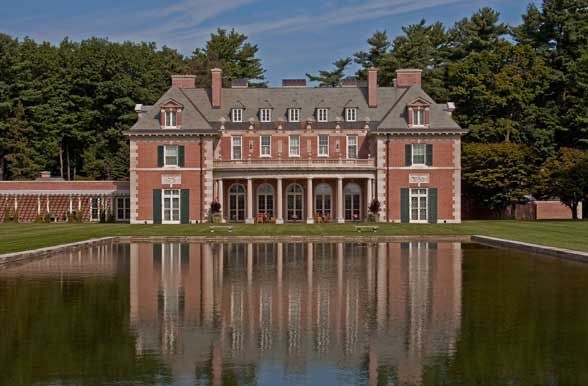
High Lawn was designed by the New York architectural firm of Delano and Aldrich and completed in 1910. It is 25,000 square feet and sits on a 1,600 acre estate. The house was a wedding present for Lila Vanderbilt Sloan, a great grand daughter of Cornelius Vanderbilt. The bas-relief sculptures above the French doors in each bay of the facade were created by Lila’s cousin, Gertrude Vanderbilt Whitney. Along with the pleasing proportions, red brick, dormers and the limestone quoins, High Lawn is a striking example of Georgian revival house design. I only have one quibble: would it have killed the architect or the builder to match the chimneys visible from the front?

Cornelius Vanderbilt was known as “The Commodore” and at one time was the richest person in the United States. Cornelius started off with a single sail boat ferrying passengers between Staten Island and Manhattan, built a fleet of steamships and eventually ended up with a railroad empire with the New York Central Railroad as the centerpiece. Known to his contemporaries as crude, brutal and vulgar and barely literate, Cornelius nevertheless was a brilliant business innovator and built up a fortune that would be worth $200 billion in today’s dollars, on par with Jeff Bezos or Bill Gates. BTW, in fairness to old Corny, most of his competitors back in the day were also crude, brutal and vulgar.

Lila and her husband, William Osgood Field, used High Lawn as a vacation home and upon Lila’s death in 1934, the estate was purchased by her daughter, Marjorie Field. Marjorie and her husband, H. George Wilde, developed a dairy farm business on the property, High Lawn Farm, that has become internationally renown for breeding high quality jersey cows. The farm is still in operation to this day and can be visited by the public although High Lawn House is still a private home and not open to the public nor is the house visible from the dairy or any public road. If you do visit the dairy, stop by the store and try their purple cow milk shake.

Marjorie passed away in 1997 and the estate and farm came under the control of her son, George William “Bill” Wilde, a great great great grandchild of The Commodore. Bill, who passed away in 2013, was a graduate of Princeton and the Harvard Business School, served in the U.S. Marine Corps and was an investor in addition to being in the dairy business. Presumably, High Lawn is now controlled by his widow and heirs.

High Lawn lives on as one of the few (and probably the only) “Vanderbilt mansion” that is still lived in by a Vanderbilt, going on 115 years of continuous family ownership (140 years if you count just ownership of the land).

Just one mile north of High Lawn is another beautiful country house, The Mount, which is covered in this blog (click here for more).

Blenheim Palace in England, a “Vanderbilt Mansion” that predates the Vanderbilts by 150 years and at 301,000 square feet is almost twice as large as Biltmore. The owner is the 12th Duke of Marlborough and the great great great great grandson of the Commodore, Cornelius Vanderbilt. Hold my beer, Biltmore.
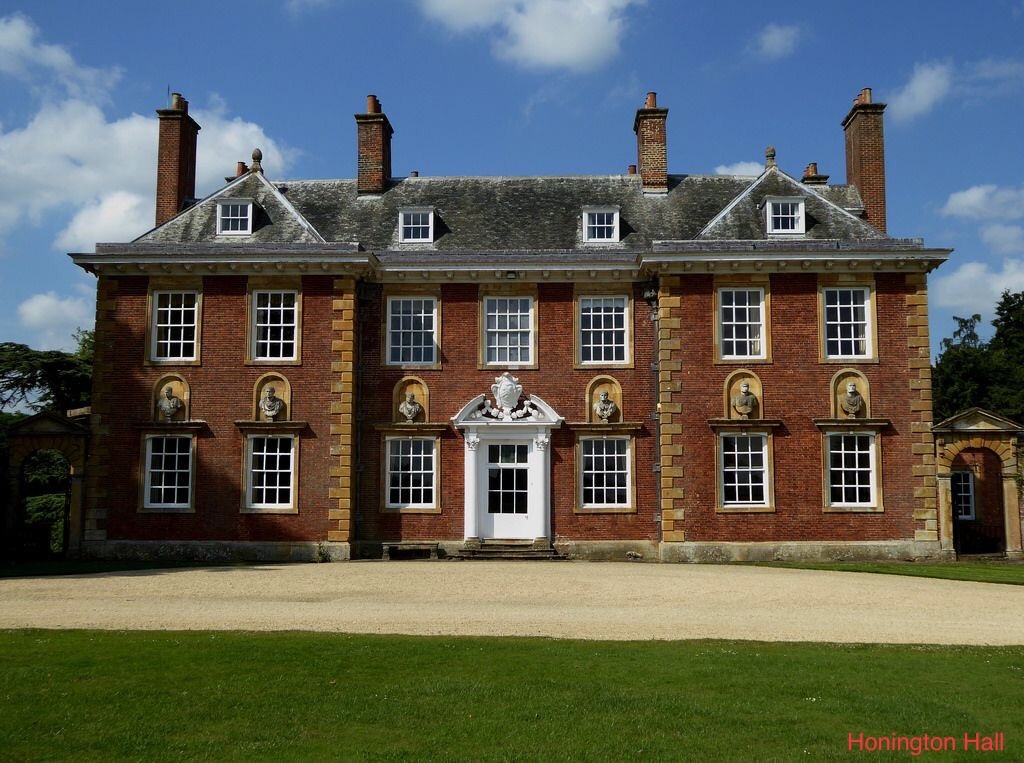
English perfection in Honington Hall in Warwickshire built in the 17th century. Could this house be the inspiration for High Lawn?