Biltmore – Disneyland for Adults

No one builds 179,000 square foot houses anymore unless you live in the Persian Gulf and your job title is Sheik. But between the 16th century and 1914 hundreds were built, mostly in Western Europe. So what changed? The outbreak of World War One put a severe crimp on the finances of European aristocrats and the labor demands of industry made it increasingly difficult to retain the servants, house maids and gardeners necessary to maintain large homes on remote rural estates. When the soldiers came home after the war they were a lot more ambivalent about working for a social class that they blamed for starting the carnage. In the United States, there was never such a surplus of labor that made it feasible to staff a gigantic house. Being a household servant in the U.S. was also never considered a respectable vocation like it was in Europe and American gilded age plutocrats would often complain about the turnover and bad attitudes of their household staffs. The Great Depression brought any pretenses to being the lord of a great castle to a crashing halt. Even today with rampant income inequality in the U.S. and twelve digit tech fortunes hardly anyone builds houses such as were built during the so-called gilded age. Those that try usually end up with a giant fiasco rather than a gorgeous house. The Biltmore Estate in Asheville, North Carolina is famous for the very reason that there is nothing else like it in the U.S. It was finished in 1895 and nothing else like it has been built since. But even in the heyday of huge houses and chateaux, owners struggled to cover the expenses and keep these properties afloat. The financial pressures are even worse today with property taxes, estate taxes and income taxes. So how do homes like Biltmore and similar properties in Europe stay afloat?

The story of Biltmore is well documented but here is a brief recap. It was the creation of George Washington Vanderbilt, a grandchild of Cornelius Vanderbilt, the 19th century railroad and steamship baron who started off with a single sailboat in Staten Island, New York and ended up with the largest fortune in the U.S. at the time, about $200 billion in today’s money. Illiterate, crass and profane, Vanderbilt was nevertheless a financial genius. He left most of his fortune to his eldest son, William Henry Vanderbilt, who doubled the value of his inheritance during his life. William Henry and his wife Maria had eight children and when William passed away in 1885 these kids took their inheritances and cut loose on houses, yachts and parties becoming the poster children of gilded age excess that is portrayed in movies, books and television. The youngest of these eight kids was George. His elder brothers ran the railroads while young George indulged in books and art. George also suffered from respiratory difficulties and in the 1880s at the suggestion of his doctors George started visiting Asheville for the warm, dry air and then started buying up small farms south of town. Much of this land had been overworked and was in poor condition and George had a vision of creating a modern version of a European feudal estate where the locals would live in villages that he created and work on farms and artisanal workshops on the estate while their children were educated in schools he built. The house was modeled after the chateaux that George had seen along the Loire valley in France and was designed by Richard Morris Hunt. The grounds were designed by Frederick Law Olmsted, generally regarded as the pioneer of landscape architecture in the U.S. At 179,000 square feet, Biltmore is the largest house ever built in North America.

By 1895 the house was completed and three years later George married Edith Stuyvesant Dresser, a descendant of the Dutch colonial governor of New Netherland (which eventually became New York). People have often commented on the lack of feminine touches in the design and decor of Biltmore and that is because it was built by a bachelor. Edith didn’t arrive on the scene until it was already built. George and Edith had three other homes in NYC and Maine. If you’re ever in Manhattan visit the Versace store on Fifth Avenue and you’ll be standing in George and Edith’s former townhome. Unfortunately, George’s vision of a self-supporting manorial estate didn’t pan out and after he died in 1914 at age 51 after a botched appendectomy his widow was forced to start selling parts of the estate to pay for taxes and maintenance. Part of the former estate is now a portion of the Pisgah National Forest and other parcels eventually became absorbed by the expanding city. The house started welcoming visitors as early as 1930 to help pay the bills.
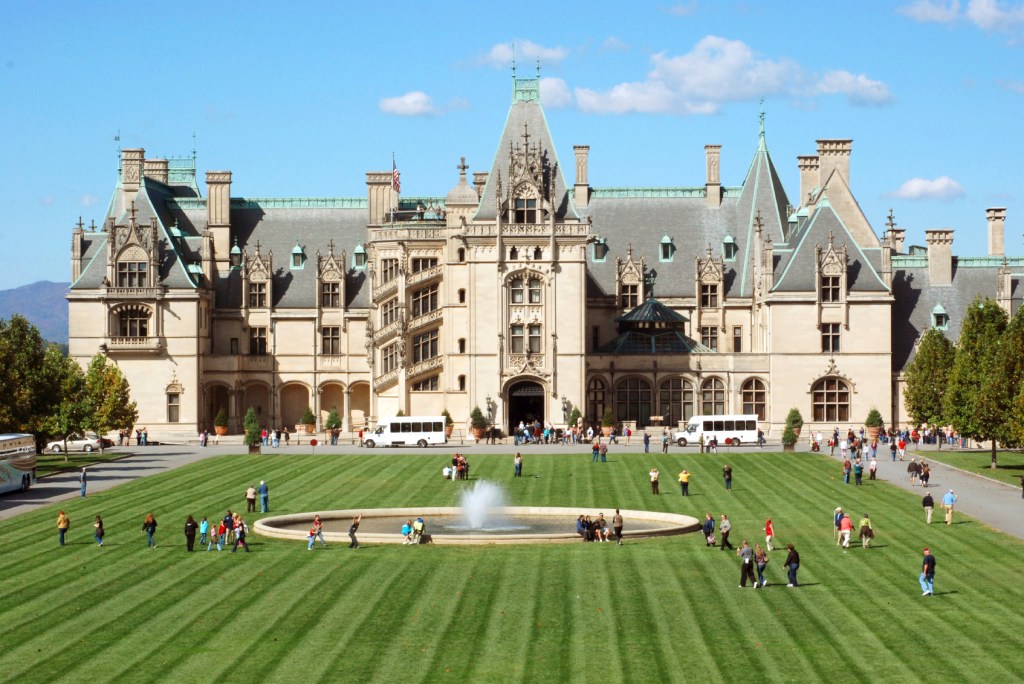
George and Edith had one child, Cornelia Stuyvesant Vanderbilt. Cornelia grew up at Biltmore and after coming into her inheritance she married John Francis Amherst Cecil, a descendant of William Cecil, chief advisor to Queen Elizabeth I. Cornelia and John lived at Biltmore for a few years but Cornelia grew bored and restless and moved to Paris in 1934, dyed her hair pink, changed her name to Nilcha and divorced John. She never returned to the U.S. and married two more times before passing away in 1976. John and Cornelia had two sons, William A.V. Cecil and George H.V. Cecil, and after Cornelia bolted for Paris John stayed on at Biltmore and raised the boys until they left for school in England and Switzerland. John never remarried, managed the estate and lived in the bachelor wing of Biltmore until his death in 1954. Between 1956 and 1976 Biltmore, still owned by the absent Cornelia, stood empty but welcomed paying visitors.
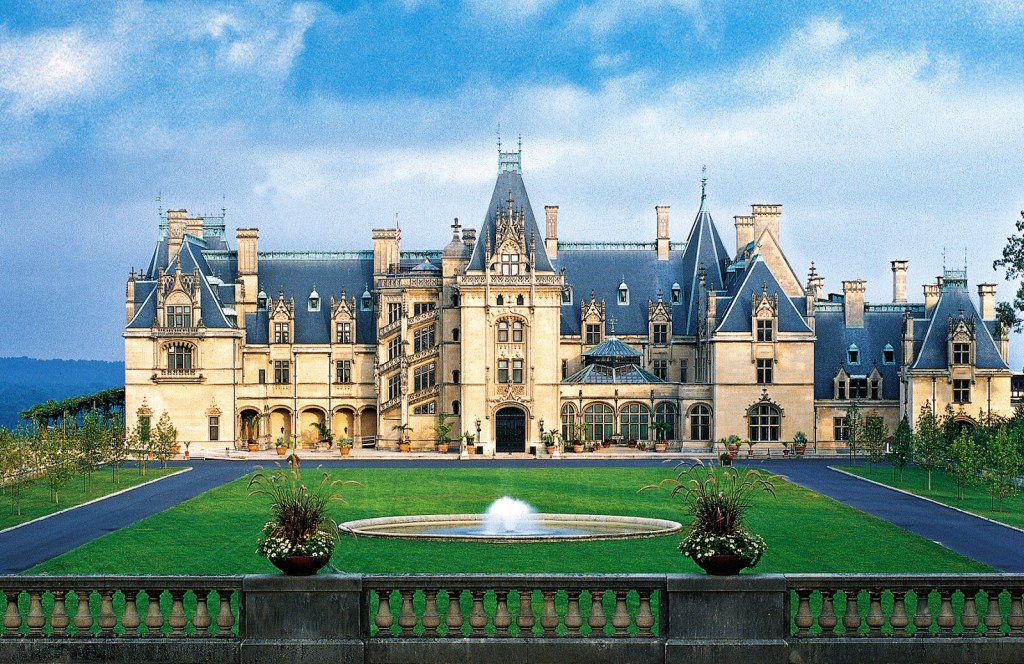
When Cornelia died in 1976 William and George Cecil inherited the estate which included the house and a dairy business, a remnant of the artisanal industries that George Vanderbilt had started 80 years before. By this time Biltmore was an enormous white elephant that bled money. George, as the elder brother, got to pick what he wanted to inherit and he picked the dairy which at least turned a modest profit. William got stuck with the money-losing house. William essentially had a choice. Try to make Biltmore pay for itself, see if the federal or state government would take it on as a national park or house museum (as happened with Hyde Park his great uncle’s home in New York), try and sell it or demolish it.

As with Biltmore and the Cecil brothers, owners of huge historic houses in Western Europe also faced severe financial difficulties in the postwar era. The ravages of war, taxes to pay for the war, houses requisitioned for military use and then beat up and postwar societal attitudes that frowned upon architectural excess left owners with mostly bad choices. Some owners sold off their ancestral houses and lands that in many cases had been in the family for centuries or donated their houses to non-profits like the National Trust in England or to the local community in France. In England, hundreds of historic homes were demolished in the postwar era although most of the truly unique and attractive houses survived. Even though many historic homes had welcomed visitors for centuries the postwar era saw the emergence of the stately home industry where owners began to aggressively promote their properties as tourist attractions. Aristocratic landowners accustomed to the privacy that a large estate afforded became aggressive marketers and entrepreneurs opening up restaurants, gift shops, wedding chapels and the like. Today when you visit a historic home like Blenheim Palace or Chatsworth in England you will be rubbing shoulders with hundreds of visitors, wedding guests or business people hosting an event. Even with all this extra income the business of running a big historic house is typically little better than a break-even endeavor. But at least it keeps the house in the family and owners get to enjoy it during the off hours.

The Cecil brothers followed this model at Biltmore. George sold the dairy business and opened a winery and tasting room and parceled out much of the Biltmore agricultural land for residential and commercial development, hotels and shopping centers. Other parts of the estate have been developed for a wide range of tourism related uses. There is a mountain biking center, an equestrian center, a fitness center, a spa, several restaurants, a wedding venue, meeting facilities, banquet facilities, two hotels, a wide variety of retail shops, a nursery center, a shooting range, hiking trails, even a falconry center. And lest we forget there is also the Biltmore mansion that is open for tours starting at $70 per person and running as high as $130 per person at Christmas time when the house is decorated for the holidays. There are attractions for children as well but Biltmore has really become what some jokesters have dubbed “Disneyland for Adults.” Biltmore has become a major economic engine of Asheville and the major tourist attraction of western North Carolina. In the stately house industry Biltmore has become a model for not just financial sustainability but also a lucrative business for the Vanderbilt-Cecils, something that the original builder could never have imagined and wasn’t able to achieve. The chart below shows annual attendance figures for Biltmore and some of its peers in the stately and historic house industry. As shown, Biltmore is near the top of the table.
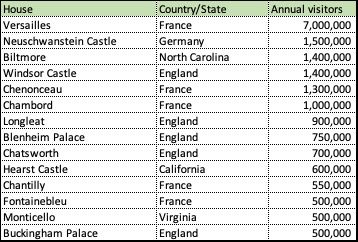
Note: if you include all castles then sleeping beauty’s castle at Disneyland has them all beat with 17 million annual visitors.

Of the fourteen houses in the table above, five are still used as homes today at least part of the year. Biltmore isn’t one of them. It hasn’t been lived in for nearly 70 years. Both of the Cecil brothers passed away by 2020 and the two businesses, Biltmore Company (which runs the house and most of the tourist attractions) and Biltmore Farms (the winery and property development arm), are now run by their children who live in smaller, more modern and manageable homes. While purists might decry the commercialism of Biltmore or similar properties in Western Europe it must be remembered that few of these houses were ever able to pay for themselves even at their peak in the 17th and 18th centuries. Their finances were pressured by factors beyond their owners control such as declining agricultural prices, wars, depressions, confiscation by communist regimes, death and taxes. Tourism has saved most historic houses especially the truly big ones like Biltmore or Blenheim Palace in England. Income from tourism pays for the upkeep and most of these houses have never looked better. Biltmore is just the extreme example of this trend and arguably the most successful.
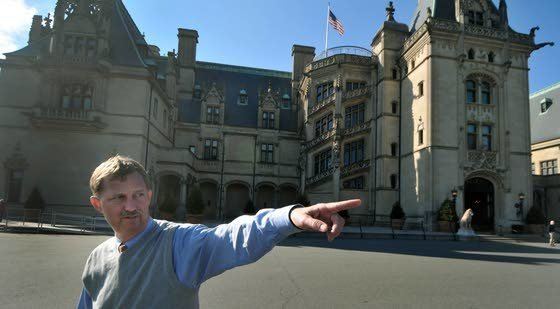
Bill Cecil, great grandson of the builder of Biltmore and current owner

For more on Vanderbilt houses be sure to click here for a post about Hyde Park, the creation of George Vanderbilt’s brother, Frederick, in New York as well as information on the mansion building binge of that generation of Vanderbilts. Or click here for a post about the stunning High Lawn house, uniquely the only gilded age Vanderbilt house that is still lived in by the family. For information about visiting Biltmore, click here. Double check your available credit card balance and have fun.

Chilton

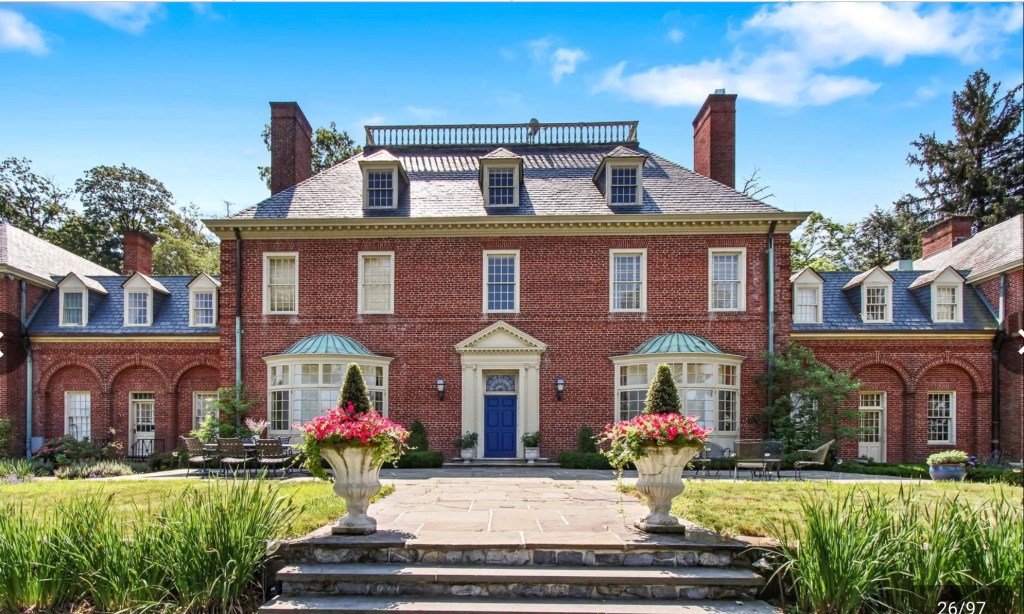
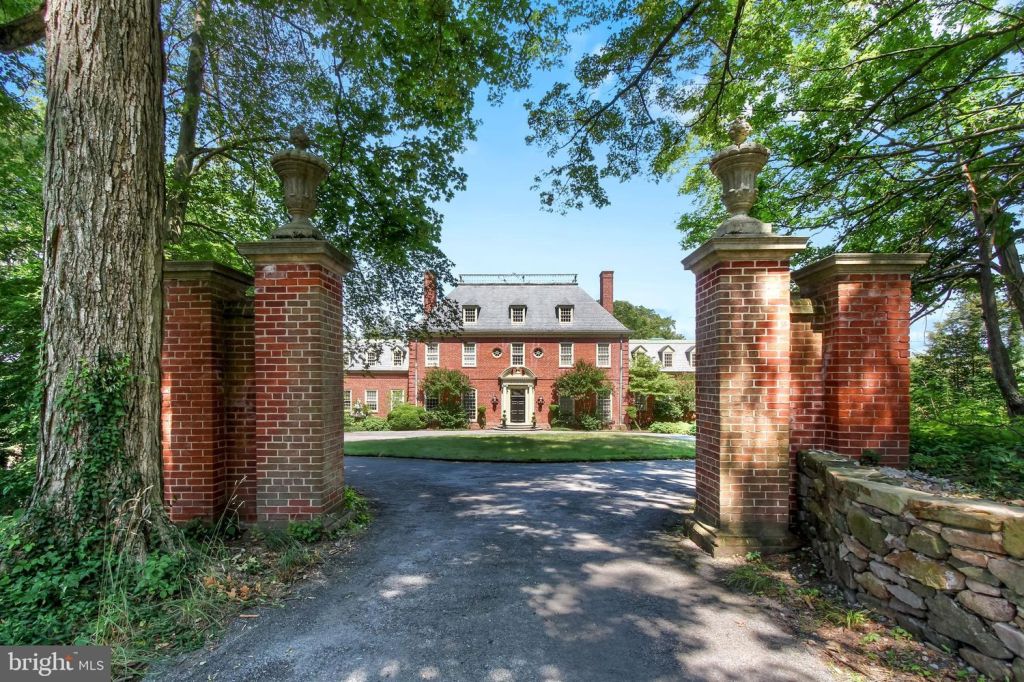
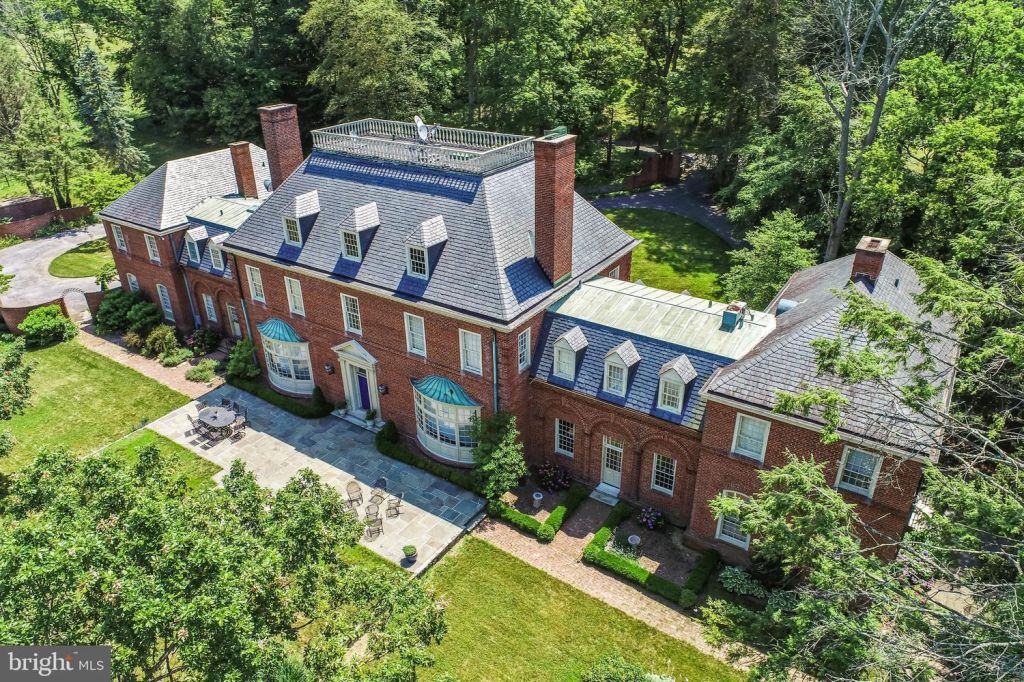
William Bottomley was one of the most accomplished American architects during the first half of the 20th century. His specialty was Georgian-revival homes and his work can be seen in many locations in the northeast but he is best known for the homes he designed in and around Richmond, Virginia. If you’re a fan of Georgian architecture and are in the Richmond area be sure to drive up and down Monument Avenue or in the Windsor Farms neighborhood west of town for an immersive experience in Georgian home design.

Just outside of Harrisburg, Pennsylvania is another Bottomley home dating from 1929 called Chilton. Chilton is 12,500 square feet and sits on a 104 acre estate. Until 2021 it was owned by Robert and Susan Mumma who were in the commercial real estate business. In 1990 they decided that Chilton would make a great golf course development with an 18-hole golf course and 350 homes and proposed this notion to Monaghan Township. The Township burghers disagreed so the Mummas attempted to create a separate borough (a type of municipality in Pennsylvania) out of their property and develop their project anyway. The trial court gave its stamp of approval but the Township appealed and the appellate court decided that a borough composed only of the three adults that were living on the 492 acres comprising Chilton at the time wasn’t viable. Eventually the Mummas threw in the towel and the property was sold in 2021.

One of several William Bottomley commissions in the Windsor Farms neighborhood of Richmond, VA.

Click here for a YouTube video showing Chilton when it was recently on the market. For more examples of William Bottomley’s work in this blog click here for Rose Hill or here for Halfway House, both country houses in Virginia.

Sherman CT home

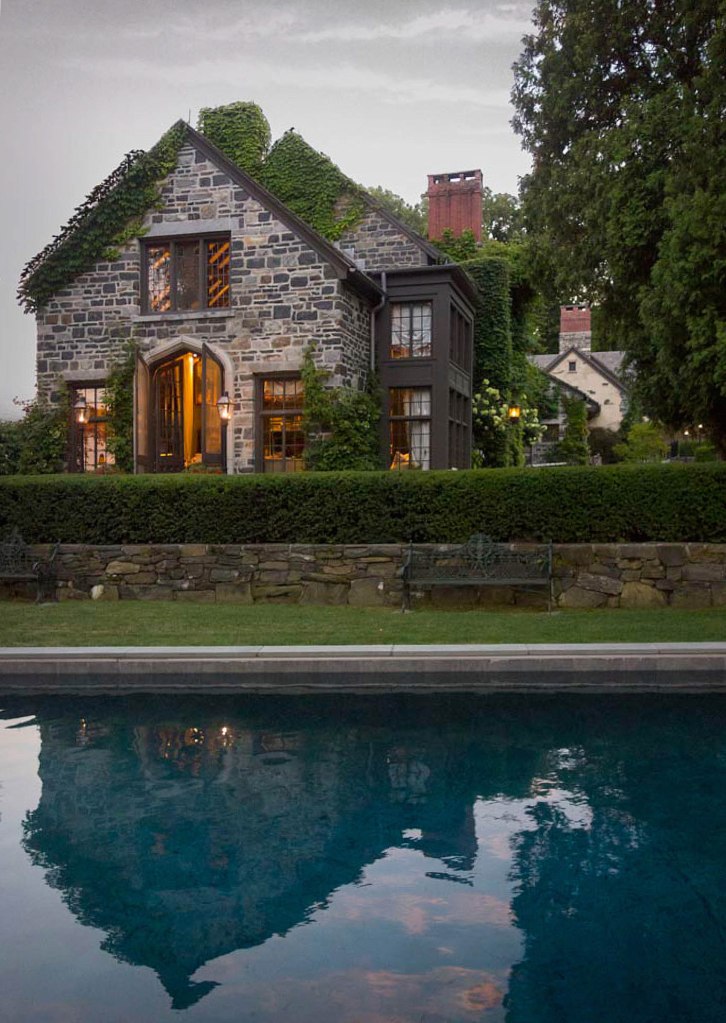
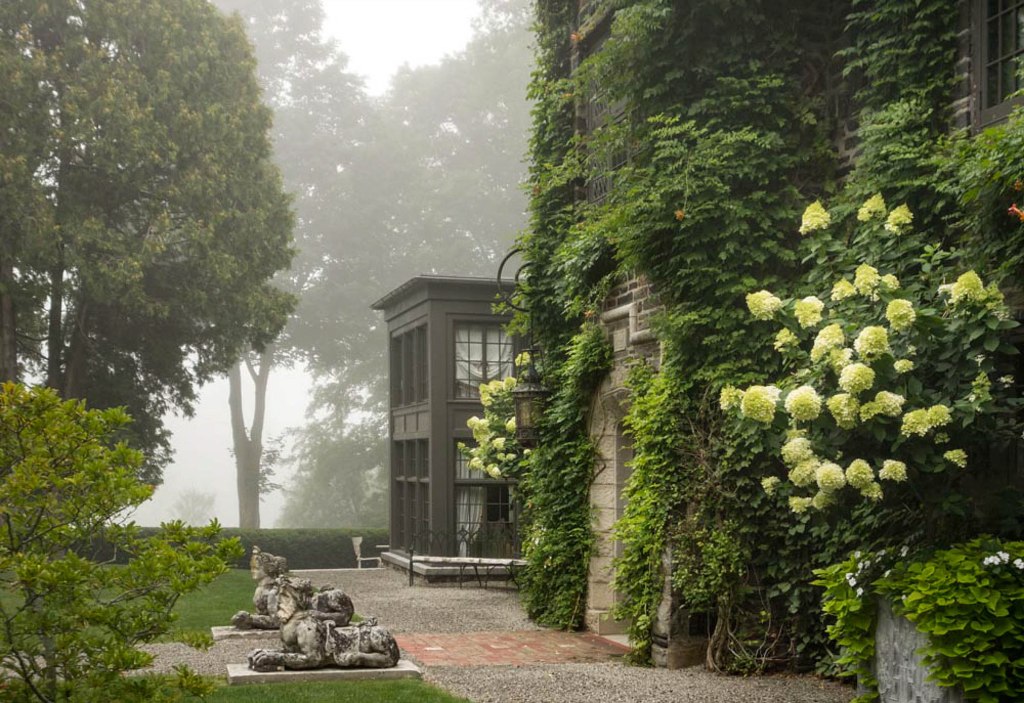
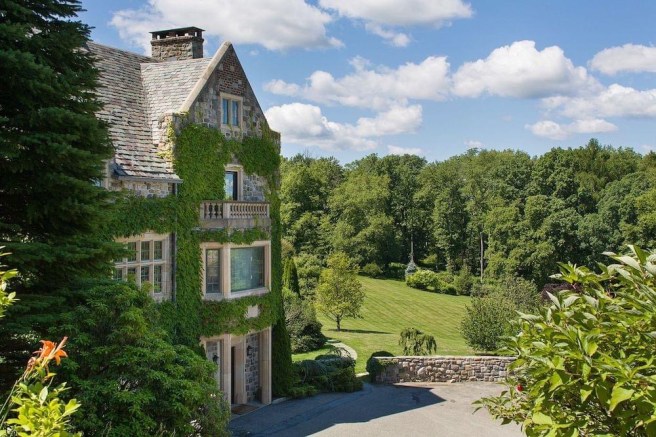
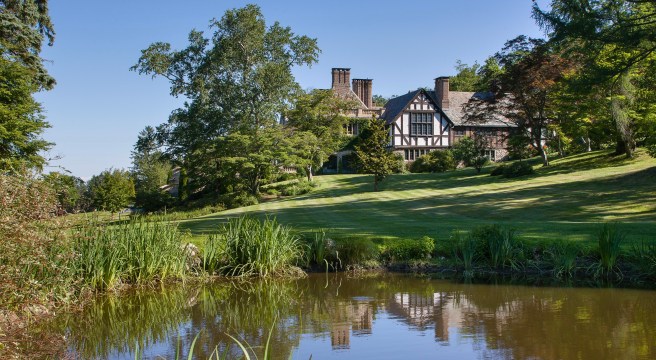
This gorgeous tudoresque home doesn’t have a cute name but sits on a 42 acre estate just outside Sherman, Connecticut. It was built in 1916 and extensively remodeled in 2018 by the architectural firm of Di Biase Filkoff. The owners raise prize-winning English Springer Spaniels at a nearby kennel. It is a private home and not open to the public although if you’re in a market for an expensive dog you can probably get close.

Migdale

This is Migdale Castle outside the bucolic village of Millbrook in Dutchess County, New York.  The 35,000 square foot Tudor revival home sits on a 350 acre estate that comprises a pond, orchards, kitchen garden and a separate gatehouse and guest house.  Bette Midler is a neighbor.  Dutchess County, along with adjacent Litchfield County, Connecticut and the Massachusetts Berkshires, is one of the rare desirable areas in the United States that has managed to avoid a lot of subdivision or development despite being within easy reach of a major city. The area is characterized by small, quaint towns with antique shops and farm-to-table restaurants, leafy estates and small farms and is favored by celebrities and business people from New York that want less noise, less pretension and more space than they could find in places like Greenwich or the Hamptons. Much of the land is encumbered by conservation easements that restrict development and guarantee a serene, green, leafy, artisanal future.

Migdale Castle was completed in 1927 by Margaret “Midge” Carnegie, the daughter and only child of Andrew Carnegie, and her husband, Roswell Miller, The name Migdale was a play on Margaret’s nickname. Andrew Carnegie was the founder of Carnegie Steel (later US Steel).  Mr. Carnegie was, by some reckonings, the sixth wealthiest person in history with a fortune worth $372 billion in 2014 dollars (right behind the communist icon Josef Stalin in 5th place).  However, most of his fortune was given away in his lifetime to endow libraries and universities and Margaret had to make do with $15 million.

Margaret “Midge” Carnegie and Roswell Miller

Margaret Carnegie served as a director for the Carnegie Corporation, a philanthropic trust set up by her father, that has been funding libraries and educational institutions for over a century. The Corporation’s best known invention is the beloved children’s television show, Sesame Street. Roswell was a civil engineer and real estate sales executive who, before marrying Margaret, had served on submarine chasers during the First World War. She and Roswell lived at Migdale with their four children until 1953. In that year, Midge and Roswell split up and Roswell got Migdale in the divorce. Midge moved to Greenwich, CT where she lived out her years passing away in 1990.  Roswell lived at Migdale for 30 years until his death in 1983.

After Roswell passed away, Migdale sat neglected until the year 2000. Enter French/American art dealer Guy Wildenstein and his wife, Kristina Hansson. Guy (pronounced Gee as in geese) and Kristina paid $5.3 million for Migdale and have since poured an additional $20 million into the property on renovations. Guy was a member of the Wildenstein family of art dealers that originated in France in the 1870s. The Wildensteins hold a private art collection containing priceless works from the likes of Van Gogh, Rembrandt and Monet that is reputedly the second most valuable private collection in the world (after the Queen’s Royal Collection which is supposedly worth $8 billion). [Fun fact about Guy Wildenstein: he once held the door open for me as I was going to get keys made at the hardware store in Millbrook.]

Much of the Wildenstein’s art is tucked away in secure “offshore” storage facilities in Switzerland away from the prying eyes of tax authorities. However, in 2001 the French Ministry of Economy and Finance decided to take a crack at it. Tipped off by Guy’s own stepmother, the Ministry accused Guy and his brother, Alec, of hiding artwork inherited from their father’s estate and evading $600 million in taxes. Guy and Alec were also accused of money laundering and were facing prison terms. After two trials that exposed Wildenstein family secrets that they didn’t want exposed (e.g., Bahamian trust accounts, a practice of disinheriting the wives of Wildensteins), Guy and Alec were acquitted of all charges in 2017. Not a ministry to give up easily, Economy and Finance got the French high court to annul the verdict and trial #3 will commence shortly.

Guy Wildenstein

Fresh from exoneration #2 in Paris, Guy and Kristina decided to unload Migdale and listed it for $14 million in 2018.  For several years it was under contract to a certain Will Guidara, a Manhattan restaurateur who gave up on city life after the COVID pandemic forced his restaurants to close. Mr. Guidara planned to create a boutique resort at Migdale (calling it Second Mountain) featuring gourmet food, spa treatments, etc. Unfortunately for Mr. Guidara, the local villagers in Millbrook didn’t take kindly to this intrusion on their tranquility. The usual claims of traffic impacts and lack of water, not to mention zoning inconsistency, were the barricades thrown up in front of Mr. Guidara.

March 2025 Update: Unable to secure permits to realize his vision for Migdale, Mr. Guidara threw in the towel and put the property up for auction. In May 2024, Migdale was sold for $9 million to the actor Liam Neeson.

If you want to see more of this lovely property, click here for a melodic YouTube video. The Wildensteins are an interesting family and you can learn more about their art business by clicking here or you can walk by their gallery at 689 Fifth Avenue in Manhattan. If you’ve got 40 or 50 million dollars to invest in art they will even let you in (visits are by appointment only).

The Mount

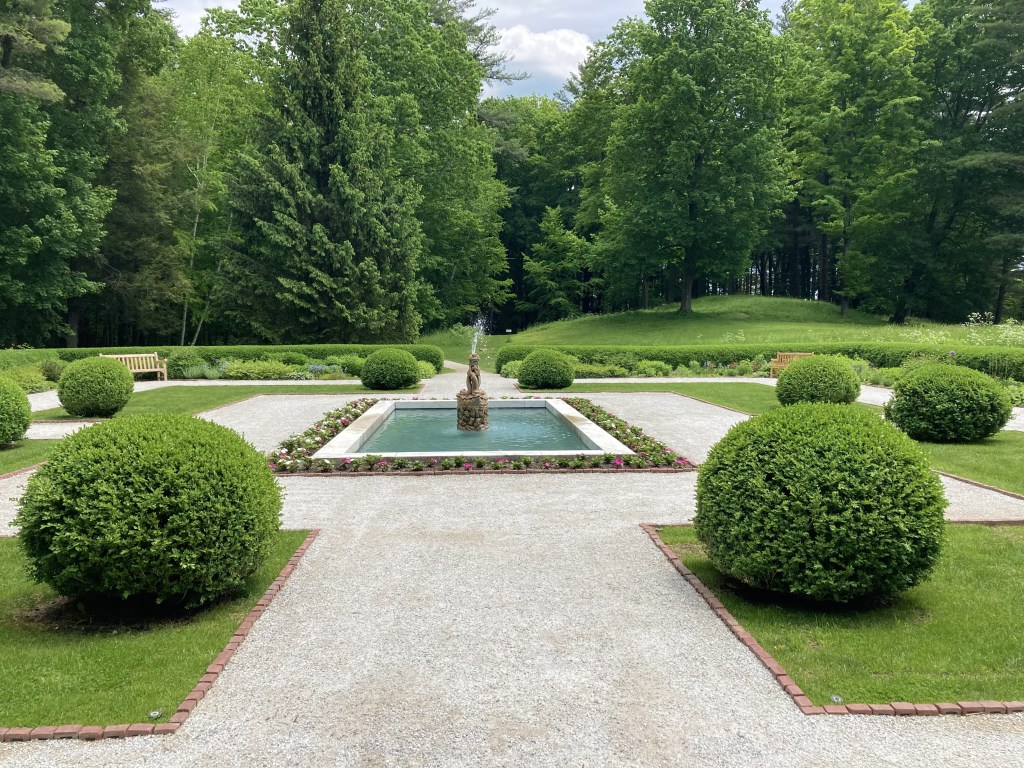
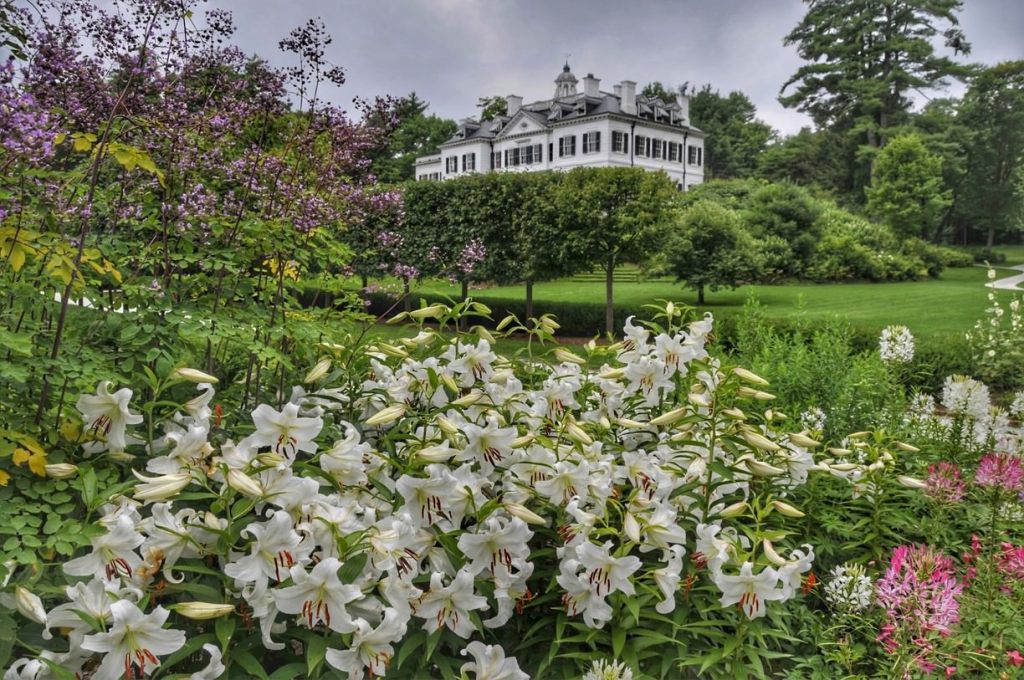
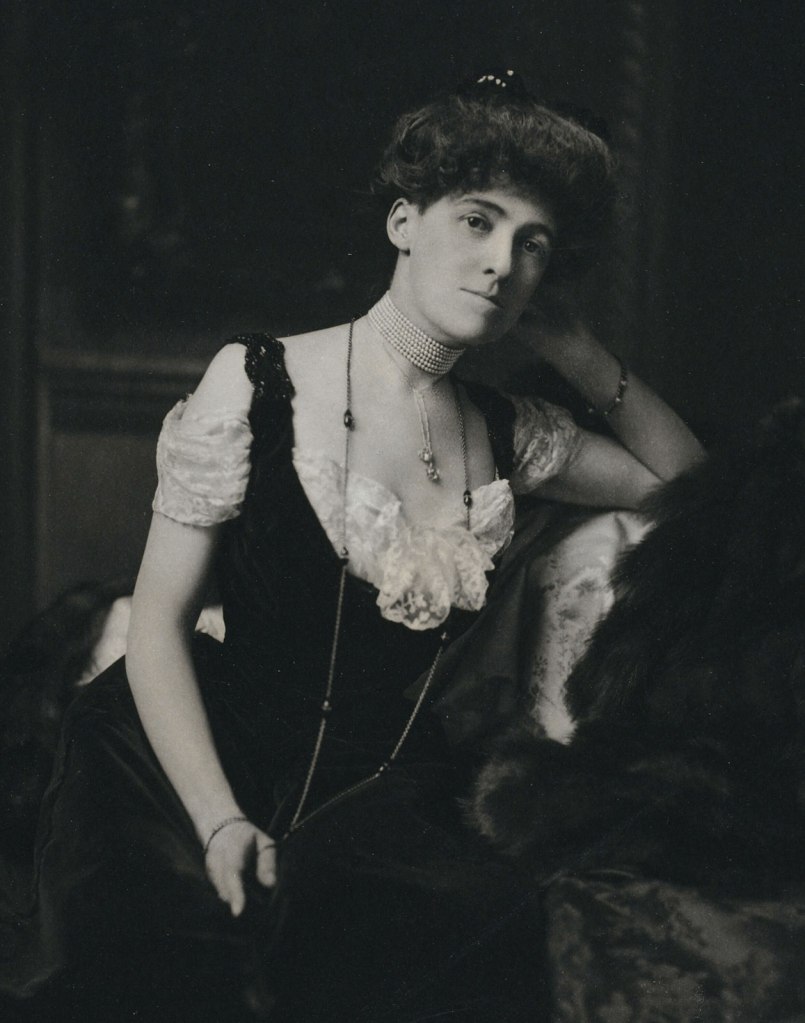
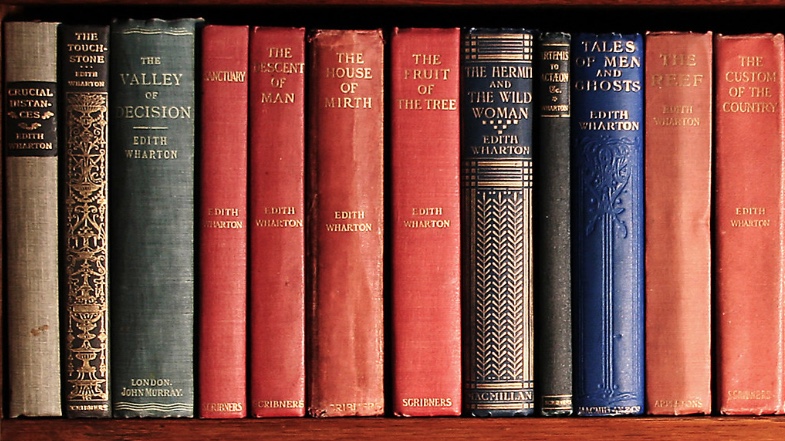
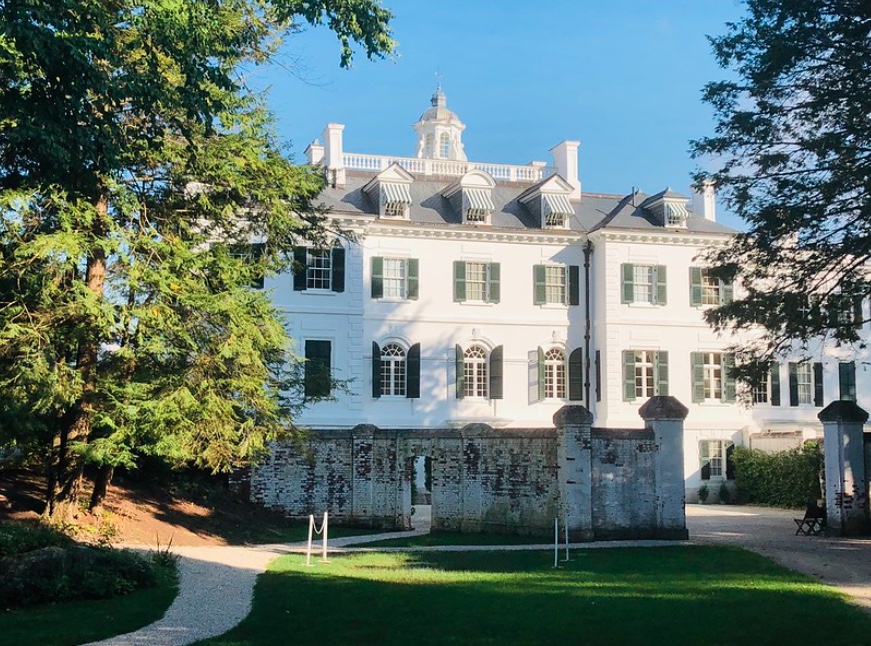
This is The Mount, the well-known home of Pulitzer Prize winning author, Edith Wharton. The house is located just south of Lenox, Massachusetts in the Berkshire Mountains. This area was familiar to gilded age plutocratic families as a more laid back, less pretentious alternative to Newport, Rhode Island. It was this type of setting that attracted Edith and her husband, Teddy, at the turn of the century when they sold their Newport home, Land’s End, and bought 113 acres near Lenox in 1901. In addition to being the author of classic novels such as The Age of Innocence and Ethan Frome, Edith was also an authority on interior decorating and landscape architecture (her book, The Decoration of Houses, is still in print and available on Amazon). The Whartons engaged Edith’s friend and architect, Ogden Codman Jr., to design their new house. Unfortunately, Ogden refused to offer “friend prices” for his services so he was let go. Instead, The Mount was designed by Francis L. V. Hoppin of New York. Edith could either be a difficult client or a very helpful client depending on your perspective and the final look of The Mount reflects much of her input. The finished 17,000 square foot house is a fusion of chateauesque, Palladian and New England architectural styles and was completed in 1902. The grounds were designed by Edith and her niece, the noted landscape architect Beatrix Farrand, in a collaboration that produced the stunning gardens that still exist today. Farrand’s other commissions include the White House grounds and Dumbarton Oaks in Washington D.C. The planning and execution of the gardens left Edith to ponder “Decidedly, I am a better landscape gardener than novelist.” History would show that she was excellent at both.

Entrance front

Edith was no stranger to classical architecture having travelled to Europe extensively. In fact, by the time she was in her late 40s she had traversed the Atlantic Ocean more than 60 times, quite an accomplishment in the days before air travel. She was born into wealth in 1862, her family being among the founders of Chemical Bank, one of the largest banks in the world by the time it merged with Chase Manhattan Bank in 1996 eventually forming today’s JPMorgan Chase Bank. Edith was a reluctant debutante at a time when well-born girls were expected to marry early and well and then just socialize for the rest of their lives rather than become educated and have a profession. The precocious Edith was a voracious reader and writer and her novels are chronicles of the upper class milieu in which she grew up. When Edith did marry, it was to Edward ‘Teddy’ Wharton from Boston. Unfortunately, Teddy suffered from chronic depression and alcoholism and the Whartons drifted apart soon after completing The Mount. In fact, given how much The Mount is associated with Edith Wharton it’s remarkable that she only lived there for seven years. In 1909, Edith left The Mount and Teddy and embarked for France. Other than a trip home in 1923, she lived out her years in France and never saw The Mount again. She passed away in 1937.

After the Whartons left The Mount in 1909, the house was leased out to Albert Shattuck, a New Orleans banker, and his wife Mary. The Shattucks had moved to New York and wanted a summer place in the Berkshires. It was the Shattucks who really got to use The Mount as a home. After renting for a couple of years, the Shattucks bought the house in 1911 for $180,000 and spent their summers there for the next 13 years. Albert passed away in 1924 and Mary followed in 1935. The Shattucks are remembered for a famous robbery at their Manhattan townhouse in 1922. A former servant got together with a few cutthroats, broke into the house, stole $90,000 in valuables and locked the Shattucks and eight servants into a small wine cellar. Suffocating from lack of air, Albert eventually picked the lock with a pen knife and got everyone out. The robbers were eventually nabbed in France after a shootout.

After Mary Shattuck died in 1935, The Mount sat empty for three years before being sold at auction to the former Managing Editor of the New York Times, Carr Van Anda, and his wife, Louise. The tenure of the Van Andas at The Mount was mostly marked by disputes with the local assessor’s office about the value of the property. The Van Andas eventually lost that argument and after Louise passed away in 1942, Carr sold The Mount to the Oxford-educated school mistress, Aileen M. Farrell, who used the house as a dormitory for her private school, the Foxhollow School. By the early 1970s the maintenance costs of The Mount were chewing up the school’s tuition income and in 1976 Foxhollow closed. The house was then sold to developer Donald Altshuler for $655,000 who aimed to convert the house into a conference center/restaurant surrounded by new condos. The town of Lenox successfully fought him off and in 1980 the house was sold for $290,000 to the newly formed Edith Wharton Restoration Corporation. In the meantime, the house had been leased by a newly formed theater company called Shakespeare and Company for use in training actors and presenting Shakespeare productions in the summer. The theater company continued to lease the property from the restoration organization (which was trying to drum up the funds to restore the decaying house) in an uneasy relationship that lasted until 2001. That year the theater company moved out and restoration work was started in earnest. Notable actors who passed through The Mount during the Shakespeare & Co. years include Bill Murray, Andie MacDowell, Keanu Reeves, Richard Dreyfuss and Clueless girl, Alicia Silverstone.

Edith Wharton, the builder of The Mount

This Edith Wharton Restoration Corporation has been restoring The Mount ever since. Today, The Mount is open to the public year round for tours, musical performances and literary events and the house has been restored with period furnishings and decor from the time of Ms. Wharton’s residency. Another notable country estate is located just south of The Mount. High Lawn house, a Vanderbilt mansion which is still occupied by Vanderbilts, is covered by this blog here. For more information on The Mount and how to visit, click here.

Library scene at The Mount
Entrance front
Interior scene

Rose Hill

This is Rose Hill, an 11,000 square foot Georgian-revival house on a 410 acre estate in Greenwood, Virginia a few miles west of Charlottesville. The house was designed by William Bottomley who is credited with many Georgian masterpieces in the Old Dominion especially in the Richmond area (for other Bottomley homes in this blog click here for Half Way House or here for Chilton). The house was completed in 1930 for Susanne Williams Massie, the widow of a Richmond banker. In the early decades of the 20th century, some of Richmond’s elite established summer homes in the Greenwood area and Rose Hill is surrounded by several of these homes, most of which still exist. The area continues to be a rural enclave of historic estates, horses and gardens. One of these estates, Tiverton, which is just west of Rose Hill, is covered in this blog (click here).

Susanne passed away in 1952 and the home was purchased a few years later by Henry Bradley Martin. Mr. Martin was the grandson of Henry Phipps, a partner of Andrew Carnegie in the Carnegie Steel Corporation (later U.S. Steel). The Phipps family built several homes in the leafy suburb of Old Westbury, N.Y. on Long Island including what is arguably one of the most attractive homes in North America, Westbury House, now known as Old Westbury Gardens. The Phipps family took their steel money and put it into an investment firm called Bessemer Trust which pioneered the concept of a “family office”, a privately owned investment firm that serves the needs of a single wealthy family by investing, disbursing funds, minimizing tax liabilities, arranging private planes, getting the merc serviced, etc.

Westbury House AKA Old Westbury Gardens, a Phipps family home located in the town of Old Westbury on Long Island, NY

Henry was educated at Oxford University and served in North Africa during the Second World War as part the Office of Strategic Services (O.S.S.) the forerunner of the C.I.A. Henry was also a noted book collector who used Rose Hill to house his extensive collection which included the only privately owned copy of the original Declaration of Independence and an extensive collection of books on ornithology (i.e., the study of birds). Henry passed away in 1988 and left Rose Hill to his daughter, Alice Martin Takach. Alice and her husband, Stephen, use Rose Hill as a summer home. Rose Hill is a private home and is not open to the public.

Bloedel Reserve

Reflecting pond and the entrance front of the house

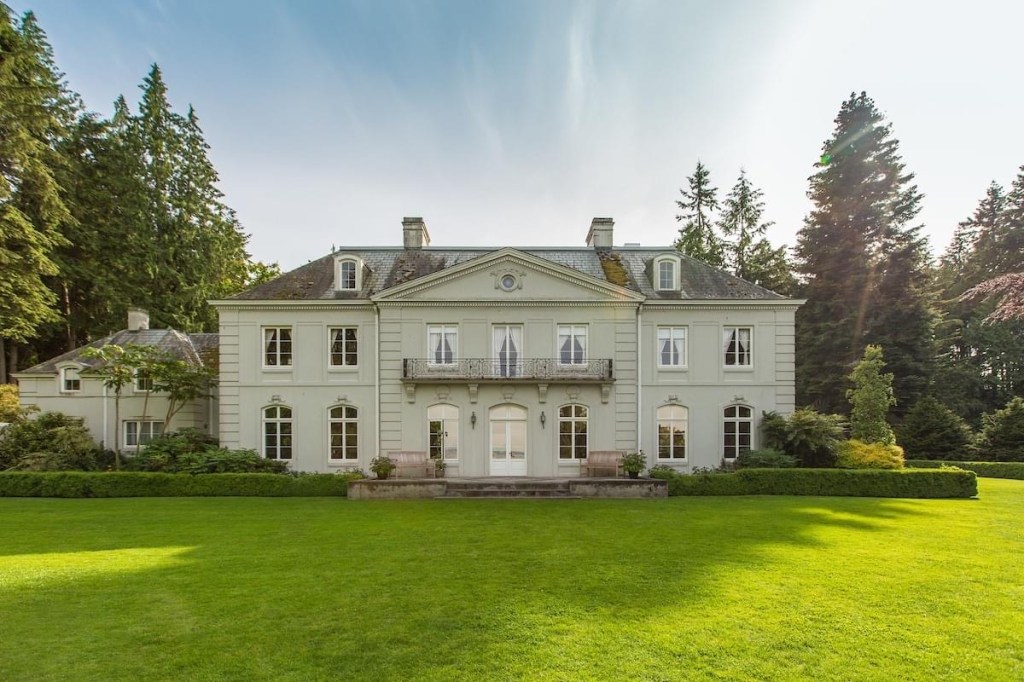
This is the Bloedel Reserve, a 150 acre country estate and botanical garden on Bainbridge Island, Washington State. Separated from Seattle by Puget Sound and only accessible by the State ferry, Bainbridge Island has been able to retain its woodsy, bucolic vibe despite being within visual range of downtown Seattle. Historically, it was a favorite place for the city’s elite to build weekend houses or retirement pads. The Bloedel Reserve was originally a country retreat known as Collinswood for Angela Collins, the widow of Seattle’s fourth mayor. Ms. Collins built the 10,000 square foot Scandinavian-style manor house, designed by J. Lister Holmes, in 1931.  In 1951, the estate was purchased by Prentice and Virginia Bloedel, both members of prominent northwest timber families. Prentice was an executive for many years with his family’s wood products company, MacMillan Bloedel Limited (since merged with Weyerhaeuser). When the Bloedels bought the estate, the surrounding land had been repeatedly logged and was in poor condition. The Bloedels dedicated the better part of their remaining lives to rehabilitating the land and creating a botanical garden that blended a woodland garden with elements of Japanese garden design. The San Francisco landscape architect, Thomas Church, had a major role in the overall design but Prentice himself was also a big creative influence. Thomas Church’s other commissions included designs for Stanford University and UC Berkeley. To realize the vision, the Bloedels doubled the acreage, created ponds, a reflecting pool, a Japanese garden and tea house, a waterfall, a moss garden and a rhododendron glen. The Bloedels called the property Agate Point Farm after a nearby geographic feature.

One of the reflecting ponds on the grounds

In 1970, the Bloedels gifted the property to the University of Washington but continued to live at Agate Point Farm until 1984 when they moved to their house in Seattle. In 1974, the property was renamed The Bloedel Reserve. In 1986, ownership was transferred to the Arbor Fund and two years later the property was opened to the public. Virginia Bloedel passed away in 1989 and Prentice Bloedel in 1996. Their former country estate is now regarded as one of the most innovative and beautiful woodland gardens in the world.  

Entrance front

The Bloedels were also significant art collectors and patrons of the Seattle Art Museum. In 1997, it was discovered that a Matisse that had hung at the estate and at the Museum had been stolen by the Nazi regime in France in 1940.  After a period of negotiation, the painting was restored to the heirs of the original owner in 1999. The Bloedel’s daughter, Virginia Wright, was also a major patron of the arts in Seattle. Her husband, Bagley Wright, was famous for being the developer of the Space Needle, Seattle’s answer to the Eiffel Tower.

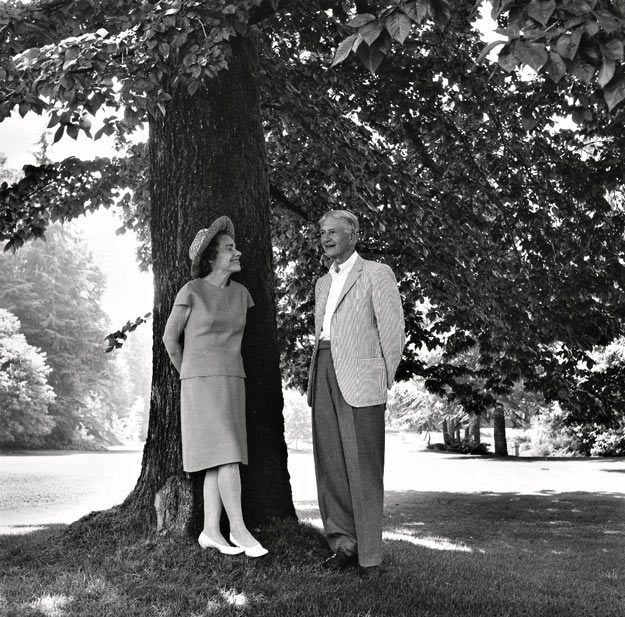
Virginia and Prentice Bloedel, second owners of the estate and the creators of the gardens

The Bloedel Reserve is now open to the public and the residence is a house museum that is little changed from when the Bloedels lived there. Click here for more information on the Reserve or here for a short YouTube video showing the property.

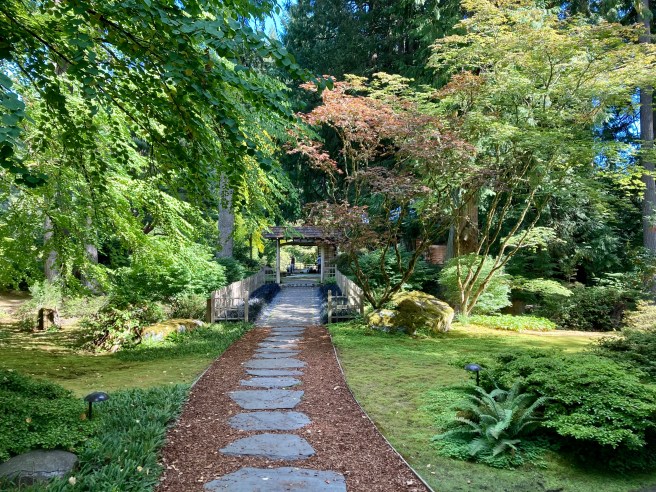
Entrance to the Japanese Garden

Reflecting pool. The final resting place of both Prentice and Virginia Bloedel is at the far end of the pool.

Northeast facade of the house overlooking Puget Sound

Northeast facade of the house

Omega

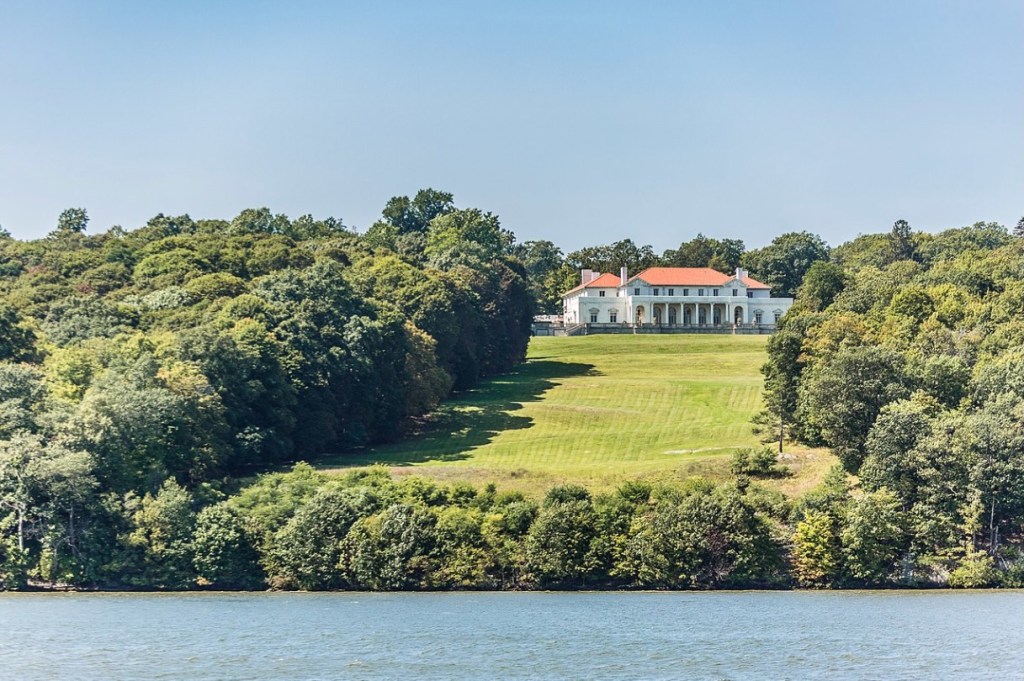
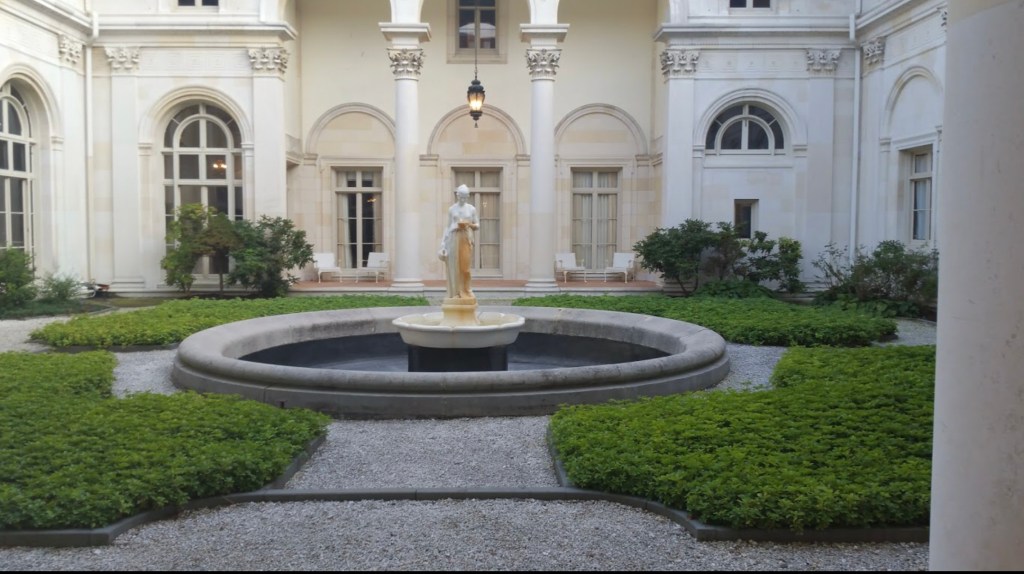
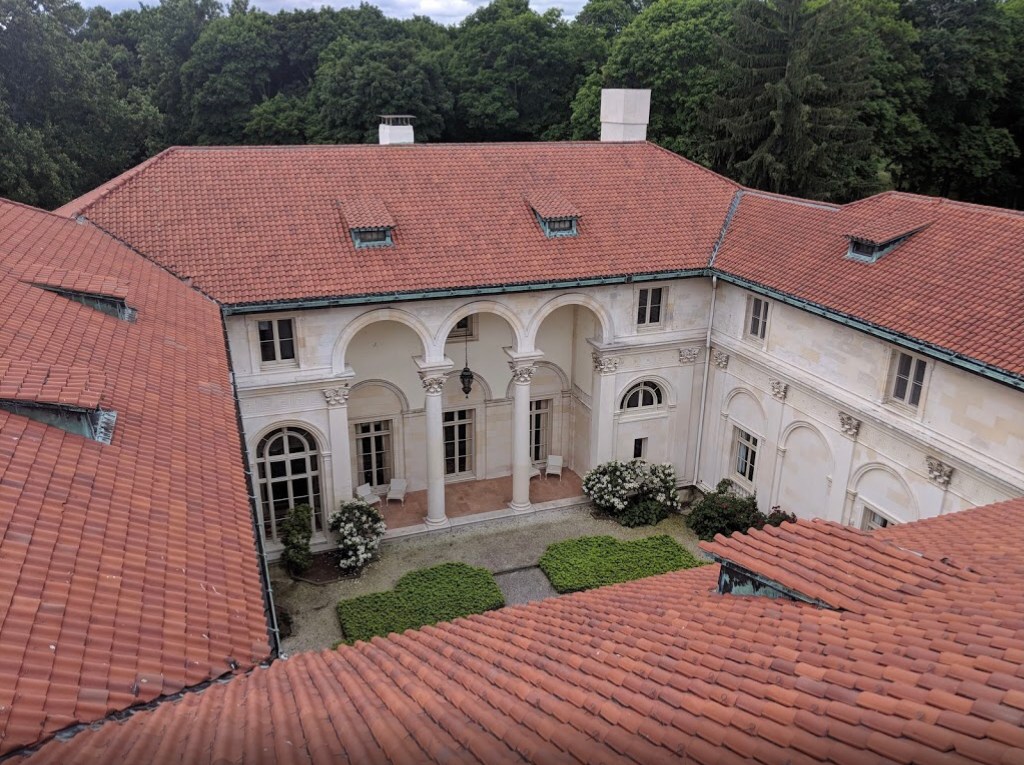
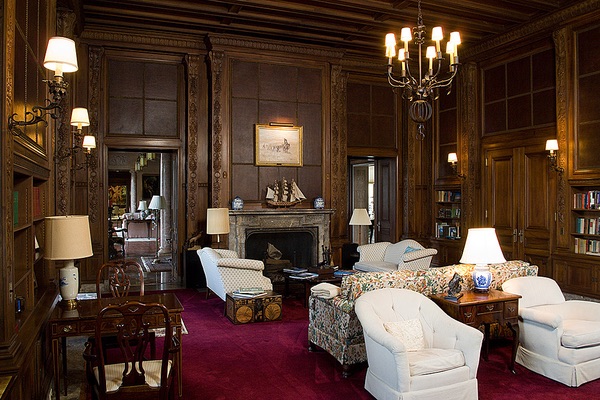
This is the Omega estate (AKA the Payne Estate) on the west bank of the Hudson River near Esopus, New York. The Beaux Arts style house was designed by Thomas Hastings of the New York architecture firm, Carrere & Hastings. The 42,000 square foot house was completed in 1911 and is sited on a 60 acre estate. The estate that eventually became Omega had three previous owners including John Jacob Astor III of the prominent Astor family and Omega was built on the site of an earlier house named Waldorf. Omega was the creation of Standard Oil executive Oliver Hazard Payne (1839-1917).

John D. Rockefeller, the founder of Standard Oil, had this tactic whereby he would calculate the value of a rival’s oil refinery assuming he had undercut their pricing and taken their market share and then Rockefeller would make the rival refiner an offer to buy their assets based on that assumed value. If the rival refused the offer, Rockefeller and the Standard Oil would simply undercut their prices, take their market share and drive them out of business. While this may seem similar to the choice that Latin American drug lords offer rivals and other troublemakers (“plata o plomo?” meaning “which do you want? silver or lead?”) it is actually quite humane given the rough and tumble business tactics that prevailed at the time. More often than not, the rival would take the offer and then be given a position within Standard Oil commensurate with their business acumen and degree of ruthlessness. Some of these one-time rivals became obscenely rich in their own right by joining the Standard Oil trust. Oliver Hazard Payne was one such rival who ended up doing just fine.

Oliver Hazard Payne was born into a politically prominent Ohio family and attended Phillips Academy Andover and Yale University. His mother was a relative of Navy admiral Oliver Hazard Perry who is famous for coining the phrase “Don’t give up the ship!” When the Civil War started, Oliver enlisted in the Army rather than avoiding conscription by paying someone to take his place as most wealthy young men were allowed to do. He was promoted to Colonel and commanded the 124th Ohio Infantry Regiment and served until the end of the war during which he was seriously wounded at the Battle of Chickamauga. After the war, Mr. Payne entered business starting up a refinery in Cleveland competing with Rockefeller’s Standard Oil. After selling out to Standard in 1872, Mr. Payne served as treasurer of the company and was also a company lobbyist. Back in those days, state and federal government in the United States was a hotbed of corruption, far worse than it is today. Bribery and kickbacks on behalf of gilded age corporate interests was pervasive and Mr. Payne was twice indicted on bribery charges but was not convicted. By the time he died in 1917 he was worth $190 million (several billion in today’s money).

Oliver Hazard Payne, the builder of Omega

Payne never married nor had any children and he left Omega to his nephew, Harry Payne Bingham. Mr. Bingham’s life was typical of second-generation gilded age industrial families (e.g., Corporate directorships, trusteeships, Park Avenue, NY Yacht Club, Palm Beach, Piping Rock Club, “scientific” yachting expeditions, Knickerbocker Club). Mr. Bingham got to use Omega for 16 years, a longer period of time than his uncle Oliver (who died only six years after its completion). After trying to sell Omega for several years, Mr. Bingham donated the property in 1933 to the New York Protestant Episcopal Mission Society which operated a convalescent home at the property. By 1937 the home had failed and in 1942 the estate was sold to Marist Brothers, a private liberal arts college and religious order in nearby Poughkeepsie for use as a high school for prospective brothers.

In 1986, the estate was purchased by businessman, Raymond Rich. Mr. Rich grew up in Iowa and started his working career in the engine room of a tramp freighter in 1930. After college he served in the Second World War in the pacific as a Marine. A born salesman and natural leader he was a professional CEO for most of his career and headed up several corporations. Mr. Rich loved nice homes and in addition to owning and extensively renovating Omega, he also owned castles in Scotland, Austria and France. He passed away in 2009 and left Omega, by now referred to as the Payne Estate, back to Marist College for use as the Raymond A. Rich Institute for Leadership Development.

Raymond Rich and friend at Omega

For more information on Omega and the institute, click here and here. YouTube has a video showing scenes from the estate taken during the dedication of the Institute and can be seen here. Omega is almost directly across the Hudson River from another significant country estate covered in this blog, Hyde Park (click here for more).

Tiverton

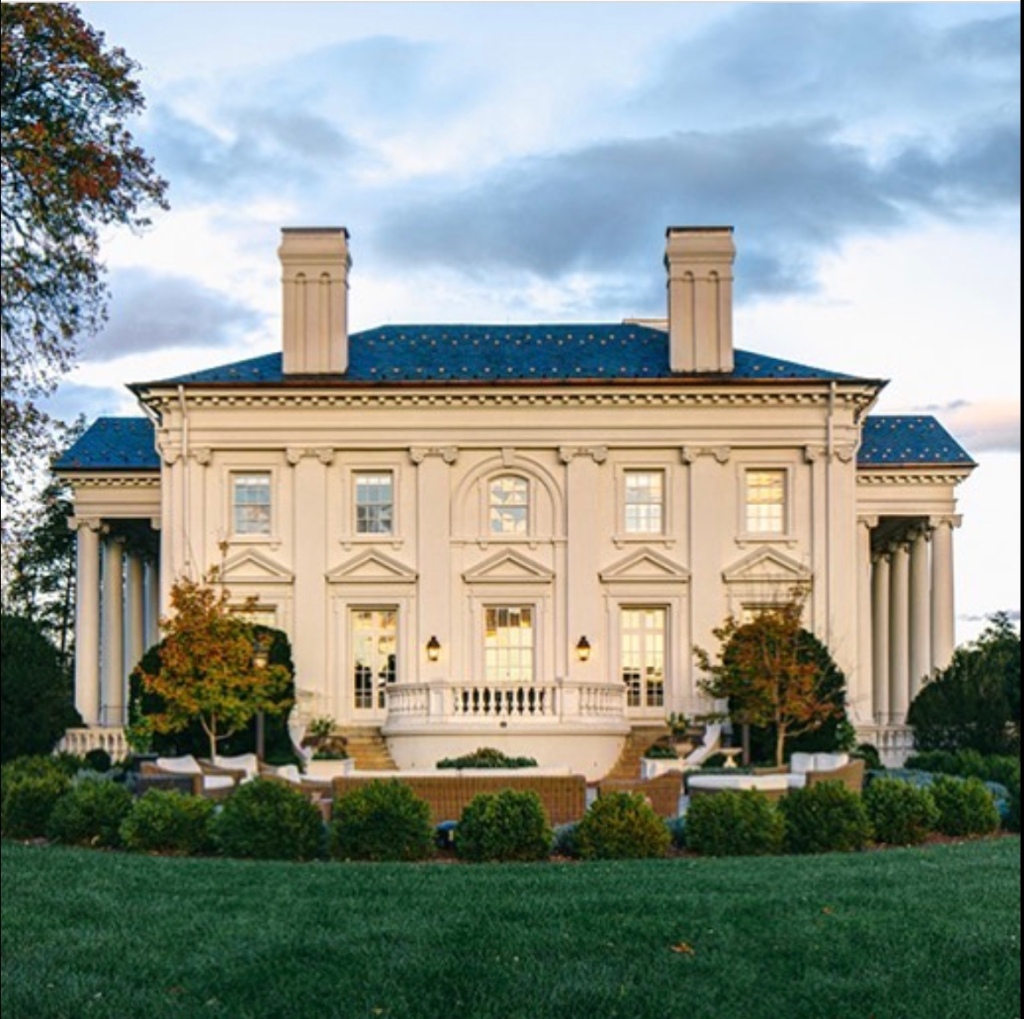
This house is Tiverton, a 19,000 square foot neoclassical mansion sitting on 460 acres in the hamlet of Greenwood, about 15 miles west of Charlottesville, Virginia. The property that would become Tiverton was purchased by Marie Ortman Boeing Owsley in 1900. Marie was originally from Austria and lived at Tiverton with her second husband, Dr. Frederic Dillard Owsley, a Chicago physician. The house was built by Frederic and completed in 1912. The identity of the architect is unknown. For some reason(s), between 1903 and 1919, Tiverton was sold, willed or transferred between members of the family multiple times. During this time period it was twice owned by Marie’s son from an earlier marriage, William Boeing, who would later go on to start Boeing Aircraft in Seattle.

Marie Ortman Boeing Owsley, the first owner of Tiverton

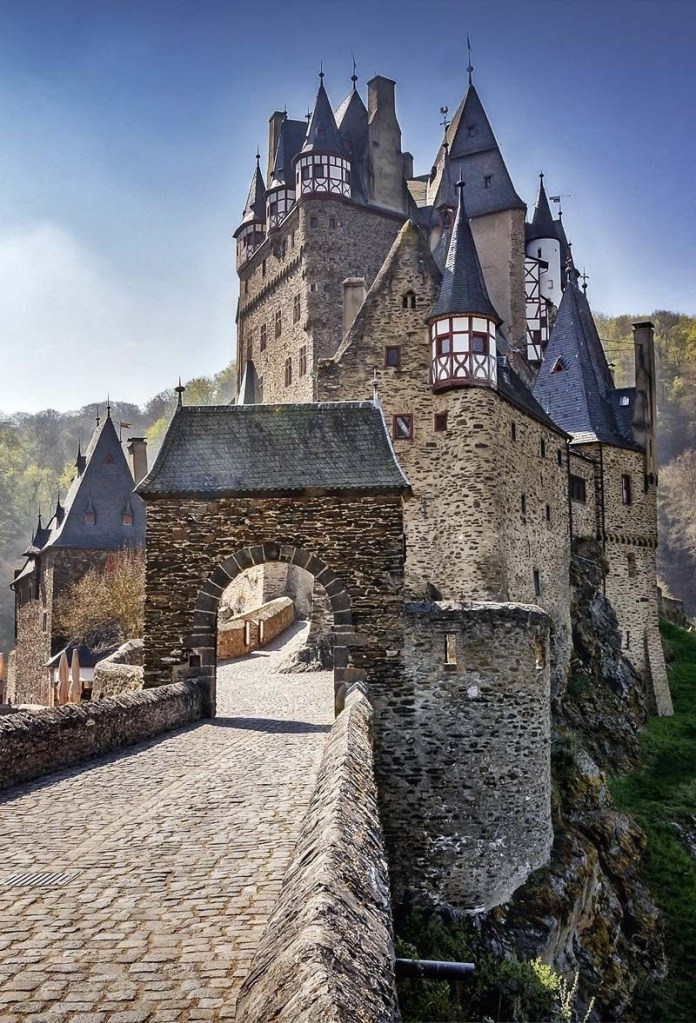
Marie died in 1910 and in 1919 the estate was bought outright by Frederic who by this time had also established a dairy operation at Tiverton. When it came to women, Frederic definitely had a type and that type was Austrian. In 1913, Frederic married another Austrian, Mariska Golgotzen, the Baroness Eltz from Vienna, Austria. The Eltz noble family originated in Germany in the 12th century and still has their seat at Burg Eltz, a castle on the Moselle River in Germany. In 1932, Tiverton was destroyed by fire leaving just the shell of the building. Frederic passed away the following year leaving the estate and burned out hulk to Mariska. The Baroness rebuilt Tiverton house to a similar design in 1935 using architect Carl Linder of Richmond. The formal gardens were redesigned by Virginia landscape architect Charles Gillette, who is renown for several gardens in the Old Dominion including a couple of country houses covered in this blog, Lochiel (click here) and Verulam (click here). One design element that the Baroness insisted on was a party room in the house complete with bar, dance floor and slot machines. The Baroness sold Tiverton in 1960 to Mike Hughey, a Florida businessman who owned gas stations. Mr. Hughey used it sparingly for the next 48 years and it slowly fell into disrepair, decay and weeds.

In 2008, Tiverton found a savior in Coran Capshaw. Mr. Capshaw had owned a bar in Charlottesville in the 1990s and signed up an unknown, local jam band to play in the pub. These unknown musicians called themselves the “Dave Matthews Band” and Mr. Capshaw has been managing them to worldwide fame ever since. He also owns a company that manages the careers and work of other musicians and artists such as Tim McGraw and Phish. He has also been involved in several property developments and renovations and owns several restaurants in Charlottesville. By the time he bought Tiverton, the house and grounds were in very poor condition but Mr. Capshaw embarked on extensive renovations (the second time for the house) and has brought the property back to life. The estate next door, Rose Hill, is also a looker and is covered in this blog (click here for more). Tiverton is a private home and is not open to the public.

Burg Eltz, the ancestral seat of the Eltz noble family

Crane Estate

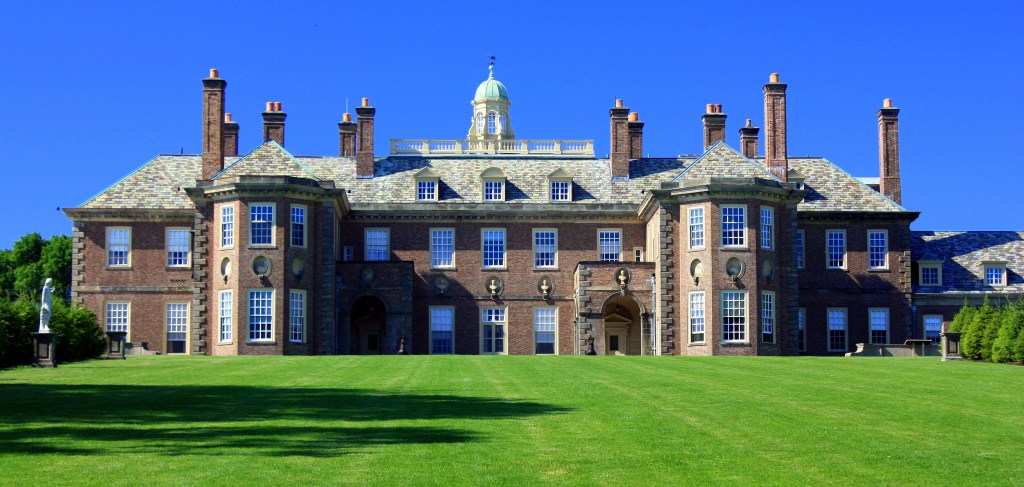
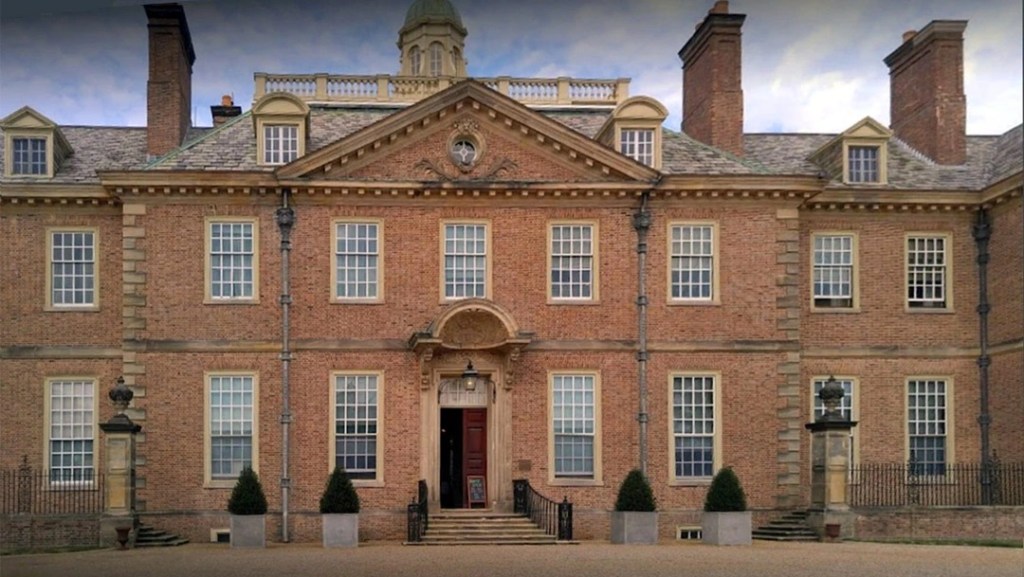
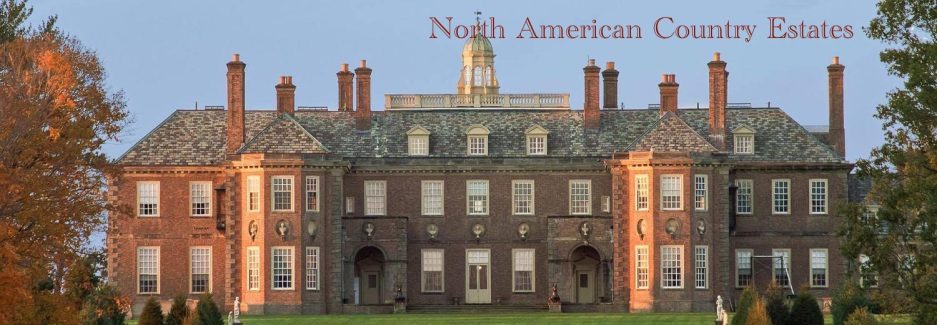
This English baroque stunner is the Crane Estate (AKA Castle Hill) and is located just outside Ipswich, Massachusetts. The house encompasses 57,000 square feet and is sited on a 2,100 acre estate. The house was designed by Chicago architect David Adler and the landscape, including the famous grand allee running down to the ocean, was designed by the Olmsted Brothers. For those unfamiliar with the term, an “allee” (pronounced AL-lay) is a design element used in a formal garden structure whereby a long, narrow expanse of lawn is lined by trees focusing the viewers attention on a distant feature such as a statue, a folly, a natural feature or the ocean in this case.

The house was built over three years and completed in 1928 by the son of the founder of the Crane Company famous for plumbing fixtures, Richard Crane, Jr., and his wife, Florence Higginbotham Crane. Richard had taken over as CEO of the company his father had founded back in 1855 and worked hard to achieve the Crane Company mission to “Make America want a better bathroom.” Florence’s father was a co-founder of the Marshall Field department store company in Chicago.

Garden front view from the grand allee

The current house is actually the second one to stand on the site. The Cranes bought the property in 1909 and built an Italian Renaissance-style house. Florence decided she didn’t like the house she called “the Italian fiasco” feeling that the architectural style didn’t fit the setting. She and Richard made a deal that if she still didn’t like it after ten years they would build something more to her liking. Ten years later Florence said she didn’t like the house so it was pulled down and the current house was built on the same foundation. You can catch glimpses of the first house in the sporting casino, located half way down the grand allee, which sports the Italianate design of the original house. The Cranes used the estate as their summer residence and lived most of the year in Chicago where the Crane Company was based.

The original Italianate mansion (AKA “the Italian Fiasco”) that preceded the current house. Pulled down in 1924.

Richard only got to enjoy the new house for three years before passing away in 1931. Florence lived on at the estate until her death in 1949 at which point it was deeded to The Trustees of Reservations, a non-profit organization which preserves and operates historic sites in Massachusetts. The Crane’s adult children, Cornelius Vanderbilt Crane (no relation to the Vanderbilts) and Florence Crane Jr. had rights as life tenants to continue to live in the guest house seasonally and use the property along with their families. The last resident was Cornelius’ second wife, Minescule ‘Mine’ Sawahara, who lived there until 1974. Both Crane children were adventurous spirits. Florence Jr. married writer William Robinson and they lived part-time in a one room house in Tahiti. Cornelius embarked on voyages to study the anthropological history of the South Pacific.

Fun facts about Cornelius and Florence, Jr.: Cornelius was the adoptive grandfather of SNL co-founder, actor and comedian Chevy Chase, who vacationed at the Crane Estate as a youth. In fact, Chevy Chase’s real name is Cornelius after his grandfather. Florence Jr. married a second time to the son of an exiled Russian aristocrat and became Princess Florence Belosselsky-Belozersky. Grigory Rasputin, the mad monk who helped to bring down the Russian Romanov dynasty was found dead floating in the Neva River in front of the Belosselsky-Belozersky family palace in St. Petersburg in 1916.

The builders of the Crane Estate, Richard and Florence Crane with their children, Cornelius and Florence Jr.

The Crane Estate is still owned and operated by The Trustees and the house and grounds are open to the public and are frequently used as a film location and a performing arts venue. Notable film credits include The Witches of Eastwick starring Jack Nicholson, Little Women starring Meryl Streep and Emma Watson and the reality TV series, The Amazing Race. Click here for information on visiting the Crane Estate. You can also stay at the former guest house on the estate – click here for more info on that. A YouTube video featuring some nice drone photography of the house and the grand allee can be seen here.

The Crane Estate has a connection to another beautiful country house covered in this blog. Richard Crane’s nephew, also named Richard Crane, bought and lived at the Westover Plantation in Virginia (click here).

Aerial view showing the entrance front of the house and the famous grand allee lined by statuary, Norway spruce, white pine and red cedar
Garden front of the house showing the sporting casino midway down the grand allee. The casino was built at the time of the original Italianate house and still shows that style of design.
The library
View of the gardens

Close-up view of the entrance front
Detail from garden front