
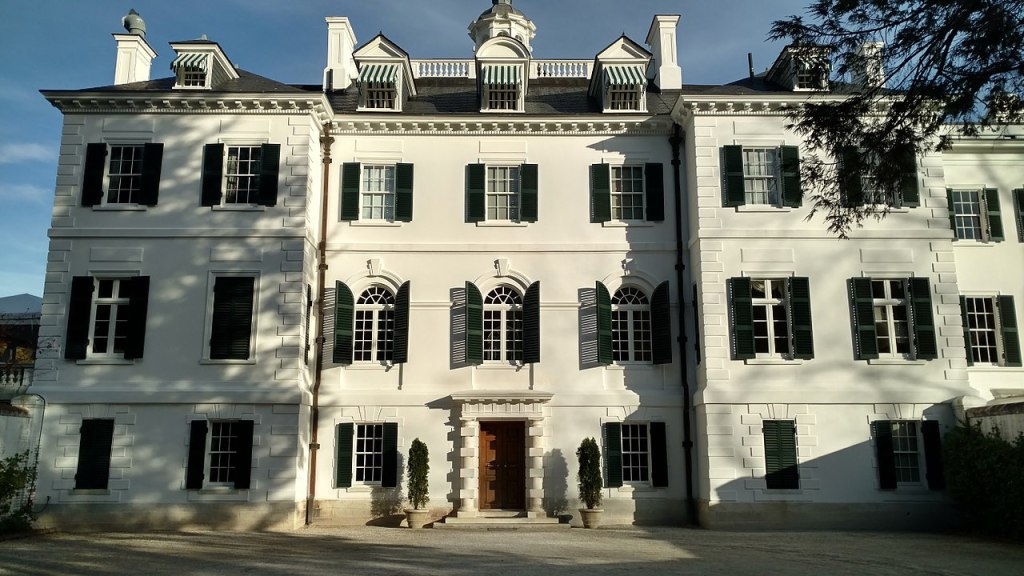
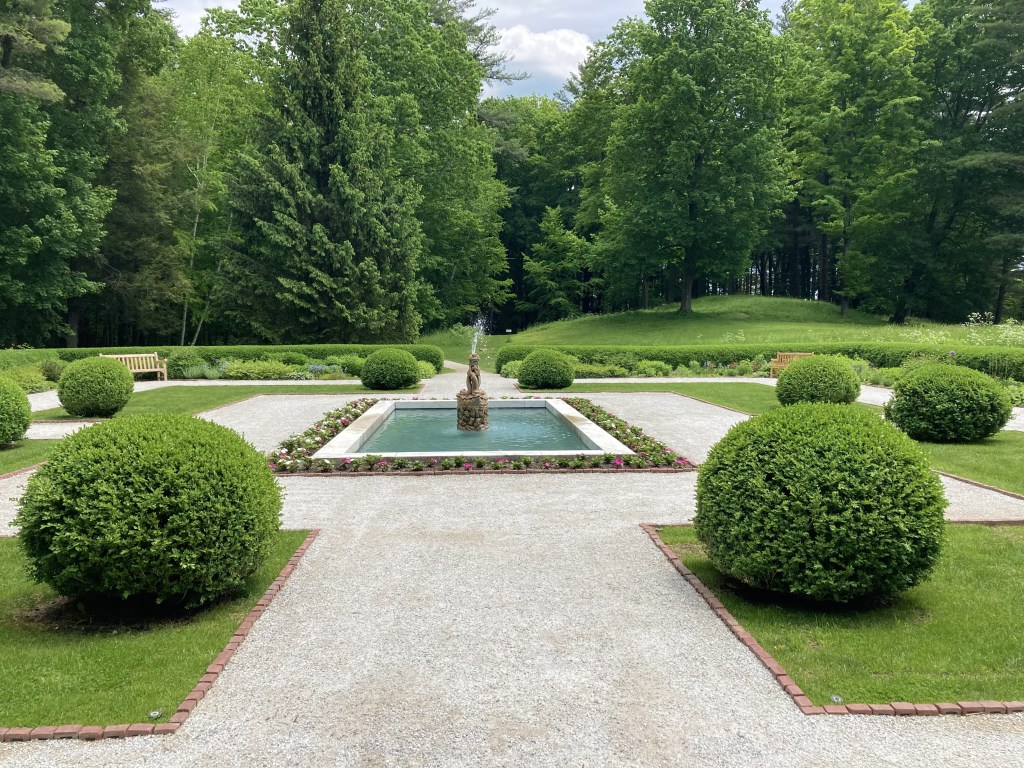
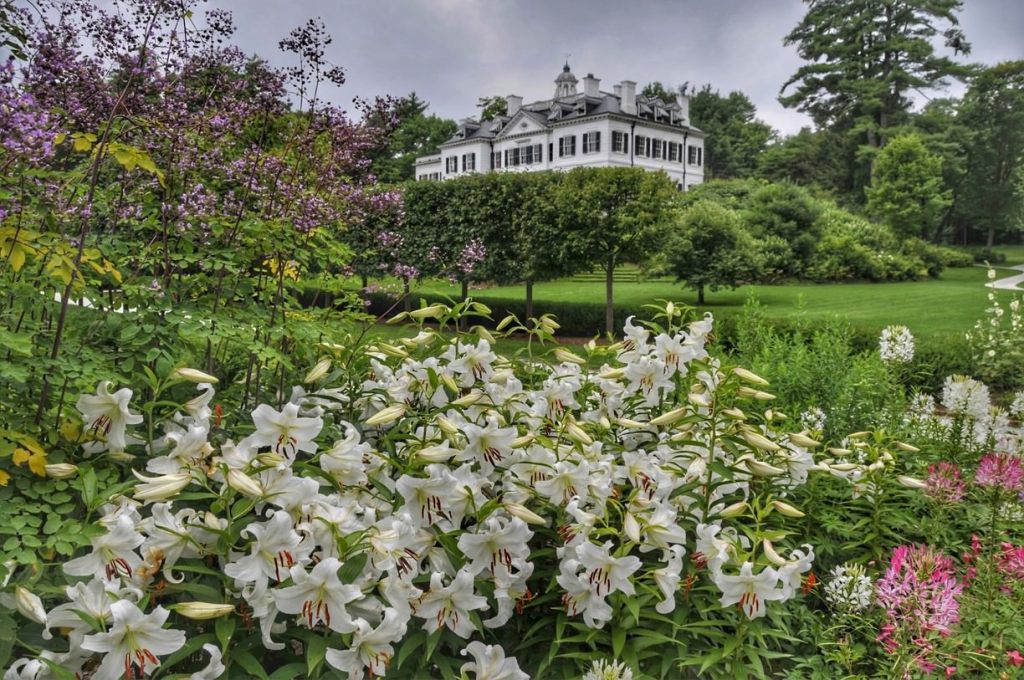
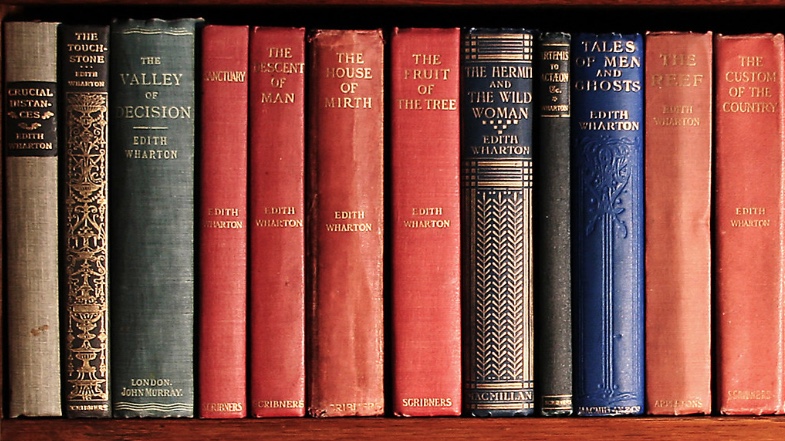
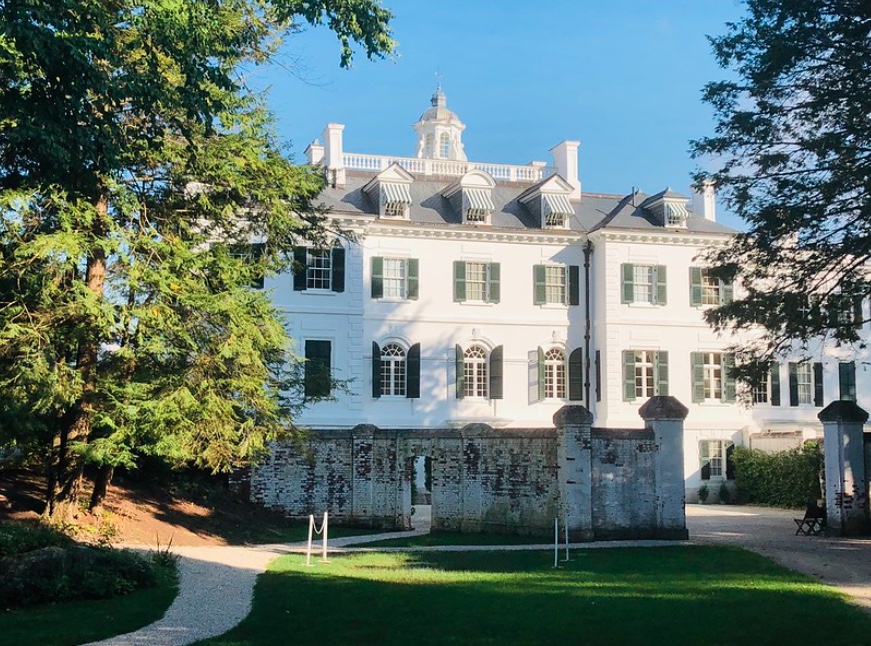
This is The Mount, the well-known home of Pulitzer Prize winning author, Edith Wharton. The house is located just south of Lenox, Massachusetts in the Berkshire Mountains. This area was familiar to gilded age plutocratic families as a more laid back, less pretentious alternative to Newport, Rhode Island. It was this type of setting that attracted Edith and her husband, Teddy, at the turn of the century when they sold their Newport home, Land’s End, and bought 113 acres near Lenox in 1901. In addition to being the author of classic novels such as The Age of Innocence and Ethan Frome, Edith was also an authority on interior decorating and landscape architecture (her book, The Decoration of Houses, is still in print and available on Amazon). The Whartons engaged Edith’s friend and architect, Ogden Codman Jr., to design their new house. Unfortunately, Ogden refused to offer “friend prices” for his services so he was let go. Instead, The Mount was designed by Francis L. V. Hoppin of New York. Edith could either be a difficult client or a very helpful client depending on your perspective and the final look of The Mount reflects much of her input. The finished 17,000 square foot house is a fusion of chateauesque, Palladian and New England architectural styles and was completed in 1902. The grounds were designed by Edith and her niece, the noted landscape architect Beatrix Farrand, in a collaboration that produced the stunning gardens that still exist today. Farrand’s other commissions include the White House grounds and Dumbarton Oaks in Washington D.C. The planning and execution of the gardens left Edith to ponder “Decidedly, I am a better landscape gardener than novelist.” History would show that she was excellent at both.
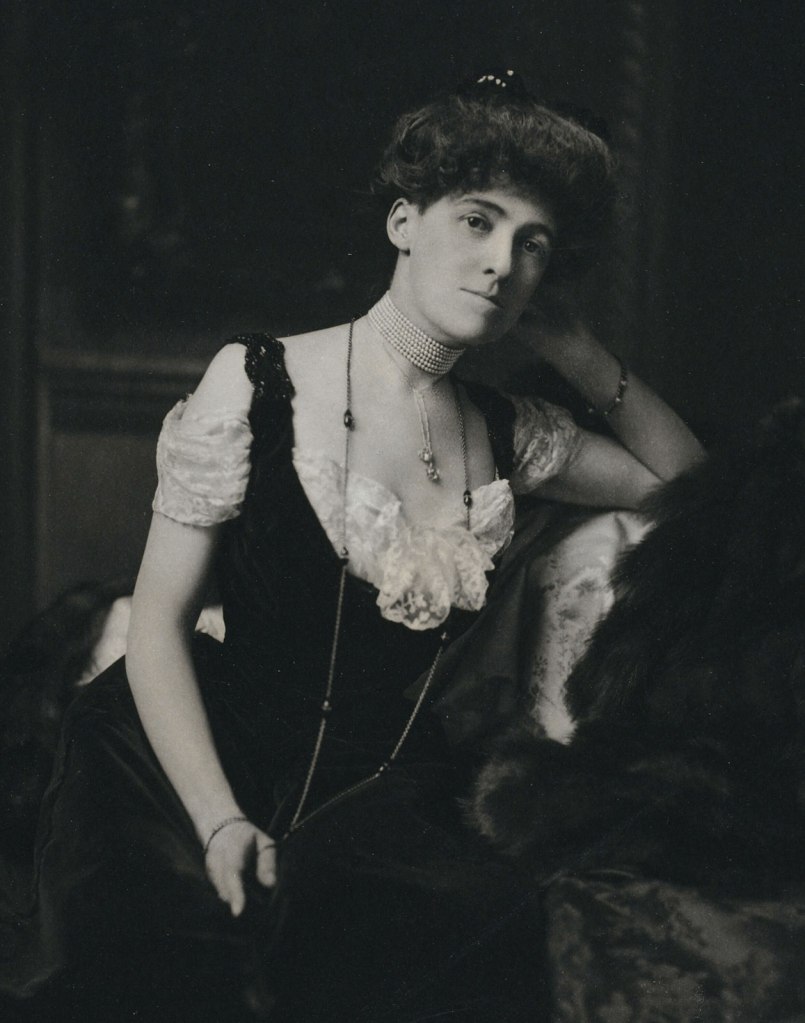
Edith was no stranger to classical architecture having travelled to Europe extensively. In fact, by the time she was in her late 40s she had traversed the Atlantic Ocean more than 60 times, quite an accomplishment in the days before air travel. She was born into wealth in 1862, her family being among the founders of Chemical Bank, one of the largest banks in the world by the time it merged with Chase Manhattan Bank in 1996 eventually forming today’s JPMorgan Chase Bank. Edith was a reluctant debutante at a time when well-born girls were expected to marry early and well and then just socialize for the rest of their lives rather than become educated and have a profession. The precocious Edith was a voracious reader and writer and her novels are chronicles of the upper class milieu in which she grew up. When Edith did marry, it was to Edward ‘Teddy’ Wharton from Boston. Unfortunately, Teddy suffered from chronic depression and alcoholism and the Whartons drifted apart soon after completing The Mount. In fact, given how much The Mount is associated with Edith Wharton it’s remarkable that she only lived there for seven years. In 1909, Edith left The Mount and Teddy and embarked for France. Other than a trip home in 1923, she lived out her years in France and never saw The Mount again. She passed away in 1937.
After the Whartons left The Mount in 1909, the house was leased out to Albert Shattuck, a New Orleans banker, and his wife Mary. The Shattucks had moved to New York and wanted a summer place in the Berkshires. It was the Shattucks who really got to use The Mount as a home. After renting for a couple of years, the Shattucks bought the house in 1911 for $180,000 and spent their summers there for the next 13 years. Albert passed away in 1924 and Mary followed in 1935. The Shattucks are remembered for a famous robbery at their Manhattan townhouse in 1922. A former servant got together with a few cutthroats, broke into the house, stole $90,000 in valuables and locked the Shattucks and eight servants into a small wine cellar. Suffocating from lack of air, Albert eventually picked the lock with a pen knife and got everyone out. The robbers were eventually nabbed in France after a shootout.
After Mary Shattuck died in 1935, The Mount sat empty for three years before being sold at auction to the former Managing Editor of the New York Times, Carr Van Anda, and his wife, Louise. The tenure of the Van Andas at The Mount was mostly marked by disputes with the local assessor’s office about the value of the property. The Van Andas eventually lost that argument and after Louise passed away in 1942, Carr sold The Mount to the Oxford-educated school mistress, Aileen M. Farrell, who used the house as a dormitory for her private school, the Foxhollow School. By the early 1970s the maintenance costs of The Mount were chewing up the school’s tuition income and in 1976 Foxhollow closed. The house was then sold to developer Donald Altshuler for $655,000 who aimed to convert the house into a conference center/restaurant surrounded by new condos. The town of Lenox successfully fought him off and in 1980 the house was sold for $290,000 to the newly formed Edith Wharton Restoration Corporation. In the meantime, the house had been leased by a newly formed theater company called Shakespeare and Company for use in training actors and presenting Shakespeare productions in the summer. The theater company continued to lease the property from the restoration organization (which was trying to drum up the funds to restore the decaying house) in an uneasy relationship that lasted until 2001. That year the theater company moved out and restoration work was started in earnest. Notable actors who passed through The Mount during the Shakespeare & Co. years include Bill Murray, Andie MacDowell, Keanu Reeves, Richard Dreyfuss and Clueless girl, Alicia Silverstone.
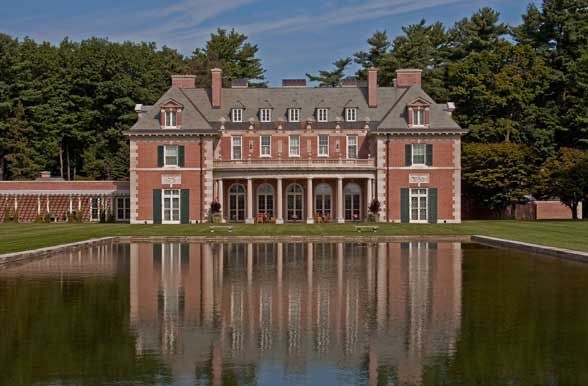
This Edith Wharton Restoration Corporation has been restoring The Mount ever since. Today, The Mount is open to the public year round for tours, musical performances and literary events and the house has been restored with period furnishings and decor from the time of Ms. Wharton’s residency. Another notable country estate is located just south of The Mount. High Lawn house, a Vanderbilt mansion which is still occupied by Vanderbilts, is covered by this blog here. For more information on The Mount and how to visit, click here.




 North American Country Estates