Grey Towers

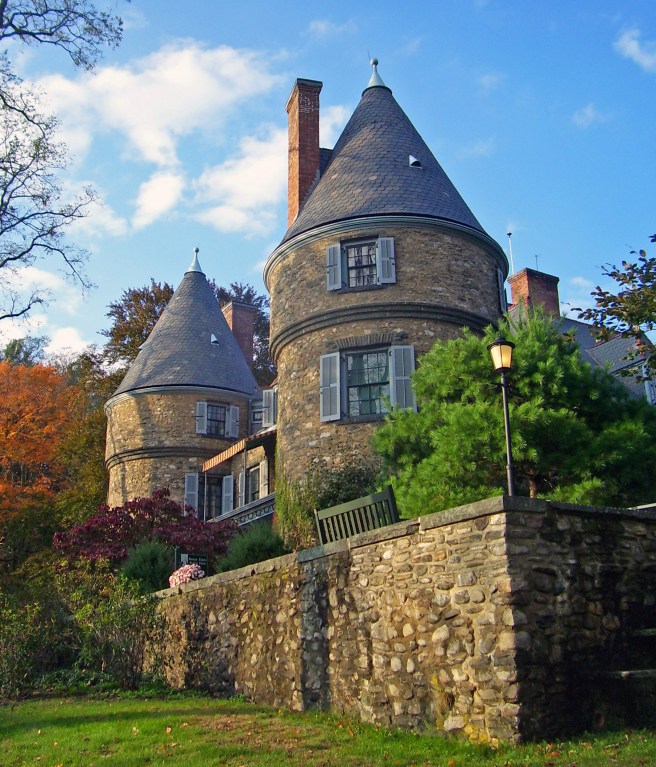
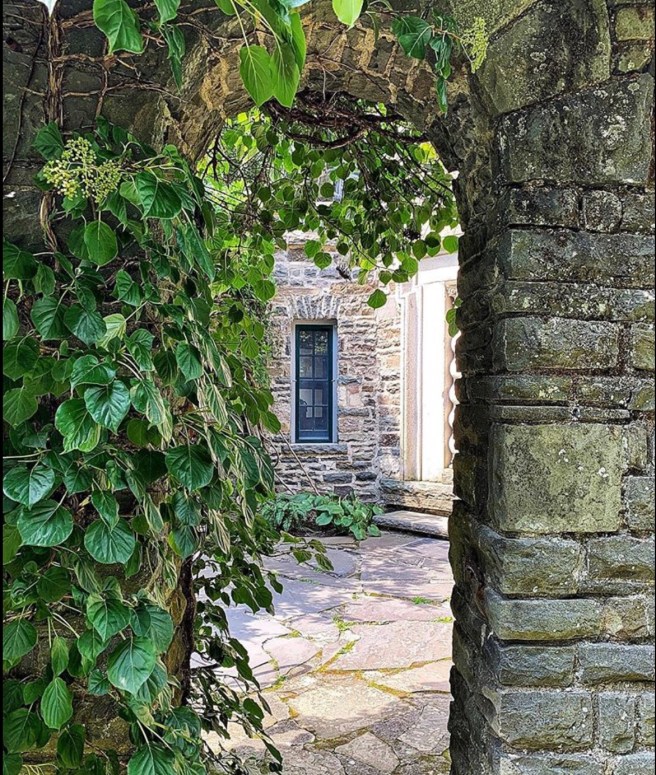
This French Norman-style house is Grey Towers.  It sits on a 102 acre estate outside Milford, Pennsylvania.  It was built in 1886 by James Pinchot, a successful New York City wallpaper merchant and his wife, Mary. James grew up in Milford and moved back after retiring from business to raise his family.  The house was designed by Richard Morris Hunt (who designed many gilded age mansions such as Biltmore) and the grounds included contributions by Frederick Law Olmsted, the most influential American landscape architect of the 19th century.  

The Pinchots lived at Grey Towers for many years before James passed away in 1908 followed by Mary in 1914. The Grey Towers estate was split between their sons, Amos and Gifford with the latter taking the house. Gifford was a graduate of Yale University with a degree in forestry and also studied forestry in France. His first job after returning from France was managing the forests on the Biltmore Estate, the North Carolina home of George Washington Vanderbilt. He attracted the attention of Presidents William McKinley and Theodore Roosevelt who appointed him as the first head of the U.S. Forest Service. In this role, Pinchot was a staunch conservation advocate and fought against the industrial forestry practices that characterized the Forest Service during most of the 20th century.
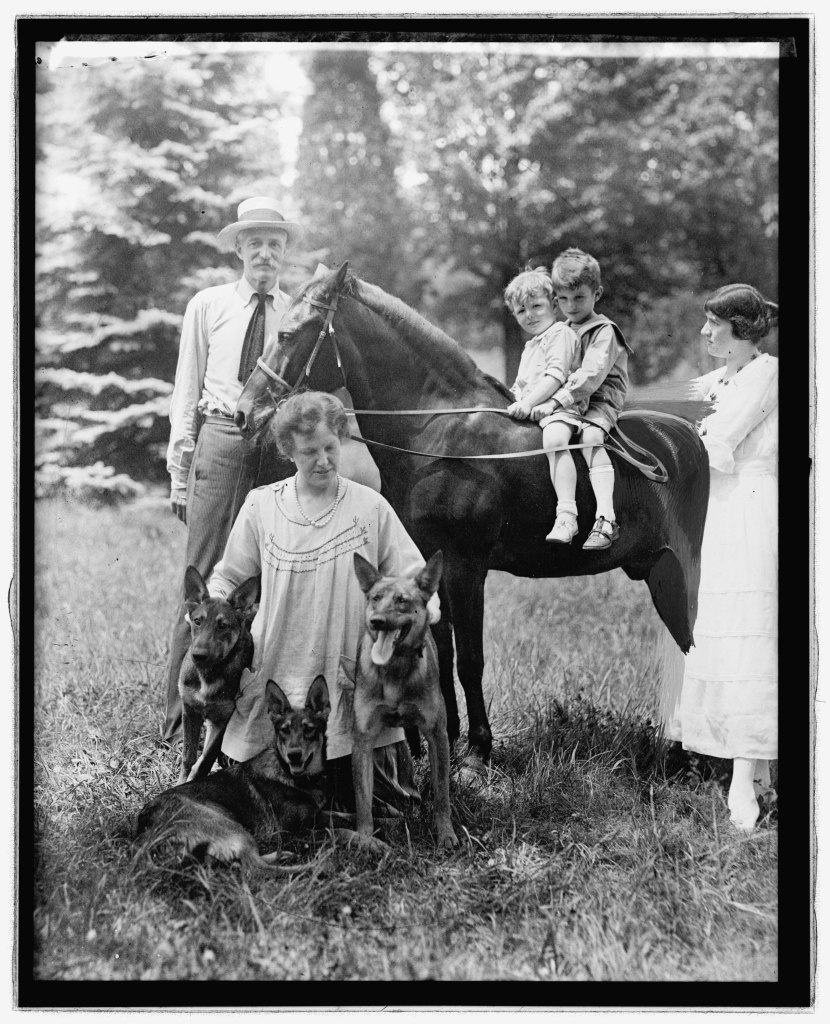
The Pinchots at Grey Towers, 1921

After leaving the Forest Service in 1910, Gifford served as Governor of Pennsylvania for two terms. Cornelia was active in the women’s suffrage movement and was a major donor to the NAACP. She was a close friend of Teddy Roosevelt and shared his passion for progressive causes. She also tried her hand at politics but was unsuccessful in runs for Congress and the Pennsylvania Governorship. The Pinchot family used Grey Towers mostly as a summer home. Gifford passed away in 1946 followed by Cornelia in 1960. Their son, Gifford Jr., donated Grey Towers to the U.S. Forest Service as a house museum and a conference/educational center focusing on conservation. Grey Towers is the only non-forest asset managed by the Forest Service. The house and gardens are open to the public on a daily basis. Click here for more info on Grey Towers or here for a YouTube video showing scenes from Grey Towers.

Gifford Pinchot’s legacy of forest stewardship lives on today. The Gifford Pinchot National Forest in Washington State is named after him along with several other natural and geographic features around the U.S. The Giffords son, Gifford Jr., helped found the Natural Resources Defense Council (NRDC), one of the preeminent environmental legal advocacy organizations in the U.S. today.
Claremont Manor

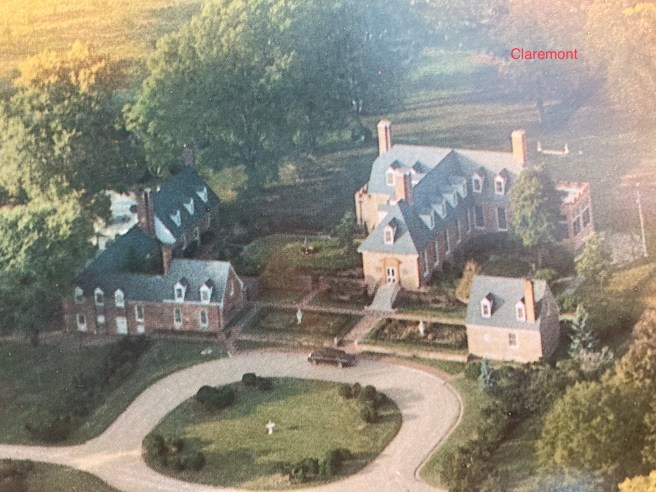
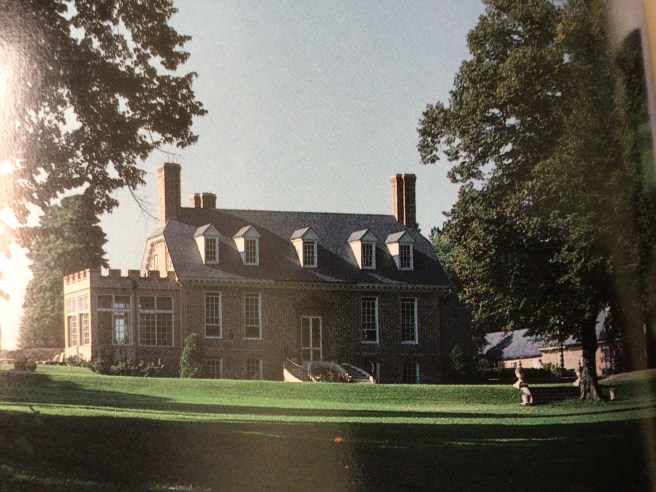
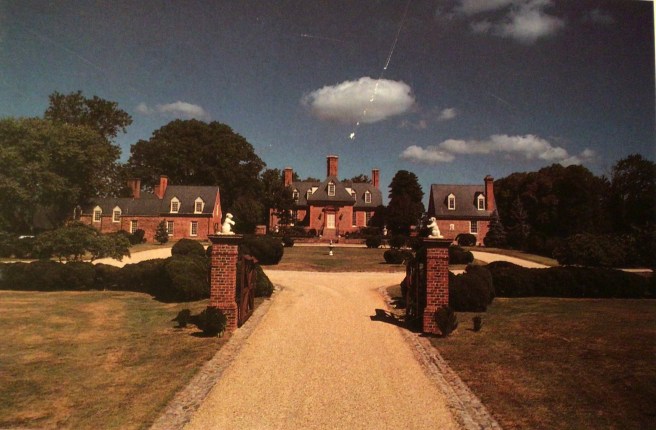
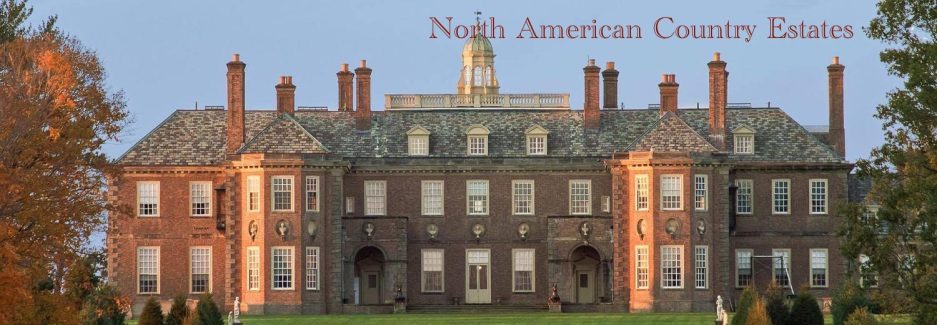
Claremont Manor is an 1,100 acre estate situated on the right bank of the James River about 30 miles southeast of Richmond. A beautiful Georgian manor house sits on the property along with several outbuildings in the same style. Extensive gardens surround the main house which overlooks the James River. The origins of Claremont Manor date back to the 1620s when George Harrison, one of the Jamestown settlers, established a small tobacco plantation on the site. Mr. Harrison died in 1623, the victim of the first recorded duel in Virginia. The estate passed to the Clement family and then to the Allen family in 1681. The Allens built the manor house that exists today in 1750. At one time, the estate amounted to 12,000 acres and was a significant agricultural supplier to the confederacy during the Civil War. However, being on the losing side didn’t work out for the Allens. After the war, their Confederate currency worthless, they were forced to parcel out Claremont (much of it to migrating yankees). The last Allen threw in the towel in 1886 and moved to New York to practice law bringing 205 years of family ownership to an end..

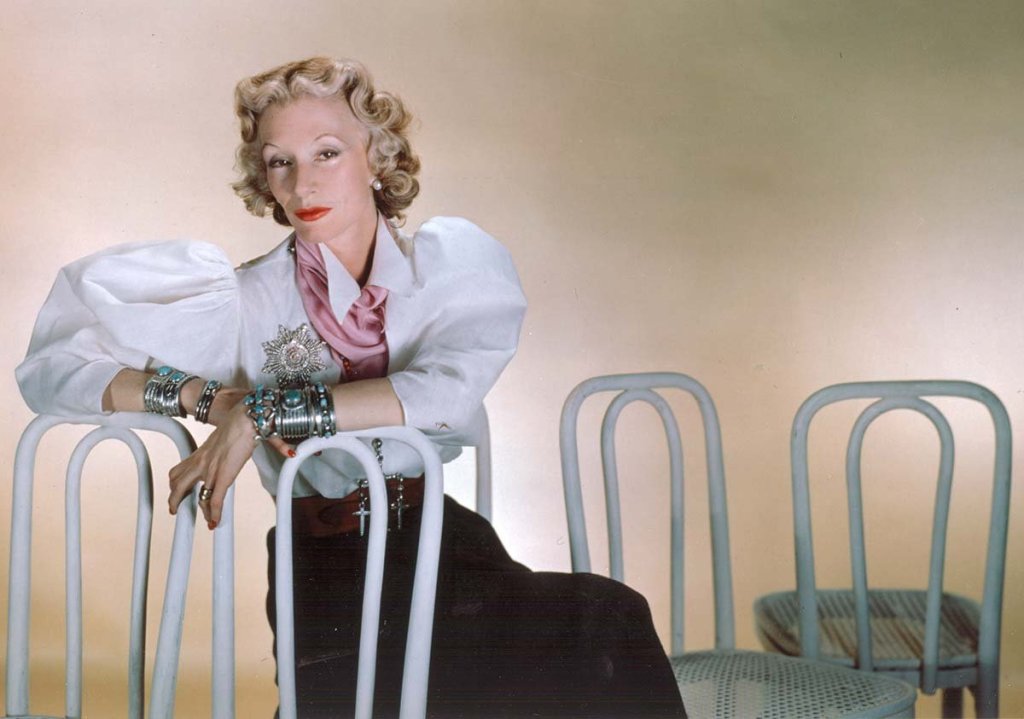
In the ensuing decades after the war, Claremont Manor had many owners but three stand out. In 1940, Millicent Rogers bought the estate. Ms. Rogers was the granddaughter of Henry Rogers, a partner of John D. Rockefeller in the Standard Oil Trust. Millicent was a fashion icon and socialite during the early decades of the 20th century and later became an activist promoting Native American rights. Millicent had an active love life, marrying three times, once to a broke Austrian count, and included among her romantic partners actor Clark Gable, James Bond author Ian Fleming, and various princes from Russia, Italy and England. Mr. Gable was a frequent guest at Claremont Manor and contemplated buying a nearby plantation home. Millicent sold Claremont Manor in 1950 and retired to her home in Taos, New Mexico where she established a museum of Native American art that exists to this day.

Millicent Rogers, the chatelaine of Claremont 1940-1950

Between 1950 and 1964, Claremont was owned by James and Margaret Carter. James owned coal mining properties in Virginia and he and Margaret, although never making Claremont their primary residence, embarked on extensive renovations and additions to the property including adding to the main house and rebuilding various outbuildings. They also bought adjoining parcels more than doubling the size of the property. They sold the estate in 1964 and it served as a parochial school for the next 12 years until it was purchased by Lewis and Ann Kirby. The Kirbys added even more land to the estate bringing it up to its current 1,100 acres. Ann Kirby is a descendent of one of the owners of the Woolworth department store empire. Lewis was a graduate of Princeton University and served in General Patton’s Third Army in World War II. During his time in the service, he fought in the Battle of the Bulge and was present at the liberation of the Buchenwald concentration camp. After the war, he had a long career in the insurance industry. The Kirbys were passionate about Claremont and family traditions and heraldry. Ann passed away in 1996 and Lewis in 2015. Presumably, Claremont Manor is now controlled by their three children.

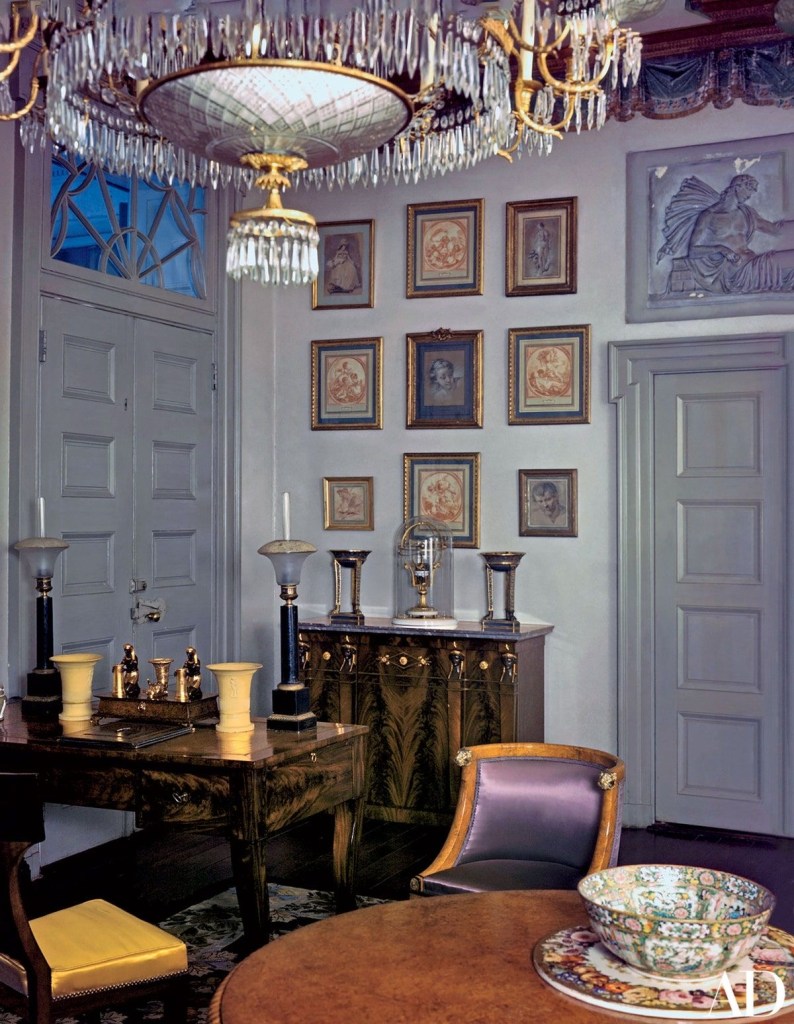
Interior of Claremont during the ownership of Millicent Rogers