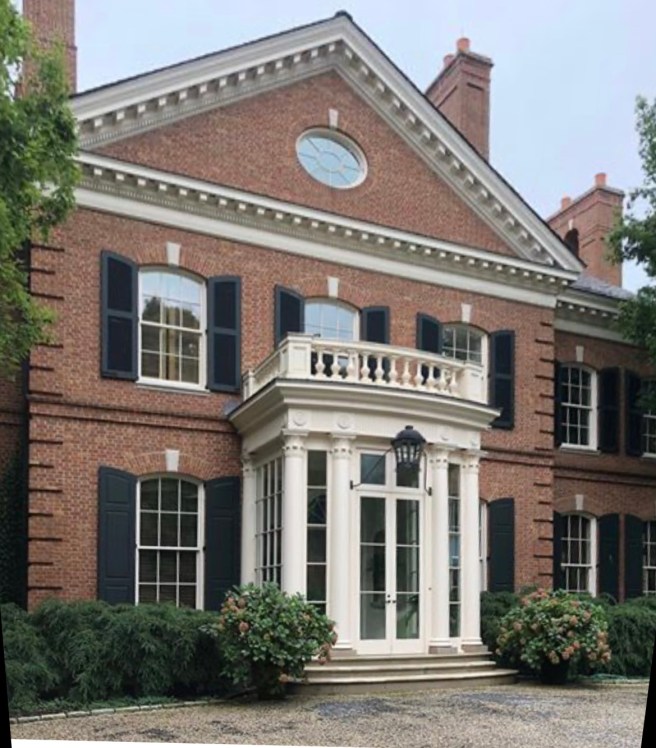
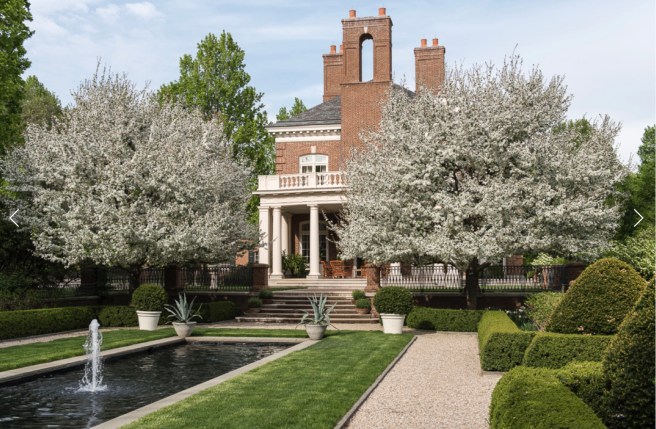
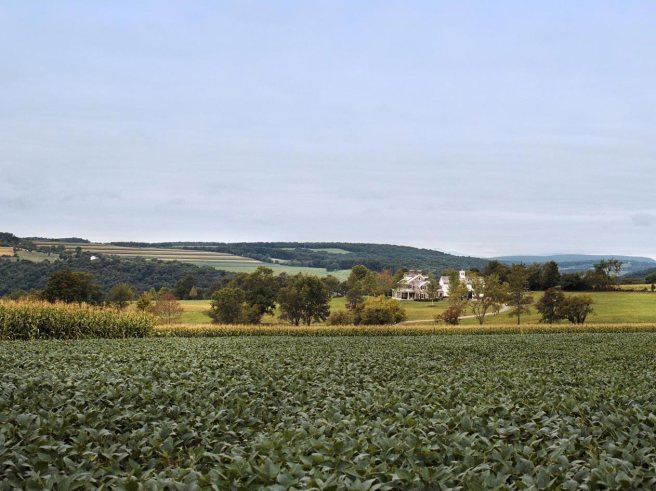
This house and its surrounding gardens is known as Twin Maples. The house was built in 1996 and is situated on a 325 acre estate near Salisbury, Connecticut. It is the creation of a couple who were active in the arts in New York and Boston.
Twin Maples was originally part of a 1740 land grant by King George II of England to the Selleck family and, incredibly, the property has only been sold twice since then. The Sellecks hung on to it for over two hundred years. The name Twin Maples refers to two maple trees that grew at the site of a former house on the property. The Georgian style house was designed by New York architect David Easton who also designed Albemarle House near Charlottesville (click here for more on the infamous Albemarle House).
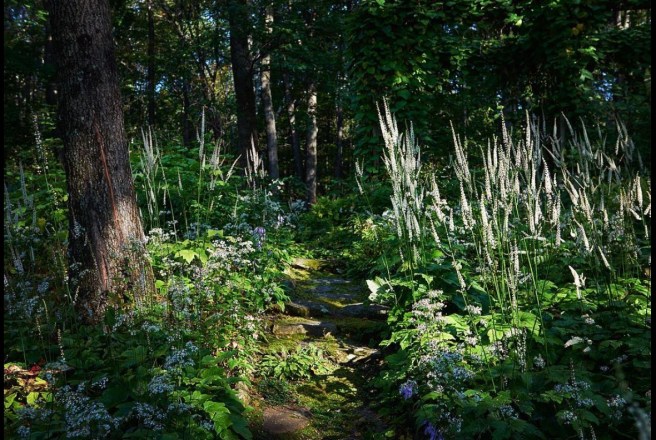
The house is gorgeous but it is the gardens at Twin Maples that really set this property apart. They include a formal garden next to the house which transitions to woodland gardens and a wildflower meadow. There is even a winter garden inside the house itself. The gardens are the work of landscape architect Rodney Robinson and plantswoman Deborah Munson. Successfully cultivating a wildflower meadow is one of the most difficult things to pull off in gardening but this meadow, designed by Larry Weaner, along with the other gardens has won multiple awards. The entire garden ensemble has also been recognized by the Smithsonian Institution.
Twin Maples is still a private home and is not open to the public although the gardens are occasionally included on local garden tours. A few miles to the north is another significant country estate, the Scoville Estate covered in this blog here.
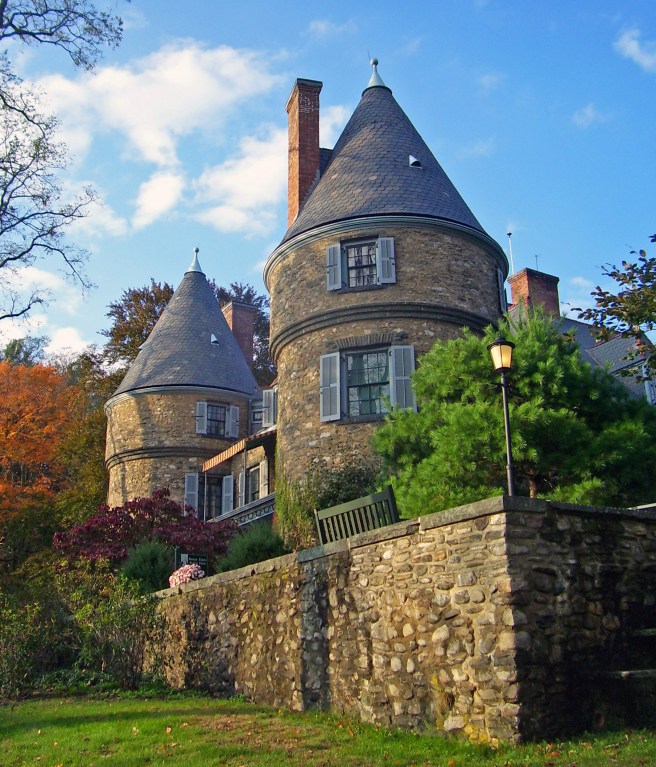
This French Norman-style house is Grey Towers. It sits on a 102 acre estate outside Milford, Pennsylvania. It was built in 1886 by James Pinchot, a successful New York City wallpaper merchant and his wife, Mary. James grew up in Milford and moved back after retiring from business to raise his family. The house was designed by Richard Morris Hunt (who designed many gilded age mansions such as Biltmore) and the grounds included contributions by Frederick Law Olmsted, the most influential American landscape architect of the 19th century.
The Pinchots lived at Grey Towers for many years before James passed away in 1908 followed by Mary in 1914. The Grey Towers estate was split between their sons, Amos and Gifford with the latter taking the house. Gifford was a graduate of Yale University with a degree in forestry and also studied forestry in France. His first job after returning from France was managing the forests on the Biltmore Estate, the North Carolina home of George Washington Vanderbilt. He attracted the attention of Presidents William McKinley and Theodore Roosevelt who appointed him as the first head of the U.S. Forest Service. In this role, Pinchot was a staunch conservation advocate and fought against the industrial forestry practices that characterized the Forest Service during most of the 20th century.
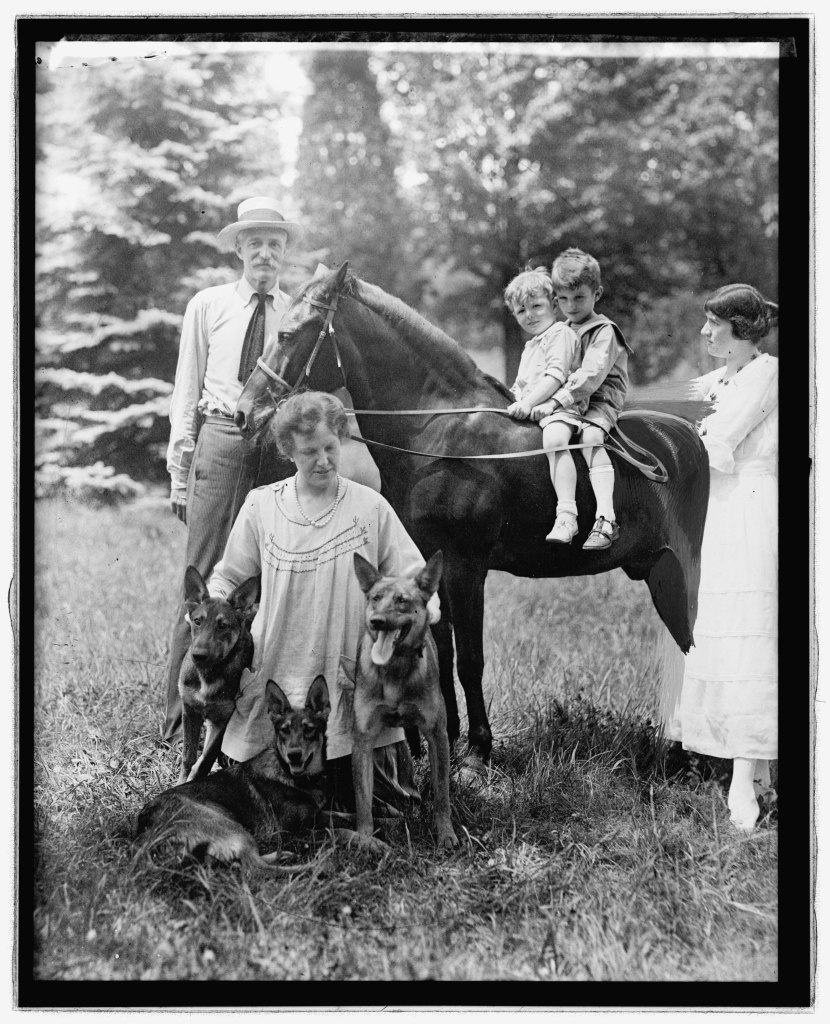
The Pinchots at Grey Towers, 1921
After leaving the Forest Service in 1910, Gifford served as Governor of Pennsylvania for two terms. Cornelia was active in the women’s suffrage movement and was a major donor to the NAACP. She was a close friend of Teddy Roosevelt and shared his passion for progressive causes. She also tried her hand at politics but was unsuccessful in runs for Congress and the Pennsylvania Governorship. The Pinchot family used Grey Towers mostly as a summer home. Gifford passed away in 1946 followed by Cornelia in 1960. Their son, Gifford Jr., donated Grey Towers to the U.S. Forest Service as a house museum and a conference/educational center focusing on conservation. Grey Towers is the only non-forest asset managed by the Forest Service. The house and gardens are open to the public on a daily basis. Click here for more info on Grey Towers or here for a YouTube video showing scenes from Grey Towers.
Gifford Pinchot’s legacy of forest stewardship lives on today. The Gifford Pinchot National Forest in Washington State is named after him along with several other natural and geographic features around the U.S. The Giffords son, Gifford Jr., helped found the Natural Resources Defense Council (NRDC), one of the preeminent environmental legal advocacy organizations in the U.S. today.
Longfield Farm was designed by architect Gil Schafer and completed in 2007. The federal style home is clad in fieldstone and sits on a 400 acre farm near Amenia, New York. Longfield was built by Richard ‘Duke’ and Hannah Buchan who also have homes in New York City and Palm Beach, FL. The Buchans both have backgrounds in asset management on Wall Street and Duke served as ambassador to Spain and Andorra during the Trump administration.
The Buchans raise horses on the farm and also grow several dozen varieties of heirloom tomatoes. The farm and house are not open to the public although supposedly you can buy their produce at a nearby farm stand.
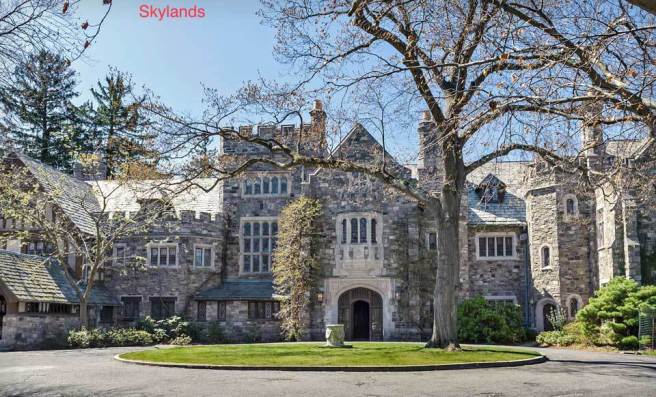
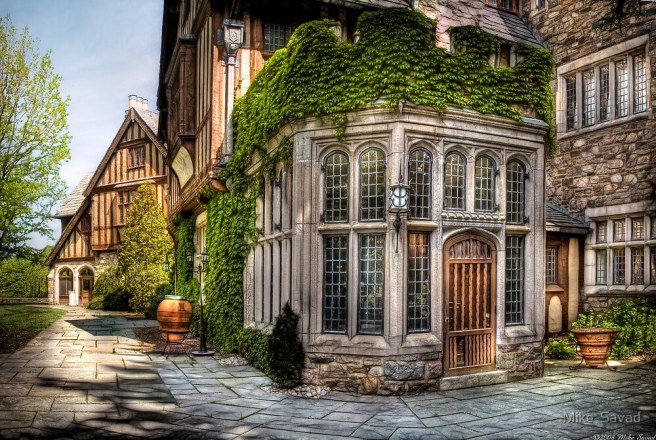
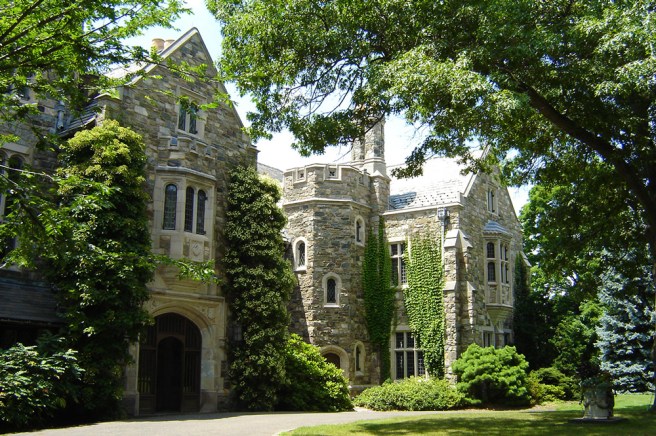
This tudoresque mansion and the surrounding gardens is known as Skylands and is located near Ringwood, New Jersey. It forms the New Jersey State Botanical Gardens and is part of Ringwood State Park but a century ago it was the country weekend retreat of Francis Lynde Stetson, a New York corporation and railroad attorney who was also the personal lawyer for J. P. Morgan, the preeminent financial engineer of the gilded age. Stetson built a granite mansion on the site and assembled enough land to create a 1,100 acre estate. After Mr. Stetson passed away in 1920, Skylands was sold to investment banker and engineer, Clarence Lewis. Clarence tore down the existing mansion and hired the architect, John Russell Pope, to design the current Tudor-revival mansion which measures 35,000 square feet. Among Pope’s other famous commissions are the Jefferson Memorial and the National Gallery of Art in Washington D.C. In keeping with a common decorating practice of the time, the interior was decorated with portions of English manor houses that were dismantled, shipped across the Atlantic, and then reinstalled.
Mr. Lewis was a trustee of the New York Botanical Garden and set out to create his own botanical showcase on his estate. The basic design was created by landscape architect, Samuel Parsons, a protege of the famous Olmsted firm, during Stetson’s ownership. But Mr. Lewis was also a first rate plantsman who developed an interest in horticulture from working in the garden with his wife, Annah, in their previous home in nearby Mahwah. Annah passed away before Clarence bought Skylands but he continued to pursue an interest in horticulture, traveling the world looking for specimens to transplant at Skylands and also donating plants to nearby nurseries and gardens. Heartbroken over his wife’s untimely death, Mr. Lewis did not remarry and his mother, Helen Salomon, was largely responsible for decorating the interiors.
Mr. Lewis sold Skylands to Shelton College, a christian liberal arts college, in 1953 and the estate was then used for teaching and college functions. Unfortunately, Shelton did not keep up with the landscaping with the same dedication and vision as Clarence Lewis and the grounds deteriorated during the college’s ownership. In 1966, Shelton was looking to unload Skylands and the State of New Jersey stepped up and bought the estate. Amazingly, local gardeners and nurseries who had benefited from Clarence Lewis’ plant donations in previous decades returned the favor and helped to revitalize the gardens and grounds of Skylands using the same plant stock. Today Skylands is one of the preeminent examples of estate gardening in North America.
The grounds of Skylands are open to the public but the house is only open for tours intermittently. If you’re getting married, you can rent the house and a portion of the grounds for your ceremony. Click here for further information about Skylands and the New Jersey State Botanical Garden and here and here for a couple of contemplative Youtube videos presenting Skylands.
Castles are dotted all over western and Central Europe. Originally designed to defend the lord of the castle and his subjects from marauders, castles eventually were converted to strictly residential purposes and many of Europe’s castles still serve as private homes to this day. Many assorted dreamers and loonies in North America have attempted to build authentic looking castles but most attempts have failed to replicate the aesthetic and construction values of the castles of Europe.
Charlotte Bronson Hunnewell Martin, the first mistress of Hidden Valley Castle
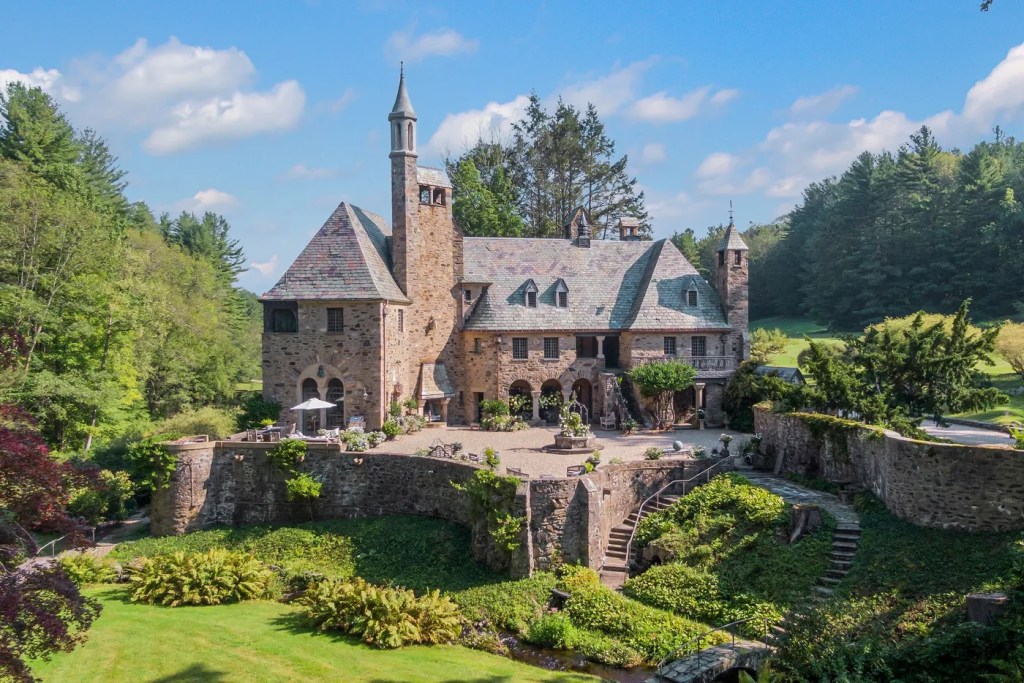
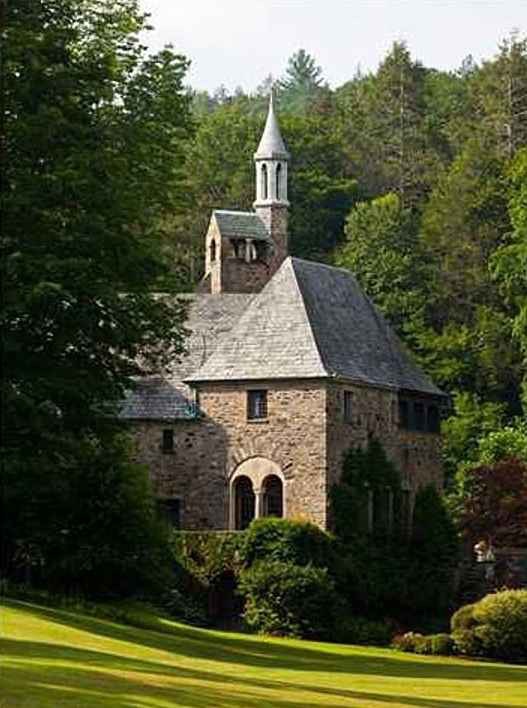
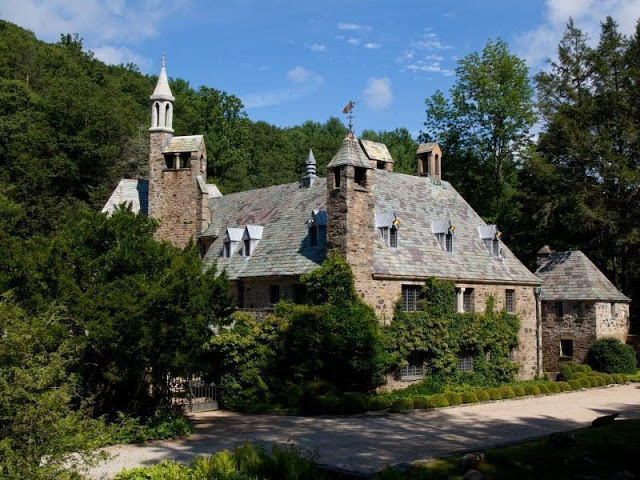
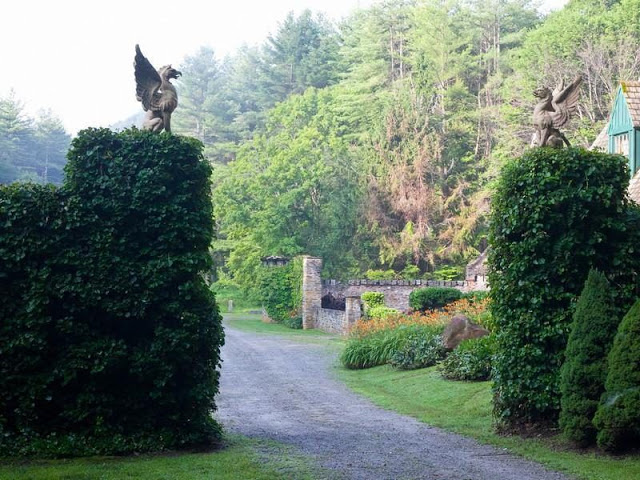
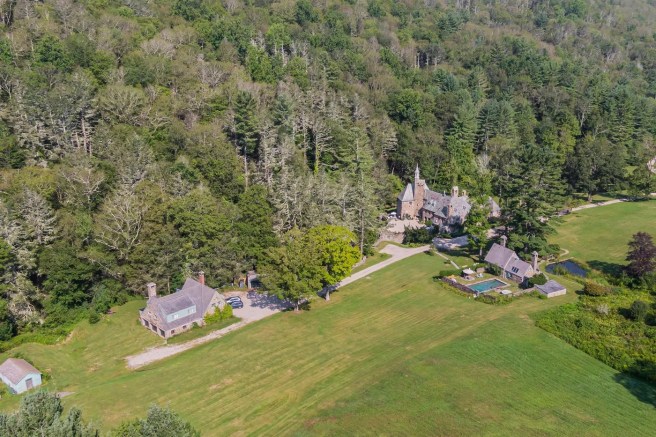
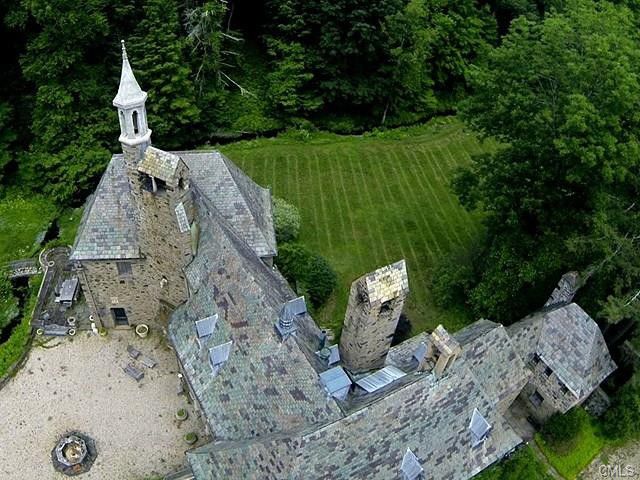
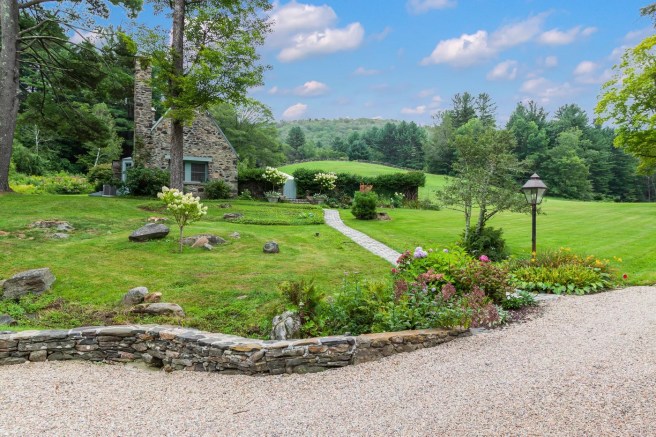
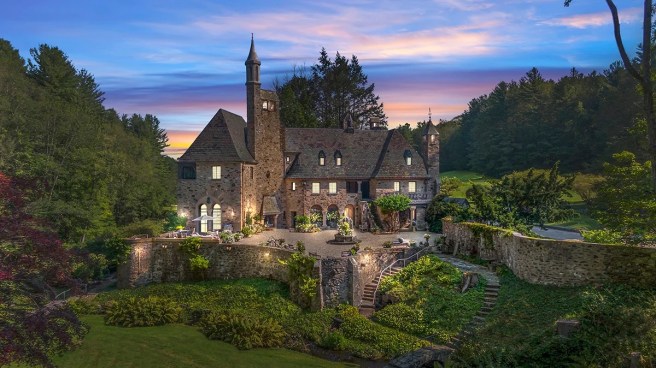
One of the rare exceptions is a home known as Cornwall Castle located near Cornwall, Connecticut in the Litchfield Hills (AKA Hidden Valley Castle). The castle was designed by the architect, Edward Dean, and completed in 1925 for wealthy New York socialite Charlotte Bronson Hunnewell Martin and her husband, Dr. Walton Martin, a surgeon. The castle sits on 275 acres of woodland and streams and includes several outbuildings. Charlotte came from old Massachusetts railroading and banking money and loved the concept of European nobility so much that she and the doctor built the house in a storybook castle style. The doctor completed the illusion by occasionally riding around the estate on a white horse wearing a red cape. In addition to the castle, Charlotte also developed a set of row houses with a shared garden in Manhattan known as Turtle Bay Gardens. Residents of Turtle Bay have included Katherine Hepburn, composer Stephen Sondheim, famous twin Mary-Kate Olsen and the author of Charlotte’s Web, E.B. White, who allegedly named the spider after his landlord. Dr. Martin passed away in 1949 and Charlotte in 1961. Charlotte cut her only child out the will and the castle was subsequently sold.
The castle has had a series of lords since then including financier Saul Steinberg, a flashy New York financier from the 1980s era of junk bonds. Mr. Steinberg sold the castle in 1983 complaining about the bugs and insects that lived in the woods and fields around the castle and retreated back to his Manhattan co-op. Next up was former Macy’s executive, Joseph Cicio, who tried to renovate the castle, ran short of money and sold in 1988.
In 2001, Alphonse ‘Buddy’ Fletcher bought the castle. Mr. Fletcher was a New York hedge fund manager who burned through $212 million of his client’s money before declaring bankruptcy and being investigated by the SEC. Judges and officials involved in the investigations hailed from places like the Cayman Islands and Bermuda throwing a further whiff of suspicion and disrepute onto the affairs of the one-time lord of Cornwall Castle. In 2014, his lordship also fell behind on the mortgage payments and the castle was foreclosed upon in 2015.
In 2019 the castle and estate were purchased by a local Litchfield County builder and his wife for $1.6 million. They did extensive renovations and flipped it for $3.7 million in late 2022. The castle is still a private home and is not open to the public. A video describing the property can be viewed here. Hopefully, the new lord or lady of Cornwall Castle can provide the stability and commitment that it richly deserves as potentially the preeminent example of storybook and castle architecture in North America.
The Vanderbilt family is famous for incalculable wealth, gilded age mansions, blue jeans and Anderson Cooper. Many fans of gilded age mansions know about those that were built by members of the Vanderbilt clan such as the Biltmore Estate in North Carolina (click here for more on Biltmore), The Breakers in Newport, RI or Hyde Park in New York (click here for more on Hyde Park). Most people assume that the Vanderbilt mansions have long since been converted into museums and that the Vanderbilt descendants now live like the rest of us mere mortals. Although some Vanderbilt descendants have done well in business, the arts or academia or are minor members of the English aristocracy others lead decidedly middle class lives.
The Vanderbilt fortune that was built up in the 19th century through astute investments in steamships and railroads has been so diluted through inheritance and multiple divorces or squandered on fine living throughout the decades that most contemporary Vanderbilts are merely comfortable, not filthy rich. By way of example, one of the bigger chunks of contemporary Vanderbilt money is in the hands of someone with no Vanderbilt blood at all (and potentially has never even met a Vanderbilt). A certain John Hendrickson had been working as a government official in Alaska and living in a two-bedroom condo in Anchorage when he met and married former actress and horse breeder Marylou Whitney. Marylou, in turn, had previously been the fourth and final wife of Cornelius Vanderbilt Whitney and inherited $100 million when C.V. died in 1992. When Marylou (who was 40 years older than John) died in 2019, the former Alaska government employee inherited her fortune.
Due to these sorts of twists and turns, contemporary Vanderbilts mostly live in nice, but unremarkable homes. But there are a few exceptions. One truly notable exception is the home of James Spencer-Churchill, the 12th Duke of Marlborough and great grandson of the famously reluctant bride, Consuelo Vanderbilt. The Duke owns (and sometimes even lives in) England’s Blenheim Palace, which is almost twice as large, and also twice as nice, as the Biltmore Estate. For more on Biltmore, click here. On this side of the Atlantic sits a more down-to-earth exception known as High Lawn, nestled in the Berkshire Mountains near Lee, Massachusetts.
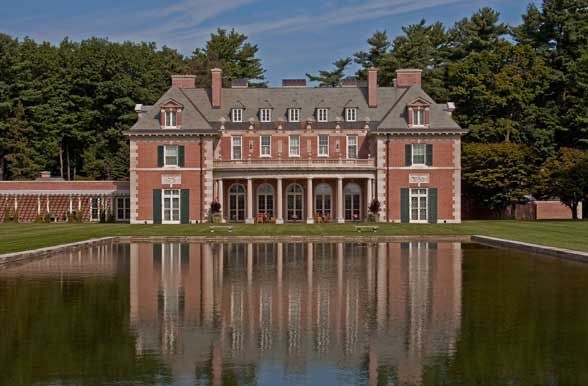
High Lawn was designed by the New York architectural firm of Delano and Aldrich and completed in 1910. It is 25,000 square feet and sits on a 1,600 acre estate. The house was a wedding present for Lila Vanderbilt Sloan, a great grand daughter of Cornelius Vanderbilt. The bas-relief sculptures above the French doors in each bay of the facade were created by Lila’s cousin, Gertrude Vanderbilt Whitney. Along with the pleasing proportions, red brick, dormers and the limestone quoins, High Lawn is a striking example of Georgian revival house design. I only have one quibble: would it have killed the architect or the builder to match the chimneys visible from the front?
Cornelius Vanderbilt was known as “The Commodore” and at one time was the richest person in the United States. Cornelius started off with a single sail boat ferrying passengers between Staten Island and Manhattan, built a fleet of steamships and eventually ended up with a railroad empire with the New York Central Railroad as the centerpiece. Known to his contemporaries as crude, brutal and vulgar and barely literate, Cornelius nevertheless was a brilliant business innovator and built up a fortune that would be worth $200 billion in today’s dollars, on par with Jeff Bezos or Bill Gates. BTW, in fairness to old Corny, most of his competitors back in the day were also crude, brutal and vulgar.
Lila and her husband, William Osgood Field, used High Lawn as a vacation home and upon Lila’s death in 1934, the estate was purchased by her daughter, Marjorie Field. Marjorie and her husband, H. George Wilde, developed a dairy farm business on the property, High Lawn Farm, that has become internationally renown for breeding high quality jersey cows. The farm is still in operation to this day and can be visited by the public although High Lawn House is still a private home and not open to the public nor is the house visible from the dairy or any public road. If you do visit the dairy, stop by the store and try their purple cow milk shake.
Marjorie passed away in 1997 and the estate and farm came under the control of her son, George William “Bill” Wilde, a great great great grandchild of The Commodore. Bill, who passed away in 2013, was a graduate of Princeton and the Harvard Business School, served in the U.S. Marine Corps and was an investor in addition to being in the dairy business. Presumably, High Lawn is now controlled by his widow and heirs.
High Lawn lives on as one of the few (and probably the only) “Vanderbilt mansion” that is still lived in by a Vanderbilt, going on 115 years of continuous family ownership (140 years if you count just ownership of the land).
Just one mile north of High Lawn is another beautiful country house, The Mount, which is covered in this blog (click here for more).
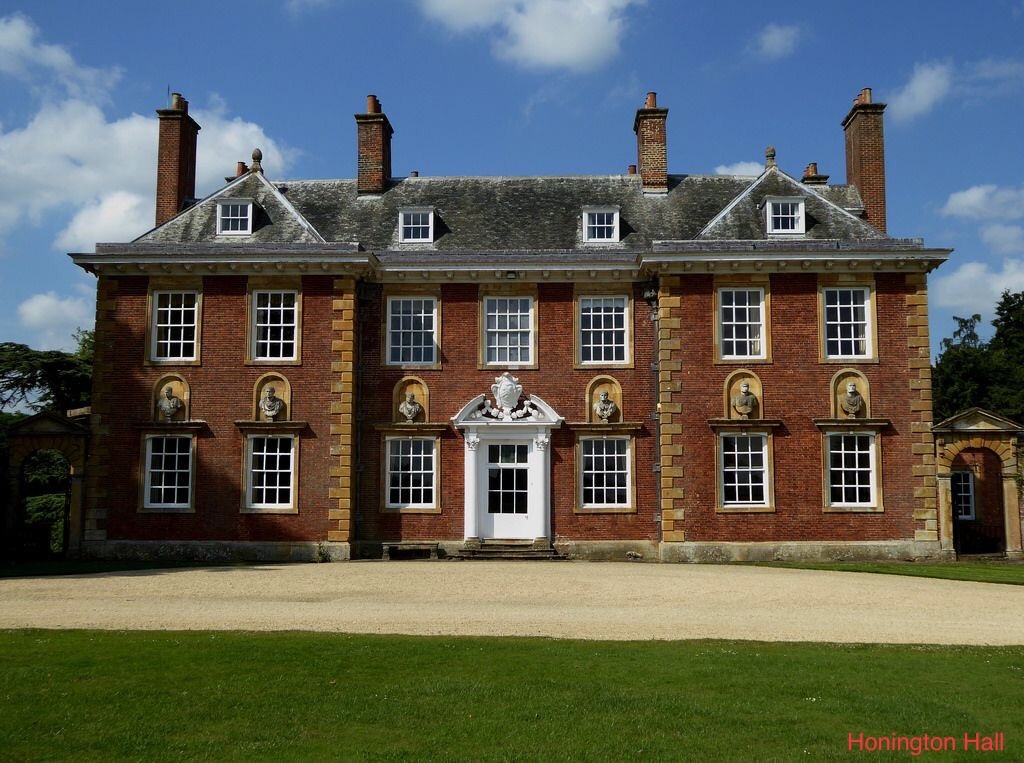
Blenheim Palace in England, a “Vanderbilt Mansion” that predates the Vanderbilts by 150 years and at 301,000 square feet is almost twice as large as Biltmore. The owner is the 12th Duke of Marlborough and the great great great great grandson of the Commodore, Cornelius Vanderbilt. Hold my beer, Biltmore.English perfection in Honington Hall in Warwickshire built in the 17th century. Could this house be the inspiration for High Lawn?
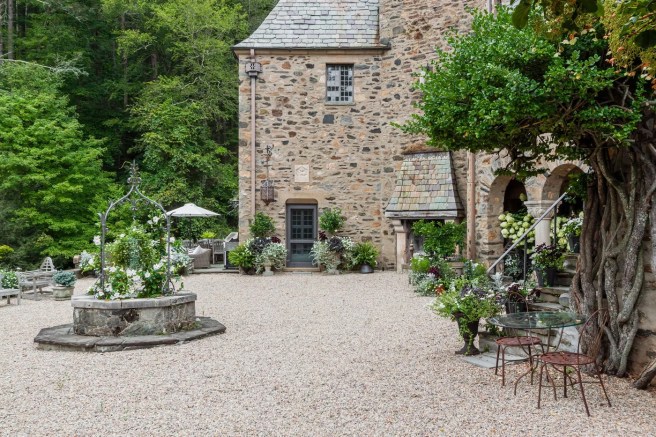
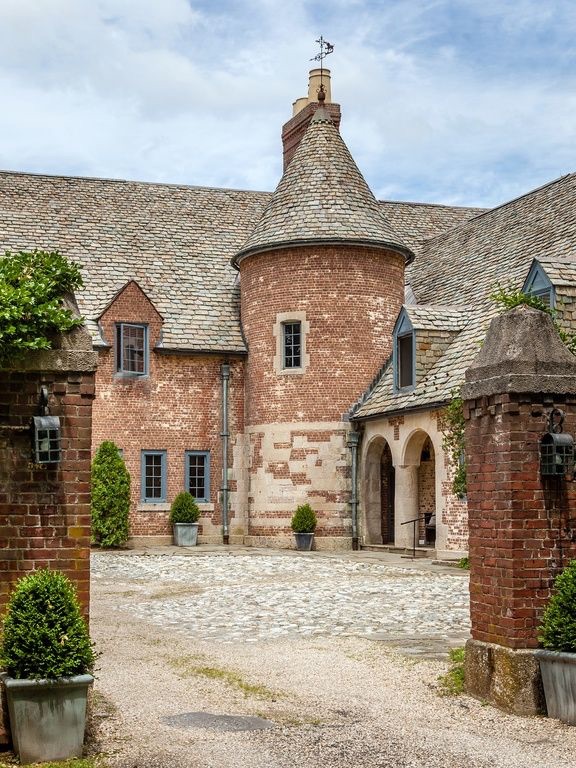
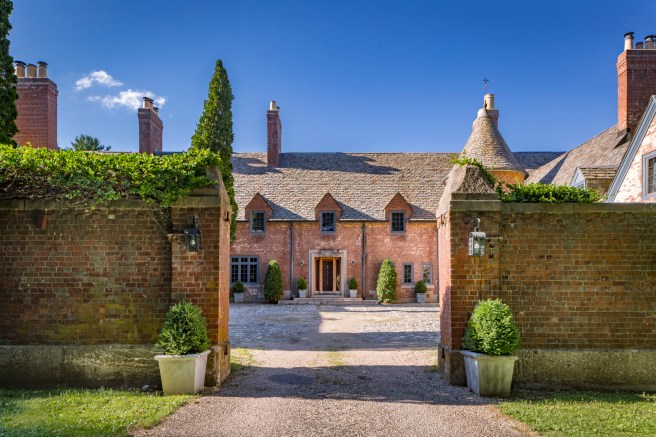
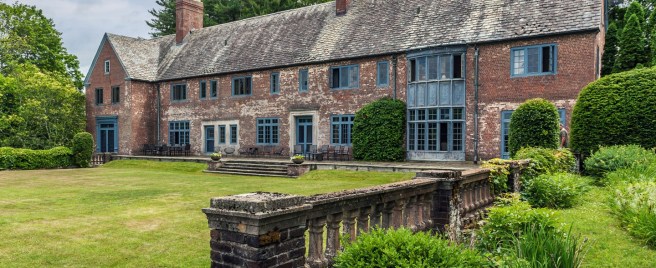
This beautiful French Norman farmhouse-style country house is the Scoville Estate. It is located in Taconic near Salisbury, Connecticut in the Litchfield Hills. The house is 12,400 square feet and sits on a 100 acre estate with fine views of the surrounding hills. Meryl Streep is a next door neighbor. It is not the largest, most expensive or plushest country estate in North America but IMO is one of the coolest.
The Scoville family has a history around Taconic going back to the 19th century when a local farmer named Samuel Scoville began mining high quality iron ore on his property. His sons, Jonathan and Nathaniel, moved to Buffalo, NY and expanded the business and the family fortune by manufacturing iron railroad car wheels. Nathaniel had two sons, Robert and Herbert, who moved back to Taconic with their mother, bought more land to add to the family estate and constructed a manor house in 1894. This house burned in 1915 but several structures associated with the house such as the carriage house and a power mill remain to this day. These structures have, in turn, been converted into residences.
Herbert Scoville and his wife, Orlena, constructed the French Norman house situated to the west of the original manor house in 1927. It was designed by Joseph Leland of Boston. Orlena lived until 1967 and the house was, at some point, taken over by her son, Herbert Jr. and his wife, Ann. Herbert Jr. was a trained scientist who worked at the CIA for many years and then the Arms Control and Disarmament Agency. He was a tireless proponent of nuclear disarmament and dedicated the latter part of his life to this cause. His wife, Ann, was a noted sculptor and many of her pieces decorated the grounds of their Connecticut estate (which they usually referred to as the “Hill House”).
Herbert Jr. died in 1985 and after Ann passed away in 2014, the heirs made the decision to sell the estate and it sold for $5.8 million in 2017. Thus ended over 150 years of family ownership. The new owners are a couple that are associated with an investment firm focusing on sustainable technologies in the energy, water and waste management areas. Scoville Estate continues to serve as a private home and is not open to the public.
Just outside the nearby town of Salisbury is another country estate covered in this blog, Twin Maples – click here.





















 North American Country Estates