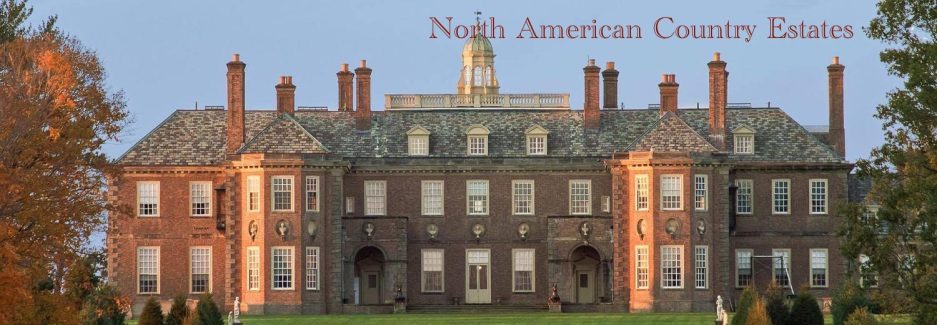
The Livingstons

Unlike much of the world the United States has never had a royal family (except for Hawaii) or a class of nobles or titled aristocrats. Founding fathers such as George Washington, James Madison and Thomas Jefferson may have lived on big estates like English squires but they were never addressed as the Duke of Virginia or the Earl of Charlottesville. Like you and me they were commoners. Many Americans believe that the Kennedys are the closest thing to royalty in the U.S. However, there is another family that would have a better claim. The Livingstons of New York have not only lived like aristocrats since the 17th Century but have produced signers of the Declaration of Independence and the Constitution, Presidents, diplomats, members of congress and cabinet secretaries and have had a long and continuing influence on political life in the U.S. This post presents a brief history of the Livingstons and some of the country estates and mansions they built which for the most part still exist today.

Livingston family coat of arms

The Livingston experience in America started in 1674 when 21 year old Robert Livingston arrived in Boston after having lived in the Netherlands with his Scottish parents. His father, the Reverend John Livingston, was banished from Great Britain in 1662 for not pledging loyalty to the recently enthroned King Charles II in the aftermath of the English Civil War. The Livingstons settled in Rotterdam where young Robert studied commerce and became fluent in Dutch. These skills served Robert well in the new world when he settled in Albany, New York which had recently been part of the Dutch colony of New Netherlands and where the power elite was still mostly composed of Dutch traders and landowners. One of these landowners was Nicholas Van Rensselaer who controlled the 700,000 acre Rensselaerwyck manor in the Hudson River Valley (roughly between Albany and Kindershook). Nicholas took a liking to the enterprising scotsman and appointed him as his secretary and as “Indian agent” on the manor. Within a couple of years Nicholas died and Robert married his widow, the brilliant and hard-charging Alida Schuyler of the influential Schuyler family. Together this power couple took charge over the commerce and politics of Albany and the Hudson River valley. In addition to managing extensive real estate holdings, the Livingstons financed slave trading and high seas piracy and Robert served in the Provincial Assembly of New York for many years.
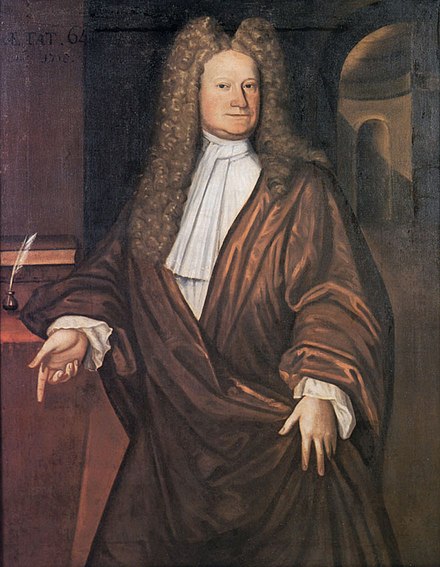
Robert Livingston the Elder, the 1st Lord of Livingston Manor (1654-1728)

In 1686, Robert and Alida received a land grant of 160,000 acres on the left bank of the Hudson (roughly the southern third of today’s Columbia County) and the Livingston Manor was born. Contrary to popular belief, a manor was not a house but a unit of land and a political subdivision that was owned by a private individual. Manors were the prevailing form of land ownership and political subdivision in Europe at the time and the system was introduced to French, Dutch, Spanish and British colonies in North America in the 17th century. Manors were usually granted to favored individuals that demonstrated great administrative and commercial abilities with the blessing of whichever king was reigning back in England. Often times the owner of a manor in North America was the second-born son of a manorial lord in the old country where the first-born son would inherit the entire estate, a system known as primogeniture that still exists today in the U.K. although now daughters can inherit as well. George Washington’s estate, Mount Vernon, and Thomas Jefferson’s Monticello were manorial-type estates originally granted by colonial governors .

The owners of manors, usually referred to as a lord (British), patroon (Dutch), seigneur (French) or a don (colonial-era California), were granted extensive civil, judicial and governance powers over their manorial lands. The lord of a manor was in effect the landlord, governor, mayor and judge for those who lived on the manor. In return, the lord was expected by the sovereign or their colonial representative to govern competently, make the land prosperous, collect taxes and rents and settle disputes. Owners of manors would typically build a nice house on their property from which to administer the manor and this became known as the “manor house.” Many famous stately homes in the U.K. started out as manor houses and the term has come to be equated with any large, classically designed house whether or not it had anything to do with an actual manor. Interestingly, manor houses were not particularly exclusive or private in centuries past and manor tenants would often eat their meals and party on a daily basis with the lord in the house itself.

Manorial lands were farmed by tenant farmers who paid rents to the lord of the manor in the form of cash, crops or labor. Tenancies would usually pass from generation to generation pretty much tying the tenants to the land. Being a tenant on a manor was better than being a slave but your options and opportunities were still limited. Although it sounds harsh by today’s standards, manorial systems of governance made sense back in the day when central governments were relatively weak and communication and transportation was difficult and arduous.

Manorial systems slowly died out in Europe and North America as citizens demanded more rights and economic autonomy but remnants of the manor system still exist today. Manorial estates still predominate today in England with some dating back to the 16th century when King Henry VIII confiscated all the lands owned by the Catholic Church (which was most of England) and divvied it out to his favorite courtiers. The last manorial rents in Quebec were paid as late as 1970. To the present day some homeowners in Maryland still pay “ground rent” twice a year to some landlord, a relic of the days when Maryland was the domain of the colonial landowner and governor, the Baron Baltimore. (The 6th and final Baron Baltimore who ruled the colony before the British were kicked out actually never set foot in Maryland and reputedly spent all his income on drugs and prostitutes).

The Livingston Manor was largely settled by German refugees (hence the present-day town of Germantown in Columbia County). At its peak, the manor covered 700,000 acres. Robert (the Elder) and Alida Livingston had nine children and passed away in 1728 and 1727 respectively. Unlike in England where manorial estates were passed intact to first-born sons, the Livingston Manor was divided between his third and fourth sons, Philip and Robert. Robert the Younger founded the Clermont Manor, site of the Clermont mansion (shown above), on a 13,000 acre parcel carved out of the larger manor. Philip became the Lord of Livingston manor and he and his wife, Catherine, had 11 children including signers of the Declaration of Independence and the U.S. Constitution. Philip’s oldest son, yet another Robert, inherited Livingston Manor in 1749 but upon his death in 1790 the estate was divided among his five sons (which included another Robert) and a son-in-law.

The demise of the Livingston Manor as a viable real estate business was sealed during the “Anti-Rent Wars” of the 1840s. As the Livingston estate was subdivided among various heirs a problem arose as the ratio of rent-paying tenants to Livingston family landlords decreased. Like other manorial landlords who found themselves in the same boat, the Livingstons responded by becoming more aggressive about collecting delinquent rents and cracking down on unpermitted logging and mining. Manor tenants, emboldened by the new ideas of Jacksonian democracy, revolted against the landlord-tenant system and worked through the courts, the state legislature and used a fair amount of violence to abolish the semi-feudal system which predominated in New York. By 1850 the manor system was all but dead.

The Livingston lands, now not so lucrative as they had been, continued to be divided among heirs over the decades or were sold off. It was fairly common for Livingstons to marry cousins or in-laws to try and keep the ancestral lands within the family but over time most of the historic Livingston Manor passed out of family ownership. However, remnants of the estate are still owned by Livingston descendants in the present day.

Map of the Livingston Manor (the smaller pink shape at bottom of photo)

Livingston descendants have had prominent roles in the political, social and artistic spheres in the United States right up to the present day. Descendants include Eleanor Roosevelt, David Crosby, founder and guitarist of Crosby, Stills, Nash and Young, and actors Jane Wyatt and Montgomery Clift. President George H. W. Bush was a 10th generation descendant of Lord Robert the Elder. The Livingstons linked up with the Astor family in 1818 when a Livingston married the son of John Jacob Astor (America’s first multi-millionaire and New York City slumlord). Their daughter-in-law was Caroline Astor “The Mrs. Astor” who invented social snobbery in America with her list of the 400 people it was deemed acceptable to invite to parties. The Livingstons also linked up through marriage with other prominent New York landlord dynasties such as the Van Rensselaers (owners of the Rennselaerwyck Manor), Van Cortlandts, Goelets and Schermerhorns and also had links to the Roosevelt and the Phipps family that gained their fortune from Carnegie Steel (later U.S. Steel). There is even a Livingston link (by marriage, not blood) with the Vanderbilt family.

The Livingstons built 20-30 mansions (depending on how you define a mansion) along the Hudson River in Columbia and Dutchess counties over the decades. Most of these still exist although most were sold out of the family over the years. The following paragraphs describe ten of the more notable or architecturally distinguished homes.

Clermont
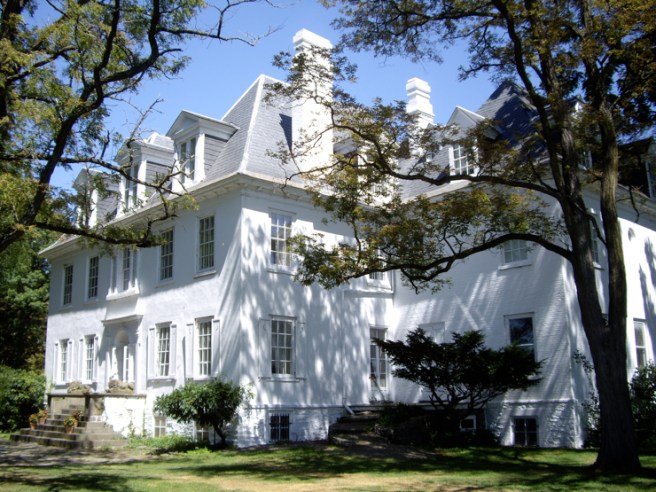
Clermont

Robert Livingston the Younger was the third son of the original Lord of Livingston Manor. He was educated in Scotland and England and briefly practiced law in Albany before returning to the Hudson Valley to help manage the manor. Upon the death of his father in 1728, he inherited a 13,000 acre chunk of the Livingston Manor south of the present day town of Germantown. He named his estate Clare (“Clear”) Mount because of the fine view of the Catskill Mountains from his picturesque home overlooking the river. Robert the Younger expanded his estate south into Dutchess County and across the river during his tenure and by the time he died in 1775 the estate amounted to 600,000 acres. Clermont passed to his son, another Robert, who was referred to as “Judge Livingston” but the Judge died a few months later and the estate was then managed by his widow, Margaret Beekman Livingston, for the next several years. In 1777 the British army sailed up the Hudson River burning and pillaging as they went and burned Clare Mount house down as punishment for the Livingston family’s support of the American Revolution. Margaret had the house rebuilt to its present form by 1782 and renamed the house and estate Clermont (French for Clear Mountain). Her oldest son, yet another Robert, was known as “The Chancellor” in reference to the high judicial office he held in New York State. The Chancellor was one of five founding fathers who drafted the Declaration of Independence (although it was his cousin Philip who signed it) and administered the first oath of office to the new President, George Washington. He served as Minister to France under President Thomas Jefferson and in that role negotiated the Louisiana Purchase with the Government of Napoleon Bonaparte. In his spare time he was a freemason and experimented with methods of raising sheep. One of the Chancellor’s great great great granddaughters was Eleanor Roosevelt. The Chancellor’s descendants continued to live at Clermont right up to 1962 when the last of the Clermont Livingstons, Alice Delafield Clarkson Livingston, deeded the estate to the State of New York. It is now known as Clermont State Historic Site and can be visited by the public to see the house as it was furnished in the early 20th century. Click here for more information about Clermont and how to visit this fascinating and historic home.

Montgomery Place

Montgomery place

Montgomery Place dates back to 1805 and was built by Janet Livingston Montgomery and named in honor of her husband, Richard Montgomery, a general in the Continental Army fighting against the British in the American Revolution and who was killed during an unsuccessful invasion of Quebec. Janet’s mother was Margaret Beekman Livingston of Clermont. The house was inherited by Janet’s brother, Edward Livingston in 1828. Edward was a U. S. Senator representing Louisiana, Secretary of State and Minister to France under President Andrew Jackson and also a Mayor of New York City. The house stayed in the Livingston family until 1986 when it was sold to a non-profit organization and opened as a house museum after several years of renovation. In 2016, it was purchased by the adjacent Bard College and is now used as a classroom and special events center. The public can visit the property and explore the grounds and gardens. Click here for information on visiting Montgomery Place.

Callendar House

Callendar House

Callendar House is located near the town of Tivoli and was constructed in 1794 by Henry Gilbert Livingston who lived on the next estate northward along the river called The Pynes. Henry sold it the following year to a Livingston cousin. Originally called Sunning Hill, the house wasn’t dubbed Callendar House until 1860 when it was bought by Johnston Livingston after having been out of the family for a few decades. The name Callendar House was a nod to an ancestral Livingston family castle in Falkirk, Scotland that still exists. Johnston was an associate of banker J.P. Morgan and was one of the bankers who helped to mitigate financial disaster in the Panic of 1907. He was also one of the founders of both Wells Fargo Bank and American Express. Johnston’s descendants continued to live at Callendar House until 1976 when the house was put up for auction. Callendar House was then owned by a Swiss investment banker named Jean de Castella and used as a horse breeding operation. The house is currently owned by a New York City couple that work in finance especially in the energy sector and is not open to the public. Incredibly, The Pynes, the estate next door, is still owned by Livingston family descendants to the present day.

Staatsburgh

Staatsburgh

The house that would eventually become today’s Staatsburgh was built in 1833 by Morgan Lewis and his wife Gertrude Livingston who was a daughter of Margaret Beekman and Judge Livingston of Clermont. Morgan’s father had been a signer of the Declaration of Independence and Morgan himself was the third Governor of New York State as well as a State legislator. The Lewis/Livingstons had originally bought the 334 acre estate in 1792 and built a colonial style house on the site. This first house was destroyed in 1832 in a fire deliberately set by a disgruntled tenant farmer and rebuilt in a greek revival style. Three generations of Livingstons later, Ruth Livingston and her husband, Ogden Mills, hired architects McKim, Mead and White to remodel and enlarge Staatsburgh in 1896 by essentially building the Beaux-Arts mansion that stands there today over and around the existing house. The Mills’ also had homes in California (where Ogden’s father made his fortune in the gold fields), Paris, New York City and Newport, Rhode Island. Staatsburgh was just their weekend place while they were staying in the City. Their son, Ogden Livingston Mills, inherited Staatsburgh in 1929. Ogden Jr. was the U.S. Secretary of the Treasury when the Great Depression started and he convinced President Herbert Hoover to respond with tax increases and fiscal austerity which, as it turned out, made the depression even worse. Ogden’s sister, Gladys Mills Phipps, inherited Staatsburgh in 1937 but soon afterwards donated the estate, since expanded to 1,600 acres, to the State of New York for use as a state park. Unfortunately, the State failed to properly maintain Staatsburgh and the house deteriorated over the ensuing decades. It wasn’t until just recently that a concerted effort was made to try and rehabilitate the house. Part of the problem is that the 1896 construction was done in a very slipshod manner and the consequences have magnified over the years. Staatsburgh is open to the public and while the exterior of the house is in marginal condition the interior rooms are extravagantly furnished and show the house in all of its gilded age glory. For more information on Staatsburgh including how to visit, click here. Another house designed by McKim, Mead and White is a few miles south in Hyde Park, the Vanderbilt mansion – click here for more.

Teviotdale

Teviotdale

Teviotdale was designed and built in 1774 by Walter Livingston, the sixth child of Robert Livingston, the third and final Lord of Livingston Manor. Teviotdale is located southeast of the town of Linlithgo and, unlike most of the Livingston homes, is well inland from the Hudson River. Walter married his cousin, Cornelia Schuyler, who herself was related to Alida Schuyler who founded the Livingston Manor with Robert the Elder. As mentioned previously, marrying cousins and in-laws was one way the Livingstons tried to keep the family real estate business intact. Walter and Cornelia had six children and the youngest, Harriet Livingston, married Robert Fulton, in 1808. Fulton was the inventor of the steamboat (christened the Clermont in honor of the family who helped finance the project). Tragically, Robert died of pneumonia seven years later after falling through ice into the frozen Hudson River while trying to rescue his attorney. It may not have been the happiest of marriages anyway as Fulton was not only obsessively busy with inventing but was also bisexual and what we would call polyamorous today. He tried to coax Harriet into polyamorous adventures but she declined. After Robert died Harriet moved into Teviotdale with her four children. Fulton had made good money from his boat inventions and between this legacy and some Livingston money Harriet was a wealthy widow. Unfortunately this situation attracted fortune hunters and a particularly bad one caught the eye of Harriet. She married Englishman, Charles Dale, in 1816 and within a few years he had burned through her inheritance including mortgaging and then losing Teviotdale through foreclosure. Teviotdale was sold to one of the house servants, Christian Cooper, and it remained in the Cooper family until it was bought by a Livingston descendant in 1927. Sadly, the house was abandoned in 1945 and largely forgotten until 1969 when it was bought and restored by interior designer Harrison Cultra and his partner Richard Barker. Upon the death of Barker in 1988, Teviotdale was willed to their friend, Victor Cornelius, a public finance specialist, who still owns it today. Mr. Cornelius has not only continued the restoration but has also bought surrounding properties to bring the estate closer to its historical extent. Teviotdale is a private home and not open to the public.

Rokeby
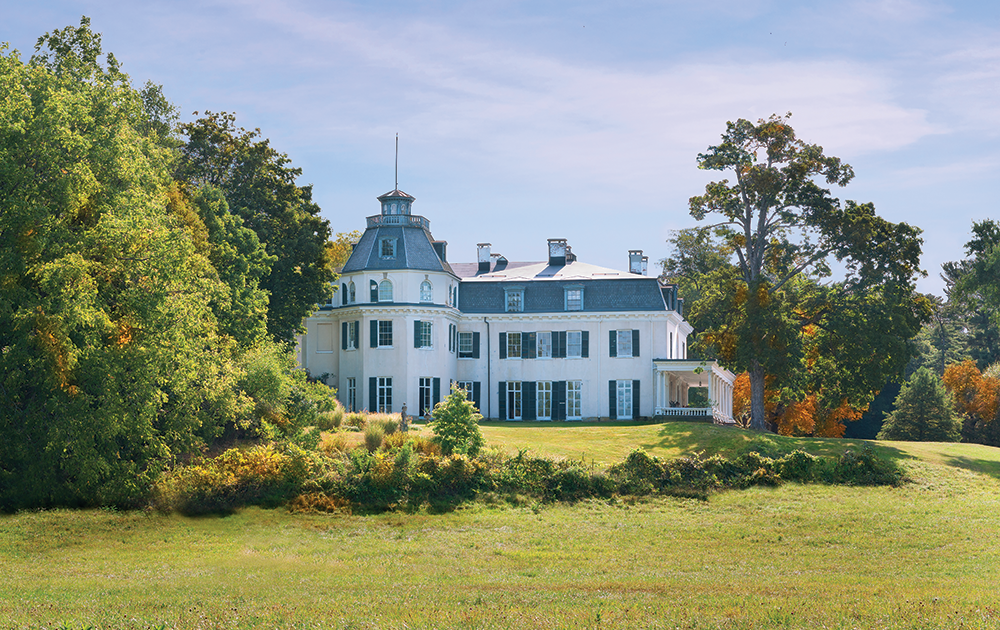
Rokeby

Rokeby is located north of Rhinebeck in a large area of woods and country estates that also include Edgewater, Sylvania and Steen Valetje, all Livingston homes covered in this post. The country estate that would become Rokeby was carved out of Clermont in 1800 after the death of Clermont’s Margaret Beekman Livingston for her daughter, Alida. Alida would marry John Armstrong in 1789. Armstrong was a U.S. Senator representing New York and Secretary of War and Minister to France (like an ambassador) under President James Madison. Armstrong had also been a member of the Continental Congress, the precursor to what we now call the U.S. Congress. He is the only member of the Continental Congress (which included most of the founding fathers of the United States) who lived long enough to be photographed. John and Alida completed Rokeby in 1815 originally calling it La Bergerie which means “sheepfold” in French and refers to the merino sheep which the Armstrong/Livingstons raised at the estate, a gift from Napoleon Bonaparte. John and Alida’s fifth child was Margaret Rebecca Armstrong who married William Backhouse Astor Sr., the son of John Jacob Astor, thereby linking the two most influential and wealthiest families in the U.S. during the early 19th century. William Astor bought La Bergerie from his father-in-law in 1836 and Margaret renamed it Rokeby after a fictional location in Scotland from a Sir Walter Scott poem.

William and Margaret’s granddaughter, Margaret “Maddie” Astor Ward, married John Winthrop Chanler in 1862. Chanler was a lawyer and member of the Winthrop family who settled Massachusetts in the 17th century. He served in Congress for seven years representing New York. John and Maddie had 11 children with eight living to adulthood. Tragically, both Maddie and John died of pneumonia within two years of each other while their children were still young. When they were orphaned the oldest, John, was just 15. The youngest was just three years old. Rokeby was left to the children, popularly known as the “Astor orphans,” and they each had a trust fund to finish their education and maintain an upper class lifestyle but they had minimal adult supervision while growing up. Thus began the strange and intriguing story of Rokeby as a sort of playhouse that continues to this day. The Astor family guarded the financial assets of the orphans and John Chanler’s cousin, Mary Marshall, became sort of a foster mother while the orphans tormented their tutors, goofed off, pulled pranks and roughhoused around the estate. By the turn of the century all the orphans had sold their share of Rokeby to the 8th orphan, Margaret Chanler, who started a dairy farm on the property with her husband, Richard Aldrich. The last surviving orphan, Alida Beekman Chanler, died in 1969. Alida was the last surviving member of “the 400,” the list of socially acceptable people according to one of her great aunts, Caroline Schermerhorn Astor, AKA “The Mrs. Astor.”

Margaret’s descendants still live at Rokeby. Whatever Astor money came down through inheritance is mostly gone and the house is in a state of genteel decay sustained by some organic farm income and hosting weddings. The house is also used as a retreat for visiting artists and writers. Incredibly, the house and the 400 acre estate is in its 338th year of Livingston/Astor family ownership. The house is not open to the general public but if you want to get married there this link has all the information. A couple of miles south of Rokeby is another Livingston/Astor house covered in this blog, Marienruh – click here for more on that.

Steen Valetje

Steen Valetje

Steen Valetje (small stony valley in Dutch) was carved out of the southernmost 100 acres of the Rokeby estate by William Backhouse Astor Sr. as a wedding gift for his daughter, Laura Eugenia Astor. Laura married Franklin Hughes Delano in 1844 and the house was completed seven years later. The Delano family had landed in North America with the same group of pilgrims who came over on the Mayflower (but on a different ship). Delano was involved in a shipping business before he married a Livingston/Astor and, afterwards, became active in managing the Astor real estate business. Franklin’s grand nephew was Franklin Delano Roosevelt, the 32nd President of the United States. Franklin and Laura Delano raised Norwegian ponies and Aberdeen Angus cattle on the estate and in later years spent most of their time in Monaco and Italy. Franklin died in 1893 and Laura gifted Steen Valetje to their nephew, Warren Delano IV, a coal company executive and a mentor to his nephew, FDR. Warren was also passionate about Norwegian horses but this hobby proved deadly when some of his horses took fright at a train and bolted into its path with Warren at the reins killing him instantly. His eldest son, Lyman Delano, inherited the estate and moved in with his wife, Leila, in 1922. They renamed it Mandara and kept it until Leila passed away in 1967. Thereafter, the estate had several owners and was renamed again to Atalanta. Currently, the estate, renamed yet again back to Steen Valetje is owned by Joseph Bae, the CEO of private equity giant Kohlberg Kravis Roberts and Co.

In addition to politics, the Delano family had wide ranging business interests in shipping, banking, railroads and drug dealing. Warren’s father, also named Warren and whose motto was “Just say yes,” made a fortune shipping Turkish opium to China in the 1840s. Another Delano, William Adams Delano, was a partner in the architecture firm of Delano and Aldrich responsible for many famous gilded age commissions in the first half of the 20th century including a significant Vanderbilt house covered in this blog, High Lawn, in the Berkshires. Click here for more on High Lawn.

Fox Hollow

Fox Hollow

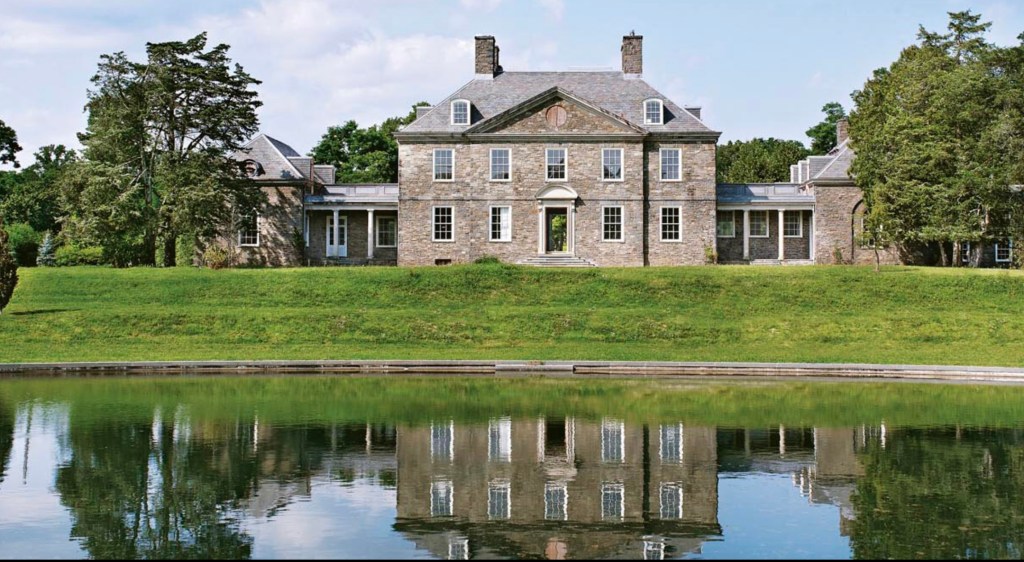
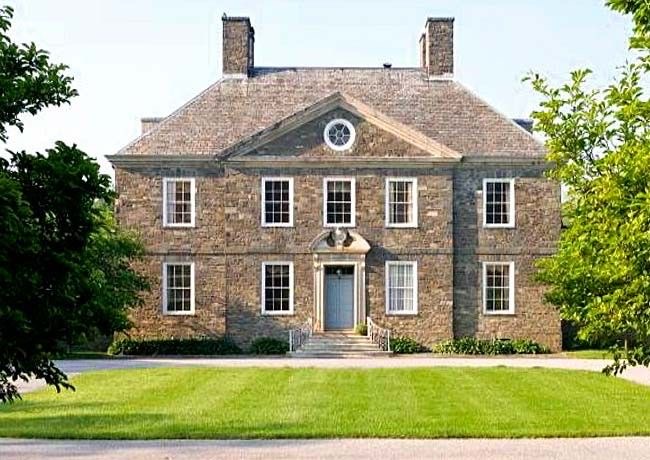
Judge Livingston and Margaret Beekman Livingston of Clermont had ten children and five of them (or their descendants) built homes discussed in this post. Their third child, Margaret Livingston, married a surgeon named Thomas Tillotson who served in the American Revolution. Thomas and Margaret developed the Linwood estate overlooking the Hudson River south of Rhinebeck starting in 1788. Ten years later Tillotson subdivided Linwood creating the Glenburn estate to the east and deeded it to his 12 year old daughter, Janet. Glenburn was later enlarged by acquiring part of the neighboring Grasmere estate (another Livingston property). Janet’s granddaughter, Alice, would marry another Hudson Valley aristocrat, Tracy “Pup” Dows, and together they hired the society architect, Harrie Lindeberg, to design and build a colonial style mansion reminiscent of Mount Vernon in 1910 and called it Fox Hollow. Tracy and Alice lived a pleasant life as Hudson Valley gentry keeping busy with riding, sailing, dancing, drinking and traveling. They had three children, Stephen, Margaret and Deborah. Deborah, was an accomplished equestrian who trained at the Spanish Riding School in Vienna, home of the famous white Lipizzaner horses. She rode and trained alongside General George S. Patton prior to the Second World War and the general later pulled strings at the end of the war to place the Spanish Riding School under U.S. Army jurisdiction so it would not fall under the control of the Soviet Red Army which was occupying Vienna at the time.

Like many post-gilded age members of the idle class, the Dows’ spent more than they earned and they had to vacate Fox Hollow in 1930 and the house became a girls school. When Tracy Dows passed away in 1937 he left Fox Hollow to his three children. They subsequently sold the estate to their distant relative, Vincent Astor, who owned Ferncliff to the north of Rhinebeck. Deborah bought back 200 acres and established a horse farm, Southlands, that still exists as a foundation focusing on equestrian activities. Vincent Astor eventually sold Fox Hollow thus ending eight generations of family ownership dating back to Robert Livingston the Elder, the Lord of Livingston Manor. Today, Fox Hollow is a residential addiction treatment center so unless you have a drug problem it’s not possible to visit the house.

In an interesting footnote, Linwood was eventually bought by a brewer named Jacob Ruppert who owned the New York Yankees from 1915 until his death in 1939. Ruppert developed the intimidating Yankee teams of the 1920s and 30s including buying Babe Ruth from the Boston Red Sox and initiating the “Curse of the Bambino” that plagued Red Sox until 2004. He also built Yankee Stadium on land that had been owned by the Astor family in the Bronx.

Edgewater and Sylvania
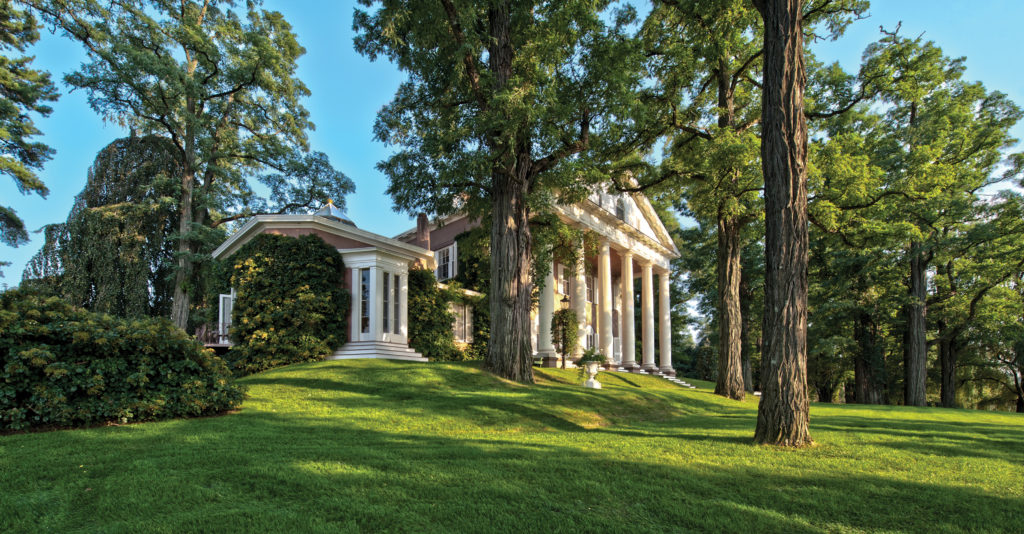
Edgewater

Edgewater sits on a 250 acre estate right on the left bank of the Hudson (on the edge of the water) just west of Barrytown. The land under Edgewater house was a wedding gift from John Livingston (one of the children of Judge Livingston of Clermont) to his daughter, Margaretta, when she married in 1819. The Neo-classical house was built soon afterwards. When Margaretta’s husband and her father died in the 1850s she sold the house and moved to London. The new owner was a New York banker named Robert Donaldson and Edgewater stayed in his family until 1902. Edgewater was then bought by a member of the Astor family, Elizabeth Astor Winthrop Chanler, one of the “Astor orphans” who grew up at neighboring Rokeby, another Livingston/Astor estate (see above). Elizabeth and her husband, writer John Jay Chapman (whose great great grandfather was John Jay, the first Chief Justice of the U.S. Supreme Court), used Edgewater house as a guest house and built another house called Sylvania on the hill behind Edgewater. Edgewater stayed in the Livingston/Astor/Chapman family until 1946. In 1950, Edgewater was bought by Gore Vidal, a writer and cultural zeitgeist during the 1960s and 1970s. Vidal was a step-brother, once removed, to Jacqueline Kennedy and was famous for defining the spirit of the age through his many witticisms that include:

“It is not enough to succeed. Others must fail”

“A narcissist is just someone who is better looking than you are”

“The United States was founded by the brightest people in the country. And we haven’t seen them since”

And finally…… “No good deed goes unpunished”

Gore Vidal was also famous for getting into very public feuds and lawsuits with other prominent writers and intellectuals such as Truman Capote (over allegations of drunkeness at the White House), conservative commentator William F. Buckley (where Buckley threatened to “sock him in the face”) and novelist Norman Mailer (about whom Vidal said “Once again, words failed Norman Mailer” after Mailer allegedly head butted Vidal backstage on the Dick Cavett Show).
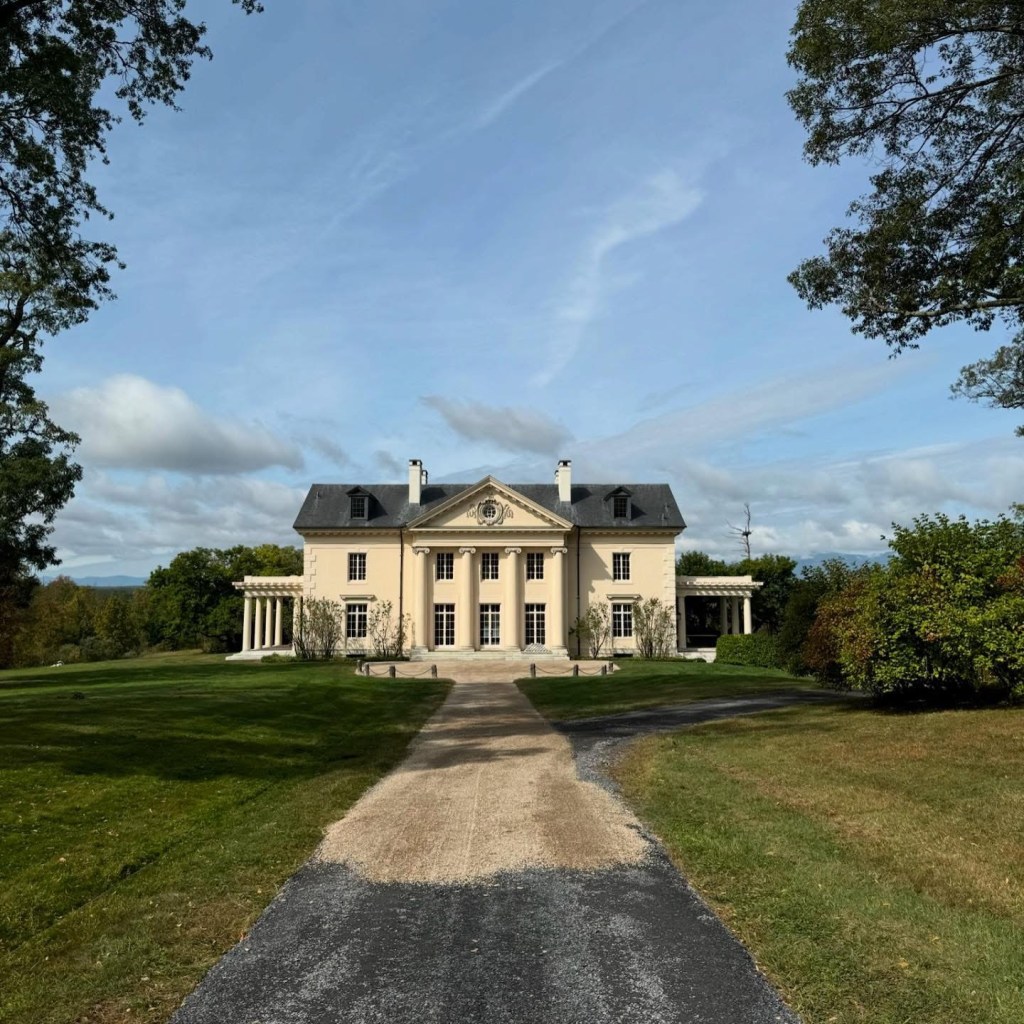
Sylvania

By 1969, Edgewater had been whittled down to just 3 acres. It was bought that year by Richard Jenrette, an investment banker who founded Donaldson, Lufkin and Jenrette (DLJ) an influential Wall Street investment bank later acquired by Credit Suisse. Jenrette bought back some of the historical estate lands east of the house and restored the house itself including historically accurate furnishings. In 2018, Jenrette created the Classical American Homes Preservation Trust which currently owns Edgewater. Edgewater can be visited by the public a few days each month. Click here for more information about Edgewater and how to visit. Sylvania is a private home and not available for visits.

Much has been written about the Livingstons and their influence continues to reverberate through the cultural and political life of the United States right up to the present day. For more information about the family and their architectural heritage on the Hudson River, consider buying Life Along the Hudson: The Historic Country Estates of the Livingston Family available on Amazon here (not sponsored).

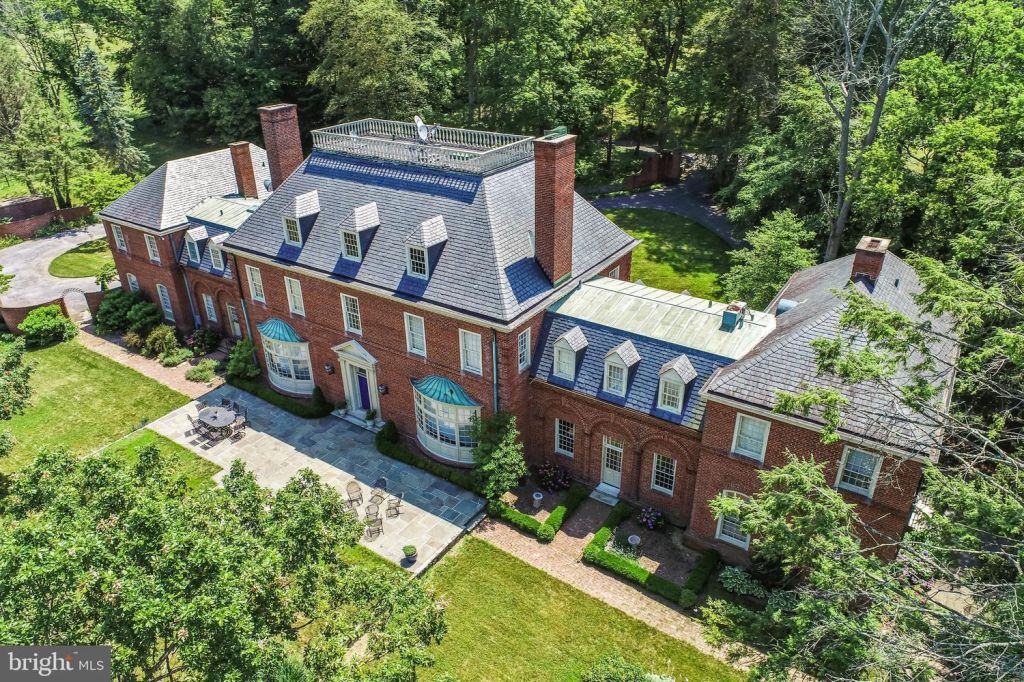
Chilton

William Bottomley was one of the most accomplished American architects during the first half of the 20th century. His specialty was Georgian-revival homes and his work can be seen in many locations in the northeast but he is best known for the homes he designed in and around Richmond, Virginia. If you’re a fan of Georgian architecture and are in the Richmond area be sure to drive up and down Monument Avenue or in the Windsor Farms neighborhood west of town for an immersive experience in Georgian home design.

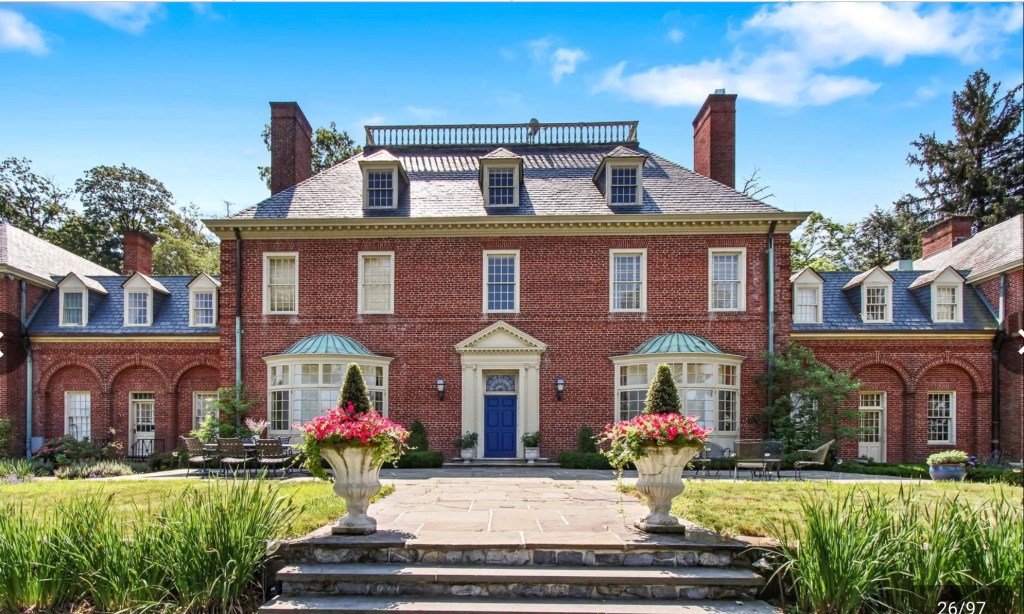
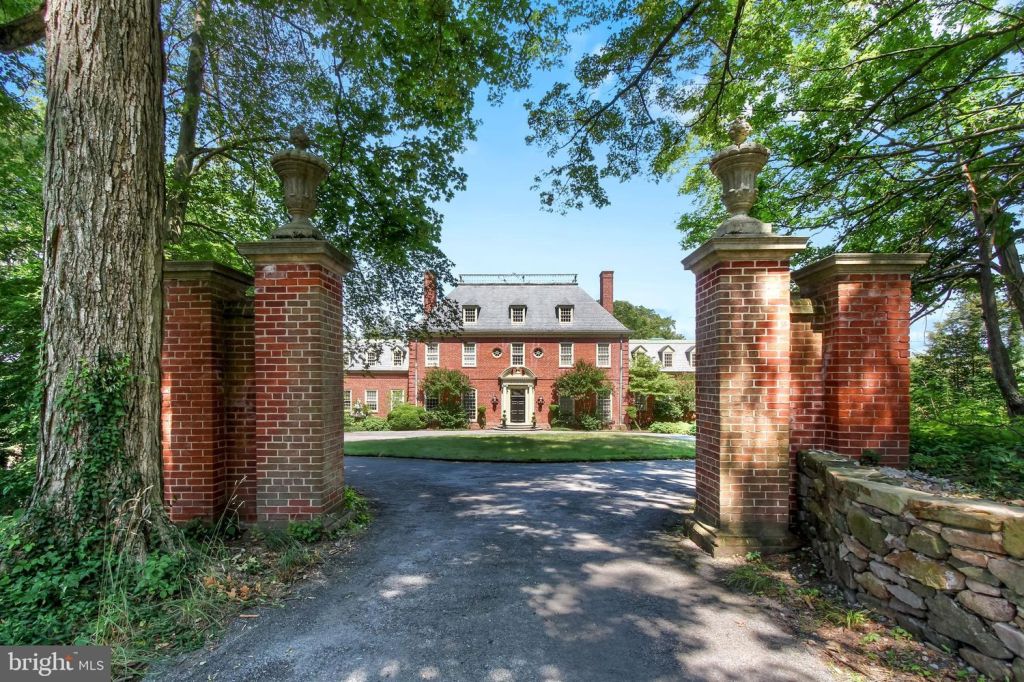
Just outside of Harrisburg, Pennsylvania is another Bottomley home dating from 1929 called Chilton. Chilton is 12,500 square feet and sits on a 104 acre estate. Until 2021 it was owned by Robert and Susan Mumma who were in the commercial real estate business. In 1990 they decided that Chilton would make a great golf course development with an 18-hole golf course and 350 homes and proposed this notion to Monaghan Township. The Township burghers disagreed so the Mummas attempted to create a separate borough (a type of municipality in Pennsylvania) out of their property and develop their project anyway. The trial court gave its stamp of approval but the Township appealed and the appellate court decided that a borough composed only of the three adults that were living on the 492 acres comprising Chilton at the time wasn’t viable. Eventually the Mummas threw in the towel and the property was sold in 2021.

One of several William Bottomley commissions in the Windsor Farms neighborhood of Richmond, VA.

Click here for a YouTube video showing Chilton when it was recently on the market. For more examples of William Bottomley’s work in this blog click here for Rose Hill or here for Halfway House, both country houses in Virginia.

Sherman CT home

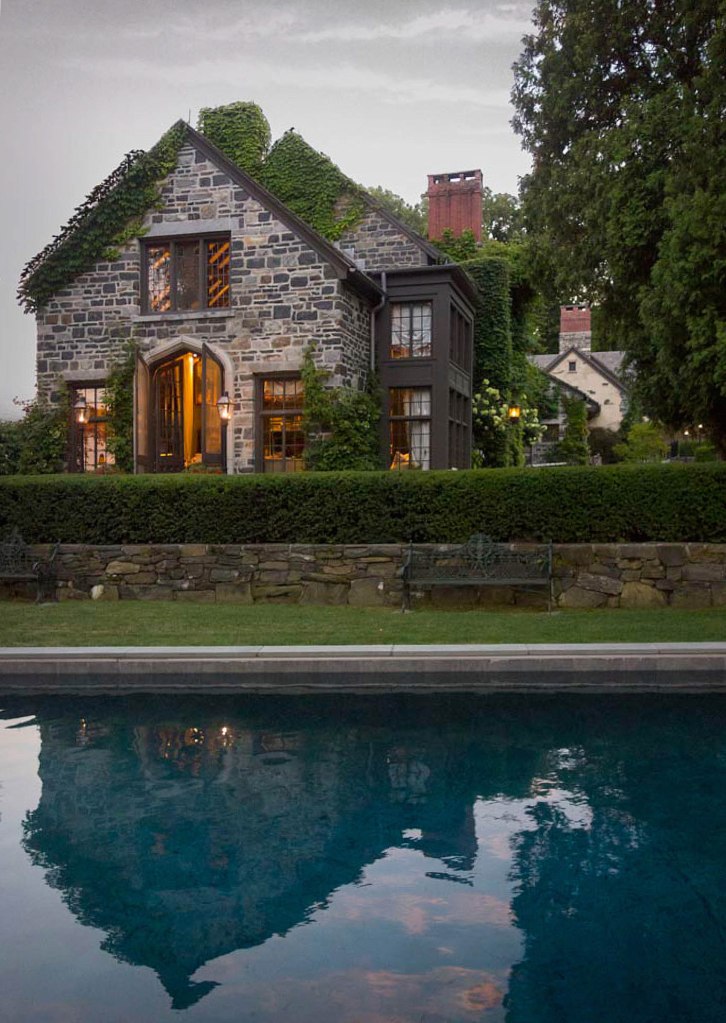
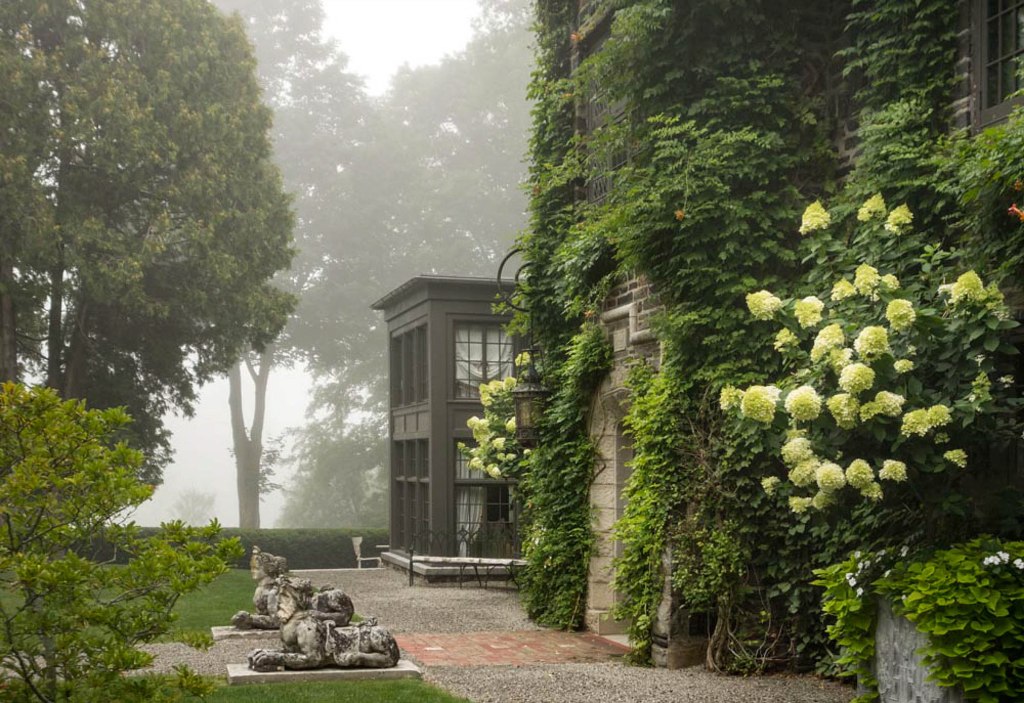
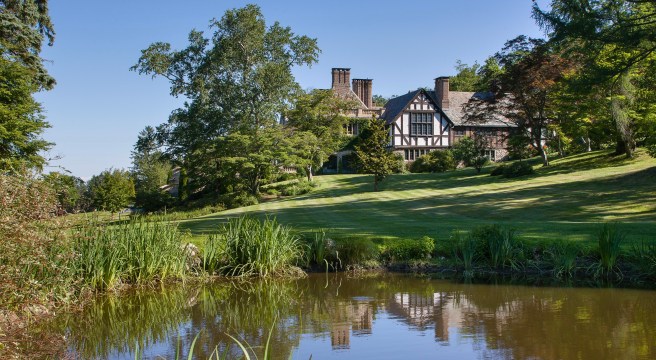
This gorgeous tudoresque home doesn’t have a cute name but sits on a 42 acre estate just outside Sherman, Connecticut. It was built in 1916 and extensively remodeled in 2018 by the architectural firm of Di Biase Filkoff. The owners raise prize-winning English Springer Spaniels at a nearby kennel. It is a private home and not open to the public although if you’re in a market for an expensive dog you can probably get close.

Migdale

This is Migdale Castle outside the bucolic village of Millbrook in Dutchess County, New York.  The 35,000 square foot Tudor revival home sits on a 350 acre estate that comprises a pond, orchards, kitchen garden and a separate gatehouse and guest house.  Bette Midler is a neighbor.  Dutchess County, along with adjacent Litchfield County, Connecticut and the Massachusetts Berkshires, is one of the rare desirable areas in the United States that has managed to avoid a lot of subdivision or development despite being within easy reach of a major city. The area is characterized by small, quaint towns with antique shops and farm-to-table restaurants, leafy estates and small farms and is favored by celebrities and business people from New York that want less noise, less pretension and more space than they could find in places like Greenwich or the Hamptons. Much of the land is encumbered by conservation easements that restrict development and guarantee a serene, green, leafy, artisanal future.

Migdale Castle was completed in 1927 by Margaret “Midge” Carnegie, the daughter and only child of Andrew Carnegie, and her husband, Roswell Miller, The name Migdale was a play on Margaret’s nickname. Andrew Carnegie was the founder of Carnegie Steel (later US Steel).  Mr. Carnegie was, by some reckonings, the sixth wealthiest person in history with a fortune worth $372 billion in 2014 dollars (right behind the communist icon Josef Stalin in 5th place).  However, most of his fortune was given away in his lifetime to endow libraries and universities and Margaret had to make do with $15 million.
Margaret “Midge” Carnegie and Roswell Miller

Margaret Carnegie served as a director for the Carnegie Corporation, a philanthropic trust set up by her father, that has been funding libraries and educational institutions for over a century. The Corporation’s best known invention is the beloved children’s television show, Sesame Street. Roswell was a civil engineer and real estate sales executive who, before marrying Margaret, had served on submarine chasers during the First World War. She and Roswell lived at Migdale with their four children until 1953. In that year, Midge and Roswell split up and Roswell got Migdale in the divorce. Midge moved to Greenwich, CT where she lived out her years passing away in 1990.  Roswell lived at Migdale for 30 years until his death in 1983.

After Roswell passed away, Migdale sat neglected until the year 2000. Enter French/American art dealer Guy Wildenstein and his wife, Kristina Hansson. Guy (pronounced Gee as in geese) and Kristina paid $5.3 million for Migdale and have since poured an additional $20 million into the property on renovations. Guy was a member of the Wildenstein family of art dealers that originated in France in the 1870s. The Wildensteins hold a private art collection containing priceless works from the likes of Van Gogh, Rembrandt and Monet that is reputedly the second most valuable private collection in the world (after the Queen’s Royal Collection which is supposedly worth $8 billion). [Fun fact about Guy Wildenstein: he once held the door open for me as I was going to get keys made at the hardware store in Millbrook.]

Much of the Wildenstein’s art is tucked away in secure “offshore” storage facilities in Switzerland away from the prying eyes of tax authorities. However, in 2001 the French Ministry of Economy and Finance decided to take a crack at it. Tipped off by Guy’s own stepmother, the Ministry accused Guy and his brother, Alec, of hiding artwork inherited from their father’s estate and evading $600 million in taxes. Guy and Alec were also accused of money laundering and were facing prison terms. After two trials that exposed Wildenstein family secrets that they didn’t want exposed (e.g., Bahamian trust accounts, a practice of disinheriting the wives of Wildensteins), Guy and Alec were acquitted of all charges in 2017. Not a ministry to give up easily, Economy and Finance got the French high court to annul the verdict and trial #3 will commence shortly.

Guy Wildenstein

Fresh from exoneration #2 in Paris, Guy and Kristina decided to unload Migdale and listed it for $14 million in 2018.  For several years it was under contract to a certain Will Guidara, a Manhattan restaurateur who gave up on city life after the COVID pandemic forced his restaurants to close. Mr. Guidara planned to create a boutique resort at Migdale (calling it Second Mountain) featuring gourmet food, spa treatments, etc. Unfortunately for Mr. Guidara, the local villagers in Millbrook didn’t take kindly to this intrusion on their tranquility. The usual claims of traffic impacts and lack of water, not to mention zoning inconsistency, were the barricades thrown up in front of Mr. Guidara.

March 2025 Update: Unable to secure permits to realize his vision for Migdale, Mr. Guidara threw in the towel and put the property up for auction. In May 2024, Migdale was sold for $9 million to the actor Liam Neeson.

If you want to see more of this lovely property, click here for a melodic YouTube video. The Wildensteins are an interesting family and you can learn more about their art business by clicking here or you can walk by their gallery at 689 Fifth Avenue in Manhattan. If you’ve got 40 or 50 million dollars to invest in art they will even let you in (visits are by appointment only).

The Mount

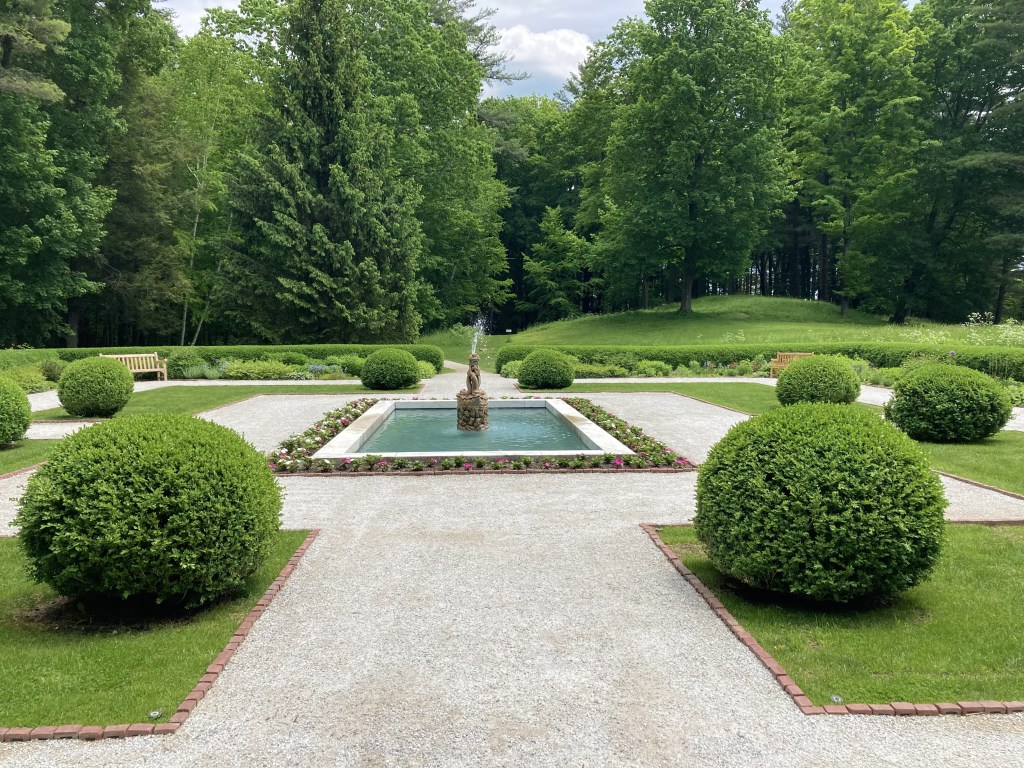
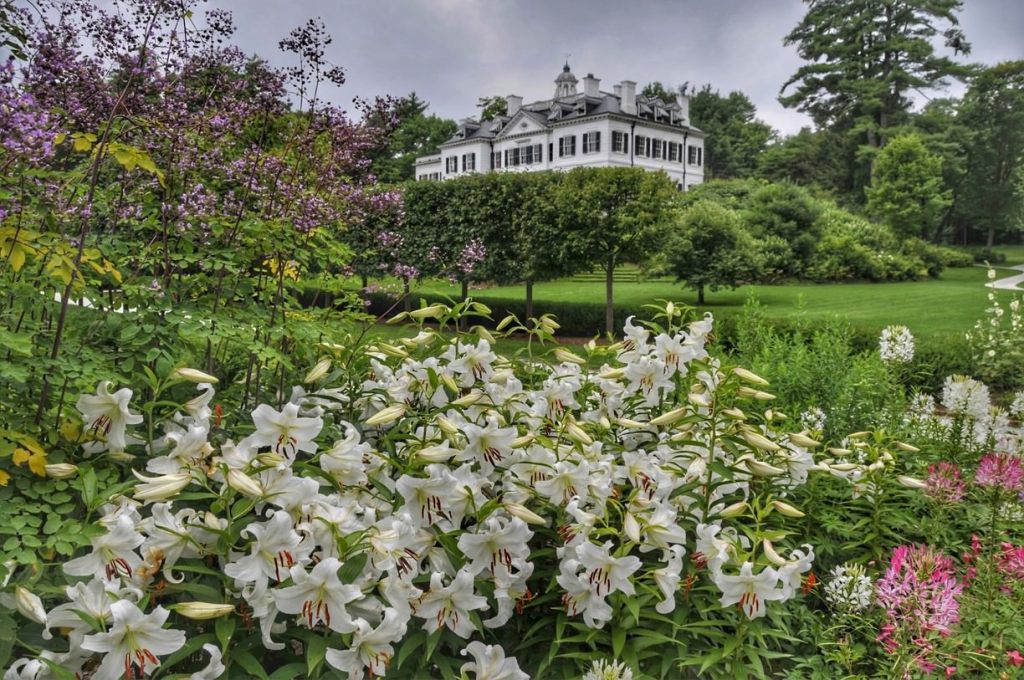
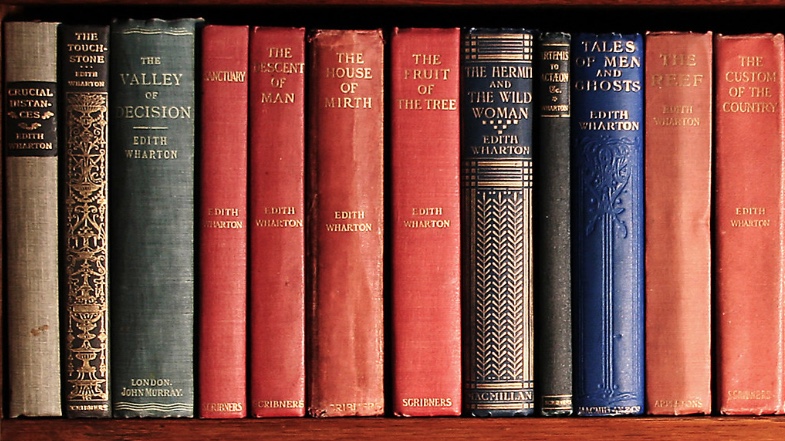
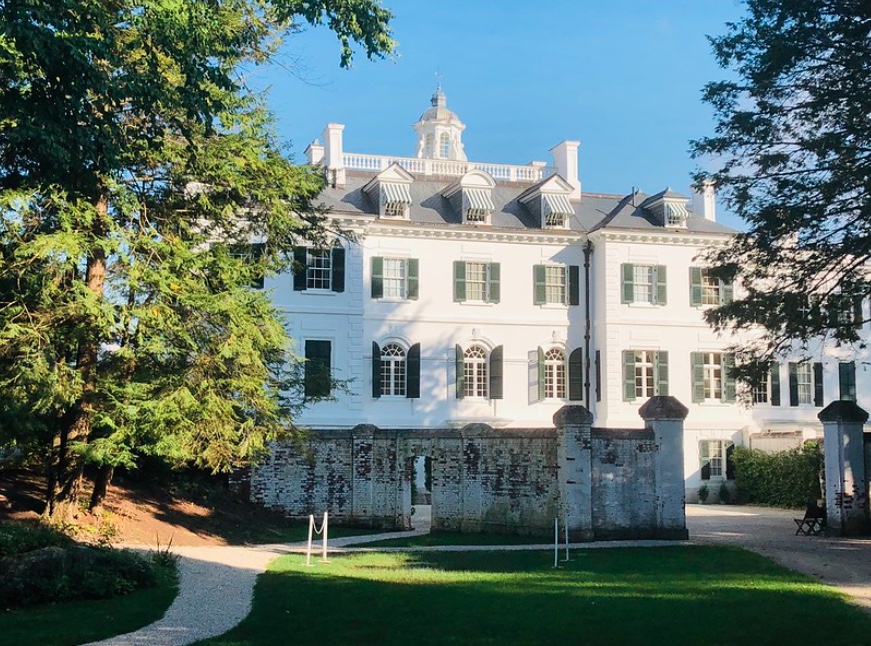
This is The Mount, the well-known home of Pulitzer Prize winning author, Edith Wharton. The house is located just south of Lenox, Massachusetts in the Berkshire Mountains. This area was familiar to gilded age plutocratic families as a more laid back, less pretentious alternative to Newport, Rhode Island. It was this type of setting that attracted Edith and her husband, Teddy, at the turn of the century when they sold their Newport home, Land’s End, and bought 113 acres near Lenox in 1901. In addition to being the author of classic novels such as The Age of Innocence and Ethan Frome, Edith was also an authority on interior decorating and landscape architecture (her book, The Decoration of Houses, is still in print and available on Amazon). The Whartons engaged Edith’s friend and architect, Ogden Codman Jr., to design their new house. Unfortunately, Ogden refused to offer “friend prices” for his services so he was let go. Instead, The Mount was designed by Francis L. V. Hoppin of New York. Edith could either be a difficult client or a very helpful client depending on your perspective and the final look of The Mount reflects much of her input. The finished 17,000 square foot house is a fusion of chateauesque, Palladian and New England architectural styles and was completed in 1902. The grounds were designed by Edith and her niece, the noted landscape architect Beatrix Farrand, in a collaboration that produced the stunning gardens that still exist today. Farrand’s other commissions include the White House grounds and Dumbarton Oaks in Washington D.C. The planning and execution of the gardens left Edith to ponder “Decidedly, I am a better landscape gardener than novelist.” History would show that she was excellent at both.

Entrance front

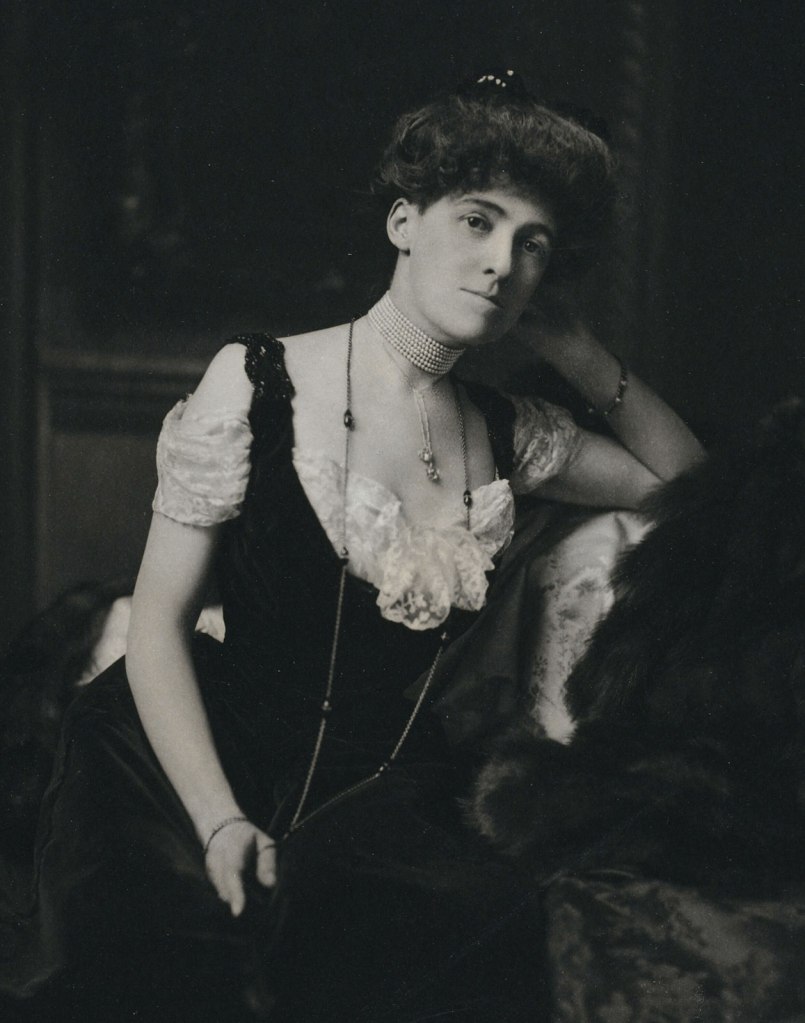
Edith was no stranger to classical architecture having travelled to Europe extensively. In fact, by the time she was in her late 40s she had traversed the Atlantic Ocean more than 60 times, quite an accomplishment in the days before air travel. She was born into wealth in 1862, her family being among the founders of Chemical Bank, one of the largest banks in the world by the time it merged with Chase Manhattan Bank in 1996 eventually forming today’s JPMorgan Chase Bank. Edith was a reluctant debutante at a time when well-born girls were expected to marry early and well and then just socialize for the rest of their lives rather than become educated and have a profession. The precocious Edith was a voracious reader and writer and her novels are chronicles of the upper class milieu in which she grew up. When Edith did marry, it was to Edward ‘Teddy’ Wharton from Boston. Unfortunately, Teddy suffered from chronic depression and alcoholism and the Whartons drifted apart soon after completing The Mount. In fact, given how much The Mount is associated with Edith Wharton it’s remarkable that she only lived there for seven years. In 1909, Edith left The Mount and Teddy and embarked for France. Other than a trip home in 1923, she lived out her years in France and never saw The Mount again. She passed away in 1937.

After the Whartons left The Mount in 1909, the house was leased out to Albert Shattuck, a New Orleans banker, and his wife Mary. The Shattucks had moved to New York and wanted a summer place in the Berkshires. It was the Shattucks who really got to use The Mount as a home. After renting for a couple of years, the Shattucks bought the house in 1911 for $180,000 and spent their summers there for the next 13 years. Albert passed away in 1924 and Mary followed in 1935. The Shattucks are remembered for a famous robbery at their Manhattan townhouse in 1922. A former servant got together with a few cutthroats, broke into the house, stole $90,000 in valuables and locked the Shattucks and eight servants into a small wine cellar. Suffocating from lack of air, Albert eventually picked the lock with a pen knife and got everyone out. The robbers were eventually nabbed in France after a shootout.

After Mary Shattuck died in 1935, The Mount sat empty for three years before being sold at auction to the former Managing Editor of the New York Times, Carr Van Anda, and his wife, Louise. The tenure of the Van Andas at The Mount was mostly marked by disputes with the local assessor’s office about the value of the property. The Van Andas eventually lost that argument and after Louise passed away in 1942, Carr sold The Mount to the Oxford-educated school mistress, Aileen M. Farrell, who used the house as a dormitory for her private school, the Foxhollow School. By the early 1970s the maintenance costs of The Mount were chewing up the school’s tuition income and in 1976 Foxhollow closed. The house was then sold to developer Donald Altshuler for $655,000 who aimed to convert the house into a conference center/restaurant surrounded by new condos. The town of Lenox successfully fought him off and in 1980 the house was sold for $290,000 to the newly formed Edith Wharton Restoration Corporation. In the meantime, the house had been leased by a newly formed theater company called Shakespeare and Company for use in training actors and presenting Shakespeare productions in the summer. The theater company continued to lease the property from the restoration organization (which was trying to drum up the funds to restore the decaying house) in an uneasy relationship that lasted until 2001. That year the theater company moved out and restoration work was started in earnest. Notable actors who passed through The Mount during the Shakespeare & Co. years include Bill Murray, Andie MacDowell, Keanu Reeves, Richard Dreyfuss and Clueless girl, Alicia Silverstone.

Edith Wharton, the builder of The Mount

This Edith Wharton Restoration Corporation has been restoring The Mount ever since. Today, The Mount is open to the public year round for tours, musical performances and literary events and the house has been restored with period furnishings and decor from the time of Ms. Wharton’s residency. Another notable country estate is located just south of The Mount. High Lawn house, a Vanderbilt mansion which is still occupied by Vanderbilts, is covered by this blog here. For more information on The Mount and how to visit, click here.

Library scene at The Mount
Entrance front
Interior scene

Omega

This is the Omega estate (AKA the Payne Estate) on the west bank of the Hudson River near Esopus, New York. The Beaux Arts style house was designed by Thomas Hastings of the New York architecture firm, Carrere & Hastings. The 42,000 square foot house was completed in 1911 and is sited on a 60 acre estate. The estate that eventually became Omega had three previous owners including John Jacob Astor III of the prominent Astor family and Omega was built on the site of an earlier house named Waldorf. Omega was the creation of Standard Oil executive Oliver Hazard Payne (1839-1917).

John D. Rockefeller, the founder of Standard Oil, had this tactic whereby he would calculate the value of a rival’s oil refinery assuming he had undercut their pricing and taken their market share and then Rockefeller would make the rival refiner an offer to buy their assets based on that assumed value. If the rival refused the offer, Rockefeller and the Standard Oil would simply undercut their prices, take their market share and drive them out of business. While this may seem similar to the choice that Latin American drug lords offer rivals and other troublemakers (“plata o plomo?” meaning “which do you want? silver or lead?”) it is actually quite humane given the rough and tumble business tactics that prevailed at the time. More often than not, the rival would take the offer and then be given a position within Standard Oil commensurate with their business acumen and degree of ruthlessness. Some of these one-time rivals became obscenely rich in their own right by joining the Standard Oil trust. Oliver Hazard Payne was one such rival who ended up doing just fine.

Oliver Hazard Payne was born into a politically prominent Ohio family and attended Phillips Academy Andover and Yale University. His mother was a relative of Navy admiral Oliver Hazard Perry who is famous for coining the phrase “Don’t give up the ship!” When the Civil War started, Oliver enlisted in the Army rather than avoiding conscription by paying someone to take his place as most wealthy young men were allowed to do. He was promoted to Colonel and commanded the 124th Ohio Infantry Regiment and served until the end of the war during which he was seriously wounded at the Battle of Chickamauga. After the war, Mr. Payne entered business starting up a refinery in Cleveland competing with Rockefeller’s Standard Oil. After selling out to Standard in 1872, Mr. Payne served as treasurer of the company and was also a company lobbyist. Back in those days, state and federal government in the United States was a hotbed of corruption, far worse than it is today. Bribery and kickbacks on behalf of gilded age corporate interests was pervasive and Mr. Payne was twice indicted on bribery charges but was not convicted. By the time he died in 1917 he was worth $190 million (several billion in today’s money).

Oliver Hazard Payne, the builder of Omega

Payne never married nor had any children and he left Omega to his nephew, Harry Payne Bingham. Mr. Bingham’s life was typical of second-generation gilded age industrial families (e.g., Corporate directorships, trusteeships, Park Avenue, NY Yacht Club, Palm Beach, Piping Rock Club, “scientific” yachting expeditions, Knickerbocker Club). Mr. Bingham got to use Omega for 16 years, a longer period of time than his uncle Oliver (who died only six years after its completion). After trying to sell Omega for several years, Mr. Bingham donated the property in 1933 to the New York Protestant Episcopal Mission Society which operated a convalescent home at the property. By 1937 the home had failed and in 1942 the estate was sold to Marist Brothers, a private liberal arts college and religious order in nearby Poughkeepsie for use as a high school for prospective brothers.

In 1986, the estate was purchased by businessman, Raymond Rich. Mr. Rich grew up in Iowa and started his working career in the engine room of a tramp freighter in 1930. After college he served in the Second World War in the pacific as a Marine. A born salesman and natural leader he was a professional CEO for most of his career and headed up several corporations. Mr. Rich loved nice homes and in addition to owning and extensively renovating Omega, he also owned castles in Scotland, Austria and France. He passed away in 2009 and left Omega, by now referred to as the Payne Estate, back to Marist College for use as the Raymond A. Rich Institute for Leadership Development.

Raymond Rich and friend at Omega

For more information on Omega and the institute, click here and here. YouTube has a video showing scenes from the estate taken during the dedication of the Institute and can be seen here. Omega is almost directly across the Hudson River from another significant country estate covered in this blog, Hyde Park (click here for more).

Maywood

Maywood is a 50 acre estate outside Bridgewater, Connecticut in Litchfield County. The Georgian/neo-classical style home on the property was designed by the firm of Ferguson and Shamamian and completed in 2000 and is owned by Peter and Leni May. Peter has degrees from the University of Chicago and is a private equity investor along with partner, Nelson Peltz. Their firm, Triarc, has either had major share holdings in or been involved in restructurings of Snapple, Wendy’s, Pepsi Co., Family Dollar and several other major corporations. Maywood is also a working organic farm producing eggs, wines, produce, honey and maple syrup which can be bought at the Bridgewater Village Store. The house and gardens are not open to the public although the gardens are opened up one day per year with the proceeds benefitting the Garden Conservancy. For more information about Maywood, click here. A YouTube video showing the beautiful grounds can be viewed here.

Entrance front

Garden scene

Garden front
garden scene
Interior scene
Garden front

Crane Estate

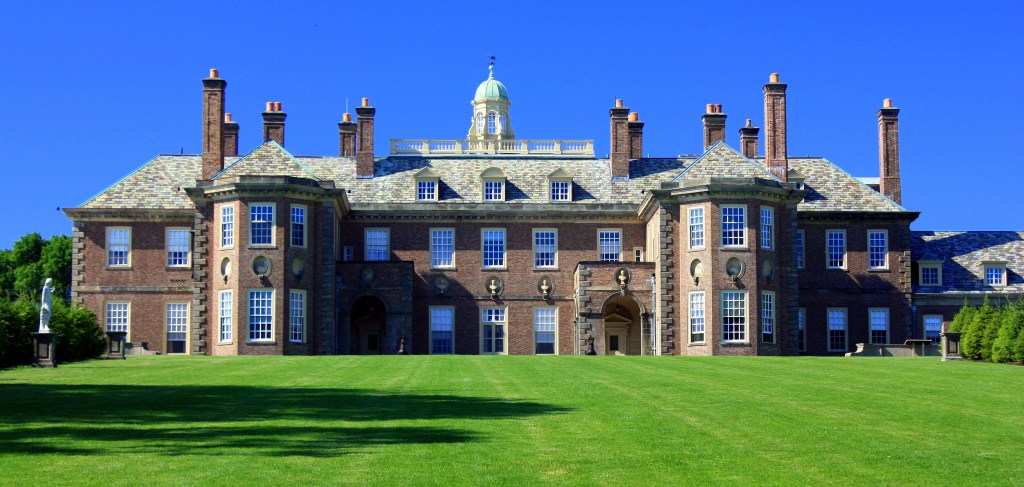
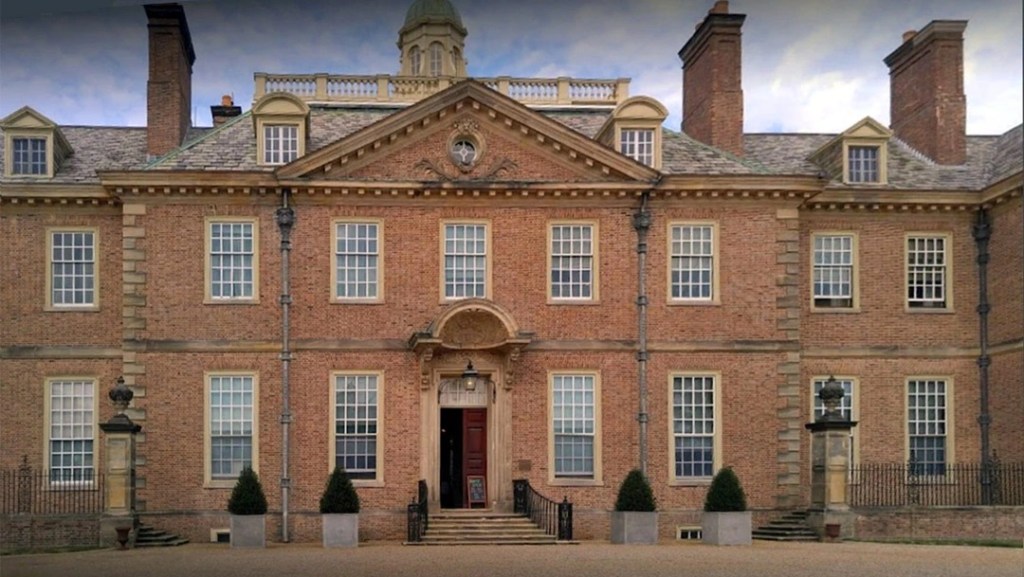
This English baroque stunner is the Crane Estate (AKA Castle Hill) and is located just outside Ipswich, Massachusetts. The house encompasses 57,000 square feet and is sited on a 2,100 acre estate. The house was designed by Chicago architect David Adler and the landscape, including the famous grand allee running down to the ocean, was designed by the Olmsted Brothers. For those unfamiliar with the term, an “allee” (pronounced AL-lay) is a design element used in a formal garden structure whereby a long, narrow expanse of lawn is lined by trees focusing the viewers attention on a distant feature such as a statue, a folly, a natural feature or the ocean in this case.

The house was built over three years and completed in 1928 by the son of the founder of the Crane Company famous for plumbing fixtures, Richard Crane, Jr., and his wife, Florence Higginbotham Crane. Richard had taken over as CEO of the company his father had founded back in 1855 and worked hard to achieve the Crane Company mission to “Make America want a better bathroom.” Florence’s father was a co-founder of the Marshall Field department store company in Chicago.

Garden front view from the grand allee

The current house is actually the second one to stand on the site. The Cranes bought the property in 1909 and built an Italian Renaissance-style house. Florence decided she didn’t like the house she called “the Italian fiasco” feeling that the architectural style didn’t fit the setting. She and Richard made a deal that if she still didn’t like it after ten years they would build something more to her liking. Ten years later Florence said she didn’t like the house so it was pulled down and the current house was built on the same foundation. You can catch glimpses of the first house in the sporting casino, located half way down the grand allee, which sports the Italianate design of the original house. The Cranes used the estate as their summer residence and lived most of the year in Chicago where the Crane Company was based.

The original Italianate mansion (AKA “the Italian Fiasco”) that preceded the current house. Pulled down in 1924.

Richard only got to enjoy the new house for three years before passing away in 1931. Florence lived on at the estate until her death in 1949 at which point it was deeded to The Trustees of Reservations, a non-profit organization which preserves and operates historic sites in Massachusetts. The Crane’s adult children, Cornelius Vanderbilt Crane (no relation to the Vanderbilts) and Florence Crane Jr. had rights as life tenants to continue to live in the guest house seasonally and use the property along with their families. The last resident was Cornelius’ second wife, Minescule ‘Mine’ Sawahara, who lived there until 1974. Both Crane children were adventurous spirits. Florence Jr. married writer William Robinson and they lived part-time in a one room house in Tahiti. Cornelius embarked on voyages to study the anthropological history of the South Pacific.

Fun facts about Cornelius and Florence, Jr.: Cornelius was the adoptive grandfather of SNL co-founder, actor and comedian Chevy Chase, who vacationed at the Crane Estate as a youth. In fact, Chevy Chase’s real name is Cornelius after his grandfather. Florence Jr. married a second time to the son of an exiled Russian aristocrat and became Princess Florence Belosselsky-Belozersky. Grigory Rasputin, the mad monk who helped to bring down the Russian Romanov dynasty was found dead floating in the Neva River in front of the Belosselsky-Belozersky family palace in St. Petersburg in 1916.

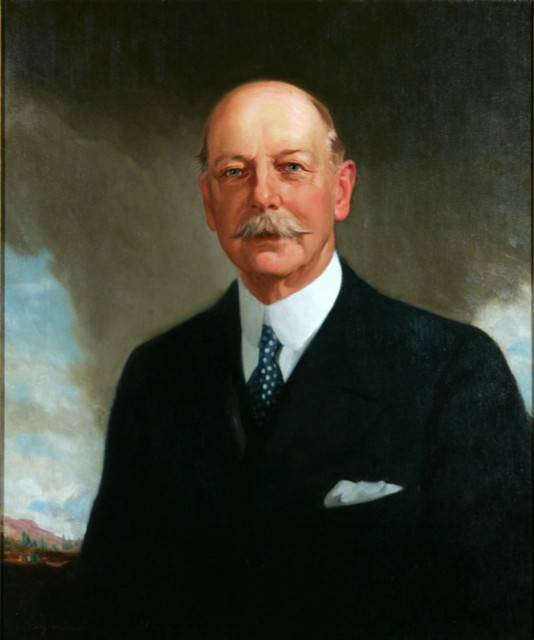
The builders of the Crane Estate, Richard and Florence Crane with their children, Cornelius and Florence Jr.

The Crane Estate is still owned and operated by The Trustees and the house and grounds are open to the public and are frequently used as a film location and a performing arts venue. Notable film credits include The Witches of Eastwick starring Jack Nicholson, Little Women starring Meryl Streep and Emma Watson and the reality TV series, The Amazing Race. Click here for information on visiting the Crane Estate. You can also stay at the former guest house on the estate – click here for more info on that. A YouTube video featuring some nice drone photography of the house and the grand allee can be seen here.

The Crane Estate has a connection to another beautiful country house covered in this blog. Richard Crane’s nephew, also named Richard Crane, bought and lived at the Westover Plantation in Virginia (click here).

Aerial view showing the entrance front of the house and the famous grand allee lined by statuary, Norway spruce, white pine and red cedar
Garden front of the house showing the sporting casino midway down the grand allee. The casino was built at the time of the original Italianate house and still shows that style of design.
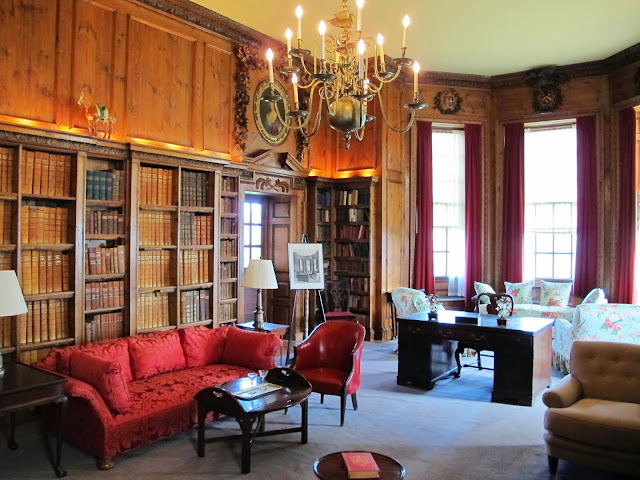
The library
View of the gardens

Close-up view of the entrance front
Detail from garden front

Hyde Park

Hyde Park was the country estate of Frederick William Vanderbilt (1856-1938). Frederick was the grandson of “the Commodore”, Cornelius Vanderbilt, the steamship and railroad tycoon who was the richest person in the United States during the middle part of the 19th Century. Despite having little education, Cornelius built up a fortune of $105 million ($150-200 billion in today’s money depending on who’s counting). Cornelius had an insatiable love of money but spent very little on himself (or his long-suffering wives) and had a remarkable mind for numbers. He kept very few accounting records and managed his vast enterprise mostly in his own head. When Cornelius passed away in 1877 he left nearly everything to his eldest son, William Henry Vanderbilt. Cornelius had 13 children and considered all of them to be idiots but thought that William Henry might have some glimmer of hope. Despite this lack of confidence in his potential, William Henry proved to be a competent financier and railroad executive and doubled his inheritance before passing away in 1885. However, he was the last Vanderbilt to add to his inheritance rather than just spending it (Anderson Cooper may be the one exception). Although he enjoyed his fortune more than the Commodore did, William Henry’s Fifth Avenue house in New York was only a small sign of what was to come from the Vanderbilts.

Frederick William Vanderbilt, the proprietor of Hyde Park

William Henry and his wife, Maria Louisa Kissam Vanderbilt, had nine children, eight living to adulthood. These eight children took their inheritances and cut loose, unleashing a deluge of home building that eclipsed anything that the royal houses of Europe had accomplished in such a short period of time. The houses either bought or built (nearly all built) by this generation of Vanderbilts is listed below:

That’s 32 mansions for 8 people (plus dependents) or four mansions per Vanderbilt. This is even more remarkable considering the size of these houses. Of the 25 largest homes ever built in the United States, six are on this list including the largest of them all, Biltmore, weighing in at 179,000 square feet. Biltmore is also the only one of these houses that is still owned by a Vanderbilt (though it is not used as a residence). Click here for more on Biltmore. Shelburne Farms is now a non-profit educational center, hotel and working farm focused on sustainability with Vanderbilt descendants still involved in the management.

Coffered ceiling in the dining room of Hyde Park

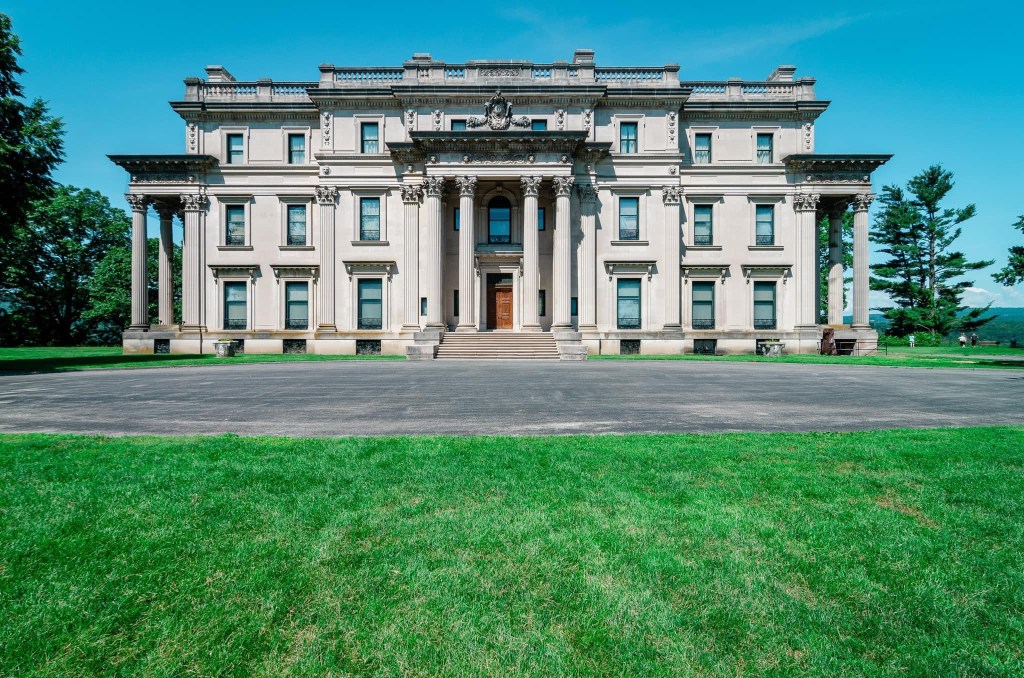
Emily Thorn Vanderbilt also built one additional notable house not on this list, High Lawn, for her daughter, Lila Vanderbilt Sloan. High Lawn is the only Gilded Age Vanderbilt mansion that is still lived in by a Vanderbilt and is covered in this blog (click here). Most of the houses on this list are either long gone, have been overrun by suburban development or, in the case of the Newport “cottages”, are really more of a luxury subdivision, not true country houses. But Hyde Park is unique in that it still retains the form of a country estate although it hasn’t been lived in for 83 years.

Hyde Park has been used as a country estate and retreat since the early 18th century when it was granted to Pierre Fauconnier in 1705 by the colonial Governor of New York, Edward Hyde, the Viscount Cornbury. In fact, the mansion we know as Hyde Park is the third house to stand on the site which is on a bluff overlooking the Hudson River and the Catskill Mountains to the west. In 1840 the estate was purchased by John Jacob Astor the Manhattan fur and real estate tycoon for his daughter, Dorothea. She and her husband, Walter Langdon, built the second house but soon afterwards Walter died and Dorothea moved to Europe. Her son, Walter Jr., took over in 1852 and expanded the estate to 600 acres. A few miles north of Hyde Park is Marienruh, another Astor house built in the 1920s.

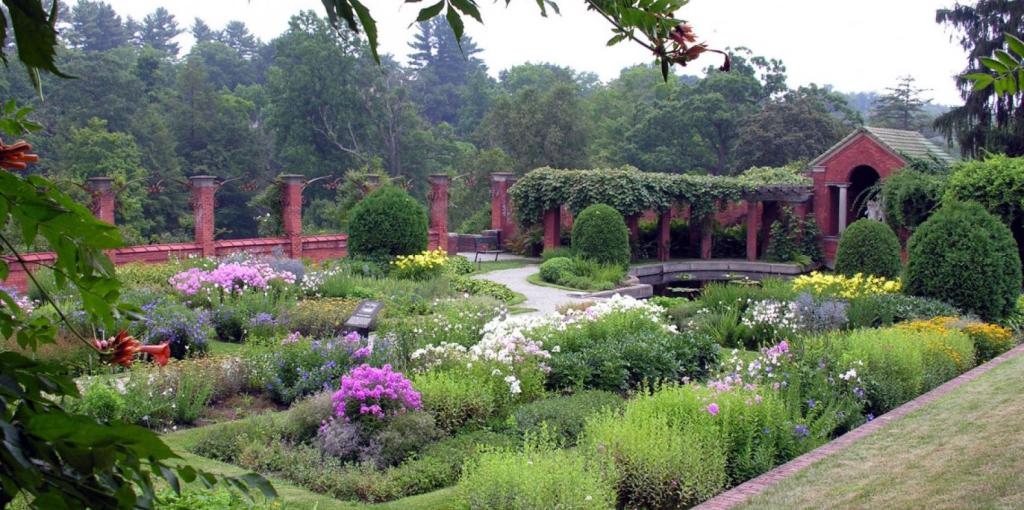
Walter Jr. died without heirs in 1894 and the estate was bought by Frederick William Vanderbilt and his wife Louise . Their initial inclination was to simply make additions to the Langdon house but their architect, Charles McKim of McKim, Mead and White, discovered severe dry rot in the structure and advised a complete rebuild. McKim designed the 50,000 square foot Neo-classical structure and construction was completed by 1899. The estate was attractive to the Vanderbilts for a couple of reasons. First, the railway that ran just below the house along the Hudson River happened to be the New York Central, which was the flagship of the Vanderbilt industrial empire. Frederick was a Director of the NY Central for 61 years although he did not pull rank when traveling between Hyde Park and New York City, preferring to sit in a regular coach rather than a private railway car as most gilded age millionaires would have done. Reserved and scholarly by nature, Frederick was the only one of his siblings to graduate from college, earning a degree from Yale University in Horticulture. He indulged his interest in horticulture at Hyde Park and devoted considerable attention to improving the landscaping that prior owners had installed at the estate. Frederick was responsible for developing the italianate formal gardens that still flourish today (thanks to the efforts of local volunteer-gardeners). The house itself was not universally admired. Some critics thought it more resembled a public library than a stately home and criticized its heavy and ponderous design elements. This didn’t seem to bother the Vanderbilts though. Of their many properties they seemed to prefer Hyde Park above the others.

On the grounds of Hyde Park

Louise Vanderbilt died in 1926 and this seemed to make the reserved Frederick even more shy. He lived as a virtual recluse at Hyde Park for the rest of his life, only seeing family and close friends, rarely speaking to the Hyde Park staff and spending his time puttering in the grounds and gardens. Frederick and Louise did not have children and when Frederick passed away in 1938 the house was left to Louise’s niece, Margaret “Daisy” Post. Daisy already had her hands full managing mansions in Newport and the south of France and wanted nothing to do with the cost and hassle of running Hyde Park as well but couldn’t find a buyer in the depths of the Depression so she approached the owner of a nearby estate, President Franklin D. Roosevelt, for advice. FDR grew up and still resided part of the year at his ancestral estate of Springwood a couple miles south of Hyde Park and he had been an occasional guest of the Vanderbilts at Hyde Park. It was FDR who suggested donating the estate to the National Park Service and opening it up to the public. Daisy agreed and by 1940, Hyde Park was open to the public (except when FDR was staying at Springwood when his aides and secret service detail would temporarily take up residence at Hyde Park).

Formal gardens at Hyde Park

If you want to visit Hyde Park, it can be reached by car or train (transferring to a bus in Poughkeepsie) from either Albany or New York City. Additional information can be found here. Leave time in your schedule for visiting nearby Springwood, the home of FDR. In addition to the final resting place of FDR and Eleanor Roosevelt, Springwood has educational and quite moving exhibits about the life and times of FDR and the challenges the the country faced during the Great Depression and the Second World War. Info regarding Springwood can be found here. Finally, almost directly across the Hudson River from Hyde Park is another notable country estate, Omega, covered in this blog (click here).

Marienruh

This beautiful Palladian/Georgian-revival house is known as Marienruh (MARY-en-roo).  It is sited on a 100 acre estate north of the  bucolic village of Rhinebeck, NY overlooking the Hudson River.  It was designed by the gilded age architect Mott Schmidt and completed in 1926. The house was a wedding present from Vincent Astor to his sister, Ava Alice Muriel Astor (who went by Alice), and her new husband, Prince Serge Obolensky. Alice was the great great granddaughter of John Jacob Astor. Astor was the first American multi-millionaire (tens of billions in today’s money) who grew rich in the early 19th century fur trade, with his agents often trading liquor to the natives for furs. Blessed with amazing foresight, Astor plowed his fur profits into Manhattan real estate (mostly woods and farms back then) and became even wealthier as these lots were converted into tenements housing the immigrants that flooded into New York City during the 19th century. On his deathbed, Astor’s only regret was that he hadn’t bought up even more of Manhattan Island. His descendants were prominent members of New York City society during the 19th and 20th century. In the early 1890s, as a result of a feud between two of the female Astors over who was more important socially, a branch of the Astor family decamped to England and has been turning out aristocrats and prominent politicians in the UK ever since. The American branch of the Astor family, in contrast, has faded into relative (but comfortable) obscurity.

Marienruh was on the grounds of the larger Astor estate, called Ferncliff Farm, that was established by Alice’s grandfather in the 1850s. In the 19th century, Astor estates and homes sprawled along the left bank of the Hudson between Rhinebeck and Barrytown (where they transitioned to the Livingston family estates that went even further north – click here for more on the Livingston estates). One such Astor estate, Rokeby, is still owned by Astor descendants.

At one time, Ferncliff was 2,800 acres but after the death of Alice’s brother, Vincent Astor, the estate was parceled out with a portion becoming a forest preserve, another portion becoming a nursing home and other portions converted to private residences. Chelsea Clinton was married at Astor Courts, a one-time sports pavilion on the estate. Another portion of the former Ferncliff estate is the home of famous photographer Annie Leibovitz.

Alice Astor, age 14

Alice Astor’s father was John Jacob Astor IV, who perished with the Titanic in April 1912. Initially, he was unperturbed about the ship striking an iceberg and was last seen having a smoke on the starboard side, a half hour before the ship disappeared beneath the waves. Afterwards, Alice was raised in England by her mother. Alice was a bit of an eccentric and claimed that she was the reincarnation of an ancient Egyptian princess. To bolster her claim, she often wore a necklace that had been among the treasures found in the tomb of Pharaoh Tutankhamun.

194
The Ferncliff mansion on the estate of the same name established by Alice Astor’s grandfather, William Backhouse Astor Jr. Demolished in the 1940s.

Alice’s husband, Prince Serge Obolensky, wasn’t a real prince of the Romanov dynasty that ruled Russia for three centuries although he was descended from another princely dynasty that preceded the Romanovs. Instead, he was married for a few years to an illegitimate daughter of Tsar Alexander II, Princess Catherine Alexandrovna Yurievskaya, before his marriage to Alice. A raconteur and bon vivant of the first order, Prince Serge was tall, handsome, smart, charming and a good dancer.

Prince Serge and Alice met at a costume ball in London where he was working as a stockbroker. Initially, Alice’s mother objected to her marrying what she considered to be a penniless, exiled Russian prince but Alice soon turned 21 and married him anyway. She and Prince Serge had three weddings in England: an Anglican ceremony, a civil ceremony, and a third in a Russian Orthodox cathedral. After honeymooning in France they began their married life of yachting, posh hotels and first class travel.

Prince Serge Obolensky and Alice Astor (1932)

Apparently, Prince Serge’s charm and dancing skills failed to keep the spark alive and he and Alice divorced in 1932 after just eight years of marriage (seven if you subtract the extra-marital affairs – on both sides). After the divorce, Alice kept Marienruh and she remarried three times: 1) an Austrian writer, 2) an English writer, and 3) an English architect. She died single in 1956 at age 54 from a stroke. She was a patron of the arts during her life and was a big supporter of the New York City Ballet company.

Although Prince Serge’s history with Marienruh was brief, his post-divorce life merits a mention. He volunteered for service in World War II and was part of the Office of Strategic Services (OSS), the forerunner of the CIA. In that role, he parachuted into Sardinia and France on missions at the age of 54. Postwar, he had a long and successful career in the New York hotel business and was a high-class lounge lizard in Manhattan, squiring around and dancing with the likes of Jackie Onassis and actress Joan Fontaine. Legend has it that he invented everyone’s favorite hangover cure, the bloody mary. He passed away in 1978 while wearing black tie, holding a martini and chatting up the nurses (I’m guessing).

After Alice Astor’s death, Marienruh was sold and used variously as a church camp, a home for unwed mothers, a drug rehab center and an event center.  The home, by then in very poor condition, was purchased in 2006 for $7 million by a writer and Columbia University professor.  The new owner has been restoring Marienruh to its former glory ever since. Marienruh serves as a private home and is not open to the public however another country estate covered in this blog is just a few miles south in Hyde Park. Frederick Vanderbilt’s Hyde Park estate (click here) is open to the public as is Springwood, the nearby home of FDR.