Monticello

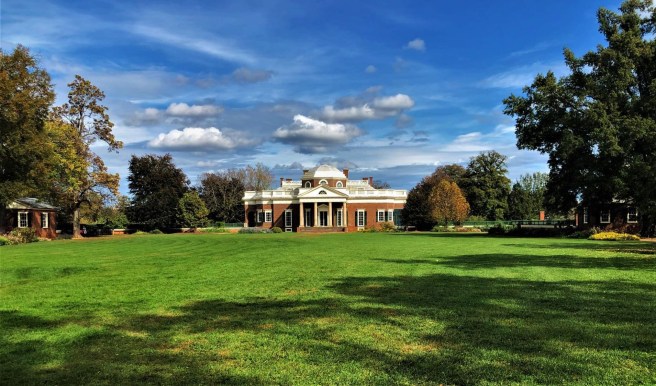
Anybody who has ever had a nickel to their name knows this house. Next to the White House, Monticello is undoubtedly the most famous house in North America. Thomas Jefferson was the third President of the United States, the second Governor of Virginia, President George Washington’s Secretary of State, author of the Declaration of Independence, founder of the University of Virginia, minister to the court of King Louis XVI and possibly one of the smartest people who ever lived. If you ever want to feel stupid, take a tour of the place that Jefferson called home for most of his life.

Jefferson’s reputation has taken a hit in recent years. Yes, he owned slaves. No, with a few exceptions, he did not free his slaves upon his death like Washington had (although Washington could have opted to not own slaves at all). He was particularly fond of one of his female slaves, Sally Hemmings. Sally was actually a half-sister of Jefferson’s wife, Martha (same father), and she was a house servant at Monticello. Martha passed away in 1782 and made Jefferson promise not to remarry. Subsequently, Sally accompanied Jefferson to Paris during his stint as Minister to France and eventually she became something like a surrogate wife to Jefferson. Over time, Sally bore six children by Jefferson starting when she was 16 years old. She and her four surviving children were all eventually freed from slavery.

Despite Jefferson’s association with slavery, the positive parts of his legacy live on. Jefferson, a polymath, was a world-class gardener, political scientist, gourmet, enlightenment philosopher and architect and spoke several languages. Although he denied the workers on his estate the basic legal and civil rights that he professed were inalienable and universal, his ideas were the foundation of future laws and decisions that eventually made this nation a more humane and equitable place for all people, not just white male property owners.

Monticello got its start when Jefferson inherited a 5,000 acre tobacco plantation outside Charlottesville from his father in 1757. Jefferson started working on plans for a plantation house right away but constantly tinkered with the design, built, tore down, and rebuilt and the house was not completed until 1809, nearly fifty years after starting. Even then, Jefferson, a serial remodeler, kept tweaking the house right up until his death. During Jefferson’s service in Europe in the 1780s, he became familiar with the latest architectural trends and the work of 16th century Italian architect, Andrea Palladio, who modernized greek and roman architectural forms for contemporary designs. Jefferson adapted these ideas to Monticello and the result is the handsome 11,000 square foot neo-classical home that we see today.

Jefferson retired to Monticello after leaving public office in 1809. By this time, Jefferson was hugely famous and had hundreds of friends that visited his mountain-top estate. The cost of all this entertaining added up and the proceeds from agricultural operations on the plantation were insufficient to balance the books. Financial problems were compounded by debts that Jefferson’s wife, Martha, inherited from her father. Jefferson attempted to increase profits from ventures like a nail factory but when he passed away in 1826 (50 years to the day of the declaration of independence), he was $18,000 in debt (about $600,000 in today’s money). His daughter and sole heir was forced to sell Monticello and 500 acres in 1831 to a local pharmacist at a fraction of its value and she also parceled off and sold much of the agricultural land.

Three years later, Monticello was flipped to a Navy admiral and real estate investor, Uriah Levy of New York. Mr. Levy was a big Jefferson admirer and hoped to preserve Jefferson’s legacy. Admiral Levy spent the next 26 years preserving and restoring Monticello and using it as a summer home. He also set out to purchase the surrounding agricultural parcels and reassemble the historic estate. Admiral Levy died in 1862 and willed Monticello to the federal government for use as an agricultural school. However, because the Civil War was raging at the time the government turned down the donation since Monticello was in Confederate Virginia. The Confederacy seized Monticello as “enemy property” and then sold it. After the Union victory, Admiral Levy’s executors recovered Monticello but it was then subject to probate lawsuits by 47 different claimants who all thought they should take ownership.

Finally, in 1879 Uriah’s nephew, Jefferson Monroe Levy of New York, settled the suits and bought out other Levy heirs. By this time, Monticello, vacant for nearly 20 years, was in a sorry state. The bottom floor of the future UNESCO World Heritage Site was being used by caretakers as a barn for cattle, grain was stored on the upper floors and the grounds were overgrown. Mr. Levy evicted the caretakers and the cattle and set to restoring Monticello to its former glory. Like his uncle, Jefferson Levy was also a real estate investor and also practiced law and served in the U.S. House of Representatives for three terms representing New York State. He lived at Monticello part of the year and welcomed the tourists who had started to visit the mansion in growing numbers in the latter part of the 19th century. He also purchased an additional 500 acres that had been part of the historic estate.
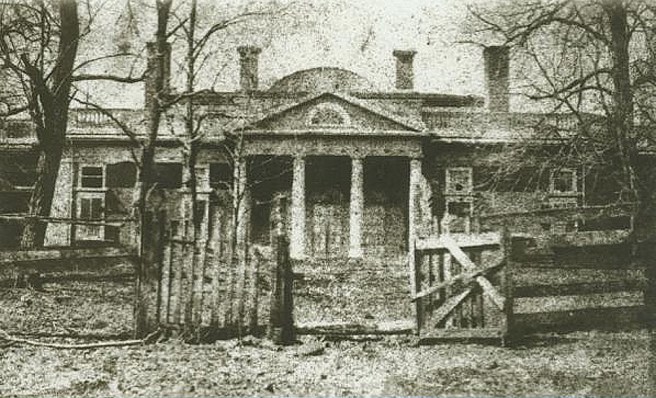
Monticello during its low point after the Civil War

In 1923, after nearly a century of Levy family ownership, Jefferson Levy sold Monticello to the newly formed Thomas Jefferson Foundation for a half million dollars and the Foundation continues to operate the estate to this day as a house museum showcasing Jefferson’s life and times. The Foundation has assiduously restored Monticello to how it would have looked during Jefferson’s life right down to the plants that would have grown on the grounds and gardens. In fact, the gardens at Monticello are world renown in horticulture circles for the rich diversity of plant material, much of which was introduced to the estate by Jefferson himself. The estate now comprises 2,500 acres and retains the form of an early 19th century country estate. Other than the vans carrying tourists to the home and their smart phones, Jefferson wouldn’t notice much difference if he was alive today.
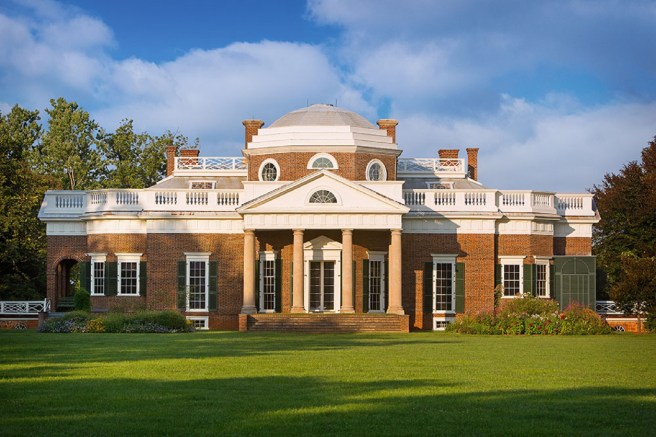
Click here for further information about Monticello or here for a symphonic YouTube video about the estate.

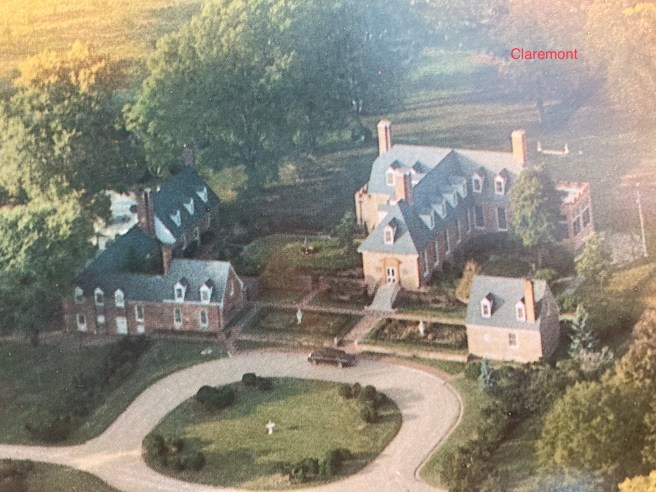
Claremont Manor

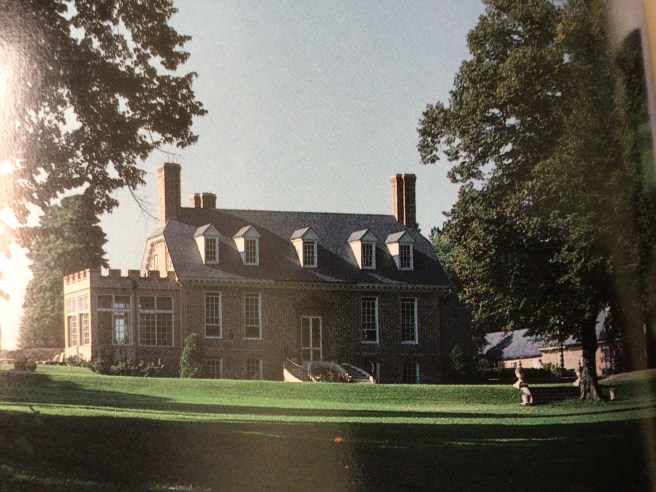
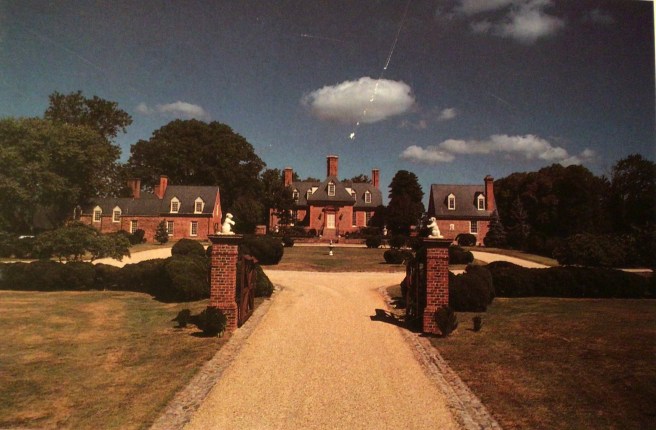
Claremont Manor is an 1,100 acre estate situated on the right bank of the James River about 30 miles southeast of Richmond. A beautiful Georgian manor house sits on the property along with several outbuildings in the same style. Extensive gardens surround the main house which overlooks the James River. The origins of Claremont Manor date back to the 1620s when George Harrison, one of the Jamestown settlers, established a small tobacco plantation on the site. Mr. Harrison died in 1623, the victim of the first recorded duel in Virginia. The estate passed to the Clement family and then to the Allen family in 1681. The Allens built the manor house that exists today in 1750. At one time, the estate amounted to 12,000 acres and was a significant agricultural supplier to the confederacy during the Civil War. However, being on the losing side didn’t work out for the Allens. After the war, their Confederate currency worthless, they were forced to parcel out Claremont (much of it to migrating yankees). The last Allen threw in the towel in 1886 and moved to New York to practice law bringing 205 years of family ownership to an end..

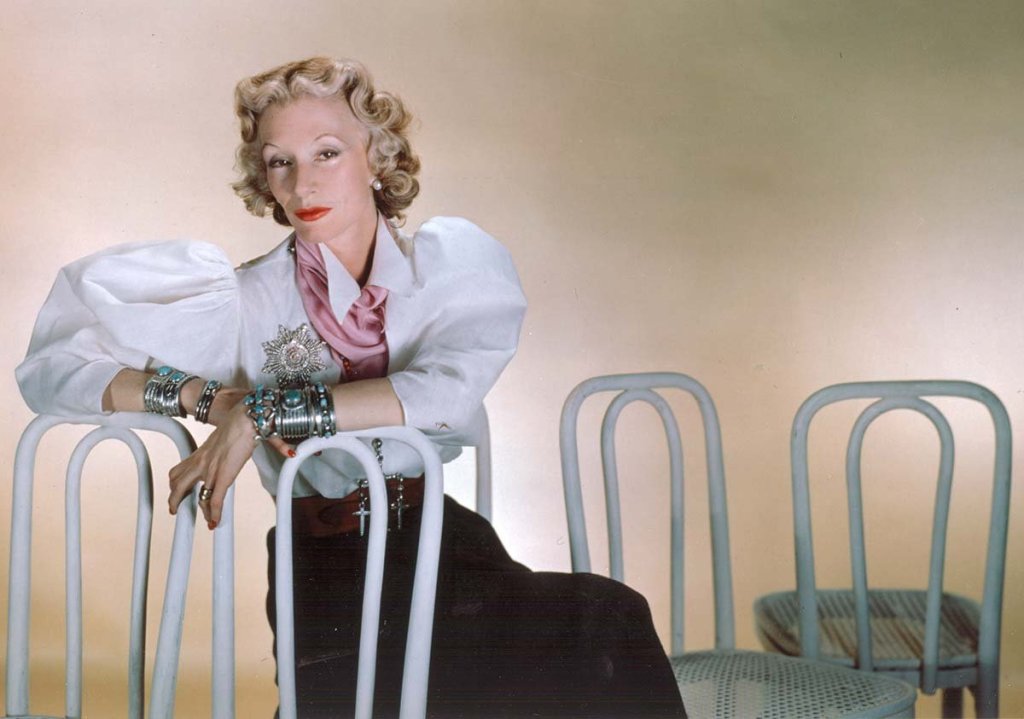
In the ensuing decades after the war, Claremont Manor had many owners but three stand out. In 1940, Millicent Rogers bought the estate. Ms. Rogers was the granddaughter of Henry Rogers, a partner of John D. Rockefeller in the Standard Oil Trust. Millicent was a fashion icon and socialite during the early decades of the 20th century and later became an activist promoting Native American rights. Millicent had an active love life, marrying three times, once to a broke Austrian count, and included among her romantic partners actor Clark Gable, James Bond author Ian Fleming, and various princes from Russia, Italy and England. Mr. Gable was a frequent guest at Claremont Manor and contemplated buying a nearby plantation home. Millicent sold Claremont Manor in 1950 and retired to her home in Taos, New Mexico where she established a museum of Native American art that exists to this day.

Millicent Rogers, the chatelaine of Claremont 1940-1950

Between 1950 and 1964, Claremont was owned by James and Margaret Carter. James owned coal mining properties in Virginia and he and Margaret, although never making Claremont their primary residence, embarked on extensive renovations and additions to the property including adding to the main house and rebuilding various outbuildings. They also bought adjoining parcels more than doubling the size of the property. They sold the estate in 1964 and it served as a parochial school for the next 12 years until it was purchased by Lewis and Ann Kirby. The Kirbys added even more land to the estate bringing it up to its current 1,100 acres. Ann Kirby is a descendent of one of the owners of the Woolworth department store empire. Lewis was a graduate of Princeton University and served in General Patton’s Third Army in World War II. During his time in the service, he fought in the Battle of the Bulge and was present at the liberation of the Buchenwald concentration camp. After the war, he had a long career in the insurance industry. The Kirbys were passionate about Claremont and family traditions and heraldry. Ann passed away in 1996 and Lewis in 2015. Presumably, Claremont Manor is now controlled by their three children.

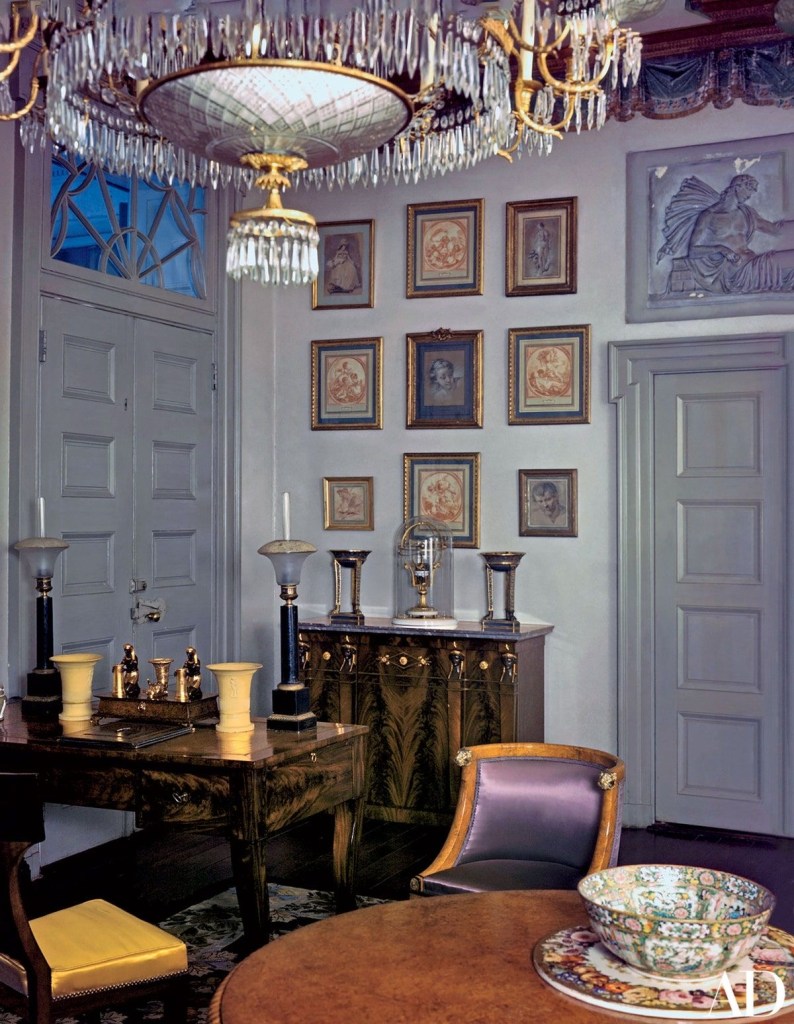
Interior of Claremont during the ownership of Millicent Rogers

Westover

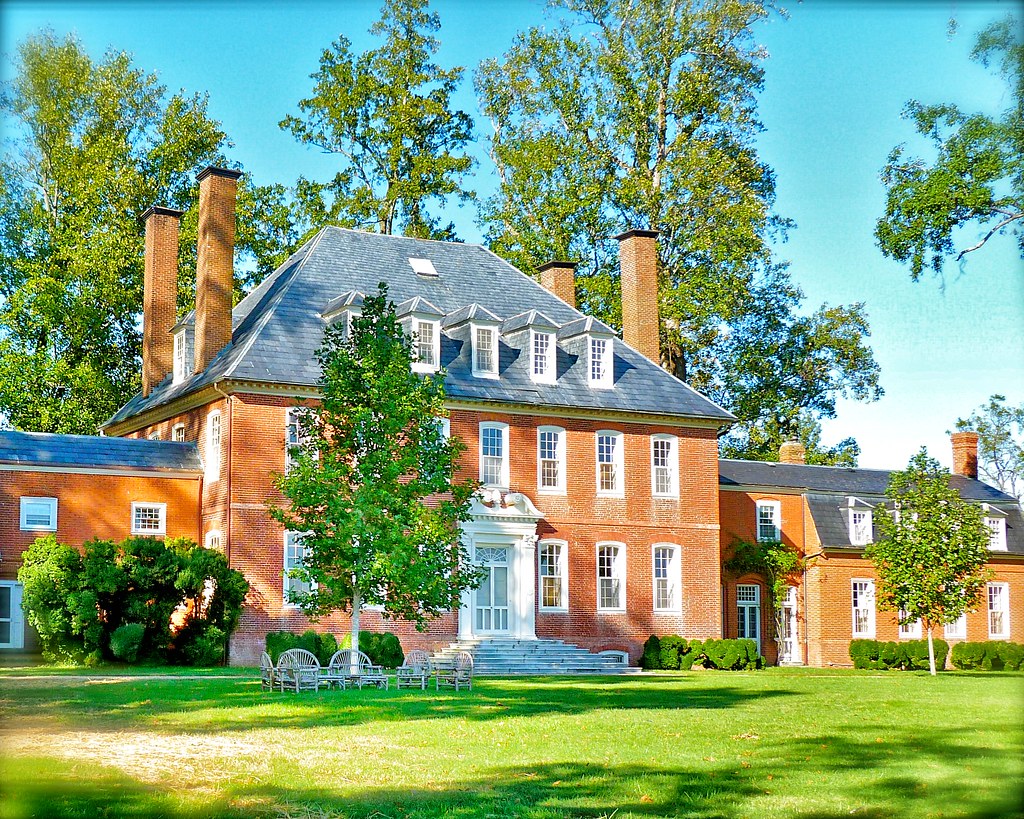
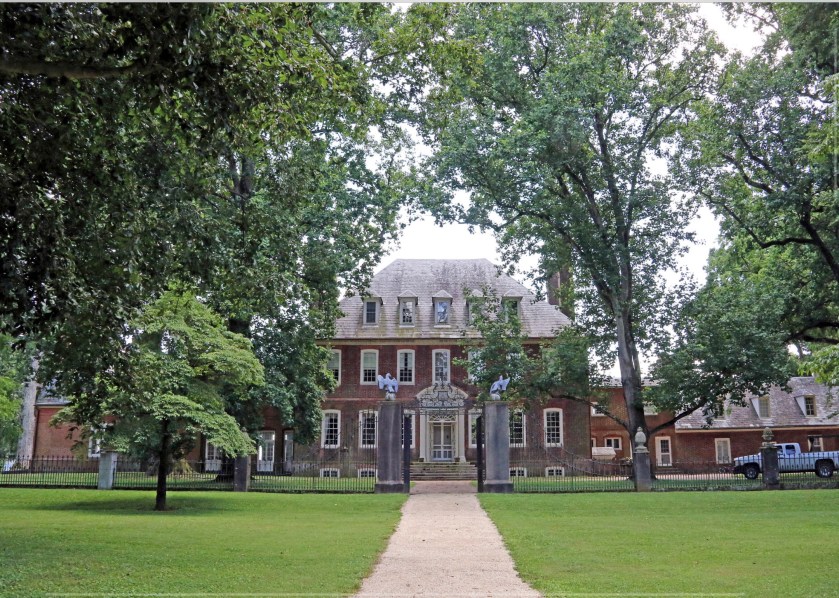
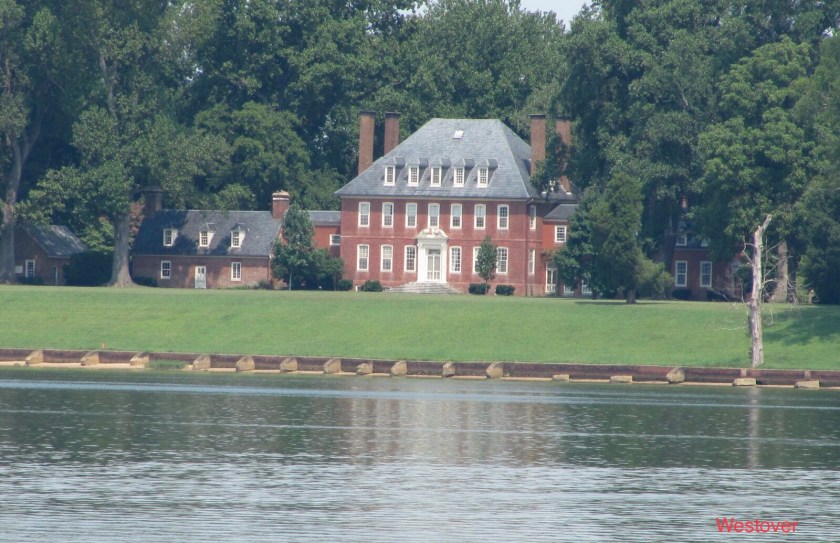
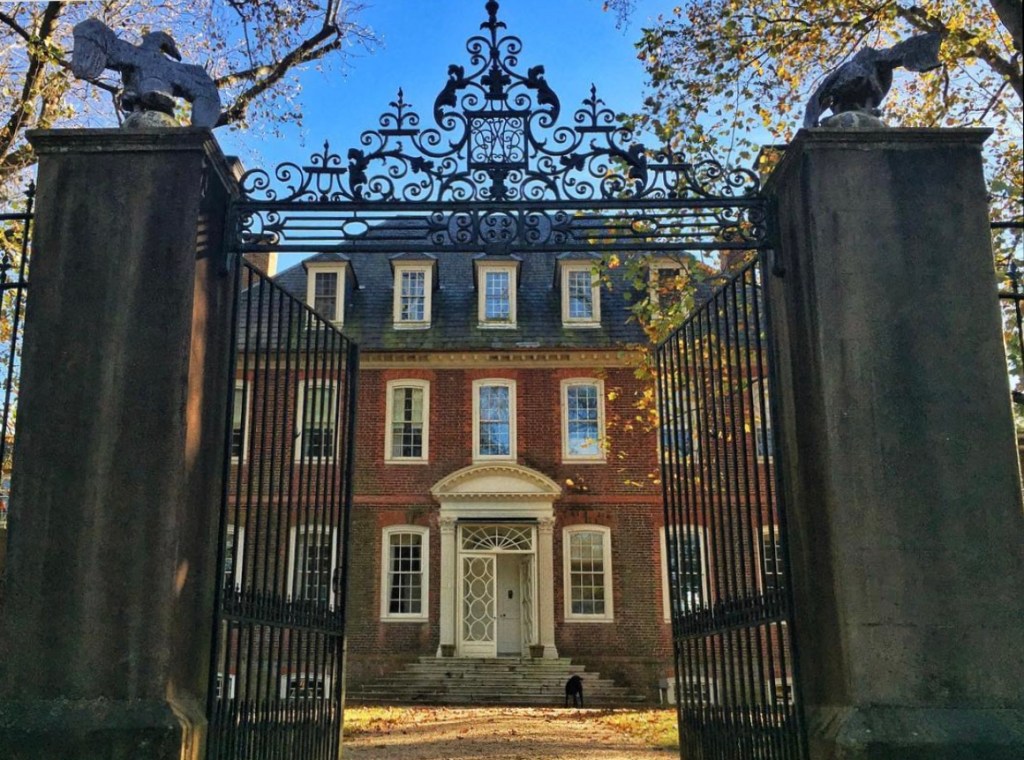
This house is one of my favorites. Something about the proportions of the central block is so satisfying to the eye not to mention the house’s lovely location on the banks of the James River.  It’s not often when an architect and their client hit on the perfect combination of design, materials and execution but the unknown architect of Westover nailed it.  Westover is located in Charles City County, Virginia, halfway between Williamsburg and Richmond. Westover is just one of several historic plantation homes in the area which date back to the 18th century. Some of these homes have never been sold and are still owned by the descendants of the builder. US presidents have been neighbors of Westover.

The Westover Plantation got its start in 1637 when the governor of the Virginia Colony granted 2,000 acres on the left bank of the James River to Thomas Pawlett who then sold to Theodorick Bland. The Blands subsequently sold to William Byrd I in 1688. It was William’s grandson, William Byrd III, who built the handsome Georgian style house that sits there today.  The year when the house was completed is lost in the fog of history but it’s believed to be in the 1750s. The name Westover is a tribute to Henry West, 4th Baron De La Warr (where we get the name of Delaware) who was the son of the Colonial Governor of Virginia in 1610.  The Byrd family is famous in Virginia for founding the capital city of Richmond and remained a force in Virginia politics right through the latter half of the 20th century. The Westover Plantation economy was built around tobacco cultivation partially fueled by slave labor up until the Civil War.

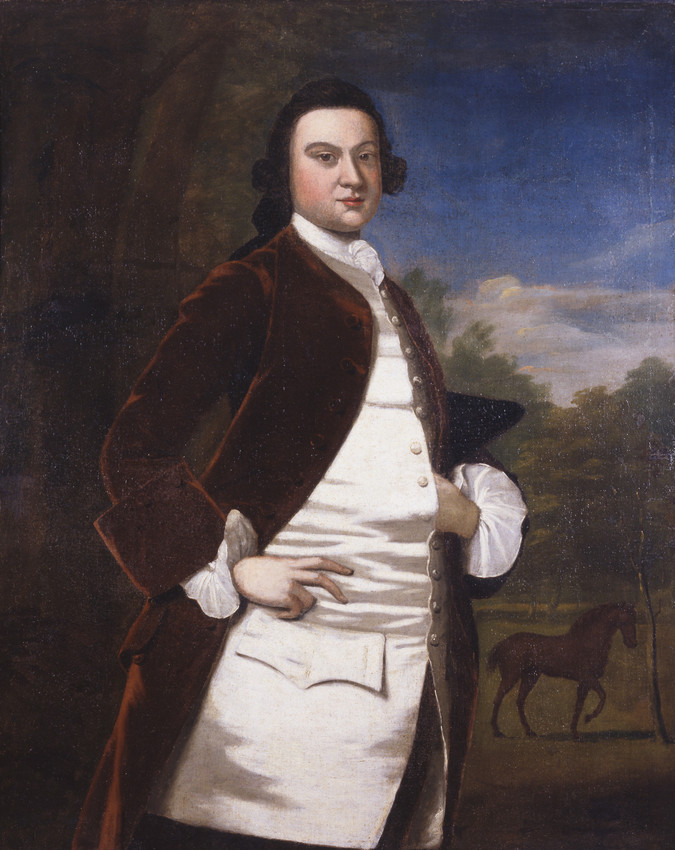
William the third lived a prodigious and imprudent life. In addition to building the mansion at Westover, he fathered 15 children and loved to gamble. It was these extravagances that eventually left him broke and despondent and he committed suicide in 1777. His widow, Mary, was forced to sell off family property in Richmond to cover expenses. During the American Revolution Mary tried to stay neutral but this only resulted in harassment from both sides. Westover was also the scene of further drama during the war when notorious traitor Benedict Arnold landed at Westover with a contingent of British troops bent on raiding nearby Richmond in 1781. General Arnold, whose wife was related to Mary, allegedly barged through the front door of Westover on his horse and hacked out a piece of the stairway bannister with his sword. The damage can still be seen today.

William Byrd III, the builder of Westover

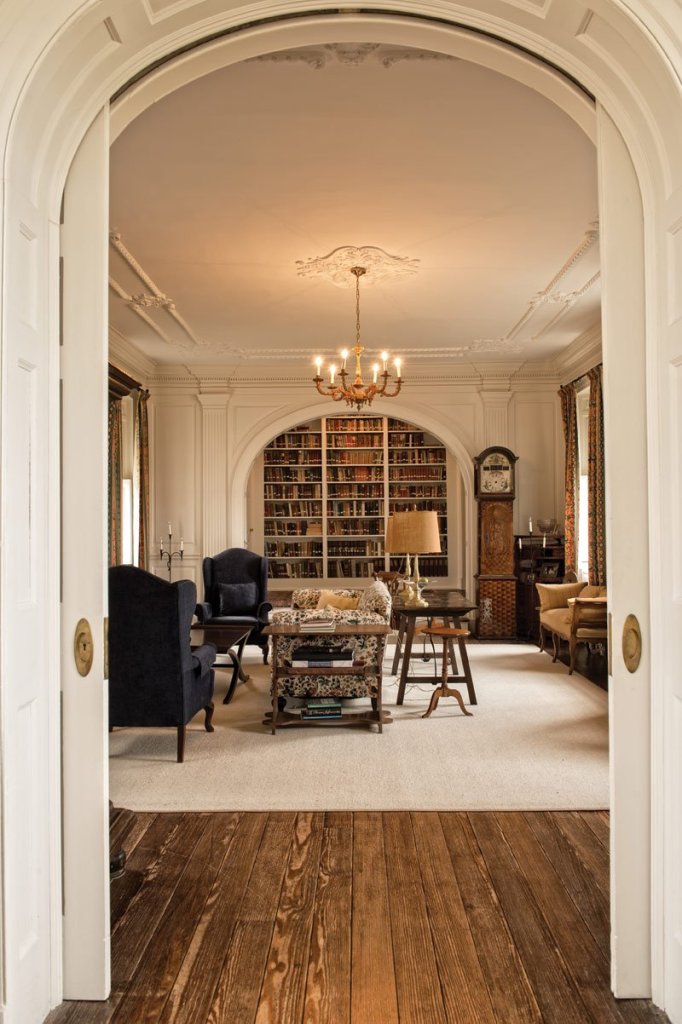
Mary Byrd continued to live at Westover until her death in 1814 after which the plantation was sold off by her children. Over the next 107 years, Westover went through several owners, typically members of other prominent Virginia dynasties such as the Seldens and the Carters. For a time, it was even back in Byrd family ownership in the personage of Claris Sears Ramsey. Ms. Ramsey was instrumental in rehabilitating Westover. The house had been in the path of the Union Army during the Civil War’s 1862 Peninsula Campaign and one of the two dependencies, containing the library, was hit by a cannon shell and burned to the ground. Ms. Ramsey rebuilt the dependency and connected both of them to the central block creating the continuous structure we see today.

By the way, for those readers unfamiliar with Tidewater Georgian architecture, dependencies were supplementary structures situated around the main residence.  The dependencies were typically used for domestic functions that were unsuitable for the main living area such as cooking which was considered a fire hazard at the time.  The dependencies could be connected to the main block of the house by enclosed hallways or breezeways (called hyphens) so that servants could transit between the residence’s main block and the service areas.  In many traditional Georgian houses, there would two identical dependencies on either side of the main block connected by two hyphens, a design called a “five part Georgian home.” 

Ms. Ramsey sold Westover to Richard Crane and his wife, Ellen Bruce Crane, in 1921. Mr. Crane was a scion of the Crane Company famous for its plumbing fixtures. Ellen’s family had lived on another Virginia plantation, Berry Hill. Mr. Crane was a philanthropist and diplomat and was the US ambassador to Czechoslovakia after the First World War. Alas, like the original builder of Westover, tranquility eluded Mr. Crane and he took his life at Westover in 1938. However, the third generation of his and Ellen’s descendants continue to live at Westover to the present day and the house has become a happier family home. Other than the Byrds themselves, the current period of family ownership is the longest in the estate’s history at 103 years and even exceeds the Byrds tenure if you just count ownership of the house.

Today, Westover Plantation continues to operate as an agricultural estate of more than 1,000 acres (although the agricultural land is leased out), hosts weddings and is occasionally used as a filming location. Although the house is a private home, the gardens can be visited at any time and the house itself can be toured by reservation or during certain weekends in the summer (click here for more info). Surrounding the house are several acres of gardens, various Colonial-era outbuildings (including a subterranean tunnel for avoiding Indian attacks), and a parish church and cemetery which hold the remains of several previous owners including various members of the Byrd family. A meditative YouTube video showing scenes from Westover can be viewed here.

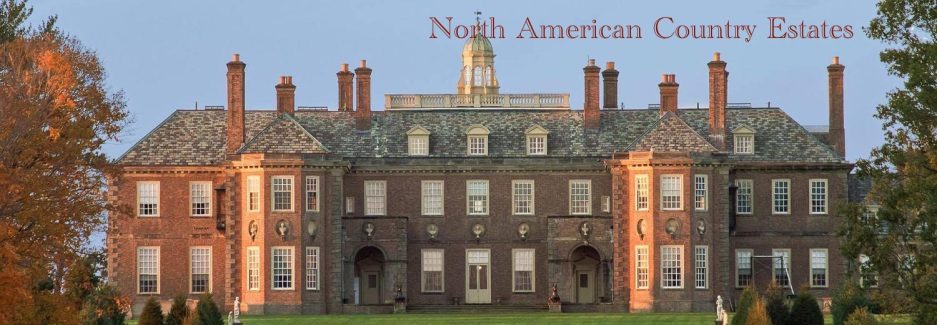
Notable nearby estates include Evelynton, which was originally a part of the Westover Plantation (click here for more on Evelynton), Berkeley Plantation and Shirley Plantation. Richard Crane’s uncle built another notable and architecturally significant estate covered in this blog, the Crane Estate (AKA Castle Hill) in Ipswich, Massachusetts (click here for more info).

The distinctive design of Westover has been copied many times over the years but the copies are never as good as the original. Westover Plantation has had its ups and downs in its 270 year existence including an unfortunate connection to slavery prior to the Civil War but it remains arguably the preeminent example of Georgian residential architecture in the United States, a national treasure of design and aesthetic.