Villa Lauriston

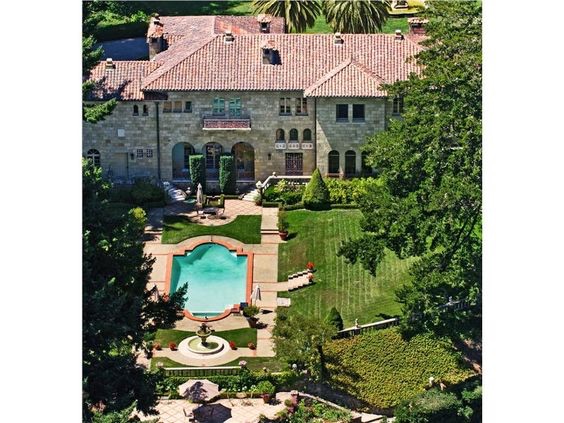
In the early decades of the 20th century, the business and financial elites of San Francisco built country estates south of the city in San Mateo County in a similar manner that wealthy New Yorkers built on the Gold Coast of Long Island or Philadelphians migrated to the Main Line. Upscale peninsula towns such as Hillsborough are a modern day evolution of this development trend. Most of these estates have since been subsumed into the suburban development that occurred after World War II or have been torn down to make way for development. A few of these estates still retain an element of their bucolic past such as Filoli in Woodside or the nearby Phleger Estate (click here for more on Phleger). A little further south stands another relic of this time period, Villa Lauriston in Portola Valley.
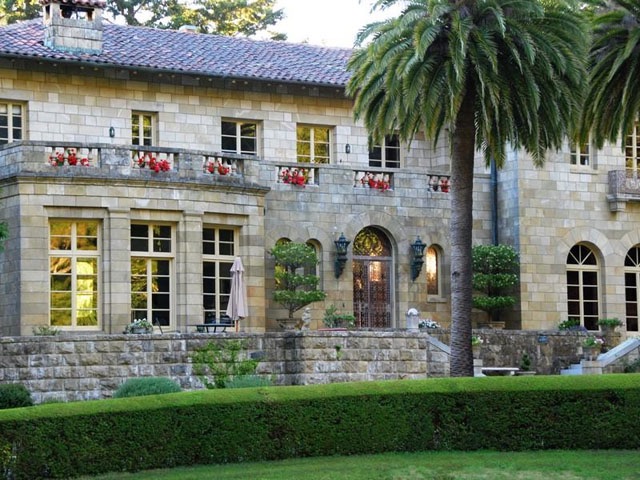
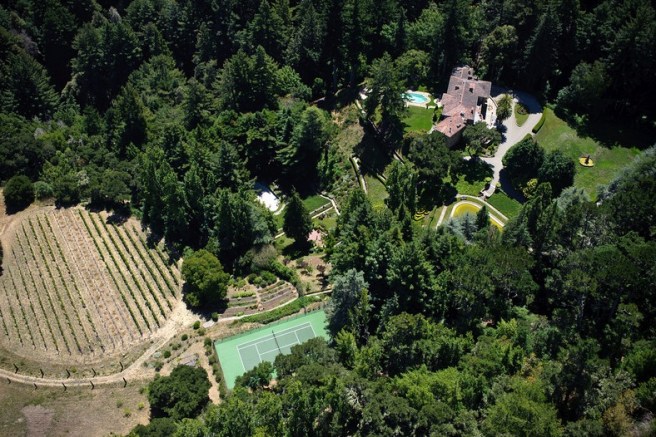
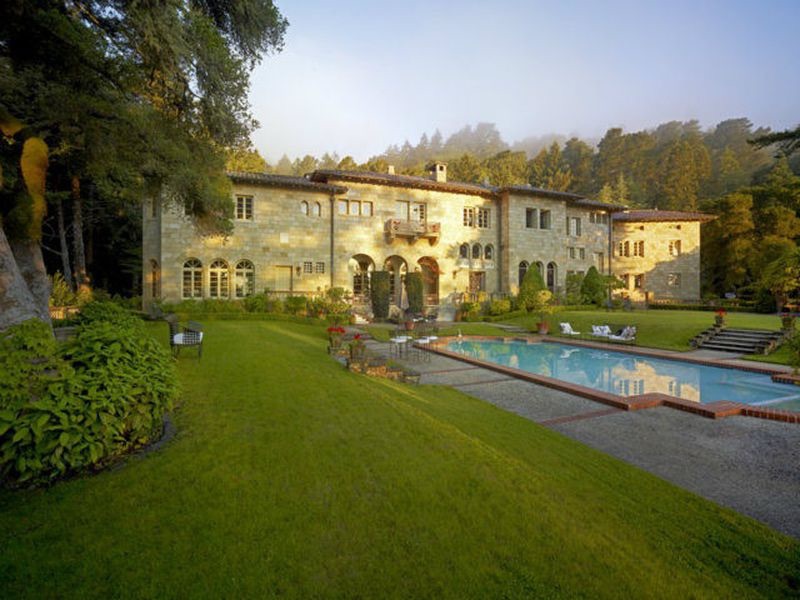
Villa Lauriston was the creation of Herbert Law, an Englishman by birth who migrated to San Francisco by way of Chicago. Herbert and his brother, Hartland, were wheeler dealers of the first order and traded in San Francisco real estate including buying the Fairmont Hotel a few days before it was damaged in the 1906 San Francisco earthquake. But their biggest innovation was starting the Viavi Company which peddled homeopathic medicines which were supposed to enhance the health and libido of women. Using the proceeds from his medication and real estate businesses, Herbert engaged architect George Schastey to design his estate. The result, completed in 1926, was the 16,000 square foot, Florentine-style Villa Lauriston which sat on a 1,000 acre estate in Portola Valley. During prohibition, Villa Lauriston was used as an illegal stash for all the liquor and wine that had been removed from Mr. Law’s San Francisco hotel properties. Herbert lived at the Villa with his wife, Leah, and their daughter, Patricia, for 11 years.
The story of Patricia is a sad one. Raised by nannies, educated at home by tutors and then at Stanford University, her parents started building a separate grand villa on the estate just for her when she was only five years old. In a macabre twist of the Cinderella legend, the manor-born, Stanford-educated Patricia fell in love with a gas station attendant, also named Stanford, in 1942 and much to the consternation of her parents married him while she was still in school. He then shipped off to the Pacific to fight the Japanese as a U.S. Marine. Perhaps as a result of parental pressure, Patricia divorced Stanford as soon as he returned from the war. One month later, Patricia was discovered, asphyxiated, in her car with a garden hose running from the exhaust into the car’s interior. Next to her was a couple of books. Apparently, she decided to do some reading while she drifted off into eternal sleep. Patricia’s unfinished villa slowly fell into ruin and burned in 1971.

The Laws sold Villa Lauriston to John Neylan in 1937. Mr. Neylan was the personal attorney for William Randolph Hearst (of Hearst Castle fame), was on the Board of Regents for the University of California for 27 years and was a member of the Bohemian Club, one of those secretive, ultra-exclusive organizations dogged by conspiracy theories that they secretly run the world. While associated with the UC, Mr. Neylan promoted the career and vision of the nuclear physicist, Ernest Lawrence, who founded Lawrence Livermore National Laboratory. Legend also has it that Mr. Neylan burned all of W.R. Hearst’s personal papers at Villa Lauriston upon the publisher’s death in 1951 – much to the consternation of Mr. Hearst’s enemies, creditors and biographers. Mr. Neylan lived at Villa Lauriston for many years before passing away in 1960. His heirs apparently struggled with Villa Lauriston before selling the estate to a group of investors in 1969. These investors dedicated most of the estate’s woodlands to conservation and subdivided the rest to carve out a couple of other residential properties leaving Villa Lauriston with about 29 acres.
After 1970, Villa Lauriston changed hands a couple of times. A sleazy commodities dealer held it for a while. Then a Silicon Valley tech entrepreneur named Norio Sugano bought it for $3.7 million. This latter day history of the Villa is an object lesson in the sheer cost and difficulty of maintaining such extravagant homes. Mr. Sugano had similar luck as the previous owners and the home was forced into foreclosure in 2012 although he did add a vineyard for growing wine grapes. It was sold at auction in 2013 for $13 million after being listed for as much as $20 million. The current owner is reportedly Eric Schmidt, the former CEO of Google.

The story of Villa Lauriston points out the difficulty of owning such large estates. On the other (more civilized) side of the Santa Cruz Mountains, much smaller, more manageable estates in Woodside sell for $20 million plus and find takers. There is a subset of wealthy individuals and families willing to take on the management of a large country estate but it can become a full-time job and the subset isn’t a big fraction of the home owning public. Fortunately for the nation’s architectural heritage, people like Mr. Neylan, Mr. Sugano and Mr. Schmidt step up and preserve these priceless (or just hard to price) homes. For those interested in more info on Villa Lauriston, an entertaining video is available on Youtube here or you can click here for a Youtube video with some more history on the house and those lived in it.

Oh….if you want to buy some of Mr. Law’s medicines, you still can. Viavi Company still exists at http://www.theviavicompany.com

High Lawn

The Vanderbilt family is famous for incalculable wealth, gilded age mansions, blue jeans and Anderson Cooper. Many fans of gilded age mansions know about those that were built by members of the Vanderbilt clan such as the Biltmore Estate in North Carolina, The Breakers in Newport, RI or Hyde Park in New York (click here for more on Hyde Park). Most people assume that the Vanderbilt mansions have long since been converted into museums and that the Vanderbilt descendants now live like the rest of us mere mortals. Although some Vanderbilt descendants have done well in business, the arts or academia or are minor members of the English aristocracy others lead decidedly middle class lives.

The Vanderbilt fortune that was built up in the 19th century through astute investments in steamships and railroads has been so diluted through inheritance and multiple divorces or squandered on fine living throughout the decades that most contemporary Vanderbilts are merely comfortable, not filthy rich. By way of example, one of the bigger chunks of contemporary Vanderbilt money is in the hands of someone with no Vanderbilt blood at all (and potentially has never even met a Vanderbilt). A certain John Hendrickson had been working as a government official in Alaska and living in a two-bedroom condo in Anchorage when he met and married former actress and horse breeder Marylou Whitney. Marylou, in turn, had previously been the fourth and final wife of Cornelius Vanderbilt Whitney and inherited $100 million when C.V. died in 1992. When Marylou (who was 40 years older than John) died in 2019, the former Alaska government employee inherited her fortune.

Due to these sorts of twists and turns, contemporary Vanderbilts mostly live in nice, but unremarkable homes. But there are a few exceptions. One truly notable exception is the home of James Spencer-Churchill, the 12th Duke of Marlborough and great grandson of the famously reluctant bride, Consuelo Vanderbilt. The Duke owns (and sometimes even lives in) England’s Blenheim Palace, which is almost twice as large, and also twice as nice, as the Biltmore Estate. For more on Biltmore, click here. On this side of the Atlantic sits a more down-to-earth exception known as High Lawn, nestled in the Berkshire Mountains near Lee, Massachusetts.

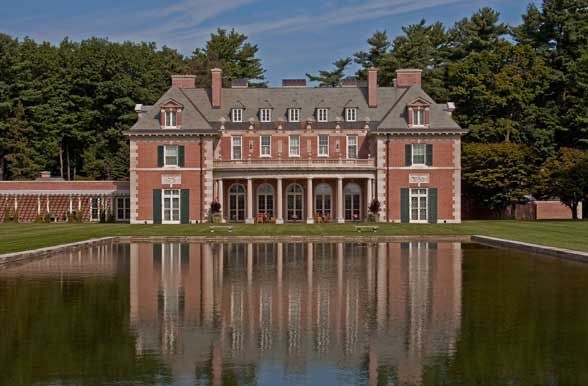
High Lawn was designed by the New York architectural firm of Delano and Aldrich and completed in 1910. It is 25,000 square feet and sits on a 1,600 acre estate. The house was a wedding present for Lila Vanderbilt Sloan, a great grand daughter of Cornelius Vanderbilt. The bas-relief sculptures above the French doors in each bay of the facade were created by Lila’s cousin, Gertrude Vanderbilt Whitney. Along with the pleasing proportions, red brick, dormers and the limestone quoins, High Lawn is a striking example of Georgian revival house design. I only have one quibble: would it have killed the architect or the builder to match the chimneys visible from the front?

Cornelius Vanderbilt was known as “The Commodore” and at one time was the richest person in the United States. Cornelius started off with a single sail boat ferrying passengers between Staten Island and Manhattan, built a fleet of steamships and eventually ended up with a railroad empire with the New York Central Railroad as the centerpiece. Known to his contemporaries as crude, brutal and vulgar and barely literate, Cornelius nevertheless was a brilliant business innovator and built up a fortune that would be worth $200 billion in today’s dollars, on par with Jeff Bezos or Bill Gates. BTW, in fairness to old Corny, most of his competitors back in the day were also crude, brutal and vulgar.

Lila and her husband, William Osgood Field, used High Lawn as a vacation home and upon Lila’s death in 1934, the estate was purchased by her daughter, Marjorie Field. Marjorie and her husband, H. George Wilde, developed a dairy farm business on the property, High Lawn Farm, that has become internationally renown for breeding high quality jersey cows. The farm is still in operation to this day and can be visited by the public although High Lawn House is still a private home and not open to the public nor is the house visible from the dairy or any public road. If you do visit the dairy, stop by the store and try their purple cow milk shake.

Marjorie passed away in 1997 and the estate and farm came under the control of her son, George William “Bill” Wilde, a great great great grandchild of The Commodore. Bill, who passed away in 2013, was a graduate of Princeton and the Harvard Business School, served in the U.S. Marine Corps and was an investor in addition to being in the dairy business. Presumably, High Lawn is now controlled by his widow and heirs.

High Lawn lives on as one of the few (and probably the only) “Vanderbilt mansion” that is still lived in by a Vanderbilt, going on 115 years of continuous family ownership (140 years if you count just ownership of the land).

Just one mile north of High Lawn is another beautiful country house, The Mount, which is covered in this blog (click here for more).

Blenheim Palace in England, a “Vanderbilt Mansion” that predates the Vanderbilts by 150 years and at 301,000 square feet is almost twice as large as Biltmore. The owner is the 12th Duke of Marlborough and the great great great great grandson of the Commodore, Cornelius Vanderbilt. Hold my beer, Biltmore.
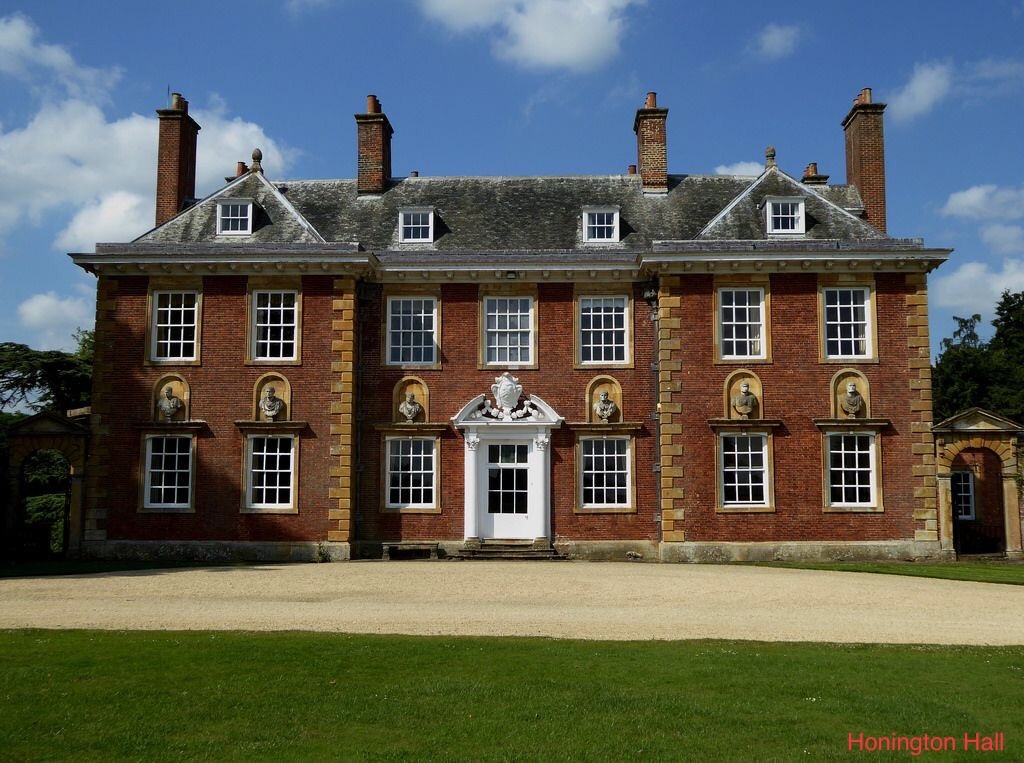
English perfection in Honington Hall in Warwickshire built in the 17th century. Could this house be the inspiration for High Lawn?

Domaine Sagard

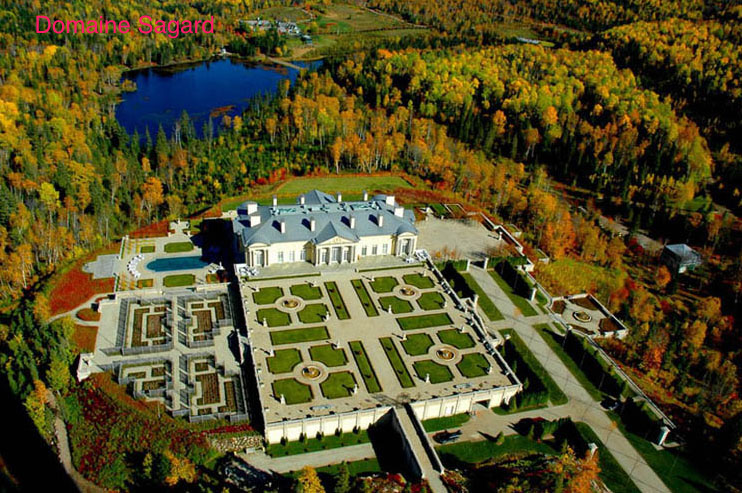
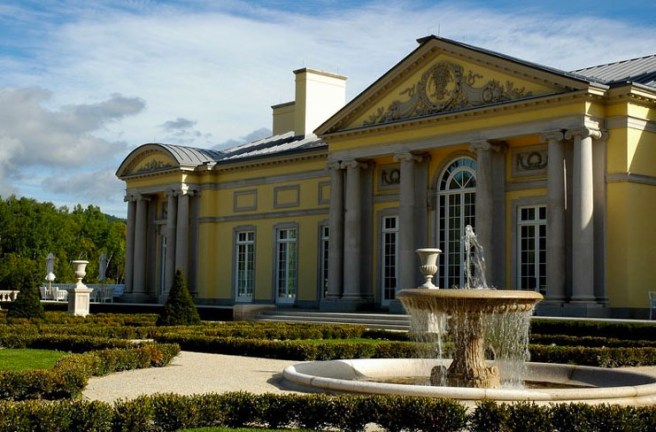
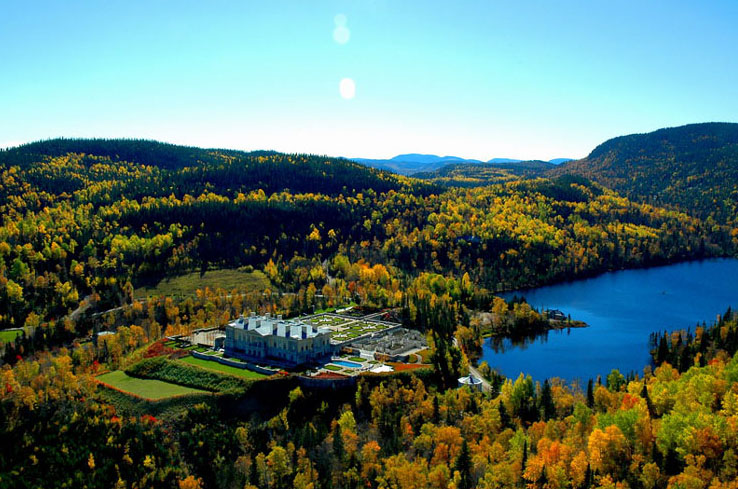
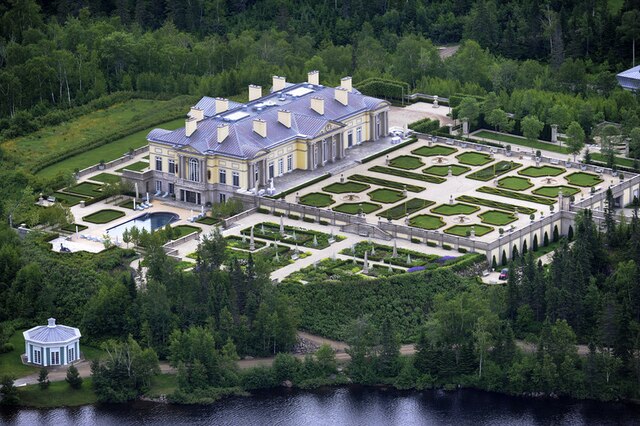
This 70,000 square foot house is called Cherlieu and sits on a vast private estate in the Laurentian mountains of Quebec called Domaine Sagard. Domaine Sagard is approximately 100 miles north of Quebec City and covers 21,000 acres.  The palladian palace of Cherlieu was completed in 1997 to a design by Quebec City architect, Sylvain Larouche. Domaine Sagard is the creation of Paul Desmarais, the founder of the Montreal-based Power Corporation of Canada.  

Mr. Desmarais was born in the bleak nickel mining town of Sudbury, Ontario in 1927. He started his business career in 1951 by taking over the family’s money-losing local bus company for a dollar, expanded to other busing companies and utilities in Ontario, and eventually built up the Power Corporation of Canada into a $50 billion conglomerate with interests in financial services, transportation, media and wood products. Some say that Mr. Desmarais’ business acumen was helped along by considerable political acumen as well. Several Canadian Prime Ministers have been on the payroll of Power Corporation either before or after their terms in office or have served on various Power Corporation boards. Mr. Desmarais was also friends with former French President Nicolas Sarkozy and former U.S. Presidents George H.W. Bush, Bill Clinton and George W. Bush. Many of these politicians have made the trek to the remote estate for parties and receptions. Mr. Desmarais passed away in 2013 followed by his wife of 60 years, Jacqueline Maranger, in 2018 and presumably the estate is now controlled by the Desmarais’ four children. Assuming you could even find Domaine Sagard, it is not open to the public.  

Mr. Desmarais was obviously a very clever guy but I’m not sure how I feel about his house. On the one hand its palladian symmetry, porticoes and columns and baroque flourishes are really unique in North America, something you’re more likely to see in St. Petersburg or Vienna. On the other hand I don’t think the design complements the setting well. Such a refined design, not to mention the yellow finish and formal gardens, would blend in better in a more civilized setting, not a forested and mountainous environment. Here it sticks out like a sore thumb. A Scottish baronial castle design using rougher textures, a more dramatic roof line and a landscape garden would have been a better choice for this setting. Nevertheless you have to admire the effort that went into planting a palace in the middle of the Quebec wilderness.

Click here for a satirical YouTube video that shows scenes from Domaine Sagard and also shows the ambivalence that the Quebecois have about their plutocrats. Another country house associated with the Power Corporation of Canada is Belmere, a creation of the company’s former CEO, Robert Gratton (click here for more on Belmere).

Paul Desmarais, builder of Domaine Sagard, on the left. Canadian Prime Minister Brian Mulroney on the right. Presidents George I and George II in the middle.

No, you may not come in.

Scoville Estate

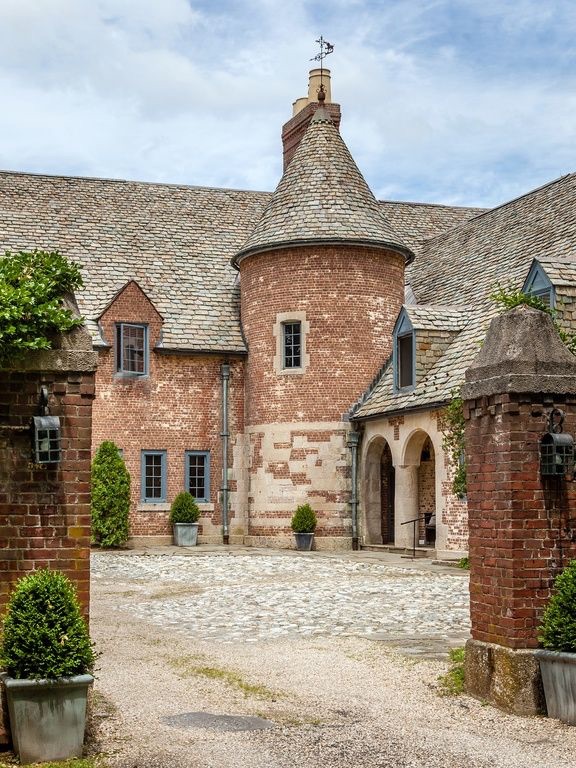
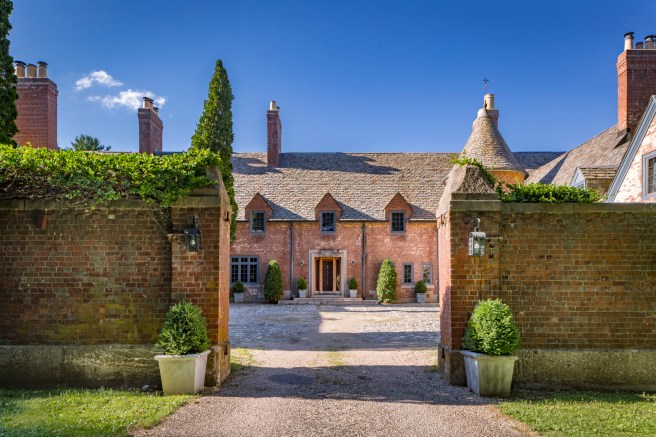
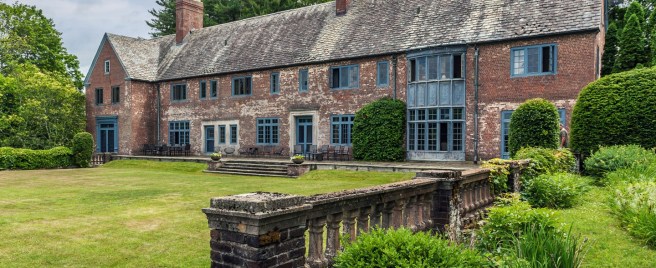
This beautiful French Norman farmhouse-style country house is the Scoville Estate.  It is located in Taconic near Salisbury, Connecticut in the Litchfield Hills.  The house is 12,400 square feet and sits on a 100 acre estate with fine views of the surrounding hills.  Meryl Streep is a next door neighbor. It is not the largest, most expensive or plushest country estate in North America but IMO is one of the coolest.

The Scoville family has a history around Taconic going back to the 19th century when a local farmer named Samuel Scoville began mining high quality iron ore on his property.  His sons, Jonathan and Nathaniel, moved to Buffalo, NY and expanded the business and the family fortune by manufacturing iron railroad car wheels.  Nathaniel had two sons, Robert and Herbert, who moved back to Taconic with their mother, bought more land to add to the family estate and constructed a manor house in 1894.  This house burned in 1915 but several structures associated with the house such as the carriage house and a power mill remain to this day. These structures have, in turn, been converted into residences.  

Herbert Scoville and his wife, Orlena, constructed the French Norman house situated to the west of the original manor house in 1927.  It was designed by Joseph Leland of Boston.  Orlena lived until 1967 and the house was, at some point, taken over by her son, Herbert Jr. and his wife, Ann.    Herbert Jr. was a trained scientist who worked at the CIA for many years and then the Arms Control and Disarmament Agency.  He was a tireless proponent of nuclear disarmament and dedicated the latter part of his life to this cause.  His wife, Ann, was a noted sculptor and many of her pieces decorated the grounds of their Connecticut estate (which they usually referred to as the “Hill House”).  

Herbert Jr. died in 1985 and after Ann passed away in 2014, the heirs made the decision to sell the estate and it sold for $5.8 million in 2017. Thus ended over 150 years of family ownership.   The new owners are a couple that are associated with an investment firm focusing on sustainable technologies in the energy, water and waste management areas. Scoville Estate continues to serve as a private home and is not open to the public.

Just outside the nearby town of Salisbury is another country estate covered in this blog, Twin Maples – click here.

Westover

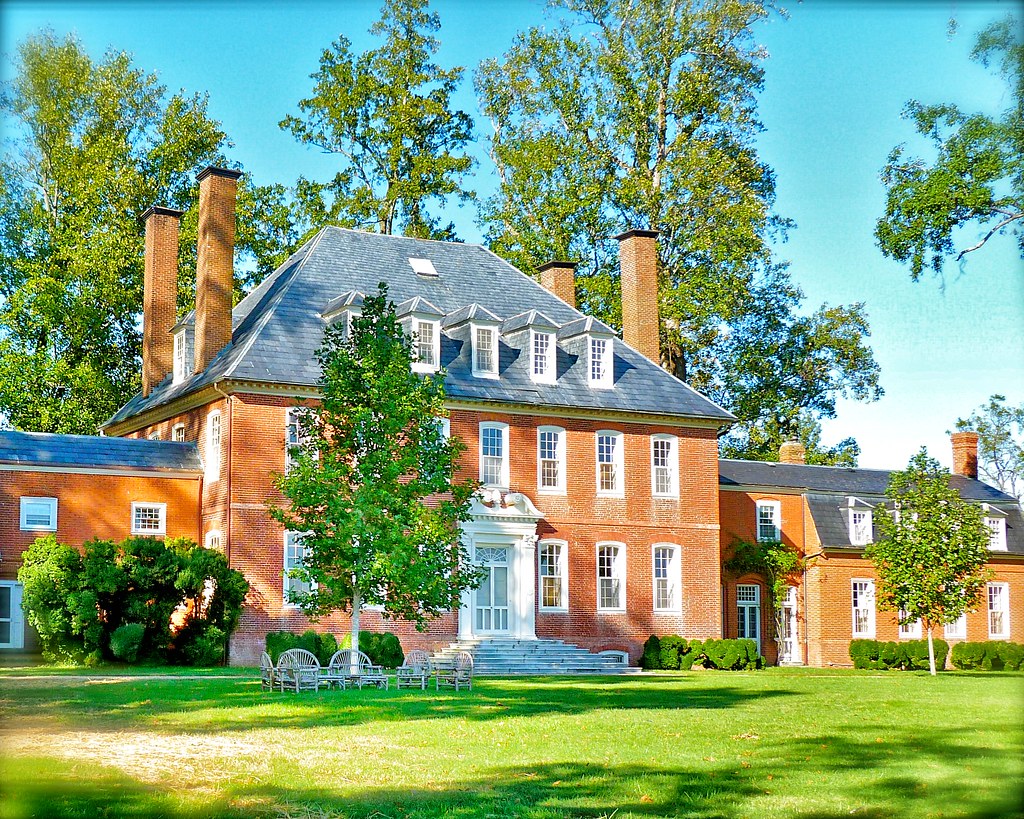
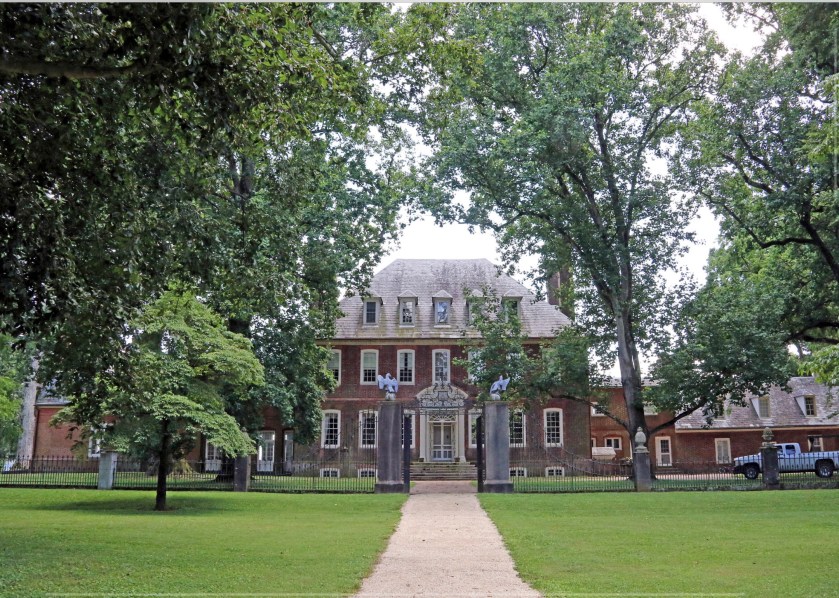
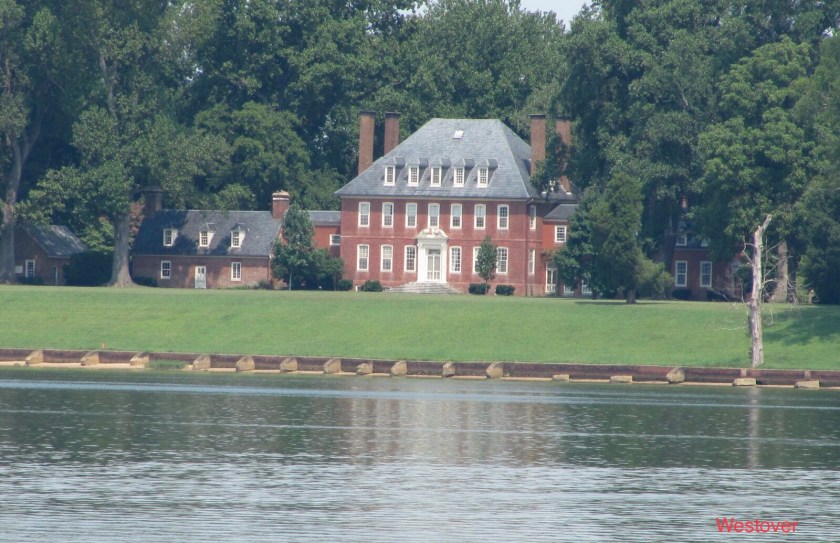
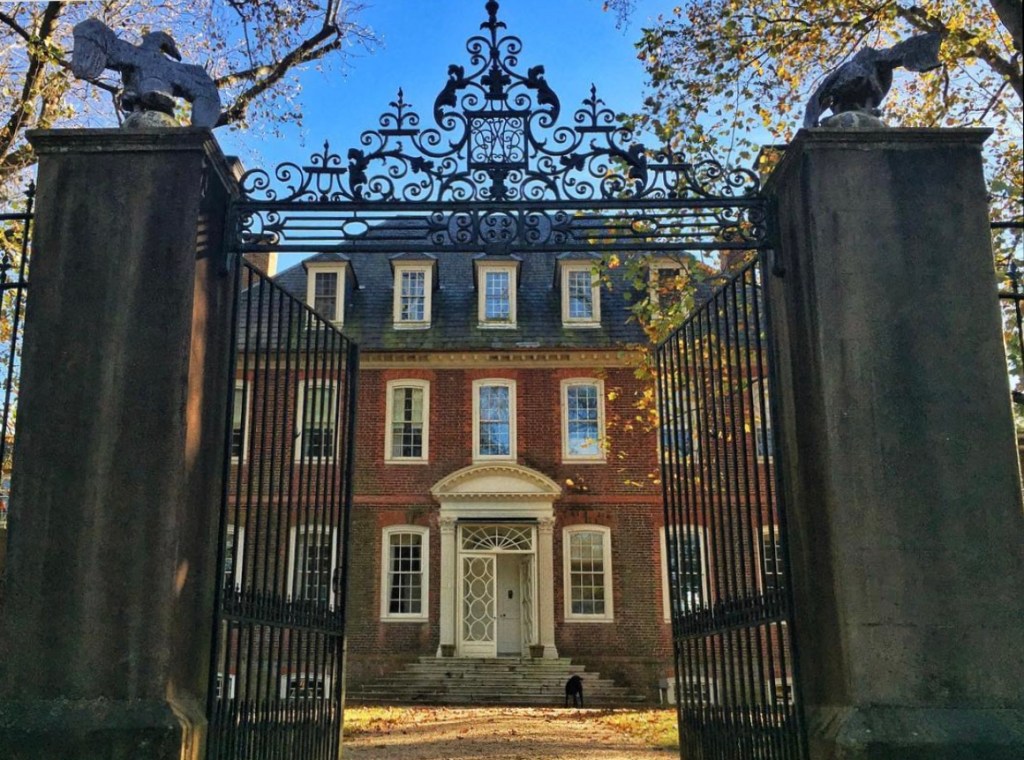
This house is one of my favorites. Something about the proportions of the central block is so satisfying to the eye not to mention the house’s lovely location on the banks of the James River.  It’s not often when an architect and their client hit on the perfect combination of design, materials and execution but the unknown architect of Westover nailed it.  Westover is located in Charles City County, Virginia, halfway between Williamsburg and Richmond. Westover is just one of several historic plantation homes in the area which date back to the 18th century. Some of these homes have never been sold and are still owned by the descendants of the builder. US presidents have been neighbors of Westover.

The Westover Plantation got its start in 1637 when the governor of the Virginia Colony granted 2,000 acres on the left bank of the James River to Thomas Pawlett who then sold to Theodorick Bland. The Blands subsequently sold to William Byrd I in 1688. It was William’s grandson, William Byrd III, who built the handsome Georgian style house that sits there today.  The year when the house was completed is lost in the fog of history but it’s believed to be in the 1750s. The name Westover is a tribute to Henry West, 4th Baron De La Warr (where we get the name of Delaware) who was the son of the Colonial Governor of Virginia in 1610.  The Byrd family is famous in Virginia for founding the capital city of Richmond and remained a force in Virginia politics right through the latter half of the 20th century. The Westover Plantation economy was built around tobacco cultivation partially fueled by slave labor up until the Civil War.

William the third lived a prodigious and imprudent life. In addition to building the mansion at Westover, he fathered 15 children and loved to gamble. It was these extravagances that eventually left him broke and despondent and he committed suicide in 1777. His widow, Mary, was forced to sell off family property in Richmond to cover expenses. During the American Revolution Mary tried to stay neutral but this only resulted in harassment from both sides. Westover was also the scene of further drama during the war when notorious traitor Benedict Arnold landed at Westover with a contingent of British troops bent on raiding nearby Richmond in 1781. General Arnold, whose wife was related to Mary, allegedly barged through the front door of Westover on his horse and hacked out a piece of the stairway bannister with his sword. The damage can still be seen today.

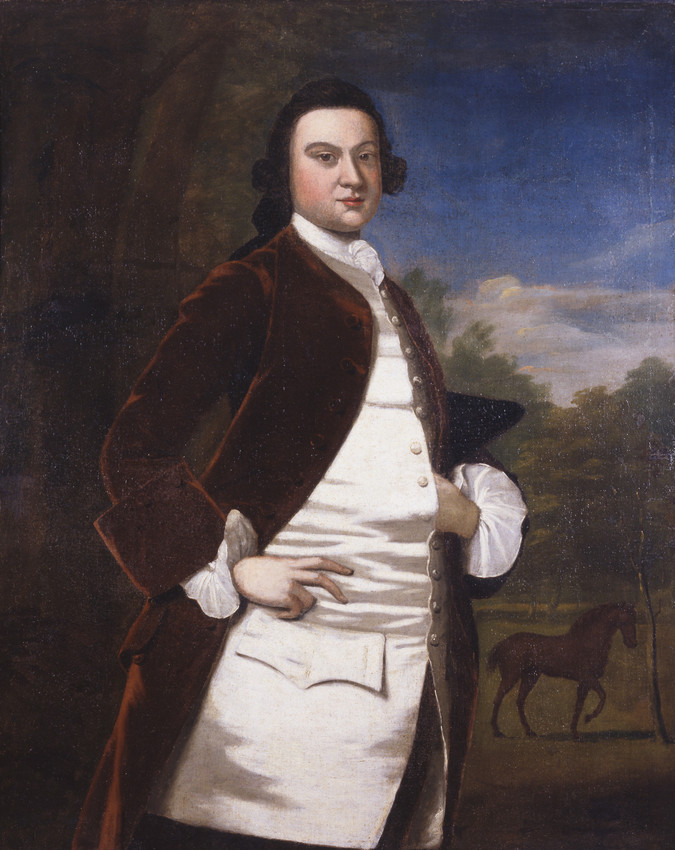
William Byrd III, the builder of Westover

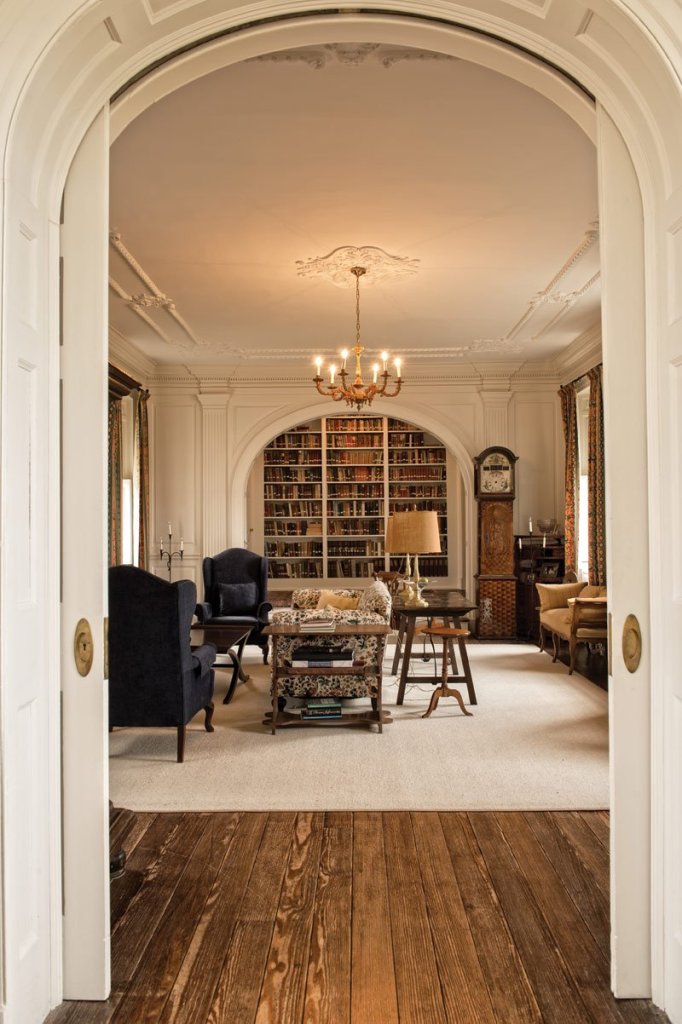
Mary Byrd continued to live at Westover until her death in 1814 after which the plantation was sold off by her children. Over the next 107 years, Westover went through several owners, typically members of other prominent Virginia dynasties such as the Seldens and the Carters. For a time, it was even back in Byrd family ownership in the personage of Claris Sears Ramsey. Ms. Ramsey was instrumental in rehabilitating Westover. The house had been in the path of the Union Army during the Civil War’s 1862 Peninsula Campaign and one of the two dependencies, containing the library, was hit by a cannon shell and burned to the ground. Ms. Ramsey rebuilt the dependency and connected both of them to the central block creating the continuous structure we see today.

By the way, for those readers unfamiliar with Tidewater Georgian architecture, dependencies were supplementary structures situated around the main residence.  The dependencies were typically used for domestic functions that were unsuitable for the main living area such as cooking which was considered a fire hazard at the time.  The dependencies could be connected to the main block of the house by enclosed hallways or breezeways (called hyphens) so that servants could transit between the residence’s main block and the service areas.  In many traditional Georgian houses, there would two identical dependencies on either side of the main block connected by two hyphens, a design called a “five part Georgian home.” 

Ms. Ramsey sold Westover to Richard Crane and his wife, Ellen Bruce Crane, in 1921. Mr. Crane was a scion of the Crane Company famous for its plumbing fixtures. Ellen’s family had lived on another Virginia plantation, Berry Hill. Mr. Crane was a philanthropist and diplomat and was the US ambassador to Czechoslovakia after the First World War. Alas, like the original builder of Westover, tranquility eluded Mr. Crane and he took his life at Westover in 1938. However, the third generation of his and Ellen’s descendants continue to live at Westover to the present day and the house has become a happier family home. Other than the Byrds themselves, the current period of family ownership is the longest in the estate’s history at 103 years and even exceeds the Byrds tenure if you just count ownership of the house.

Today, Westover Plantation continues to operate as an agricultural estate of more than 1,000 acres (although the agricultural land is leased out), hosts weddings and is occasionally used as a filming location. Although the house is a private home, the gardens can be visited at any time and the house itself can be toured by reservation or during certain weekends in the summer (click here for more info). Surrounding the house are several acres of gardens, various Colonial-era outbuildings (including a subterranean tunnel for avoiding Indian attacks), and a parish church and cemetery which hold the remains of several previous owners including various members of the Byrd family. A meditative YouTube video showing scenes from Westover can be viewed here.

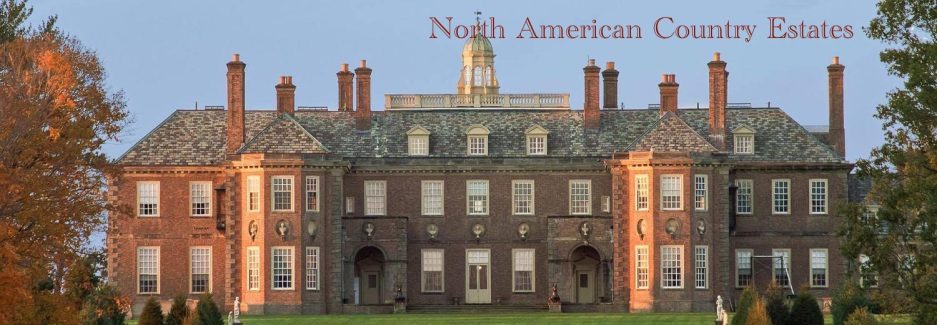
Notable nearby estates include Evelynton, which was originally a part of the Westover Plantation (click here for more on Evelynton), Berkeley Plantation and Shirley Plantation. Richard Crane’s uncle built another notable and architecturally significant estate covered in this blog, the Crane Estate (AKA Castle Hill) in Ipswich, Massachusetts (click here for more info).

The distinctive design of Westover has been copied many times over the years but the copies are never as good as the original. Westover Plantation has had its ups and downs in its 270 year existence including an unfortunate connection to slavery prior to the Civil War but it remains arguably the preeminent example of Georgian residential architecture in the United States, a national treasure of design and aesthetic.