21st century lords of the manor

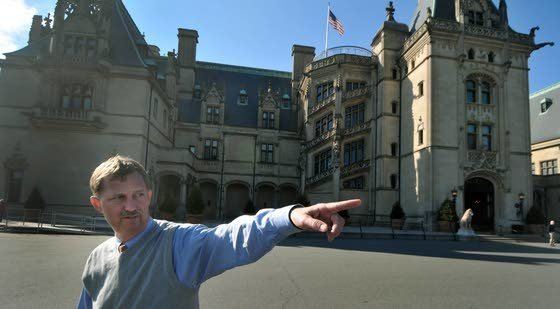
Bill Cecil, the 4th master of Biltmore

While satisfying to look at and an essential part of our architectural heritage, most of the houses and estates in this blog are a bit archaic in the 21st century. They don’t really fit into the notion of an egalitarian, democratic country with a big middle class that prides itself on equal opportunity. In the age of the subdivision, how does one have a 300 acre estate in an easy going, bucolic area such as the Virginia Piedmont, the Berkshires or the Hudson River valley without getting eaten alive by property taxes? How do large country estates survive in the 21st century? This is a real dilemma in the United States where, with customary American efficiency, land is typically taxed at a value commensurate with its “highest and best use” which usually doesn’t mean a rural, private estate. You may want to keep your bucolic 300 acre estate intact but if the suburbs or 2nd home subdivisions are encroaching on all sides, you’re going to pay a high price when the property tax bill arrives each year. On the periphery of a large metropolitan area, a land owner with a large, undeveloped piece of land would have to be unusually committed to leaving it undeveloped or as a landscape park to frame his or her lavish country house. And his or her heirs would have to be equally committed to this vision once the lord of the manor passes away, which isn’t typically the case. Heirs usually cash out by selling or subdividing up to the limits of the local zoning code both to pay estate taxes and to divvy up the estate among the heirs. And to grease the wheels, there would most likely be a pile of offer letters from land developers sitting on the desk of the dear departed. This helps explain why areas that formerly looked like the Cotswolds with leafy estates and tudoresque houses such as the Gold Coast of Long Island are now overrun by suburban housing tracts. Many of the tudoresque houses still exist but their surrounding estates have been cut down from 200 acres to just 10 or 20, just enough to screen out the view of the surrounding (likely high end) tract housing. Other former reserves of wealth, leaded windows, horses and elongated vowels such as Philadelphia’s Main Line, Boston’s North Shore, etc. have evolved in the same way. Some enclaves have retained some of their countrified essence without really being rural anymore. Examples of these low-density, luxury suburban developments include Greenwich, Connecticut; Far Hills, New Jersey; the Brandywine Valley of Pennsylvania; Montecito, California and Great Falls, Virginia.

The situation is different across the Atlantic where land use laws tend to hem in suburban development more than here in the U.S. In England, for example, an astonishing 30% of the land is still owned by landed aristocrats who, in many cases, trace their ownership back to the 16th century when King Henry VIII confiscated all the land held by the Catholic Church and parceled much of it out to his favorite courtiers. Other private homeowners (people like you and me) own just 5% of England. Even the Queen has to make do with just 1.5% of England. To be fair, many of these aristocratic landowners have executed long term ground leases over the centuries to accommodate development. They are also typically good stewards of the land and allow public access but this concentration of land ownership still contributes greatly to wealth inequality in England. In fact, many of these land-rich, cash-poor aristocrats would love for you to drop by and, for a modest admission fee, take a tour of the house and gardens or have your wedding there.
The Hunt Country

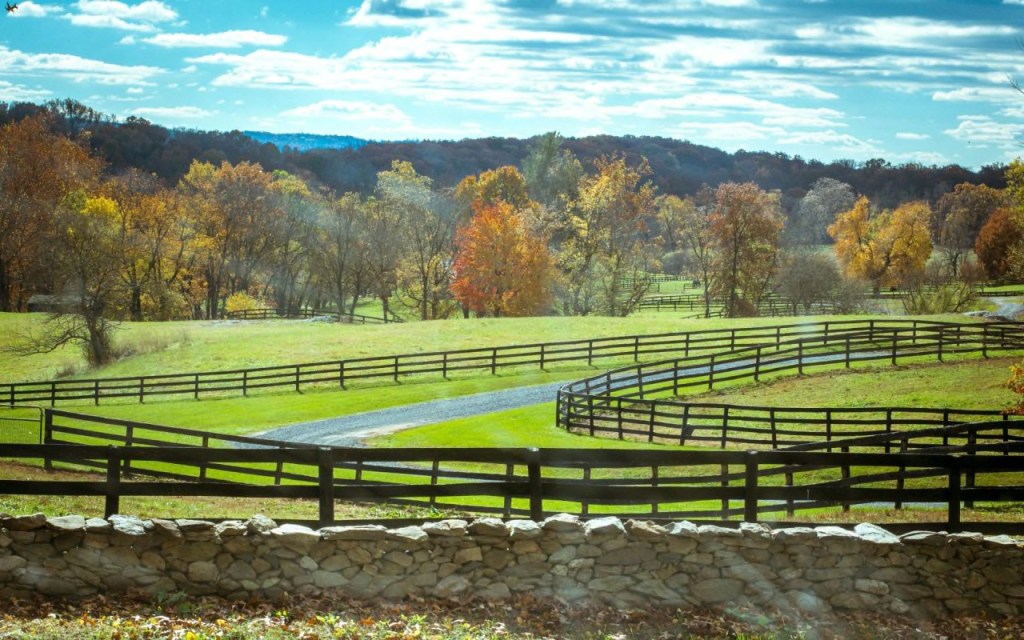
In the United States, in contrast, huge private landholdings are typically used for agricultural purposes and not for private enjoyment. And of course much of the United States, particularly west of the Great Plains, is still in public ownership. In general, private land ownership in the U.S. is much more dispersed across the socioeconomic spectrum. But there are a few interesting exceptions to this rule. The so called “Hunt Country” of Virginia is a fascinating case study. This is an area in Loudoun and Faquier Counties just west of the Washington D.C. metropolitan area. It is roughly bounded by the towns of Middleburg, Upperville, Marshall and The Plains. The moniker “Hunt Country” comes from the tradition of fox hunting and horsemanship in the area that goes back decades. The area is almost exclusively composed of large equestrian estates. Many descendants of gilded age industrialists such as the Mellons, Duponts, Mars, etc. live quiet, relaxed lives in the area, no longer billionaires (at least what they’ll admit to the IRS) but definitely not poor either, their family wealth long ago diversified and sequestered away in “tax-efficient” trusts. But even trust funders and fox hunters aren’t immune to the laws of land economics and zoning. So how do these large equestrian estates survive? Read on.

Virginia Hunt Country – land in conservation easements shown in green

Looking at the map above, you can see a dense mass of parcel boundaries to the far right in gray (the suburbs) but this ends abruptly where the burbs stop and the Hunt Country starts (the green areas) with the Bull Run Mountains forming a solid wall to keep the riffraff out. From then on as you travel west on the John Mosby Highway there is no suburban development to mar your view of green pastureland, fieldstone mansions, horses placidly grazing or being trained for steeplechase or dressage. Land owners accomplish this defiance of the laws of economics by dedicating large portions of their estates to land trusts such as the Land Trust of Virginia through conservation easements. This appeals to property owners who wish to permanently retain the rural character of their land and get a little tax benefit in the process. The owner donates the easement to the land trust organization which then records the easement. The easement exists in perpetuity and pretty much prohibits any development or subdividing. Someone from the land trust typically inspects the property periodically to ensure that the owner is abiding by the terms of the easement (e.g., not building on the easement). This reduces the assessed value of the land since it’s not developable resulting in lower property taxes for the property owner. The property owner can also deduct the reduction in property value as a charitable donation on their federal tax return. Since the land is still owned by the property owner they can decide whether to allow public access (and most do not in the Hunt Country).  In exchange for partially subsidizing the property owner’s private enjoyment of their bucolic chunk of Virginia, the public gets to enjoy the view as they drive on the public highway and wildlife habitat is protected from development.  As seen in the map, the majority of land in the Hunt Country is covered by conservation easements, sort of a private, partially subsidized park for the horse and garden set.

Land trusts exist in all states and have resulted in much valuable land being protected from development, water resources and wildlife habitat protected, and scenic and recreational resources being preserved for posterity. In fact, most land trusts and conservation easements have nothing to do with wealthy equestrians. But other bucolic, wealthy enclaves such as Dutchess County, New York and the Berkshire Mountains have similar land trust setups. There is some controversy over the tax benefits conferred on the donors of conservation easements and whether the public benefits are commensurate with the loss of tax revenues. It can be argued that the benefits accruing to property owners such as open space and privacy gained through Hunt Country conservation easements shouldn’t be subsidized by the public (who pay through less tax revenue available for public services and infrastructure). The property owner can argue that they have taken a big financial hit because they have foregone the right to subdivide or develop the property and the tax benefits do not come close to offsetting the lost value. But maybe they had no intention of developing or subdividing anyways – that’s why they donated the easement in the first place (although their heirs might have had different ideas). There is no right answer. This is ultimately a political question to be decided by legislatures. In jurisdictions where people value open space and abhor sprawl, it may be a worthwhile tradeoff even if the public can only look at the conserved land they helped to pay for (assuming the adjacent road isn’t also private).

A Hunt Country hunt

This blog covers a couple of the more architecturally significant homes in the Hunt Country. Read about Wayside Manor here, Half Way House here, and Huntley Hall here.

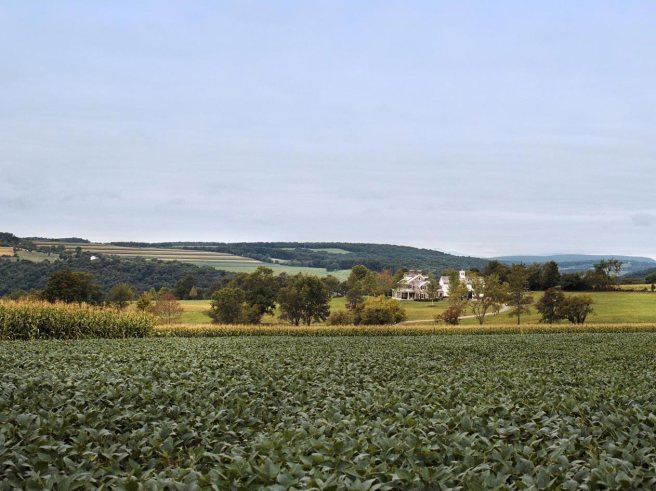
Longfield Farm

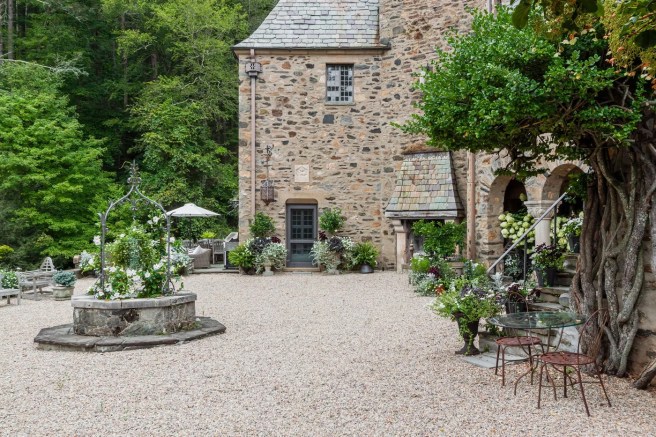
Longfield Farm was designed by architect Gil Schafer and completed in 2007.  The federal style home is clad in fieldstone and sits on a 400 acre farm near Amenia, New York. Longfield was built by Richard ‘Duke’ and Hannah Buchan who also have homes in New York City and Palm Beach, FL. The Buchans both have backgrounds in asset management on Wall Street and Duke served as ambassador to Spain and Andorra during the Trump administration.

The Buchans raise horses on the farm and also grow several dozen varieties of heirloom tomatoes. The farm and house are not open to the public although supposedly you can buy their produce at a nearby farm stand.

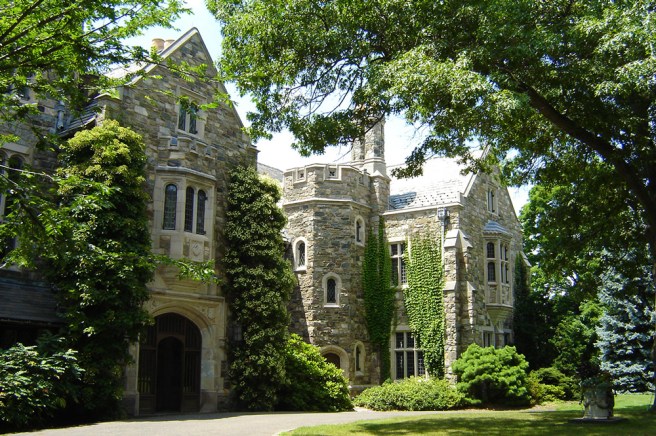
Skylands

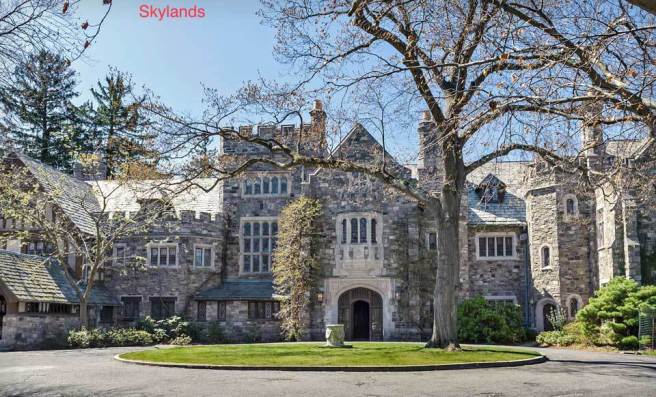
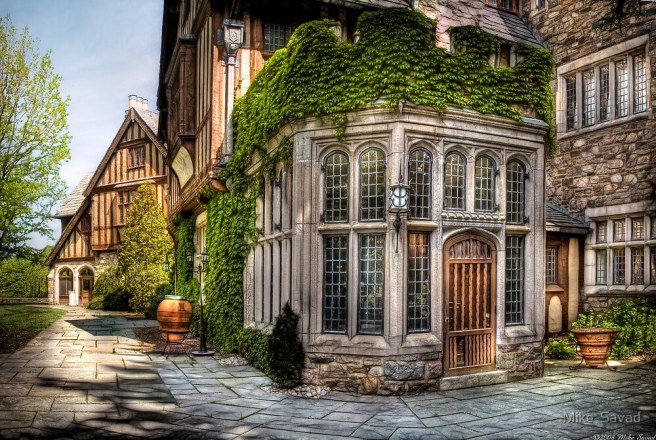
This tudoresque mansion and the surrounding gardens is known as Skylands and is located near Ringwood, New Jersey. It forms the New Jersey State Botanical Gardens and is part of Ringwood State Park but a century ago it was the country weekend retreat of Francis Lynde Stetson, a New York corporation and railroad attorney who was also the personal lawyer for J. P. Morgan, the preeminent financial engineer of the gilded age. Stetson built a granite mansion on the site and assembled enough land to create a 1,100 acre estate. After Mr. Stetson passed away in 1920, Skylands was sold to investment banker and engineer, Clarence Lewis. Clarence tore down the existing mansion and hired the architect, John Russell Pope, to design the current Tudor-revival mansion which measures 35,000 square feet. Among Pope’s other famous commissions are the Jefferson Memorial and the National Gallery of Art in Washington D.C. In keeping with a common decorating practice of the time, the interior was decorated with portions of English manor houses that were dismantled, shipped across the Atlantic, and then reinstalled.

Mr. Lewis was a trustee of the New York Botanical Garden and set out to create his own botanical showcase on his estate. The basic design was created by landscape architect, Samuel Parsons, a protege of the famous Olmsted firm, during Stetson’s ownership. But Mr. Lewis was also a first rate plantsman who developed an interest in horticulture from working in the garden with his wife, Annah, in their previous home in nearby Mahwah. Annah passed away before Clarence bought Skylands but he continued to pursue an interest in horticulture, traveling the world looking for specimens to transplant at Skylands and also donating plants to nearby nurseries and gardens. Heartbroken over his wife’s untimely death, Mr. Lewis did not remarry and his mother, Helen Salomon, was largely responsible for decorating the interiors.

Mr. Lewis sold Skylands to Shelton College, a christian liberal arts college, in 1953 and the estate was then used for teaching and college functions. Unfortunately, Shelton did not keep up with the landscaping with the same dedication and vision as Clarence Lewis and the grounds deteriorated during the college’s ownership. In 1966, Shelton was looking to unload Skylands and the State of New Jersey stepped up and bought the estate. Amazingly, local gardeners and nurseries who had benefited from Clarence Lewis’ plant donations in previous decades returned the favor and helped to revitalize the gardens and grounds of Skylands using the same plant stock. Today Skylands is one of the preeminent examples of estate gardening in North America.

The grounds of Skylands are open to the public but the house is only open for tours intermittently. If you’re getting married, you can rent the house and a portion of the grounds for your ceremony. Click here for further information about Skylands and the New Jersey State Botanical Garden and here and here for a couple of contemplative Youtube videos presenting Skylands.

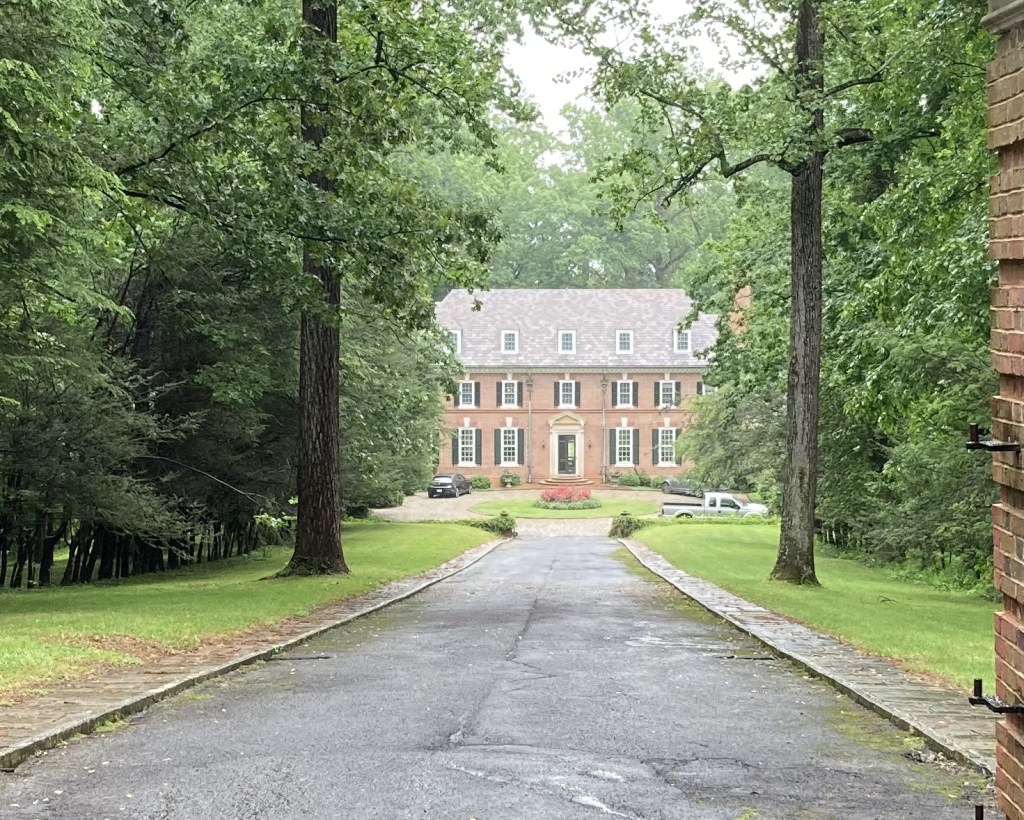
Lochiel

Current view of the entrance front

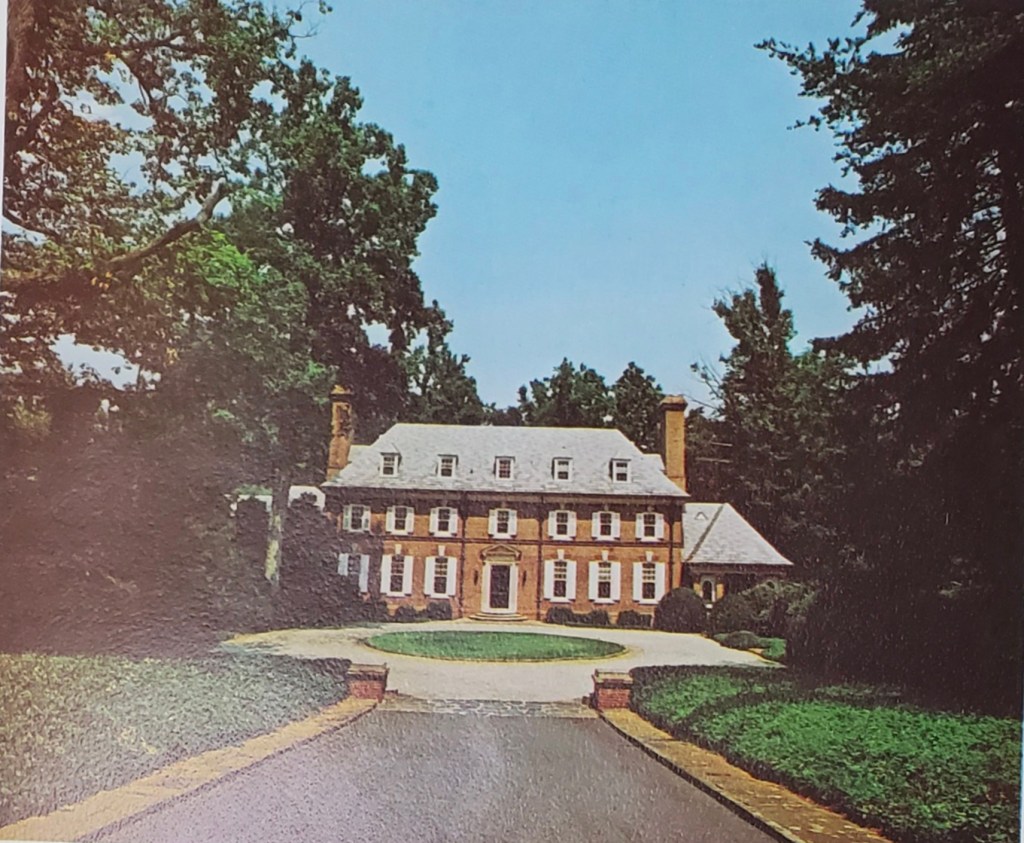
This beautiful, perfectly proportioned Georgian revival house is known as Lochiel (low-HEEL). For correct pronunciation, say the “ch” like you’re trying to cough up a hair that is stuck in your throat. Lochiel is located near Gordonsville, Virginia on a 76 acre estate. It was designed by the New York architect Percy Griffin. The landscape design was produced by Charles Gillette of Richmond, VA. Mr. Gillette is responsible for many notable landscape designs in Virginia including Verulam (click here) and Tiverton (click here). Lochiel refers to a place in Scotland that was the home of the chieftain of the Cameron clan, whose descendants were responsible for building this house. The design of Lochiel is unique in that the house is only one room deep. This provided cross breezes and sunlight no matter the day or time.

Garden front, 1935

Lochiel was commissioned by Flora Cameron, the daughter of Alexander Cameron, a Richmond tobacco products manufacturer. Flora had been living in the nearby Gaston Hall with her husband, George Zinn, but after they divorced in 1913, Flora built Lochiel on the grounds of the Cameron family estate. Flora and George were remarried in 1926 but George died three years later followed by their son and only child, George Jr., a year after that (plane crash). Fun fact about Flora: one of her uncles was the son of Confederate general Robert E. Lee. Flora lived until age 97 (64 of those years at Lochiel) passing away in 1980. Lochiel was sold for $750,000 in 1983 and since then has had a couple of owners. It appears that the present owners split their time between Virginia and the Virgin Islands (flying on Virgin Airways perhaps?). Lochiel is still a private home and is not open to the public.

Entrance drive and front of house, 1981
Front of house, 1981
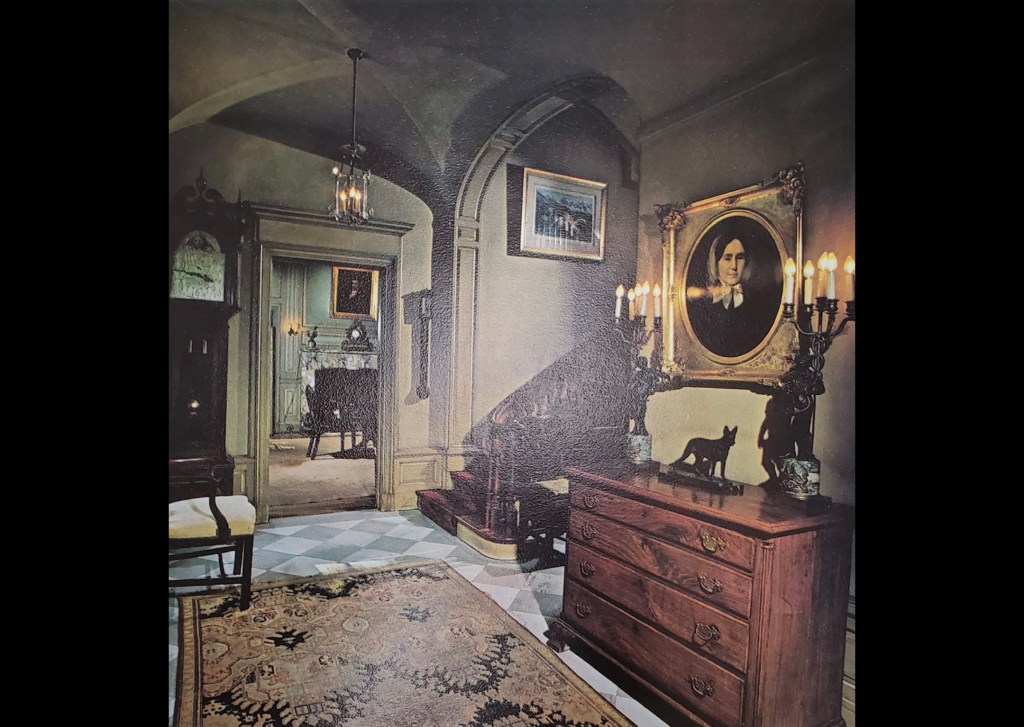
Entry hall, 1981
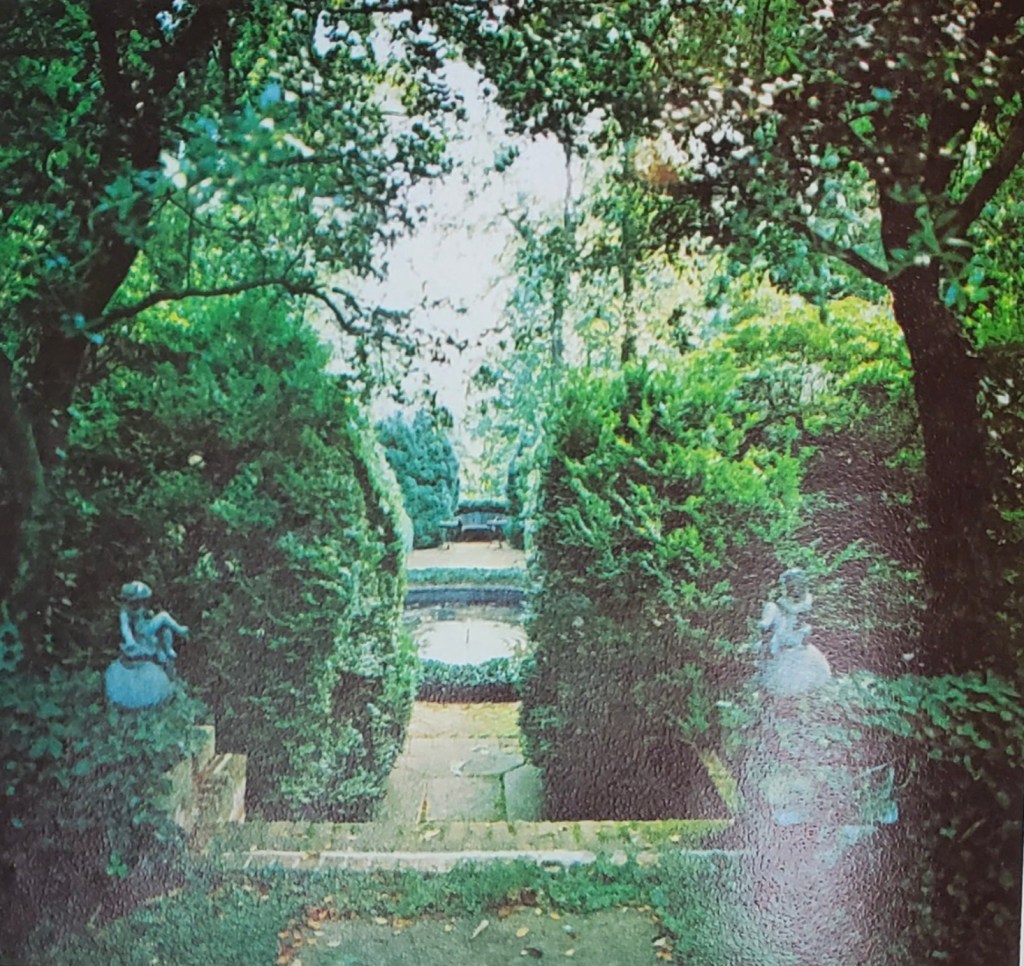
Formal gardens, 1981
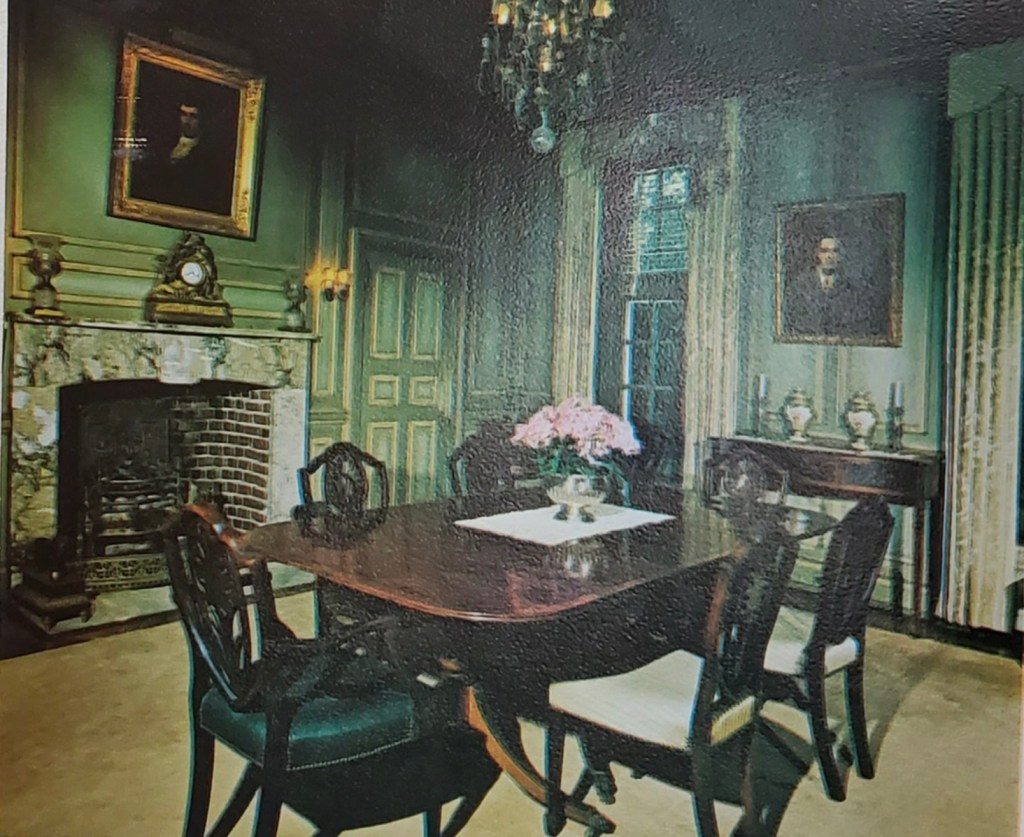
Dining room , 1981
View towards pastureland, 1981

Pictures courtesy of Orange County Historical Society and Dandridge Sterne

Argentina

Carcano family villa in Cordoba Province

European-style country estates are sprinkled all over western and Central Europe and there are a few dozen examples in North America but other than that they’re pretty much absent from the rest of the planet. But there is one other exception: Argentina. Argentina was colonized by Spain and the population largely traces its ancestry from Spain and Italy. When these settlers came to Argentina, they found vast, fertile plains (the Pampas) perfect for agriculture. Within a few decades, large agricultural estates, or estancias, had been established and their owners grew rich exporting beef and other agricultural products back to Europe. So no need to cry for Argentina. The country’s landowning elite adopted a society that would have been familiar to their distant relatives back in Europe, a luxurious townhouse in Buenos Aires and a classy country house on their estancia. Some estancia owners employed European architects and the result was several country houses that would look right at home back in Italy, France or England.

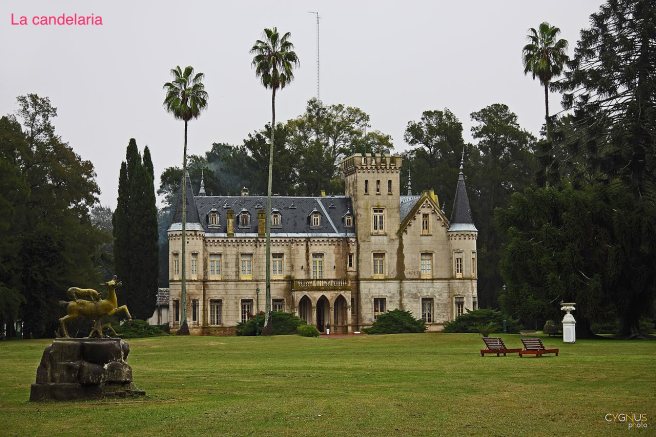
Estancia La Candelaria, Buenos Aires Province

Most of these country estates existed in relative obscurity but one or two developed some notoriety in the world outside Argentina. The Carcano family produced politicians, business leaders and ambassadors and they built their villa in a remote area of Cordoba Province. The Carcanos were also friends with the Kennedys as the patriarchs of both families served as ambassadors to the United Kingdom in the 1940s. John F. Kennedy visited the Carcano estate in 1941 and had a brief affair with Don Carcano’s daughter, Stella ‘Baby’ Carcano. Fling over, JFK moved on to a life in politics and a relationship with his beautiful wife, Jackie. And also Jackie’s press secretary, a White House intern, a couple of the secretaries, the girlfriend of a Chicago mobster, Marilyn Monroe, etc. etc. but I digress. Baby’s infatuation with JFK never dimmed and she kept up a regular correspondence with the future President until his death in 1963. Jackie, ever the good sport, visited the estate with her kids in 1966. Don Carcano’s other daughter, Ana, was married to Sir John Jacob ‘Jakie’ Astor VII, a member of the Astor family prominent in American and English social circles.

Jackie Kennedy and kids visiting the Carcano family estate, Cordoba Province. 1966

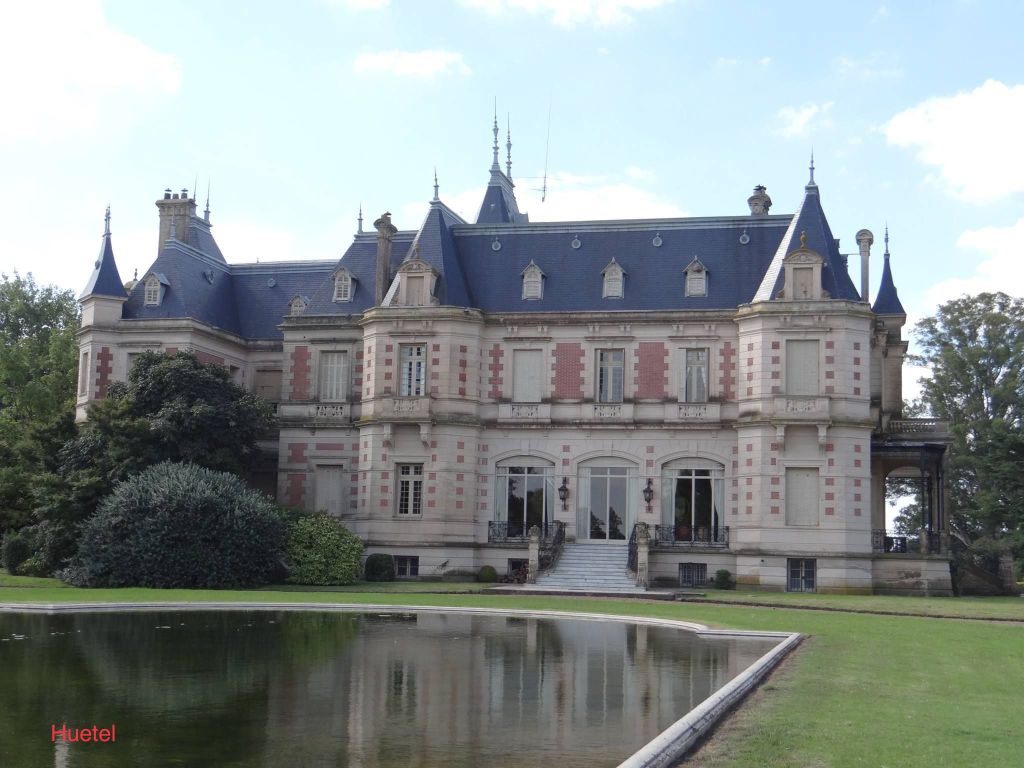
Estancia Huetel, Buenos Aires Province
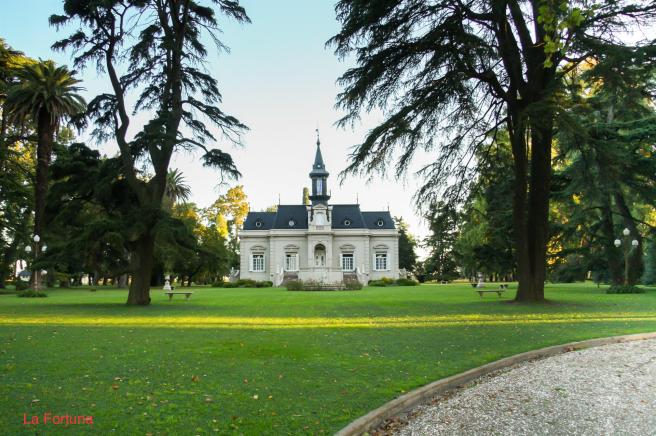
Estancia La Fortuna, Buenos Aires Province
Estancia Santa Candida, Entre Rios Province

Cornwall Castle

Castles are dotted all over western and Central Europe. Originally designed to defend the lord of the castle and his subjects from marauders, castles eventually were converted to strictly residential purposes and many of Europe’s castles still serve as private homes to this day. Many assorted dreamers and loonies in North America have attempted to build authentic looking castles but most attempts have failed to replicate the aesthetic and construction values of the castles of Europe.

Charlotte Bronson Hunnewell Martin, the first mistress of Hidden Valley Castle

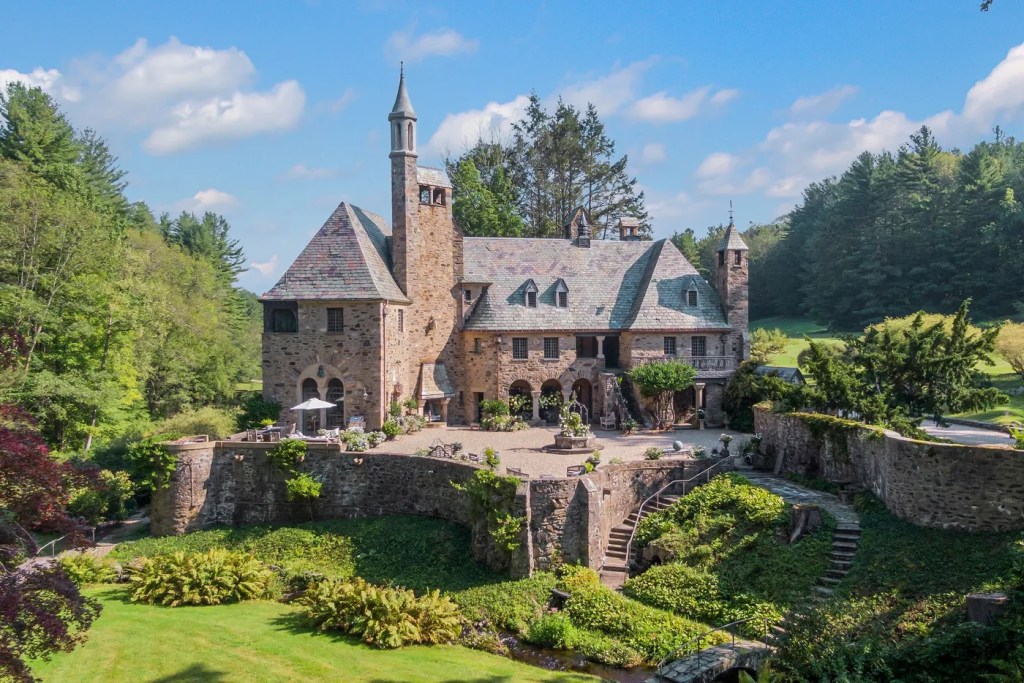
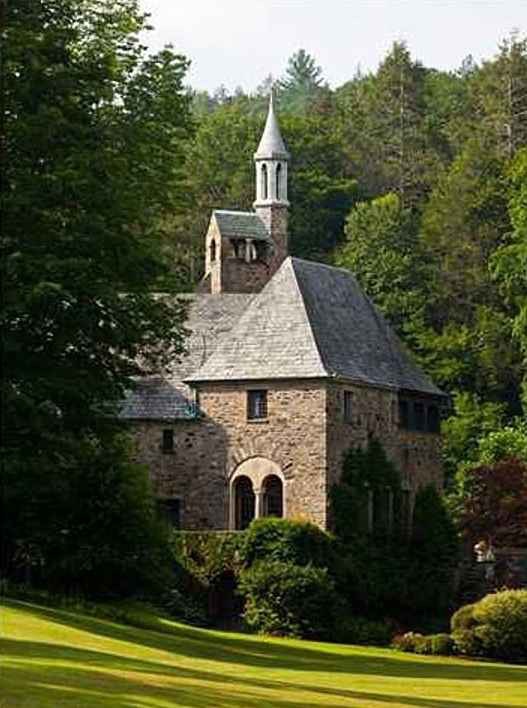
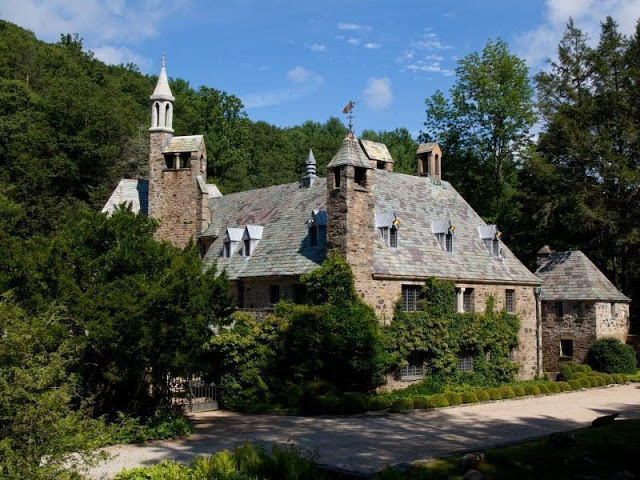
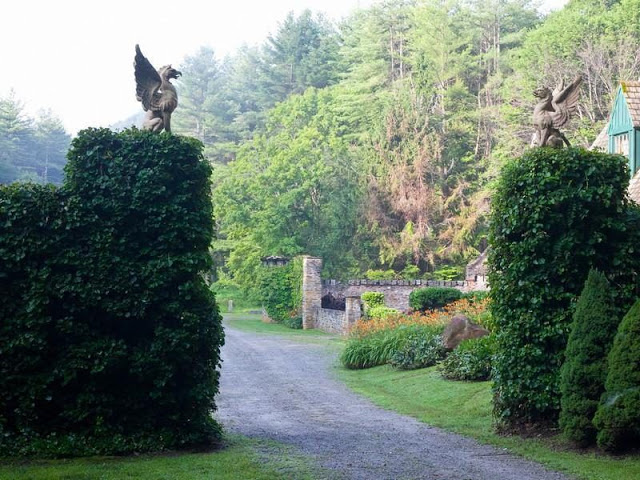
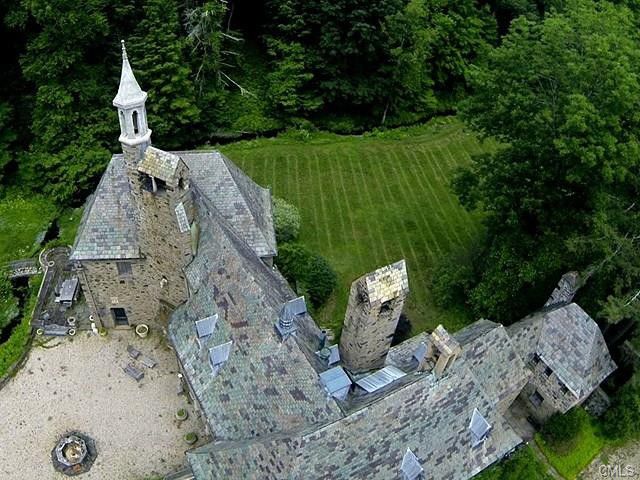
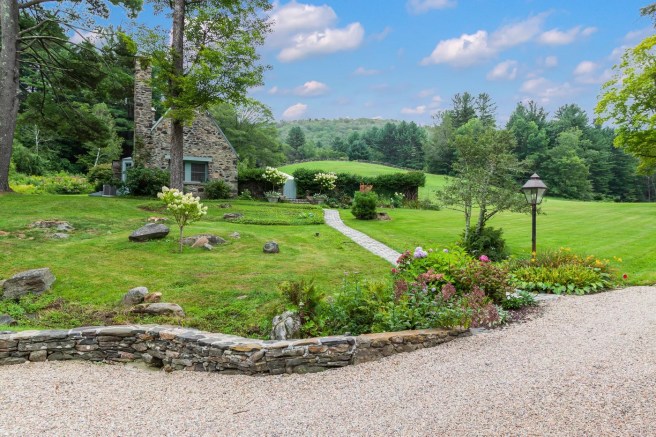
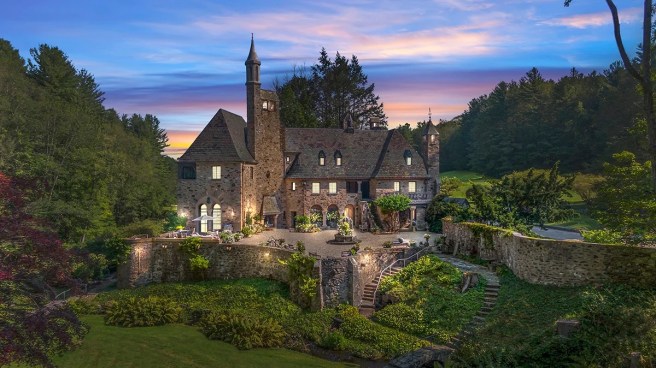
One of the rare exceptions is a home known as Cornwall Castle located near Cornwall, Connecticut in the Litchfield Hills (AKA Hidden Valley Castle).  The castle was designed by the architect, Edward Dean, and completed in 1925 for wealthy New York socialite Charlotte Bronson Hunnewell Martin and her husband, Dr. Walton Martin, a surgeon. The castle sits on 275 acres of woodland and streams and includes several outbuildings.  Charlotte came from old Massachusetts railroading and banking money and loved the concept of European nobility so much that she and the doctor built the house in a storybook castle style.  The doctor completed the illusion by occasionally riding around the estate on a white horse wearing a red cape.  In addition to the castle, Charlotte also developed a set of row houses with a shared garden in Manhattan known as Turtle Bay Gardens. Residents of Turtle Bay have included Katherine Hepburn, composer Stephen Sondheim, famous twin Mary-Kate Olsen and the author of Charlotte’s Web, E.B. White, who allegedly named the spider after his landlord. Dr. Martin passed away in 1949 and Charlotte in 1961. Charlotte cut her only child out the will and the castle was subsequently sold.

The castle has had a series of lords since then including financier Saul Steinberg, a flashy New York financier from the 1980s era of junk bonds. Mr. Steinberg sold the castle in 1983 complaining about the bugs and insects that lived in the woods and fields around the castle and retreated back to his Manhattan co-op. Next up was former Macy’s executive, Joseph Cicio, who tried to renovate the castle, ran short of money and sold in 1988.

In 2001, Alphonse ‘Buddy’ Fletcher bought the castle. Mr. Fletcher was a New York hedge fund manager who burned through $212 million of his client’s money before declaring bankruptcy and being investigated by the SEC. Judges and officials involved in the investigations hailed from places like the Cayman Islands and Bermuda throwing a further whiff of suspicion and disrepute onto the affairs of the one-time lord of Cornwall Castle. In 2014, his lordship also fell behind on the mortgage payments and the castle was foreclosed upon in 2015.

In 2019 the castle and estate were purchased by a local Litchfield County builder and his wife for $1.6 million.  They did extensive renovations and flipped it for $3.7 million in late 2022. The castle is still a private home and is not open to the public. A video describing the property can be viewed here. Hopefully, the new lord or lady of Cornwall Castle can provide the stability and commitment that it richly deserves as potentially the preeminent example of storybook and castle architecture in North America.
Monticello

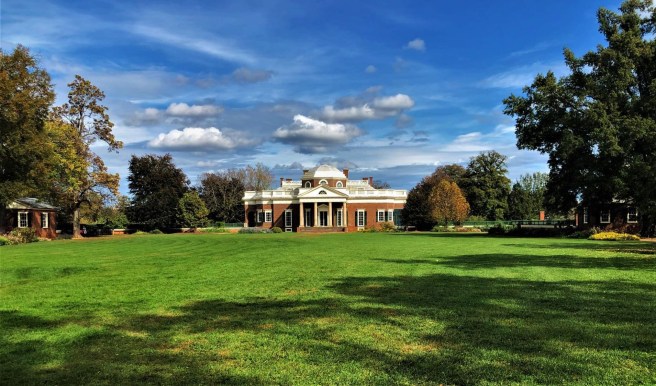
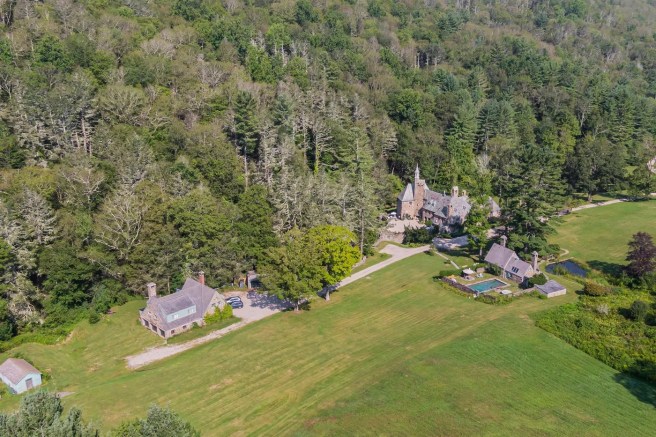
Anybody who has ever had a nickel to their name knows this house. Next to the White House, Monticello is undoubtedly the most famous house in North America. Thomas Jefferson was the third President of the United States, the second Governor of Virginia, President George Washington’s Secretary of State, author of the Declaration of Independence, founder of the University of Virginia, minister to the court of King Louis XVI and possibly one of the smartest people who ever lived. If you ever want to feel stupid, take a tour of the place that Jefferson called home for most of his life.

Jefferson’s reputation has taken a hit in recent years. Yes, he owned slaves. No, with a few exceptions, he did not free his slaves upon his death like Washington had (although Washington could have opted to not own slaves at all). He was particularly fond of one of his female slaves, Sally Hemmings. Sally was actually a half-sister of Jefferson’s wife, Martha (same father), and she was a house servant at Monticello. Martha passed away in 1782 and made Jefferson promise not to remarry. Subsequently, Sally accompanied Jefferson to Paris during his stint as Minister to France and eventually she became something like a surrogate wife to Jefferson. Over time, Sally bore six children by Jefferson starting when she was 16 years old. She and her four surviving children were all eventually freed from slavery.

Despite Jefferson’s association with slavery, the positive parts of his legacy live on. Jefferson, a polymath, was a world-class gardener, political scientist, gourmet, enlightenment philosopher and architect and spoke several languages. Although he denied the workers on his estate the basic legal and civil rights that he professed were inalienable and universal, his ideas were the foundation of future laws and decisions that eventually made this nation a more humane and equitable place for all people, not just white male property owners.

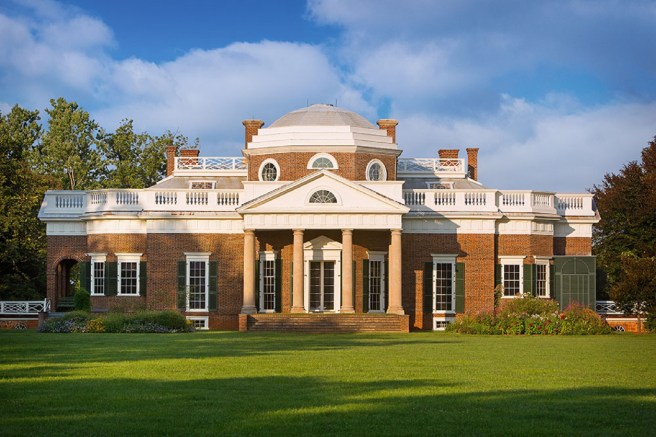
Monticello got its start when Jefferson inherited a 5,000 acre tobacco plantation outside Charlottesville from his father in 1757. Jefferson started working on plans for a plantation house right away but constantly tinkered with the design, built, tore down, and rebuilt and the house was not completed until 1809, nearly fifty years after starting. Even then, Jefferson, a serial remodeler, kept tweaking the house right up until his death. During Jefferson’s service in Europe in the 1780s, he became familiar with the latest architectural trends and the work of 16th century Italian architect, Andrea Palladio, who modernized greek and roman architectural forms for contemporary designs. Jefferson adapted these ideas to Monticello and the result is the handsome 11,000 square foot neo-classical home that we see today.

Jefferson retired to Monticello after leaving public office in 1809. By this time, Jefferson was hugely famous and had hundreds of friends that visited his mountain-top estate. The cost of all this entertaining added up and the proceeds from agricultural operations on the plantation were insufficient to balance the books. Financial problems were compounded by debts that Jefferson’s wife, Martha, inherited from her father. Jefferson attempted to increase profits from ventures like a nail factory but when he passed away in 1826 (50 years to the day of the declaration of independence), he was $18,000 in debt (about $600,000 in today’s money). His daughter and sole heir was forced to sell Monticello and 500 acres in 1831 to a local pharmacist at a fraction of its value and she also parceled off and sold much of the agricultural land.

Three years later, Monticello was flipped to a Navy admiral and real estate investor, Uriah Levy of New York. Mr. Levy was a big Jefferson admirer and hoped to preserve Jefferson’s legacy. Admiral Levy spent the next 26 years preserving and restoring Monticello and using it as a summer home. He also set out to purchase the surrounding agricultural parcels and reassemble the historic estate. Admiral Levy died in 1862 and willed Monticello to the federal government for use as an agricultural school. However, because the Civil War was raging at the time the government turned down the donation since Monticello was in Confederate Virginia. The Confederacy seized Monticello as “enemy property” and then sold it. After the Union victory, Admiral Levy’s executors recovered Monticello but it was then subject to probate lawsuits by 47 different claimants who all thought they should take ownership.

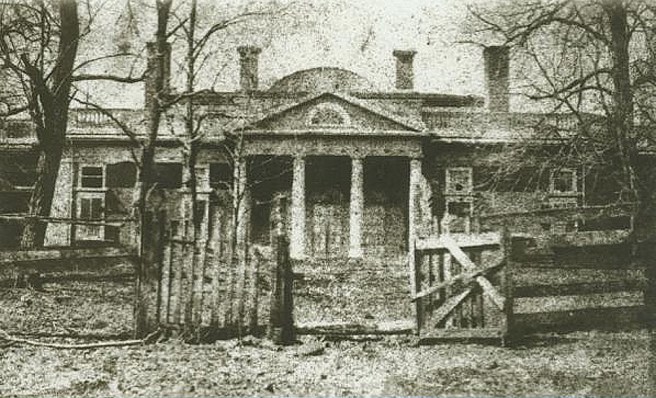
Finally, in 1879 Uriah’s nephew, Jefferson Monroe Levy of New York, settled the suits and bought out other Levy heirs. By this time, Monticello, vacant for nearly 20 years, was in a sorry state. The bottom floor of the future UNESCO World Heritage Site was being used by caretakers as a barn for cattle, grain was stored on the upper floors and the grounds were overgrown. Mr. Levy evicted the caretakers and the cattle and set to restoring Monticello to its former glory. Like his uncle, Jefferson Levy was also a real estate investor and also practiced law and served in the U.S. House of Representatives for three terms representing New York State. He lived at Monticello part of the year and welcomed the tourists who had started to visit the mansion in growing numbers in the latter part of the 19th century. He also purchased an additional 500 acres that had been part of the historic estate.

Monticello during its low point after the Civil War

In 1923, after nearly a century of Levy family ownership, Jefferson Levy sold Monticello to the newly formed Thomas Jefferson Foundation for a half million dollars and the Foundation continues to operate the estate to this day as a house museum showcasing Jefferson’s life and times. The Foundation has assiduously restored Monticello to how it would have looked during Jefferson’s life right down to the plants that would have grown on the grounds and gardens. In fact, the gardens at Monticello are world renown in horticulture circles for the rich diversity of plant material, much of which was introduced to the estate by Jefferson himself. The estate now comprises 2,500 acres and retains the form of an early 19th century country estate. Other than the vans carrying tourists to the home and their smart phones, Jefferson wouldn’t notice much difference if he was alive today.

Click here for further information about Monticello or here for a symphonic YouTube video about the estate.

Claremont Manor

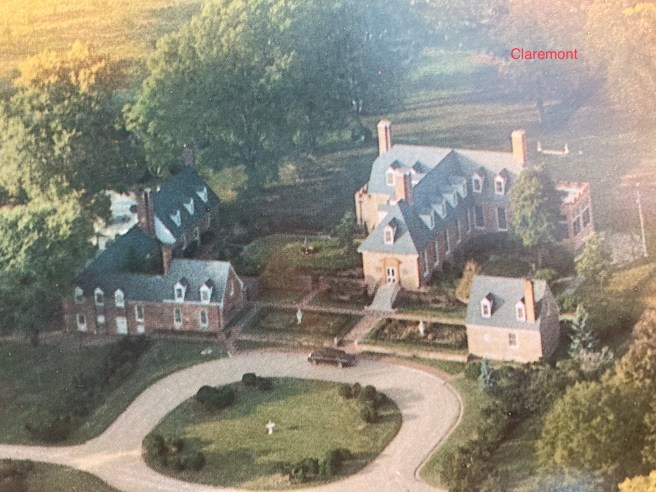
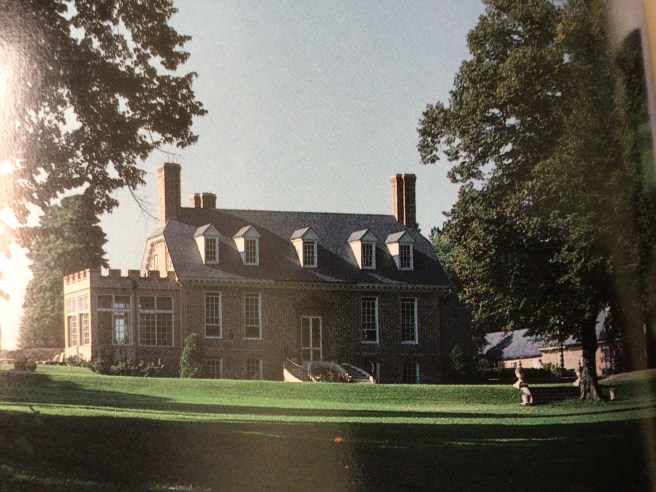
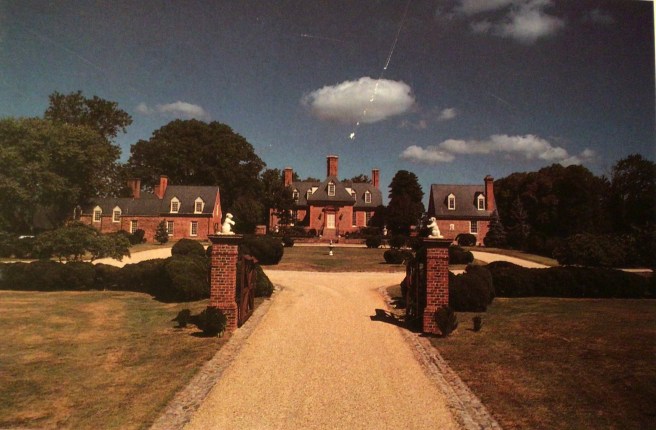
Claremont Manor is an 1,100 acre estate situated on the right bank of the James River about 30 miles southeast of Richmond. A beautiful Georgian manor house sits on the property along with several outbuildings in the same style. Extensive gardens surround the main house which overlooks the James River. The origins of Claremont Manor date back to the 1620s when George Harrison, one of the Jamestown settlers, established a small tobacco plantation on the site. Mr. Harrison died in 1623, the victim of the first recorded duel in Virginia. The estate passed to the Clement family and then to the Allen family in 1681. The Allens built the manor house that exists today in 1750. At one time, the estate amounted to 12,000 acres and was a significant agricultural supplier to the confederacy during the Civil War. However, being on the losing side didn’t work out for the Allens. After the war, their Confederate currency worthless, they were forced to parcel out Claremont (much of it to migrating yankees). The last Allen threw in the towel in 1886 and moved to New York to practice law bringing 205 years of family ownership to an end..

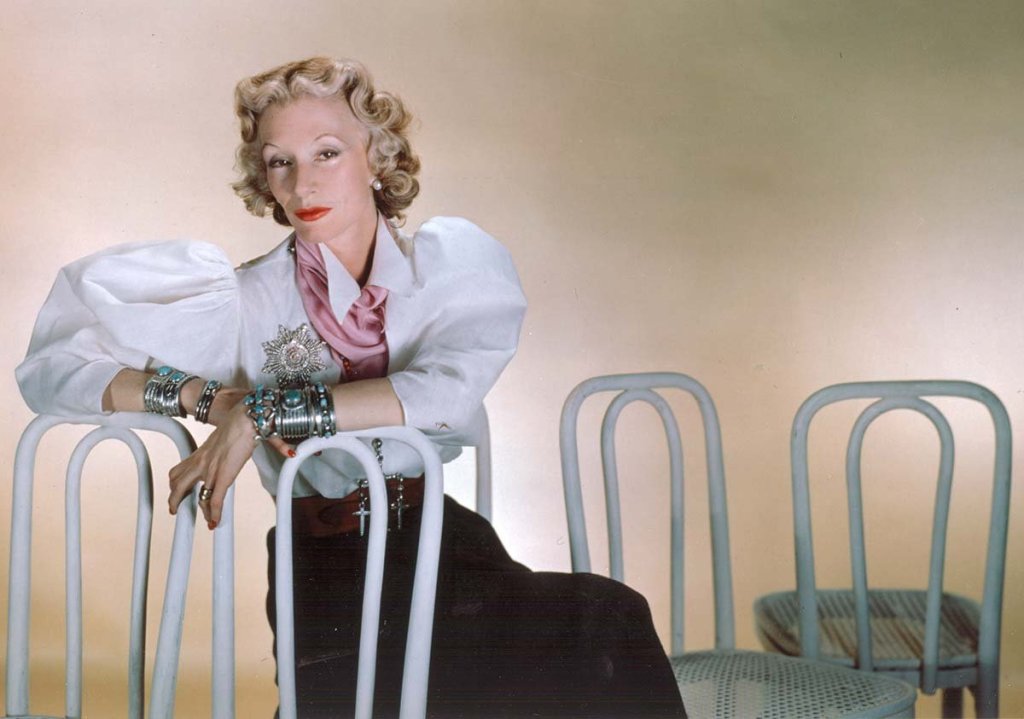
In the ensuing decades after the war, Claremont Manor had many owners but three stand out. In 1940, Millicent Rogers bought the estate. Ms. Rogers was the granddaughter of Henry Rogers, a partner of John D. Rockefeller in the Standard Oil Trust. Millicent was a fashion icon and socialite during the early decades of the 20th century and later became an activist promoting Native American rights. Millicent had an active love life, marrying three times, once to a broke Austrian count, and included among her romantic partners actor Clark Gable, James Bond author Ian Fleming, and various princes from Russia, Italy and England. Mr. Gable was a frequent guest at Claremont Manor and contemplated buying a nearby plantation home. Millicent sold Claremont Manor in 1950 and retired to her home in Taos, New Mexico where she established a museum of Native American art that exists to this day.

Millicent Rogers, the chatelaine of Claremont 1940-1950

Between 1950 and 1964, Claremont was owned by James and Margaret Carter. James owned coal mining properties in Virginia and he and Margaret, although never making Claremont their primary residence, embarked on extensive renovations and additions to the property including adding to the main house and rebuilding various outbuildings. They also bought adjoining parcels more than doubling the size of the property. They sold the estate in 1964 and it served as a parochial school for the next 12 years until it was purchased by Lewis and Ann Kirby. The Kirbys added even more land to the estate bringing it up to its current 1,100 acres. Ann Kirby is a descendent of one of the owners of the Woolworth department store empire. Lewis was a graduate of Princeton University and served in General Patton’s Third Army in World War II. During his time in the service, he fought in the Battle of the Bulge and was present at the liberation of the Buchenwald concentration camp. After the war, he had a long career in the insurance industry. The Kirbys were passionate about Claremont and family traditions and heraldry. Ann passed away in 1996 and Lewis in 2015. Presumably, Claremont Manor is now controlled by their three children.

Interior of Claremont during the ownership of Millicent Rogers

Bonnie Doone

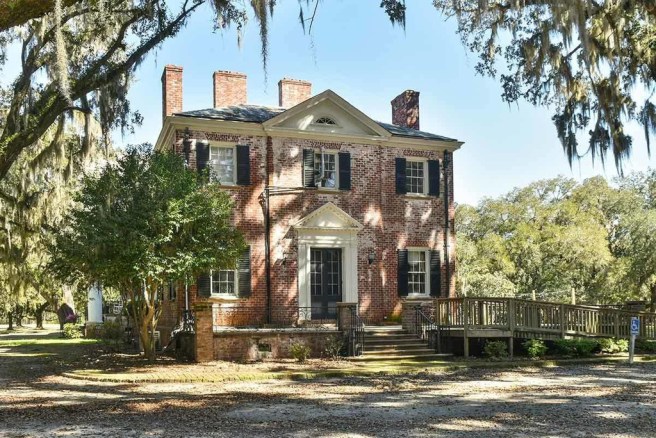
This handsome Georgian revival house is known as Bonnie Doone and is located near Waterboro, South Carolina. The house is 9,700 square feet and is surrounded by gardens on a 131 acre estate. Originally, Bonnie Doone was part of a 1722 land grant from King George I and changed hands several times before it was bought by Dr. Theodore DeHon who built a plantation house. However, when the Union Army passed through South Carolina towards the end of the Civil War they had different ideas for the plantation and burned it down. As the Union forces were wrapping up the remains of the confederate army in 1865, they were particularly destructive in South Carolina since that State was the first to secede from the union in 1860. Between 1865 and 1911, the plantation (sans a plantation house) was mostly used for rice cultivation and passed through various owners.

In 1931, the plantation was purchased by a New York City stockbroker named Alfred Caspary. Mr. Caspary also bought some adjoining properties and formed an estate of 15,000 acres. One of these adjoining properties was known as Bonnie Doone and Mr. Caspary applied that name to the whole lot. He also commissioned the construction of the Georgian revival house that sits there today. This house was completed in 1932 on the same site as the former plantation house that was destroyed in the Civil War.

Besides being a successful stockbroker, Mr. Caspary was most famous as a philatelist or stamp collector. He amassed one of the greatest stamp collections of the 20th century and reportedly spent $50,000 per year on acquisitions. His purchases were so discerning that his nickname in the stamp collecting world was the “Connoisseur.”

When Mr. Caspary passed away in 1955, two years after his wife, Margaret, the estate sat for a few years before being purchased in 1965 by the Charleston Presbytery, a unit of the Presbyterian church, and was converted into a retreat center. In 1978, the estate was subdivided and 132 acres plus the house was bought by the Charleston Baptist Association and they also used the property as a retreat center for their church community. Much of the rest of the estate was sold to timber companies. In 2019, Bonnie Doone was bought for $2.5 million by Gene Slivka, a Georgia businessman, who has purchased a few other former plantations in the southern states. Presumably, Bonnie Doone is again being used as a private home. A video showing Bonnie Doone can be seen on Youtube here.

Escarpment House

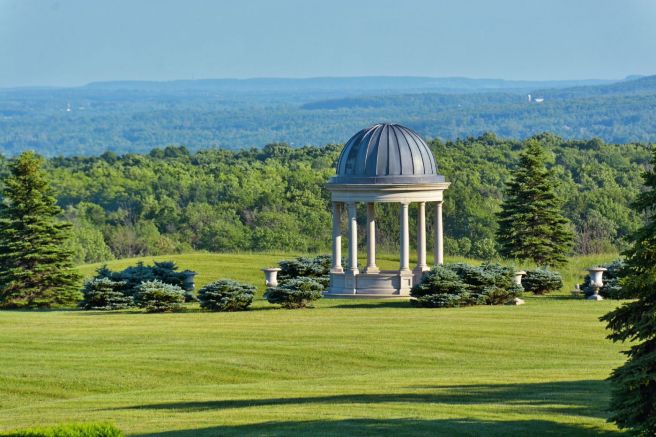
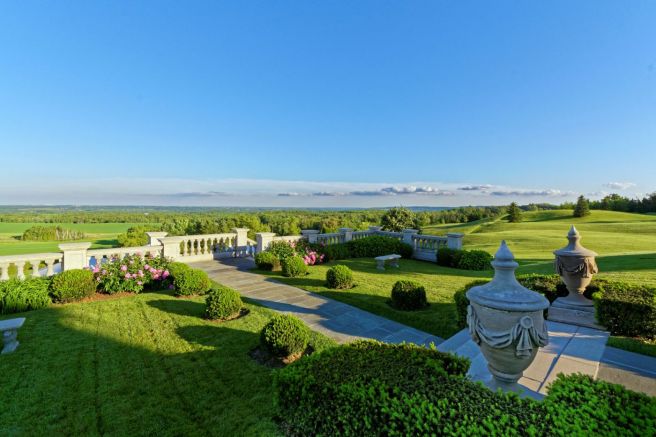
Do you like mowing the lawn? Then you might be ecstatic at the thought of owning Escarpment House! Designed by Joe Brennan of Toronto, completed in 2005 and boasting 14,000 square feet on 165 acres overlooking the distant Toronto skyline, Escarpment House is an attractive neo-georgian house in Caledon, Ontario. Originally it was known as Stoneridge Hall and the original owners put it on the market for $17 million in 2015, found no takers and eventually slid down the pricing scale to $10 million when it was sold to a Toronto-based property management and investment/golf resort operator called Longbridge Partners.

Longbridge partners also bought two golf courses that are located on either side of Escarpment House and have since been trying to market the house as a “stay and play” property for golf vacationers or as use for meetings and conferences.  A Youtube video produced when the estate was on the market can be found here. If you want to stay at Escarpment House then click here for more info.