Crane Estate

This English baroque stunner is the Crane Estate (AKA Castle Hill) and is located just outside Ipswich, Massachusetts. The house encompasses 57,000 square feet and is sited on a 2,100 acre estate. The house was designed by Chicago architect David Adler and the landscape, including the famous grand allee running down to the ocean, was designed by the Olmsted Brothers. For those unfamiliar with the term, an “allee” (pronounced AL-lay) is a design element used in a formal garden structure whereby a long, narrow expanse of lawn is lined by trees focusing the viewers attention on a distant feature such as a statue, a folly, a natural feature or the ocean in this case.

The house was built over three years and completed in 1928 by the son of the founder of the Crane Company famous for plumbing fixtures, Richard Crane, Jr., and his wife, Florence Higginbotham Crane. Richard had taken over as CEO of the company his father had founded back in 1855 and worked hard to achieve the Crane Company mission to “Make America want a better bathroom.” Florence’s father was a co-founder of the Marshall Field department store company in Chicago.

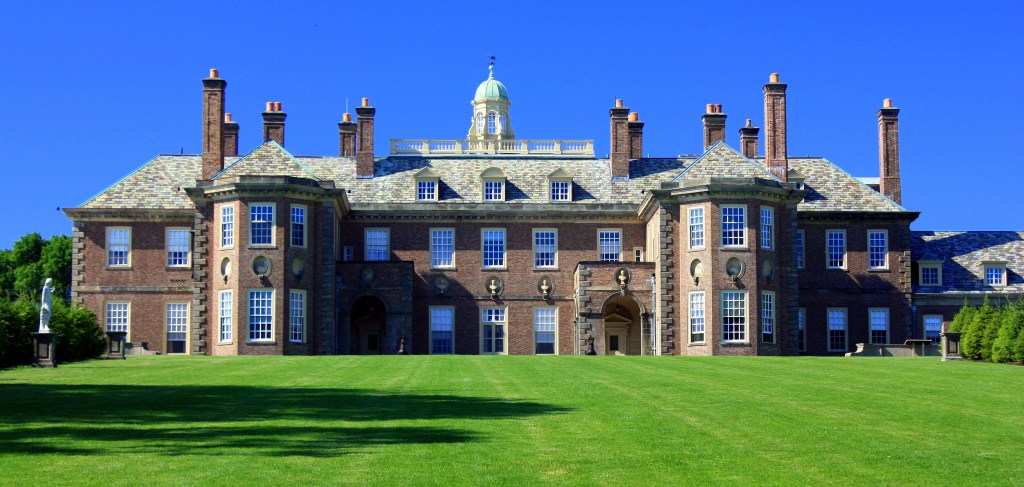
Garden front view from the grand allee

The current house is actually the second one to stand on the site. The Cranes bought the property in 1909 and built an Italian Renaissance-style house. Florence decided she didn’t like the house she called “the Italian fiasco” feeling that the architectural style didn’t fit the setting. She and Richard made a deal that if she still didn’t like it after ten years they would build something more to her liking. Ten years later Florence said she didn’t like the house so it was pulled down and the current house was built on the same foundation. You can catch glimpses of the first house in the sporting casino, located half way down the grand allee, which sports the Italianate design of the original house. The Cranes used the estate as their summer residence and lived most of the year in Chicago where the Crane Company was based.

The original Italianate mansion (AKA “the Italian Fiasco”) that preceded the current house. Pulled down in 1924.

Richard only got to enjoy the new house for three years before passing away in 1931. Florence lived on at the estate until her death in 1949 at which point it was deeded to The Trustees of Reservations, a non-profit organization which preserves and operates historic sites in Massachusetts. The Crane’s adult children, Cornelius Vanderbilt Crane (no relation to the Vanderbilts) and Florence Crane Jr. had rights as life tenants to continue to live in the guest house seasonally and use the property along with their families. The last resident was Cornelius’ second wife, Minescule ‘Mine’ Sawahara, who lived there until 1974. Both Crane children were adventurous spirits. Florence Jr. married writer William Robinson and they lived part-time in a one room house in Tahiti. Cornelius embarked on voyages to study the anthropological history of the South Pacific.

Fun facts about Cornelius and Florence, Jr.: Cornelius was the adoptive grandfather of SNL co-founder, actor and comedian Chevy Chase, who vacationed at the Crane Estate as a youth. In fact, Chevy Chase’s real name is Cornelius after his grandfather. Florence Jr. married a second time to the son of an exiled Russian aristocrat and became Princess Florence Belosselsky-Belozersky. Grigory Rasputin, the mad monk who helped to bring down the Russian Romanov dynasty was found dead floating in the Neva River in front of the Belosselsky-Belozersky family palace in St. Petersburg in 1916.

The builders of the Crane Estate, Richard and Florence Crane with their children, Cornelius and Florence Jr.

The Crane Estate is still owned and operated by The Trustees and the house and grounds are open to the public and are frequently used as a film location and a performing arts venue. Notable film credits include The Witches of Eastwick starring Jack Nicholson, Little Women starring Meryl Streep and Emma Watson and the reality TV series, The Amazing Race. Click here for information on visiting the Crane Estate. You can also stay at the former guest house on the estate – click here for more info on that. A YouTube video featuring some nice drone photography of the house and the grand allee can be seen here.

The Crane Estate has a connection to another beautiful country house covered in this blog. Richard Crane’s nephew, also named Richard Crane, bought and lived at the Westover Plantation in Virginia (click here).

Aerial view showing the entrance front of the house and the famous grand allee lined by statuary, Norway spruce, white pine and red cedar
Garden front of the house showing the sporting casino midway down the grand allee. The casino was built at the time of the original Italianate house and still shows that style of design.
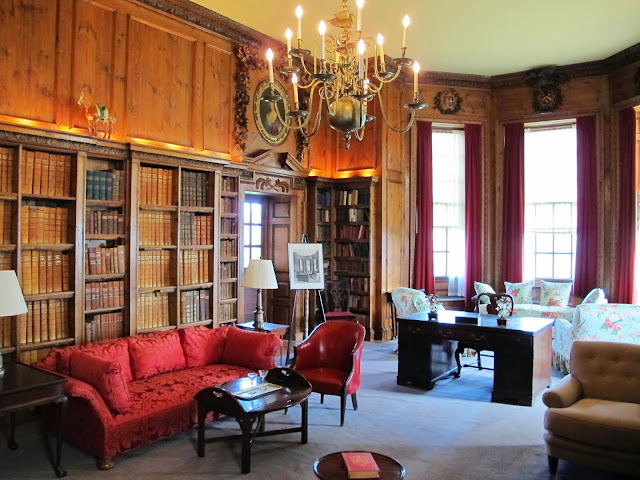
The library
View of the gardens

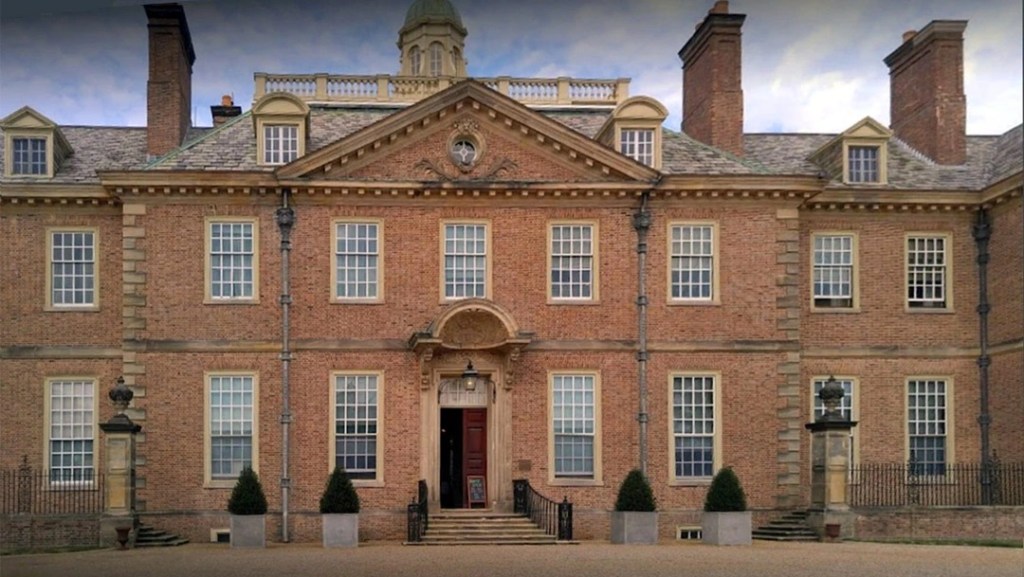
Close-up view of the entrance front
Detail from garden front

Hyde Park

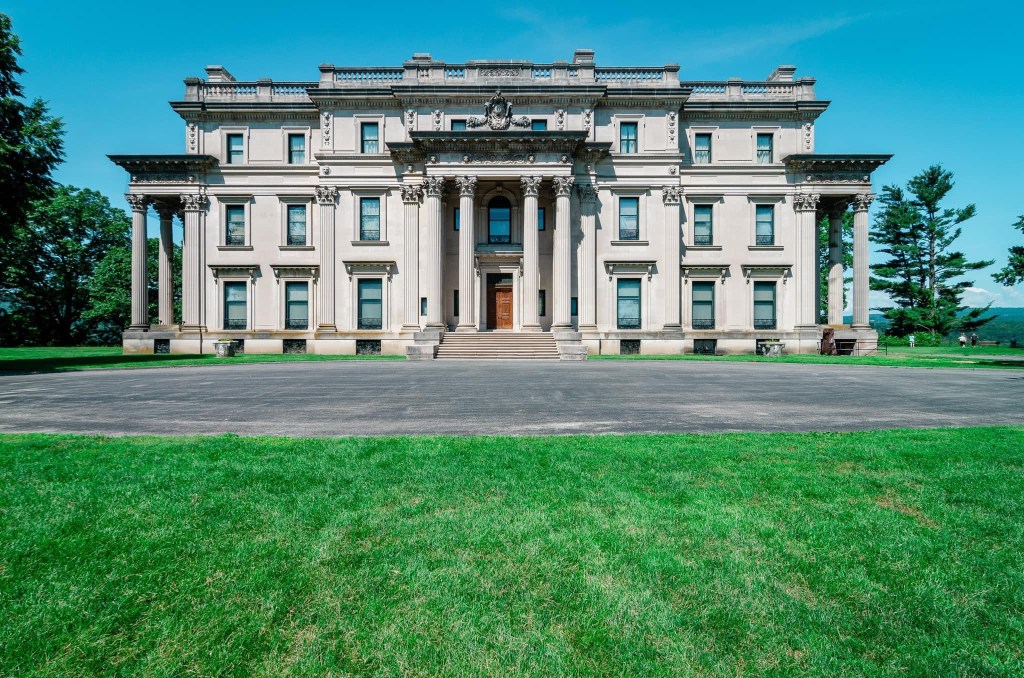
Hyde Park was the country estate of Frederick William Vanderbilt (1856-1938). Frederick was the grandson of “the Commodore”, Cornelius Vanderbilt, the steamship and railroad tycoon who was the richest person in the United States during the middle part of the 19th Century. Despite having little education, Cornelius built up a fortune of $105 million ($150-200 billion in today’s money depending on who’s counting). Cornelius had an insatiable love of money but spent very little on himself (or his long-suffering wives) and had a remarkable mind for numbers. He kept very few accounting records and managed his vast enterprise mostly in his own head. When Cornelius passed away in 1877 he left nearly everything to his eldest son, William Henry Vanderbilt. Cornelius had 13 children and considered all of them to be idiots but thought that William Henry might have some glimmer of hope. Despite this lack of confidence in his potential, William Henry proved to be a competent financier and railroad executive and doubled his inheritance before passing away in 1885. However, he was the last Vanderbilt to add to his inheritance rather than just spending it (Anderson Cooper may be the one exception). Although he enjoyed his fortune more than the Commodore did, William Henry’s Fifth Avenue house in New York was only a small sign of what was to come from the Vanderbilts.

Frederick William Vanderbilt, the proprietor of Hyde Park

William Henry and his wife, Maria Louisa Kissam Vanderbilt, had nine children, eight living to adulthood. These eight children took their inheritances and cut loose, unleashing a deluge of home building that eclipsed anything that the royal houses of Europe had accomplished in such a short period of time. The houses either bought or built (nearly all built) by this generation of Vanderbilts is listed below:

That’s 32 mansions for 8 people (plus dependents) or four mansions per Vanderbilt. This is even more remarkable considering the size of these houses. Of the 25 largest homes ever built in the United States, six are on this list including the largest of them all, Biltmore, weighing in at 179,000 square feet. Biltmore is also the only one of these houses that is still owned by a Vanderbilt (though it is not used as a residence). Click here for more on Biltmore. Shelburne Farms is now a non-profit educational center, hotel and working farm focused on sustainability with Vanderbilt descendants still involved in the management.

Coffered ceiling in the dining room of Hyde Park

Emily Thorn Vanderbilt also built one additional notable house not on this list, High Lawn, for her daughter, Lila Vanderbilt Sloan. High Lawn is the only Gilded Age Vanderbilt mansion that is still lived in by a Vanderbilt and is covered in this blog (click here). Most of the houses on this list are either long gone, have been overrun by suburban development or, in the case of the Newport “cottages”, are really more of a luxury subdivision, not true country houses. But Hyde Park is unique in that it still retains the form of a country estate although it hasn’t been lived in for 83 years.

Hyde Park has been used as a country estate and retreat since the early 18th century when it was granted to Pierre Fauconnier in 1705 by the colonial Governor of New York, Edward Hyde, the Viscount Cornbury. In fact, the mansion we know as Hyde Park is the third house to stand on the site which is on a bluff overlooking the Hudson River and the Catskill Mountains to the west. In 1840 the estate was purchased by John Jacob Astor the Manhattan fur and real estate tycoon for his daughter, Dorothea. She and her husband, Walter Langdon, built the second house but soon afterwards Walter died and Dorothea moved to Europe. Her son, Walter Jr., took over in 1852 and expanded the estate to 600 acres. A few miles north of Hyde Park is Marienruh, another Astor house built in the 1920s.

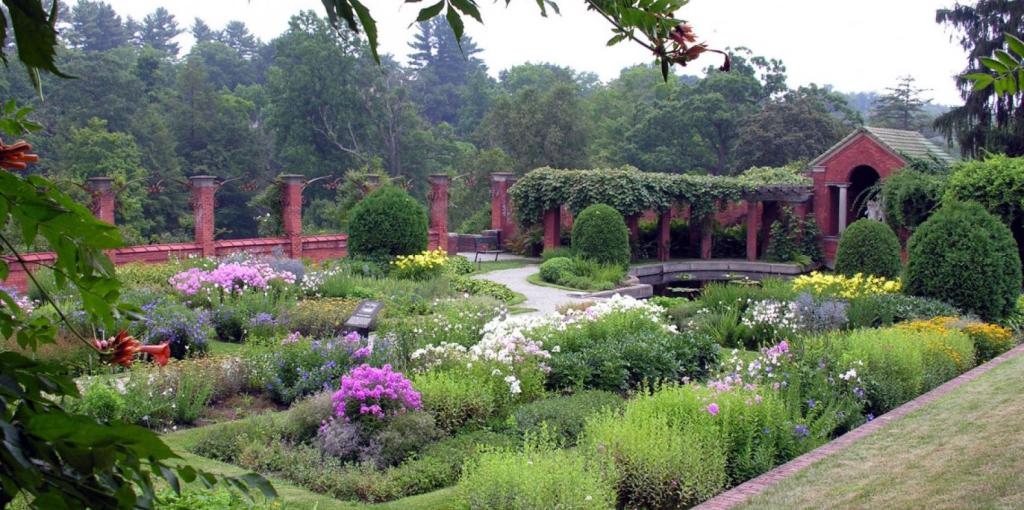
Walter Jr. died without heirs in 1894 and the estate was bought by Frederick William Vanderbilt and his wife Louise . Their initial inclination was to simply make additions to the Langdon house but their architect, Charles McKim of McKim, Mead and White, discovered severe dry rot in the structure and advised a complete rebuild. McKim designed the 50,000 square foot Neo-classical structure and construction was completed by 1899. The estate was attractive to the Vanderbilts for a couple of reasons. First, the railway that ran just below the house along the Hudson River happened to be the New York Central, which was the flagship of the Vanderbilt industrial empire. Frederick was a Director of the NY Central for 61 years although he did not pull rank when traveling between Hyde Park and New York City, preferring to sit in a regular coach rather than a private railway car as most gilded age millionaires would have done. Reserved and scholarly by nature, Frederick was the only one of his siblings to graduate from college, earning a degree from Yale University in Horticulture. He indulged his interest in horticulture at Hyde Park and devoted considerable attention to improving the landscaping that prior owners had installed at the estate. Frederick was responsible for developing the italianate formal gardens that still flourish today (thanks to the efforts of local volunteer-gardeners). The house itself was not universally admired. Some critics thought it more resembled a public library than a stately home and criticized its heavy and ponderous design elements. This didn’t seem to bother the Vanderbilts though. Of their many properties they seemed to prefer Hyde Park above the others.

On the grounds of Hyde Park

Louise Vanderbilt died in 1926 and this seemed to make the reserved Frederick even more shy. He lived as a virtual recluse at Hyde Park for the rest of his life, only seeing family and close friends, rarely speaking to the Hyde Park staff and spending his time puttering in the grounds and gardens. Frederick and Louise did not have children and when Frederick passed away in 1938 the house was left to Louise’s niece, Margaret “Daisy” Post. Daisy already had her hands full managing mansions in Newport and the south of France and wanted nothing to do with the cost and hassle of running Hyde Park as well but couldn’t find a buyer in the depths of the Depression so she approached the owner of a nearby estate, President Franklin D. Roosevelt, for advice. FDR grew up and still resided part of the year at his ancestral estate of Springwood a couple miles south of Hyde Park and he had been an occasional guest of the Vanderbilts at Hyde Park. It was FDR who suggested donating the estate to the National Park Service and opening it up to the public. Daisy agreed and by 1940, Hyde Park was open to the public (except when FDR was staying at Springwood when his aides and secret service detail would temporarily take up residence at Hyde Park).

Formal gardens at Hyde Park

If you want to visit Hyde Park, it can be reached by car or train (transferring to a bus in Poughkeepsie) from either Albany or New York City. Additional information can be found here. Leave time in your schedule for visiting nearby Springwood, the home of FDR. In addition to the final resting place of FDR and Eleanor Roosevelt, Springwood has educational and quite moving exhibits about the life and times of FDR and the challenges the the country faced during the Great Depression and the Second World War. Info regarding Springwood can be found here. Finally, almost directly across the Hudson River from Hyde Park is another notable country estate, Omega, covered in this blog (click here).
Verulam

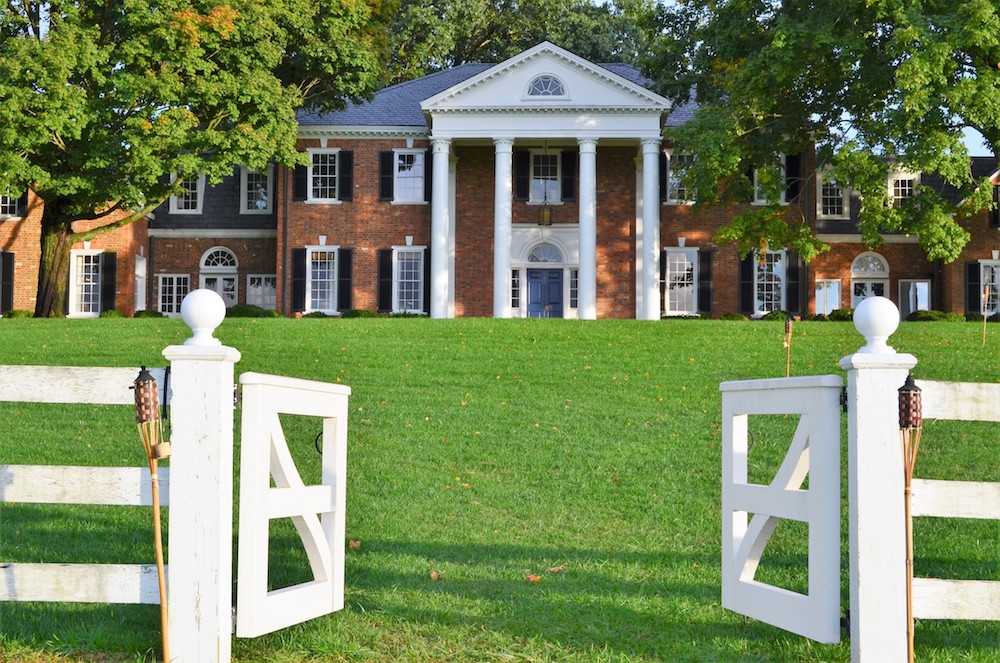
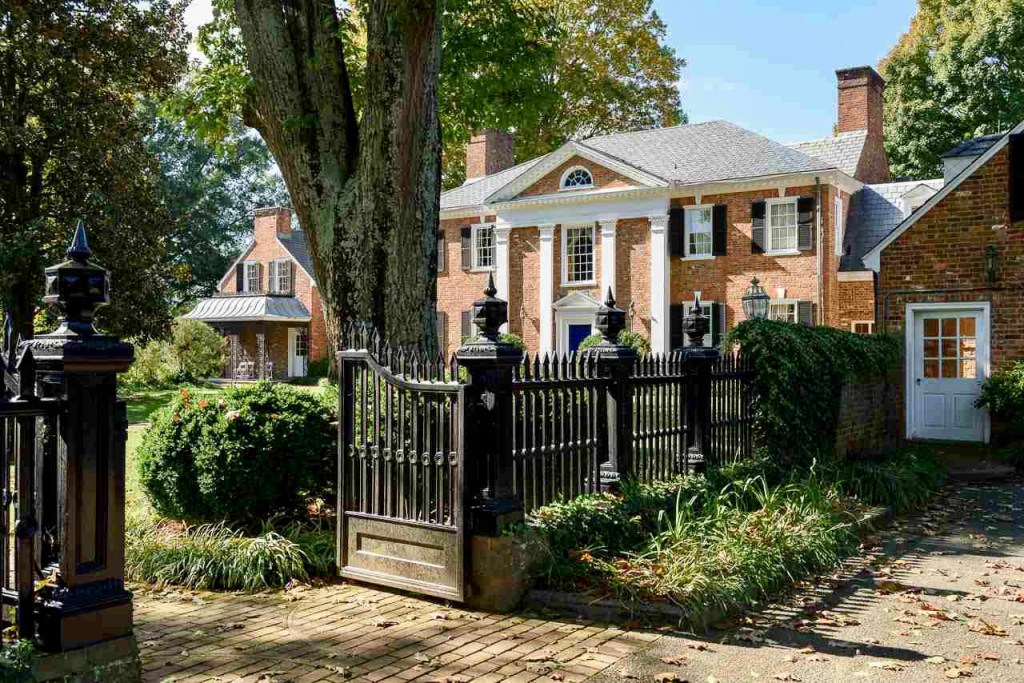
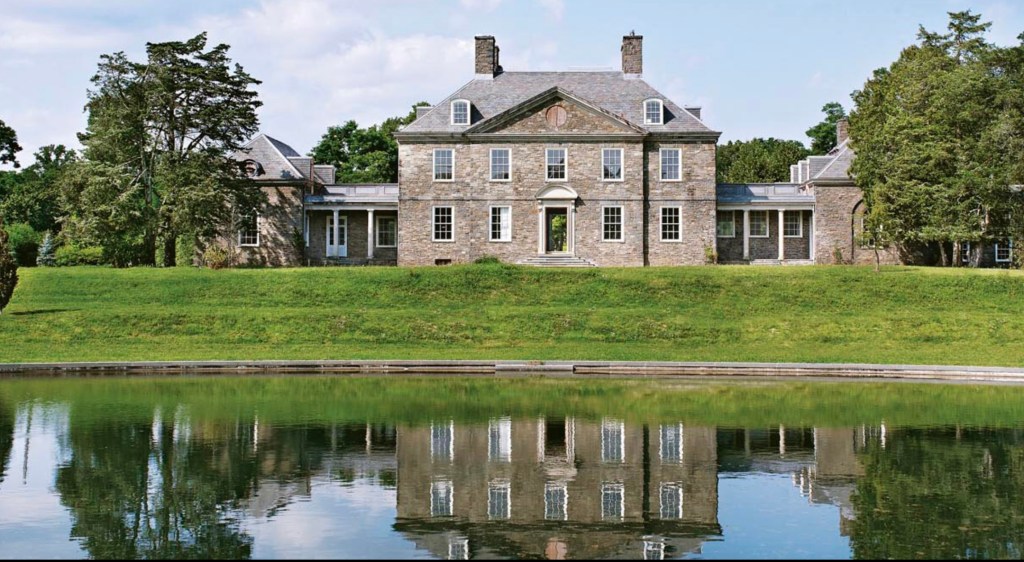
Verulam (VAIR-u-lem) is a 12,000 square foot Georgian-revival manor house sited on a 500 acre estate of the same name a few miles west of Charlottesville, Virginia. The house was the creation of New York attorney Courtland Van Clief and his wife, Eleanor. Courtland descended from Virginia horse country gentry and Eleanor’s family was involved in the lumber business in Waco, Texas. The Van Cliefs retained the Virginia-based architect Marshall Wells and landscape designer Charles Gillette to design the house and grounds. Mr. Gillette was particularly renown for developing a formal style of garden that well-suited and accentuated the Georgian, colonial and neo-classical homes dotted around Virginia. Other examples of his work can be found at Lochiel (also covered in this blog here) and Tiverton (click here). Verulam was completed in 1946 and the Van Cliefs lived here and raised thoroughbred horses until 1962 when Courtland passed away.

Courtland and Eleanor made national headlines during their 1929 wedding in Buffalo, New York when nine armed robbers crashed a pre-wedding dinner at gunpoint and stole everyone’s jewelry and cash making off with $400,000 in loot. In news reports of the time the wedding guests chalked up the robbery to “dope fiends” which just shows that things haven’t changed much since the 1920s. The Van Cliefs were no strangers to nice houses. Courtland’s brother, Ray, bought and renovated the Rosecliff mansion in Newport, Rhode Island but was killed in an auto accident on his way to have dinner and spend his first night at the newly refurbished mansion.

The next proprietors of Verulam were John and Jane “Kitchie” Ewald. John and Kitchie met while they were both working for the Virginia Youth for Eisenhower in 1952. John was well schooled at Phillips Exeter Academy, Yale University and the University of Virginia Law School. Kitchie also attended law school at Georgetown University. The two legal eagles bought the estate in 1969 and, like the Van Cliefs, the Ewalds raised thoroughbred horses at Verulam and were well regarded in the Charlottesville community for their Christmas and children’s parties. During this time, Interstate 64 was completed through this section of Albemarle County effectively splitting up the Verulam estate and reducing its size from 1,700 acres to the present 500. Unfortunately, I-64 now drones away less than a quarter mile from Verulam.

John Ewald passed away in 1979 and Kitchie remarried in 1982 and then sold Verulam in 1986 to Peter Nielsen. Mr. Nielsen was a part-time resident and gentleman farmer who was in the software business. He, in turn, sold Verulam in 2002 to Melton McGuire and his wife, Heather. The McGuires were in the microbrewery business in Alexandria and raised Friesian horses at Verulam, worked at restoring the gardens and developed a party barn on the property to host weddings and other events. At some point, the McGuires split up but Melton stayed on a Verulam until 2021 when he tragically passed away at age 57. Verulam was then on the market for a few years finally selling for $6 million in February 2024 to a local attorney. The listing can still be viewed here. An upbeat YouTube video showing scenes from Verulam can be viewed here.

Footnote: The ring leader of the wedding party armed robbery was a Canadian named George Duke. Rather than a “dope fiend,” Mr. Duke was just a common criminal on the run from Canadian authorities. Mr. Duke and the rest of the robbers were caught and Duke spent 12 years in prison and was then deported back to Canada. Apparently scared straight, he found work as a lawnmower salesman, got married and eventually built up a major lawn mower distribution company in Ontario and grew wealthy enough to build a lakefront house near Toronto. Alas, the temptations of easy money, booze, guns and whoring were too strong to resist and Duke was eventually involved in the infamous heroin smuggling operation known as the French Connection that was later the subject of an Oscar-winning movie starring Gene Hackman.

Marienruh

This beautiful Palladian/Georgian-revival house is known as Marienruh (MARY-en-roo).  It is sited on a 100 acre estate north of the  bucolic village of Rhinebeck, NY overlooking the Hudson River.  It was designed by the gilded age architect Mott Schmidt and completed in 1926. The house was a wedding present from Vincent Astor to his sister, Ava Alice Muriel Astor (who went by Alice), and her new husband, Prince Serge Obolensky. Alice was the great great granddaughter of John Jacob Astor. Astor was the first American multi-millionaire (tens of billions in today’s money) who grew rich in the early 19th century fur trade, with his agents often trading liquor to the natives for furs. Blessed with amazing foresight, Astor plowed his fur profits into Manhattan real estate (mostly woods and farms back then) and became even wealthier as these lots were converted into tenements housing the immigrants that flooded into New York City during the 19th century. On his deathbed, Astor’s only regret was that he hadn’t bought up even more of Manhattan Island. His descendants were prominent members of New York City society during the 19th and 20th century. In the early 1890s, as a result of a feud between two of the female Astors over who was more important socially, a branch of the Astor family decamped to England and has been turning out aristocrats and prominent politicians in the UK ever since. The American branch of the Astor family, in contrast, has faded into relative (but comfortable) obscurity.

Marienruh was on the grounds of the larger Astor estate, called Ferncliff Farm, that was established by Alice’s grandfather in the 1850s. In the 19th century, Astor estates and homes sprawled along the left bank of the Hudson between Rhinebeck and Barrytown (where they transitioned to the Livingston family estates that went even further north – click here for more on the Livingston estates). One such Astor estate, Rokeby, is still owned by Astor descendants.

At one time, Ferncliff was 2,800 acres but after the death of Alice’s brother, Vincent Astor, the estate was parceled out with a portion becoming a forest preserve, another portion becoming a nursing home and other portions converted to private residences. Chelsea Clinton was married at Astor Courts, a one-time sports pavilion on the estate. Another portion of the former Ferncliff estate is the home of famous photographer Annie Leibovitz.

Alice Astor, age 14

Alice Astor’s father was John Jacob Astor IV, who perished with the Titanic in April 1912. Initially, he was unperturbed about the ship striking an iceberg and was last seen having a smoke on the starboard side, a half hour before the ship disappeared beneath the waves. Afterwards, Alice was raised in England by her mother. Alice was a bit of an eccentric and claimed that she was the reincarnation of an ancient Egyptian princess. To bolster her claim, she often wore a necklace that had been among the treasures found in the tomb of Pharaoh Tutankhamun.

194
The Ferncliff mansion on the estate of the same name established by Alice Astor’s grandfather, William Backhouse Astor Jr. Demolished in the 1940s.

Alice’s husband, Prince Serge Obolensky, wasn’t a real prince of the Romanov dynasty that ruled Russia for three centuries although he was descended from another princely dynasty that preceded the Romanovs. Instead, he was married for a few years to an illegitimate daughter of Tsar Alexander II, Princess Catherine Alexandrovna Yurievskaya, before his marriage to Alice. A raconteur and bon vivant of the first order, Prince Serge was tall, handsome, smart, charming and a good dancer.

Prince Serge and Alice met at a costume ball in London where he was working as a stockbroker. Initially, Alice’s mother objected to her marrying what she considered to be a penniless, exiled Russian prince but Alice soon turned 21 and married him anyway. She and Prince Serge had three weddings in England: an Anglican ceremony, a civil ceremony, and a third in a Russian Orthodox cathedral. After honeymooning in France they began their married life of yachting, posh hotels and first class travel.

Prince Serge Obolensky and Alice Astor (1932)

Apparently, Prince Serge’s charm and dancing skills failed to keep the spark alive and he and Alice divorced in 1932 after just eight years of marriage (seven if you subtract the extra-marital affairs – on both sides). After the divorce, Alice kept Marienruh and she remarried three times: 1) an Austrian writer, 2) an English writer, and 3) an English architect. She died single in 1956 at age 54 from a stroke. She was a patron of the arts during her life and was a big supporter of the New York City Ballet company.

Although Prince Serge’s history with Marienruh was brief, his post-divorce life merits a mention. He volunteered for service in World War II and was part of the Office of Strategic Services (OSS), the forerunner of the CIA. In that role, he parachuted into Sardinia and France on missions at the age of 54. Postwar, he had a long and successful career in the New York hotel business and was a high-class lounge lizard in Manhattan, squiring around and dancing with the likes of Jackie Onassis and actress Joan Fontaine. Legend has it that he invented everyone’s favorite hangover cure, the bloody mary. He passed away in 1978 while wearing black tie, holding a martini and chatting up the nurses (I’m guessing).

After Alice Astor’s death, Marienruh was sold and used variously as a church camp, a home for unwed mothers, a drug rehab center and an event center.  The home, by then in very poor condition, was purchased in 2006 for $7 million by a writer and Columbia University professor.  The new owner has been restoring Marienruh to its former glory ever since. Marienruh serves as a private home and is not open to the public however another country estate covered in this blog is just a few miles south in Hyde Park. Frederick Vanderbilt’s Hyde Park estate (click here) is open to the public as is Springwood, the nearby home of FDR.

Huntley Hall

This is the 11,000 square foot Huntley Hall located near the hamlet of Broad Run in Fauquier County, Virginia. Huntley hall anchors a 4,000 acre estate composed of working farms, rolling pastures, park-like landscaping and small lakes. The Georgian style manor house was built in 1987 to a design by the Philadelphia-based architect, Tony Atkin. The proprietors of this enterprise are John and Anne Hazel. John Hazel’s resume includes a law degree from Harvard University, a stint as a Judge Advocate General in the Army, another brief stint as a Circuit Court judge in Fairfax County, Virginia and a partner in a 118-person law firm specializing in property and zoning law. It was this latter experience that provided the basis for a 40 year career in land development in northern Virginia where John Hazel was the key developer in major projects such as Tysons Corner and Fairfax Station. Mr. Hazel has also served on the boards of the National Air and Space Museum and the Corcoran Gallery of Art in Washington D.C. Huntley Hall is a private home and is not open to the public.

Garden front of Huntley Hall
Entrance front
landscape scene
Entrance drive

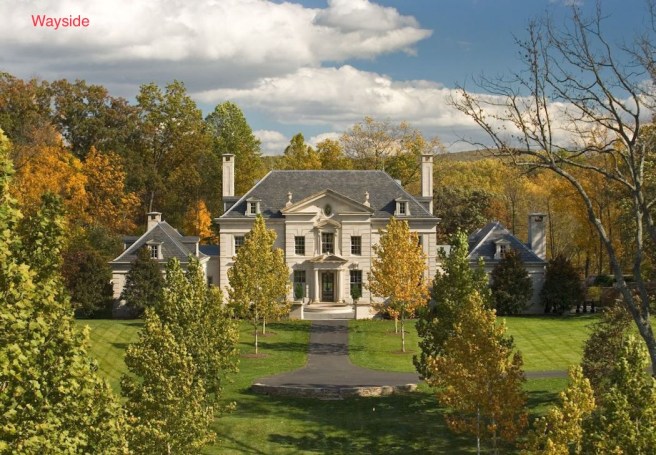
Wayside

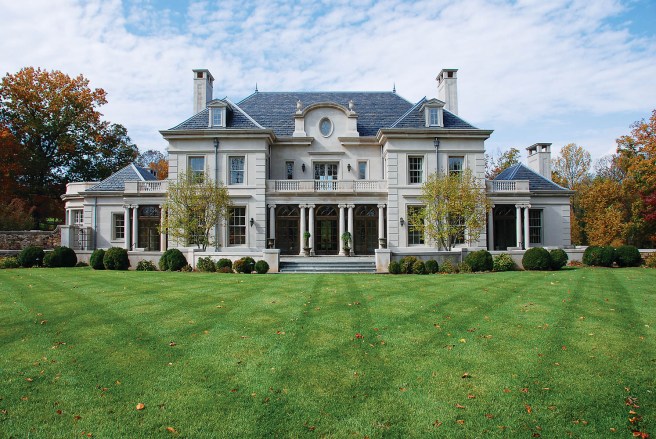
This is Wayside Manor, a 17,000 square foot neo-classical/palladian house completed in 2005 and sited on 100 acres in the Virginia Hunt Country near Middleburg, VA.  The house and landscaping was designed by the Washington D.C.-based firm of Franck & Lohsen. The property is owned by a D.C.-based developer who has built many office buildings for lobbying groups and associations over the years. The clients are big art collectors and lent their collection to the National Gallery of Art for exhibition while the house was being constructed.

If I’d been the client I would have gone with a different paving surface than asphalt (crushed rock?) and hidden the garages away but otherwise this is a great example of the New Classicism movement in residential architecture that started in Europe in the late 20th century after modernist and post-modernist schools ran their course. In the United States, interest in classical architecture was renewed in response to the destruction of classically-designed structures like New York City’s Pennsylvania Station. You don’t know what you’ve got until it’s gone when it comes to iconic buildings. Many architects on both sides of the Atlantic such as Quinlan Terry in the UK and Allan Greenberg in the US have pioneered a new appreciation and appetite for classically-designed houses that are every bit as fetching as the iconic country houses from the 17th or 18th centuries.

Just two miles east of Wayside is another interesting country house, Half Way House, covered in this blog (click here). Also, if you want to learn more about the Virginia Hunt Country and how they preserve its rural character, click here. Wayside Manor is a private home and not open to the public.

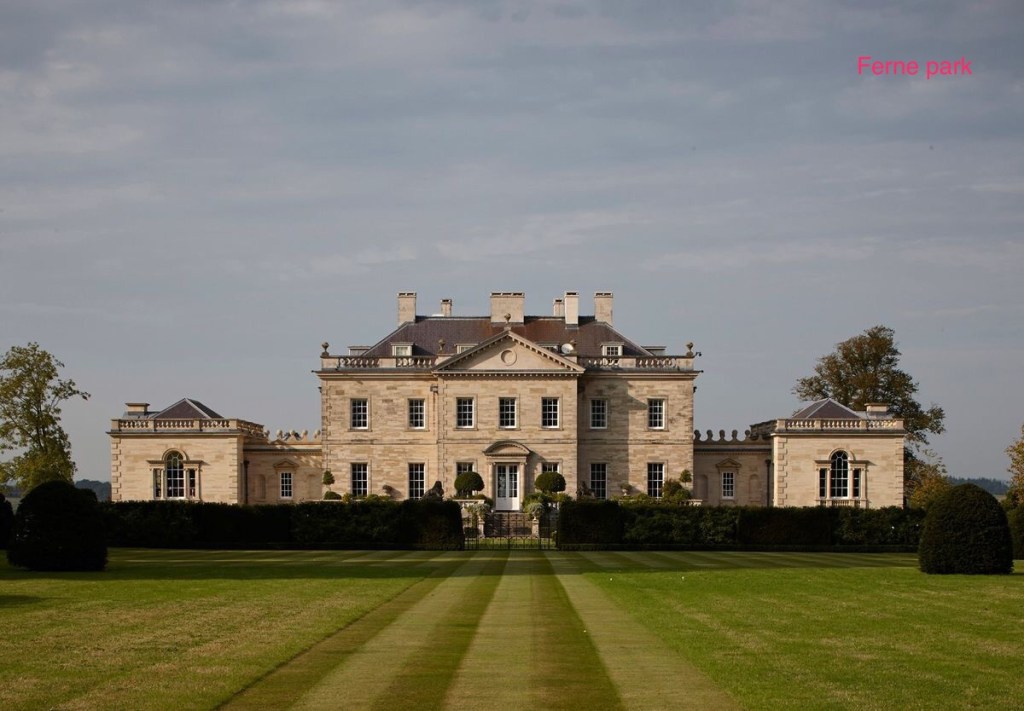
Ferne Park in Wiltshire, England. A great example of the new classicism trend in residential architecture (for those that can afford it). Designed by British architect, Quinlan Terry, the house was built in 2001 and may be the most impressive country house built in the world in the last half century.

Twin Maples

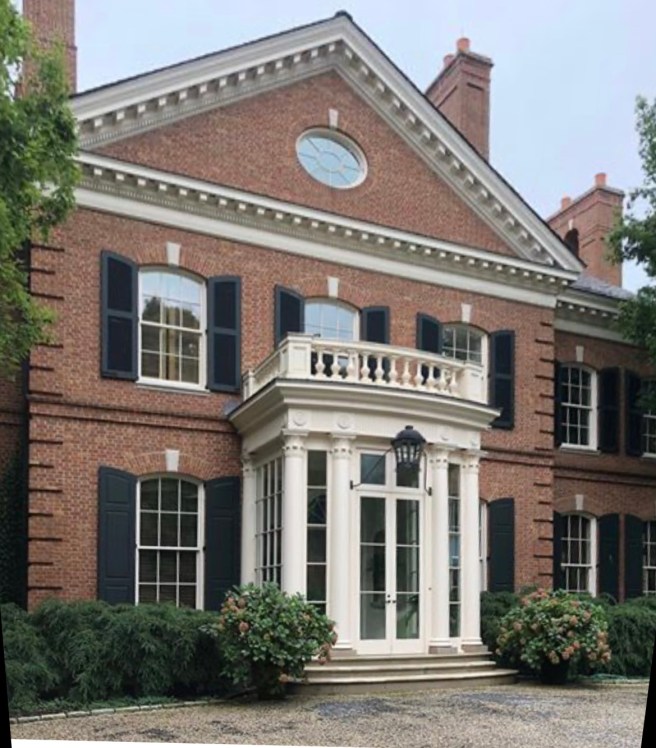
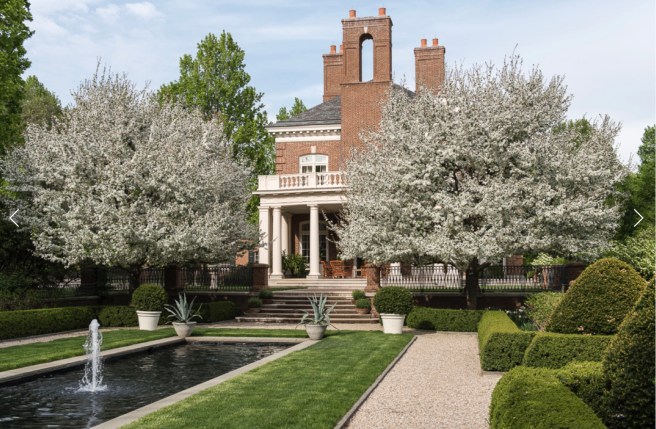
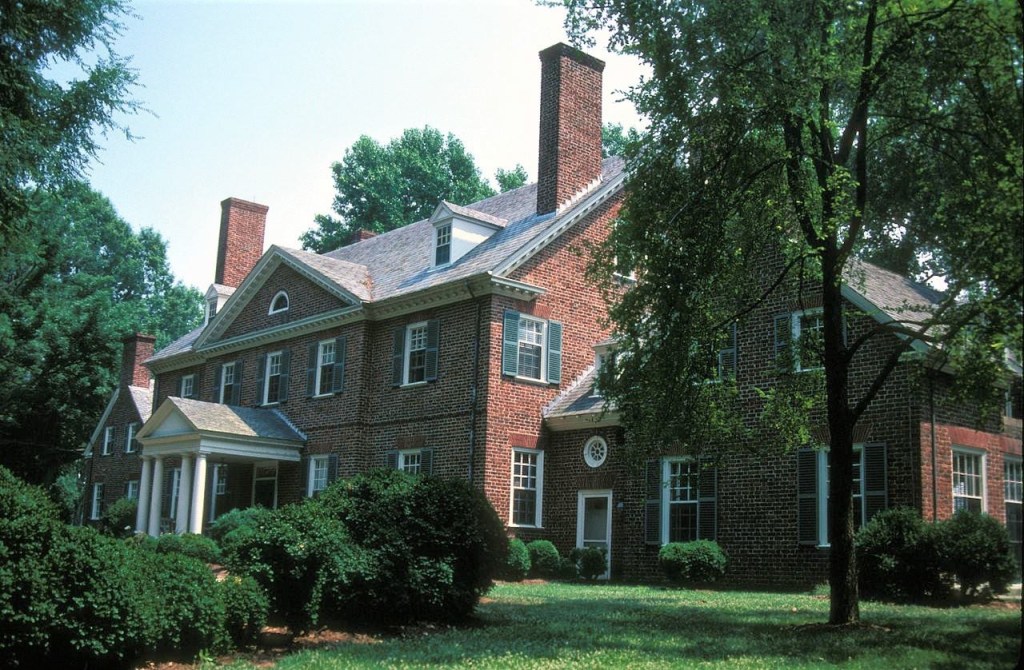
This house and its surrounding gardens is known as Twin Maples. The house was built in 1996 and is situated on a 325 acre estate near Salisbury, Connecticut. It is the creation of a couple who were active in the arts in New York and Boston.

Twin Maples was originally part of a 1740 land grant by King George II of England to the Selleck family and, incredibly, the property has only been sold twice since then. The Sellecks hung on to it for over two hundred years. The name Twin Maples refers to two maple trees that grew at the site of a former house on the property. The Georgian style house was designed by New York architect David Easton who also designed Albemarle House near Charlottesville (click here for more on the infamous Albemarle House).

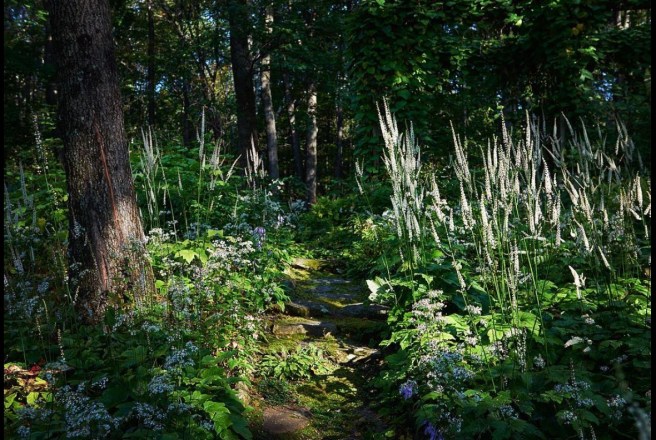
The house is gorgeous but it is the gardens at Twin Maples that really set this property apart. They include a formal garden next to the house which transitions to woodland gardens and a wildflower meadow. There is even a winter garden inside the house itself. The gardens are the work of landscape architect Rodney Robinson and plantswoman Deborah Munson. Successfully cultivating a wildflower meadow is one of the most difficult things to pull off in gardening but this meadow, designed by Larry Weaner, along with the other gardens has won multiple awards. The entire garden ensemble has also been recognized by the Smithsonian Institution.

Twin Maples is still a private home and is not open to the public although the gardens are occasionally included on local garden tours. A few miles to the north is another significant country estate, the Scoville Estate covered in this blog here.

Evelynton

Evelynton Plantation is a 2,500 acre agricultural estate situated on a tributary of the James River in Charles City County, Virginia.  Originally a part of the nearby Westover Plantation, Evelynton was carved out and sold to settle the debts of Westover’s profligate master, William Byrd III. After passing through numerous hands, the plantation was purchased at auction in 1847 by Edmund Ruffin, Jr., a member of the aristocratic Ruffin family that traced their history in the Virginia tidewater to the 17th century. Mr. Ruffin named his estate after Evelyn Byrd, the daughter of William Byrd II, the owner of Westover during the early 1700s. The portion of Westover that would become Evelynton had been intended as a dowry for Evelyn when she married. However, Evelyn’s parents were displeased with her choice of husband (a CATHOLIC!!!!!) and refused to allow the marriage. Evelyn retaliated by refusing to marry anyone and she died before the age of 30, some say of a broken heart. Evelyn Byrd is currently a friendly ghost that is occasionally seen at Westover.    

Evelyn Byrd, the namesake of Evelynton

Edmund Ruffin’s father, Edmund Sr. was a noted agronomist who pioneered techniques for renewing agricultural land that had been exhausted by decades of tobacco cultivation.  Ruffin Sr., a die-hard slave owner and secessionist, fought in the Civil War for the Confederacy while in his sixties.  According to contemporary accounts, his outspoken views on slavery and secession were so extreme that they made his fellow Virginia soldiers uncomfortable and he was asked to join another State’s regiment, the South Carolinians.  Despondent about the confederate surrender, he wrapped himself in a Confederate flag and shot himself but not before proclaiming his “….unmitigated hatred to Yankee rule and to all political, social and business connections with Yankees, and to the perfidious, malignant and vile Yankee race.” [He might have found solace living amongst Boston Red Sox fans but the historical record is silent on whether he tried that.]  Adding insult to injury, his son’s house and plantation buildings at Evelynton were burned by Union forces in 1862. Other than land cultivation, nothing happened at Evelynton for the next seven decades.

The plantation stayed in Ruffin family ownership after the war and in 1937, Edmund Ruffin Jr.’s grandson, John Augustine Ruffin and his wife, Mary Saunders Ruffin, flush with an inheritance from Mary’s family, commissioned Duncan Lee, a Richmond architect noted for his expertise in Georgian revival and Colonial designs, to build the handsome manor house that stands on the site today. John Ruffin passed away in 1945 and Mary opened up Evelynton to public tours in the 1950s to help pay the bills. Mary then passed away in 1967 and the house was taken over by their son, Archer Harrison Ruffin. Archer continued to farm Evelynton until his death in 1976 whereupon his brother, Edmund Saunders Ruffin, took over the estate. Edmund was active in the container business in Richmond but retired at Evelynton for the last years of his life. His daughter, Elizabeth Ruffin Harrison, lived nearby and opened the house for tours and events in the mid 1980s so the public could marvel at the Ruffin’s magnificent collection of 18th century American and English furniture and decorative arts. After Edmund passed away in 2002, Elizabeth became the last of the Ruffins at Evelynton when the estate was sold in 2008 closing the door on 161 years of family ownership.

The estate was purchased by John and Jeanine Hinson of Key Biscayne, Florida. John had been a successful real estate investor in the South. The Hinsons lived at Evelynton and continued to lease out the agricultural land for cultivation. Tragically, John Hinson was killed in an automobile accident in September 2021 and the future status of Evelynton is unclear. Although Evelynton has been open for tours intermittently in the last few decades, it is currently a private home and not open to the public.

Les Quatre Vents

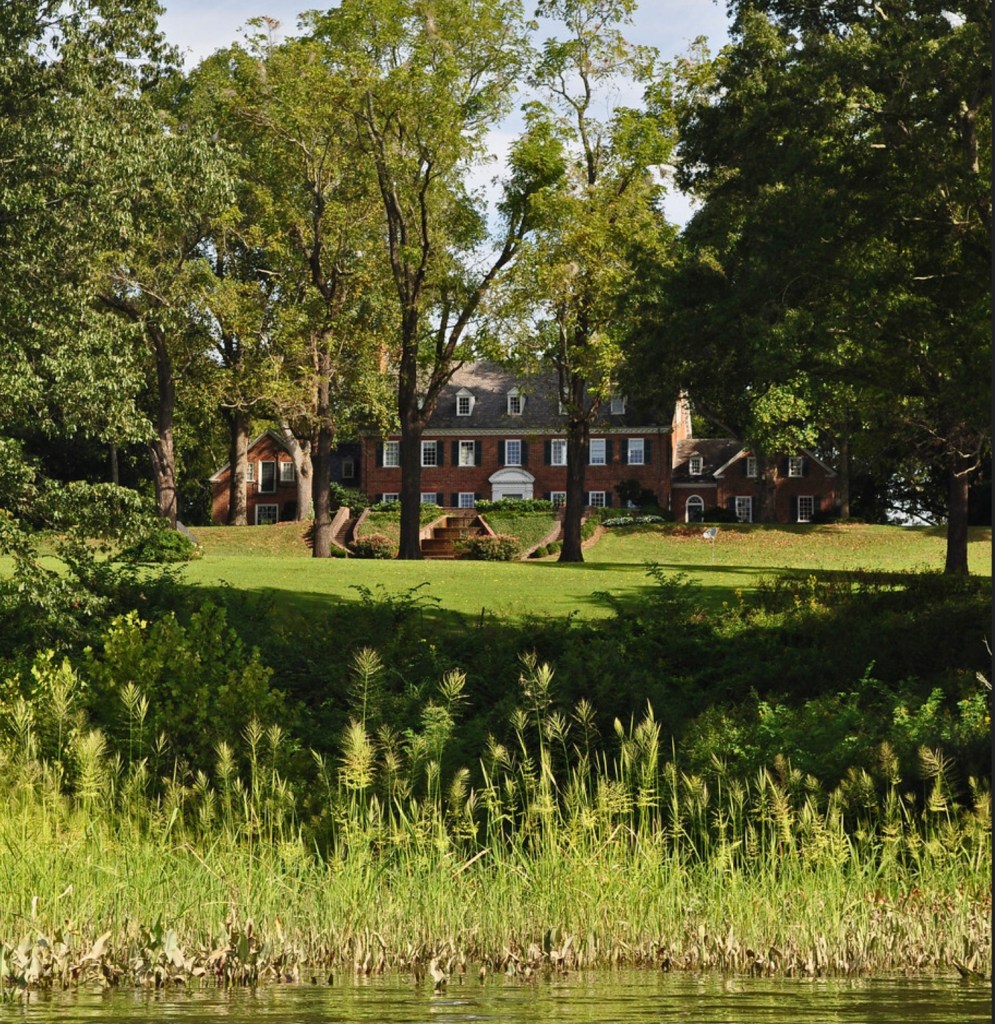
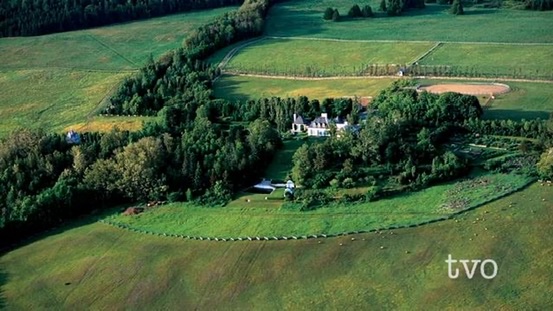
Les Quatre Vents (pronounced lay KAT-ruh vah)(translation: the four winds) is almost unknown outside gardening circles. But among gardeners and horticulturists it has a mythical reputation. Les Quatre Vents is a 200 acre estate a few miles northeast of La Malbaie, Quebec overlooking the St. Lawrence River. The property that became Les Quatre Vents was purchased in 1902 as a vacation retreat for a branch of the Cabot family. The Cabots were one of the leading families of Boston, the so-called Boston Brahmins. They and the other Boston Brahmins established themselves in New England in the 18th century and grew wealthy from trading and shipping. Typical trading runs for New England-based traders in the 17th and 18th century included West Indian sugar and rum to colonial America, American tobacco to Europe, African slaves to the West Indies, and Chinese tea, silk and porcelain to Europe. It also included one particularly lucrative trade: Turkish opium to China, sort of the early American version of the Sinaloa Cartel. The Cabots moved on from shipping, slaving and drug running to politics producing U.S. senators and ambassadors. The Cabots were big political rivals of the Kennedys in the mid 20th century and competed for Massachusetts senatorial seats in Congress.

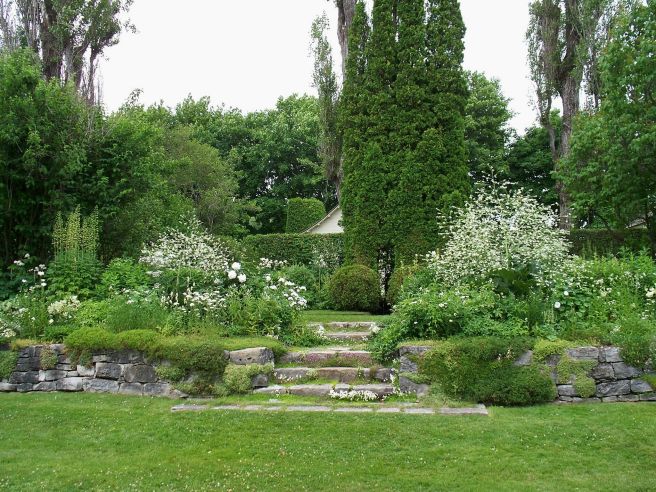
The chateauesque manor house on the property was designed by New York architect Frederick Rhinelander King to replace an earlier 1928 house that burned down in 1956. The current house was completed in 1959. An interesting side note regarding Mr. King is that he competed in the 1936 Berlin Olympics back when architecture and other art forms were actual medal events. In 1965, Francis “Frank” Higginson Cabot inherited Les Quatre Vents and undertook the gradual creation of the incredible landscape garden that exists today. Frank was Harvard-educated and worked on Wall Street for many years before deciding that his true gift was landscape architecture and horticulture. Frank and his wife, Anne, had already created an outstanding garden at their weekend retreat outside of New York City, called Stonecrop Garden, that is now open to the public. In 1975, they moved to Les Quatre Vents full-time and devoted their retirement to developing the gardens. Frank was a true plant hunter and travelled around the world looking for specimens to try out at Les Quatre Vents.

One of Frank and Anne’s major achievements was the creation of The Garden Conservancy in 1989. The Conservancy is a non-profit organization dedicated to preserving notable gardens, both private and public, for the enjoyment of future generations. They do this through grants and advocacy and, to date, have been instrumental in preserving more than 100 gardens in 26 states and provinces, gardens that might have otherwise fallen victim to development once their gardener-creators had passed away.

Frank Cabot passed away in 2011 but Les Quatre Vents is still in the family and they continue to pursue Frank’s vision. Les Quatre Vents is not open to the public although they do conduct tours four or five days each summer. Tour tickets are reportedly very difficult to get and require advance planning. For anyone interested in getting a close look at Les Quatre Vents, an excellent documentary about the Cabots and their garden, called The Gardener, was produced in 2018 and can be seen on YouTube here. In addition, Frank Cabot wrote a book about Les Quatre Vents loaded with beautiful photos of the gardens called The Greater Perfection (out of print but available on Amazon for several hundred dollars).

Grey Towers

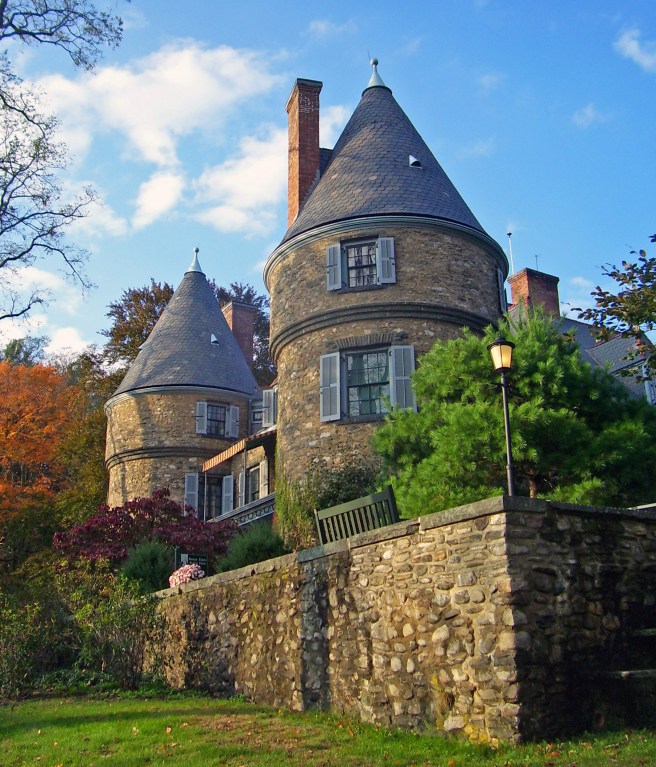
This French Norman-style house is Grey Towers.  It sits on a 102 acre estate outside Milford, Pennsylvania.  It was built in 1886 by James Pinchot, a successful New York City wallpaper merchant and his wife, Mary. James grew up in Milford and moved back after retiring from business to raise his family.  The house was designed by Richard Morris Hunt (who designed many gilded age mansions such as Biltmore) and the grounds included contributions by Frederick Law Olmsted, the most influential American landscape architect of the 19th century.  

The Pinchots lived at Grey Towers for many years before James passed away in 1908 followed by Mary in 1914. The Grey Towers estate was split between their sons, Amos and Gifford with the latter taking the house. Gifford was a graduate of Yale University with a degree in forestry and also studied forestry in France. His first job after returning from France was managing the forests on the Biltmore Estate, the North Carolina home of George Washington Vanderbilt. He attracted the attention of Presidents William McKinley and Theodore Roosevelt who appointed him as the first head of the U.S. Forest Service. In this role, Pinchot was a staunch conservation advocate and fought against the industrial forestry practices that characterized the Forest Service during most of the 20th century.

The Pinchots at Grey Towers, 1921

After leaving the Forest Service in 1910, Gifford served as Governor of Pennsylvania for two terms. Cornelia was active in the women’s suffrage movement and was a major donor to the NAACP. She was a close friend of Teddy Roosevelt and shared his passion for progressive causes. She also tried her hand at politics but was unsuccessful in runs for Congress and the Pennsylvania Governorship. The Pinchot family used Grey Towers mostly as a summer home. Gifford passed away in 1946 followed by Cornelia in 1960. Their son, Gifford Jr., donated Grey Towers to the U.S. Forest Service as a house museum and a conference/educational center focusing on conservation. Grey Towers is the only non-forest asset managed by the Forest Service. The house and gardens are open to the public on a daily basis. Click here for more info on Grey Towers or here for a YouTube video showing scenes from Grey Towers.

Gifford Pinchot’s legacy of forest stewardship lives on today. The Gifford Pinchot National Forest in Washington State is named after him along with several other natural and geographic features around the U.S. The Giffords son, Gifford Jr., helped found the Natural Resources Defense Council (NRDC), one of the preeminent environmental legal advocacy organizations in the U.S. today.