Albemarle

Prologue

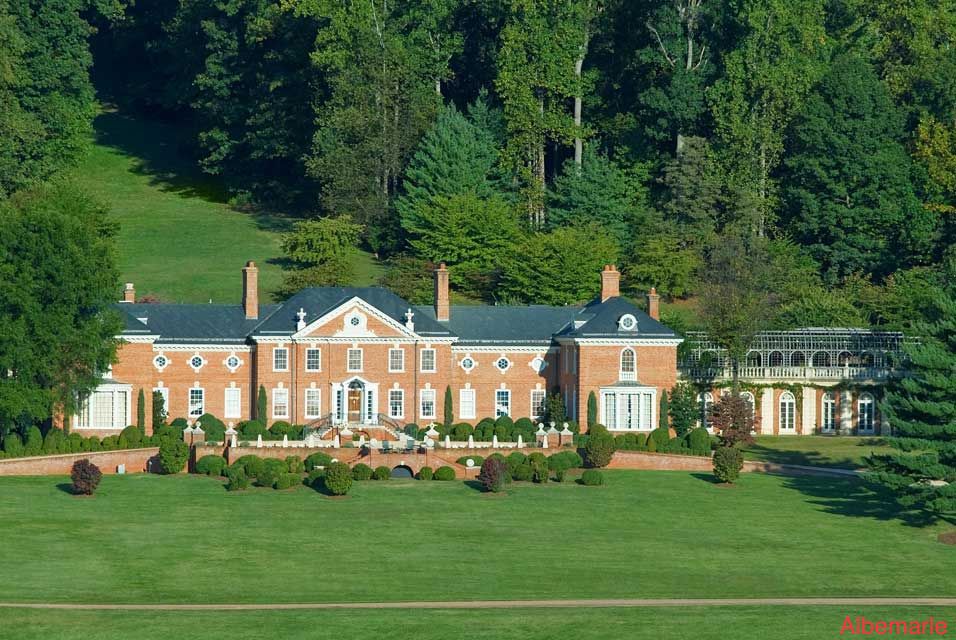
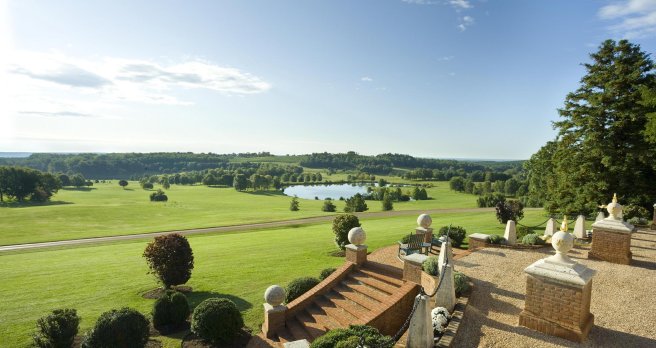
This handsome 23,000 sf Georgian revival mansion is known as Albemarle (AL-bi-marl) House and is sited on a 990 acre estate south of Charlottesville, VA (which is located in Albemarle County). It was designed by David Easton, a New York-based architect and designer (who also designed Twin Maples in Connecticut), and completed in 1985 for newlyweds, John and Patricia Kluge. Albemarle House was the innocent witness to a classical tragedy involving insatiable ambitions, degeneracy, avarice, catastrophic falls, and maybe some lessons learned (but probably not). Our story unfolds thusly…..

Act I – The Catholic School Girl

Patricia Kluge (nee Rose) was born in Iraq in 1948 to British parents and was educated in a convent school in Baghdad. After her parents split up in 1963, her father moved to London and sixteen year old Patricia followed a year later to live with him. Unfortunately, Patricia’s father had already moved in with another woman and Patricia was not welcome. Patricia stayed on in London, took a series of odd jobs and lived with friends. One night, while working as a hat check girl at a Turkish nightclub, she filled in for the belly dancer who was out sick. In the audience that night was a soft-core porn publisher named Russell Gay. Mr. Gay, who was 32 years older than Patricia, took a shine to her and they moved in together and eventually married in 1973. The catholic school girl from Baghdad was a regular model for Mr. Gay’s porn publications and wrote a sex advice column for his magazine, Knave. She also took a crack at acting but her only credit is as “The Dancer” in the 1969 erotic comedy The Nine Ages of Nakedness (IMDB rating 4.7 out of 10). Eventually, Patricia grew restless with her skeevy life in London and longed for some place that was simpler, quieter and with more traditional values. So she divorced Mr. Gay in 1976, packed up her things and moved to New York City.

Patricia Kluge as “Dancer” in Nine Ages of Nakedness (1969)

Act II – The Rise

Soon after arriving in New York, Patricia met John Kluge who was 35 years her senior. John Kluge was a German immigrant who worked his way up from a Ford assembly line to extraordinary business success. His company, Metromedia, at one time owned 14 television stations and 22 radio stations. He sold off the stations in 1986 and they eventually became the core of what is now known as the Fox Network. At the time, Kluge was regarded as the richest person in the U.S. with a fortune of $5.2 billion (nowadays this doesn’t even crack the top 200). John was immediately smitten by the 5’10” beauty when she invited him to a dinner party and then, when the dishes were cleared, started belly dancing on the table. John would later recall of this moment “Where had I been all my life??” For her part, Patricia phoned a friend in London and blurted “I’ve met a guy who’s stone rich!!” John soon ditched wife #2 and, after living with Patricia for a couple years, they married in 1981 in a huge wedding at St. Patricks Cathedral on New York’s Fifth Avenue. They then started building their dream home, Albemarle. They did not live happily ever after.
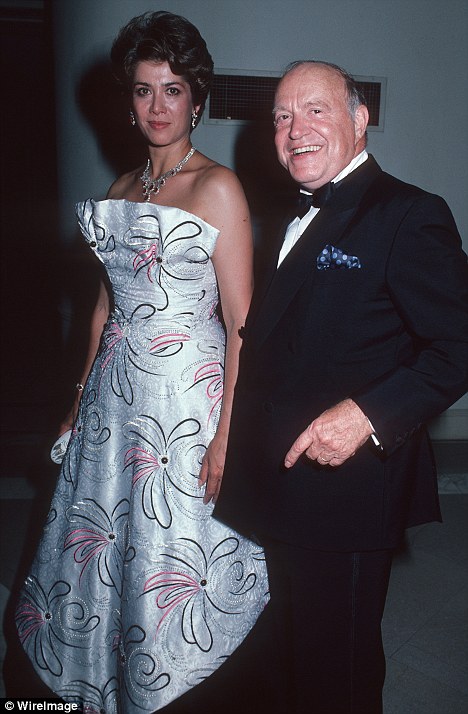
Patricia and John Kluge during the happy times

Marriage counselors will often tell you that you should work on the relationship rather than the house. Alas, John and Patricia did not heed this advice. They were only in Albemarle for five years but during that time the house was the social center of Virginia and the Kluges hosted Frank Sinatra, King Juan Carlos of Spain, the ex-King Constantine of Greece, Tony Bennett and other A-listers. Sadly, their love (or whatever it was) soon faded and they split up in 1990. In a move that would later prove calamitous, Patricia got the house in the divorce but John kept the land in front of the house including his beloved private golf course. Despite this proximity, they went their separate ways. Patricia married for a third time to William Moses, a retired IBM executive, and John married for a fourth time to Maria Kuttner, a holistic health practitioner (who was also 35 years his junior).

The not-universally-admired interior of Albemarle

Act III – The Precipice and the Fall

In the late 1990s, Patricia and William developed vineyards and a winery on the property which has won several awards for the quality of the wines. In 2007, Patricia started taking out mortgages on Albemarle to expand the winery business and to develop a 24 lot luxury subdivision on the property called Vineyard Estates (you see where this is going, right?). The timing was terrible as the 2008 financial crisis hit soon afterward wiping out the demand for the luxury homes (only a model home was built on the subdivision). In addition, the winery expansion was cranking out 30,000 cases a year but only a third of that was actually sold. Patricia and William started falling behind on the payments on $35 million in loans. Patricia realized she was in trouble and tried to bail out, listing Albemarle in 2009 for $100 million. Unfortunately, there wasn’t a market for Albemarle House either and the price was dropped to $48 million and then to $24 million but the house still sat unsold. Patricia then auctioned off the contents of the house in 2010 raising $15 million to keep the banks at bay. John Kluge, Patricia’s ex, died that same year at age 95. Towards the end of 2010 the banks moved in and starting foreclosing on the winery assets and the failed subdivision. In 2011, it went from bad to worse for Patricia. First, Bank of America foreclosed on Albemarle house itself and Patricia had to move out of her dream home and into the model home of the subdivision project. By June she had declared bankruptcy listing $3 million in assets and $48 million in liabilities. Patricia was hitting rock bottom. But a potential savior was out there. Watching all this happen. And Waiting.

The garden front of Albemarle House

Act IV – The Leader of the Free World

Donald Trump was a friend of the Kluges, a Manhattan real estate developer, casino impresario, golf course developer, online college president and a reality TV star. Later in life he would also become the leader of the free world but before all of that he had developed a liking for Albemarle. This is when the decision to split the house and the front yard in the divorce came back to haunt Patricia. By this time, the golf course and the front yard was under the control of John Kluge’s heir, John Kluge Jr. Mr. Trump cut a deal with Kluge Jr. to buy the golf course and Albemarle’s front yard for a half million dollars. Bank of America, looking to unload Albemarle house itself, put it up for auction. Mr. Trump put in the high bid of $3.6 million but the bank still rejected it as too low. Now, Mr. Trump was not a man to be easily deterred. Used to getting what he wanted (*COUGH* except for reelection), Mr. Trump bought the 776 acre vineyard out of foreclosure for $6.2 million. He now owned everything except the house itself (which the Bank of America was pitching for $16 million). His next move was to stop mowing the lawns. The grass around Albemarle house grew long and unkempt. Weeds sprouted. The curb appeal waned. The future global statesman then posted “NO TRESPASSING” signs all around his part of the property and posted security guards casting a pall on prospective buyers who the bank’s realtors would shepherd around the property. Sensing that a grave injustice was being committed, Bank of America brought suit against Mr. Trump in the Albemarle County Circuit Court in Charlottesville. Lawyers were dispatched. Declarations were submitted. Cease and desist orders were proposed. Finally, in 2012, the Bank of America, exhausted from fighting the injuries allegedly perpetrated by Mr. Trump, agreed to sell Albemarle House to him for $7 million writing off $16 million in defaulted loans to Patricia Kluge Moses. More litigation then erupted over Mr. Trump’s unpaid legal bills, late payments to John Kluge Jr., and contested conservation easements on the Albemarle estate. Virginia would not know peace again until 2013.
Epilogue

In the story of Albemarle House no one lived happily ever after. Patricia Kluge Moses, relieved of her crushing financial obligations said “My worst nightmare and personal armageddon are over.” She still lives in the model home of her one-time luxury subdivision. None of the other homes were built. Donald Trump, the humble public servant, dedicated himself to four years of public administration but eventually he was also evicted from his grand palace in Washington D.C. Today he lives in exile in Florida. John Kluge is dead. So is the English porn publisher, Russell Gay. It’s debatable if any of the main characters of this tragedy are any wiser. However, Albemarle House, the innocent witness to this tale of tragedy, has found a new life. In 2012, the Trump Organization began the process of converting the empty, neglected and decaying Albemarle mansion into a bed & breakfast and building a separate wedding venue that started welcoming guests in 2015.  The vineyard and winery started by Patricia Kluge still operates under Trump ownership and annually sells 20,000 cases of wine in addition to Trump-branded golf shirts and accessories. As one final twist to this story, Albemarle may be the only winery in the world that is owned by someone who doesn’t drink alcohol.

Donald Trump, the new lord of Albermarle, and Patricia Kluge, the departing lady of Albemarle, look on while Eric Trump explains something.

Afterword

If you want to stay at Albemarle or just drop by and sample some wine (which is supposed to be excellent) then click here for more info. Other than that, Albemarle House itself is not open to the public.

Authors Note: Obviously most people either love or loathe Donald Trump. This blog is not about politics but about architecture, beautiful country houses and the people who lived in them (for better or worse). Mr. Trump just happened to step into the line of fire in this case when he bought Albemarle and he was then exploited for his entertaining personality and colorful business practices. So I blame him. My apologies to anyone who was offended by this exploitation.
Halfway House

Entrance front

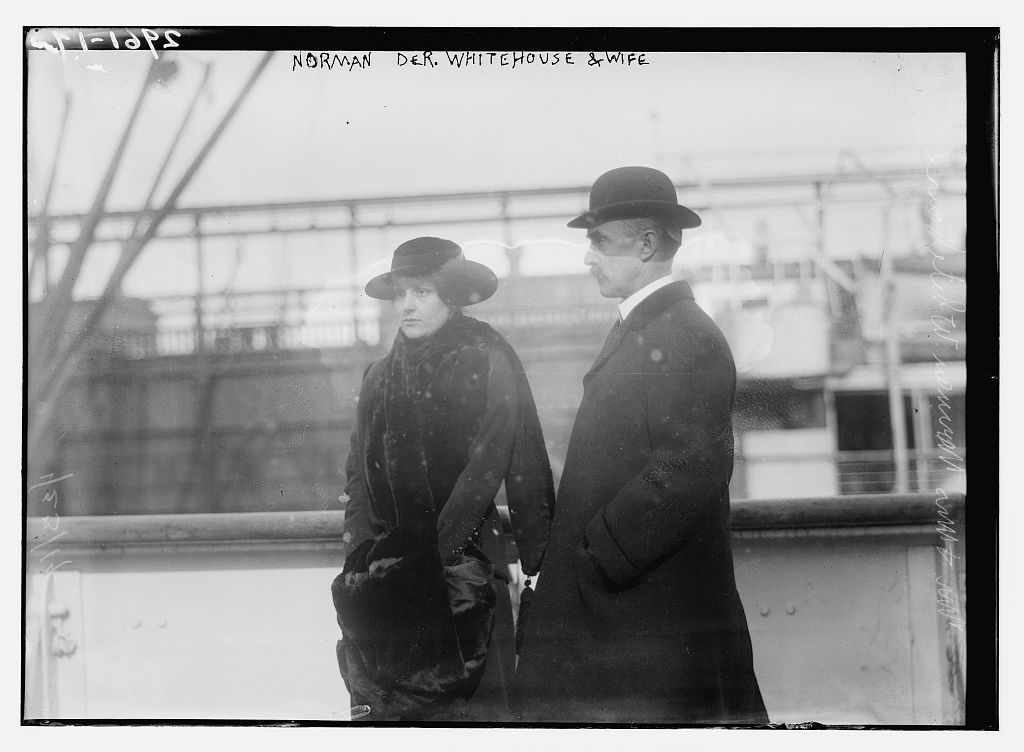
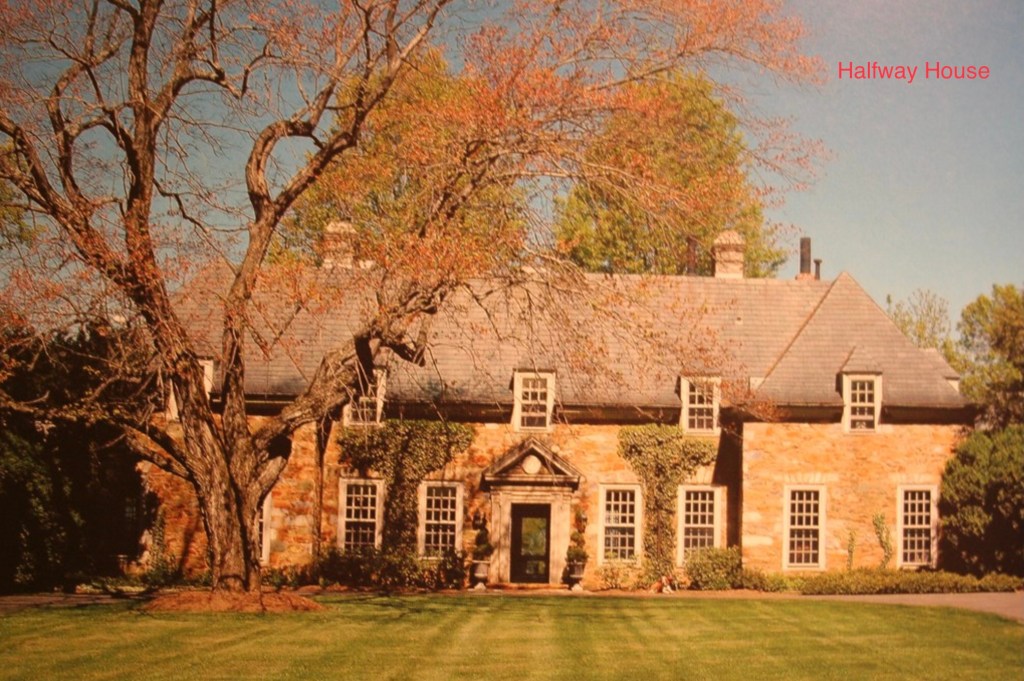
This is Halfway House which is conveniently located half way between Middleburg and The Plains in the Virginia Hunt Country west of Washington D.C. Halfway House was completed in 1934 to a design by William Bottomley, a Virginia-based architect who is responsible for many of the handsome Georgian-revival houses that grace the State (including Rose Hill and Chilton). Halfway House sits on a 571 acre estate and was built by James and Vira Whitehouse who also had homes in Newport, RI and New York City. James was a stockbroker and Vira was a suffragette and political activist. Today, Halfway House is owned by a former AOL Vice President named John Ayers and is now referred to as High Meadows Farm and is used for raising grass-fed cattle.

Design concept of Halfway House

The Virginia Hunt Country is famous as a country retreat for 1 percenters, horse farms, fox hunting and fine gardens. Just two miles west of Halfway House is another country estate covered in this blog, Wayside Manor (click here for more info). For more about the Virginia Hunt Country, click here.

James and Vera Whitehouse, the builders of Halfway House

Tulip Hill

George Washington slept here. He really did. Washington was a good friend of the builder of Tulip Hill, Samuel Galloway, and visited often during the 1770s. Tulip Hill is a Georgian-style house (actually built during the Georgian era) near Galesville, Maryland. The 8,000 square foot house sits on an 93 acre waterfront property on the West River.

Tulip Hill got started when Samuel Galloway bought the 260 acre Poplar Knowle property in 1755. He renamed it Tulip Hill for the tulip poplars that grew on the property. Samuel built the gorgeous Georgian-style house for his wife, Ann, but she died before the house was completed in 1762. Unfortunately, the identity of the architect is unknown. Samuel Galloway grew and exported tobacco at Tulip Hill and also traded in slaves imported from Africa and other indentured servants. He was also a major ship owner and owned more than 30 ships and a nearby shipyard. Samuel passed away in 1785 leaving Tulip Hill to his son, John. John Galloway expanded the house by adding the matching wings and connecting hyphens creating the classic five-part Georgian house that exists today.

Samuel Galloway, the builder of Tulip Hill

Tulip Hill stayed in the Galloway family until 1896. It was then sold to Alexis du Pont Parker, a railroad executive from Denver, CO. During the Parker ownership, the house was all but abandoned and became known to local teenagers as a place to party. In 1918, house was purchased by Henry Flather, a Washington D.C. banker and his wife, May, who was very active in building up the Girl Scouts during the early years of the organization. The Flathers are credited with extensively restoring the house and grounds after decades of neglect. Tulip Hill was then purchased in late 1948 by Lewis Andrews, a British military officer who had been a POW during the Second World War, and his wife, Hope. After Lewis’ death in 1990, the estate was bought by Morgan Wayson, a local contractor, and his wife, Janet. The Waysons put Tulip Hill on the market in 2004 for $4.9 million and it was eventually sold by auction in 2011 for $2.5 million. The trail of ownership grows cold after that and there is local speculation about the identity of the owner and what they plan to do with Tulip Hill but it is private property and not open to the public.

Entrance front
Entrance hall

Migdale

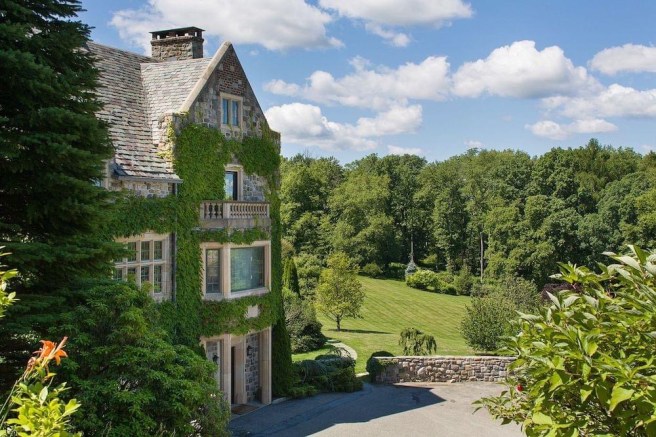
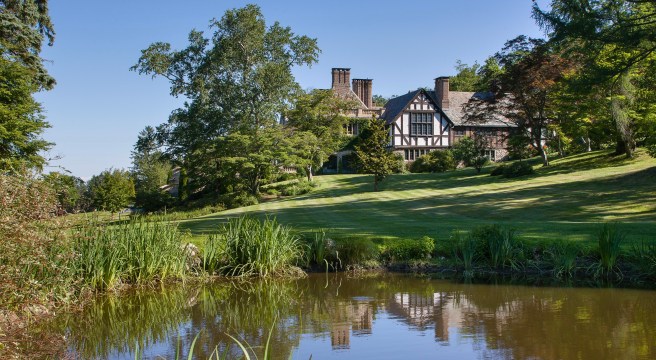
This is Migdale Castle outside the bucolic village of Millbrook in Dutchess County, New York.  The 35,000 square foot Tudor revival home sits on a 350 acre estate that comprises a pond, orchards, kitchen garden and a separate gatehouse and guest house.  Bette Midler is a neighbor.  Dutchess County, along with adjacent Litchfield County, Connecticut and the Massachusetts Berkshires, is one of the rare desirable areas in the United States that has managed to avoid a lot of subdivision or development despite being within easy reach of a major city. The area is characterized by small, quaint towns with antique shops and farm-to-table restaurants, leafy estates and small farms and is favored by celebrities and business people from New York that want less noise, less pretension and more space than they could find in places like Greenwich or the Hamptons. Much of the land is encumbered by conservation easements that restrict development and guarantee a serene, green, leafy, artisanal future.

Migdale Castle was completed in 1927 by Margaret “Midge” Carnegie, the daughter and only child of Andrew Carnegie, and her husband, Roswell Miller, The name Migdale was a play on Margaret’s nickname. Andrew Carnegie was the founder of Carnegie Steel (later US Steel).  Mr. Carnegie was, by some reckonings, the sixth wealthiest person in history with a fortune worth $372 billion in 2014 dollars (right behind the communist icon Josef Stalin in 5th place).  However, most of his fortune was given away in his lifetime to endow libraries and universities and Margaret had to make do with $15 million.

Margaret “Midge” Carnegie and Roswell Miller

Margaret Carnegie served as a director for the Carnegie Corporation, a philanthropic trust set up by her father, that has been funding libraries and educational institutions for over a century. The Corporation’s best known invention is the beloved children’s television show, Sesame Street. Roswell was a civil engineer and real estate sales executive who, before marrying Margaret, had served on submarine chasers during the First World War. She and Roswell lived at Migdale with their four children until 1953. In that year, Midge and Roswell split up and Roswell got Migdale in the divorce. Midge moved to Greenwich, CT where she lived out her years passing away in 1990.  Roswell lived at Migdale for 30 years until his death in 1983.

After Roswell passed away, Migdale sat neglected until the year 2000. Enter French/American art dealer Guy Wildenstein and his wife, Kristina Hansson. Guy (pronounced Gee as in geese) and Kristina paid $5.3 million for Migdale and have since poured an additional $20 million into the property on renovations. Guy was a member of the Wildenstein family of art dealers that originated in France in the 1870s. The Wildensteins hold a private art collection containing priceless works from the likes of Van Gogh, Rembrandt and Monet that is reputedly the second most valuable private collection in the world (after the Queen’s Royal Collection which is supposedly worth $8 billion). [Fun fact about Guy Wildenstein: he once held the door open for me as I was going to get keys made at the hardware store in Millbrook.]

Much of the Wildenstein’s art is tucked away in secure “offshore” storage facilities in Switzerland away from the prying eyes of tax authorities. However, in 2001 the French Ministry of Economy and Finance decided to take a crack at it. Tipped off by Guy’s own stepmother, the Ministry accused Guy and his brother, Alec, of hiding artwork inherited from their father’s estate and evading $600 million in taxes. Guy and Alec were also accused of money laundering and were facing prison terms. After two trials that exposed Wildenstein family secrets that they didn’t want exposed (e.g., Bahamian trust accounts, a practice of disinheriting the wives of Wildensteins), Guy and Alec were acquitted of all charges in 2017. Not a ministry to give up easily, Economy and Finance got the French high court to annul the verdict and trial #3 will commence shortly.

Guy Wildenstein

Fresh from exoneration #2 in Paris, Guy and Kristina decided to unload Migdale and listed it for $14 million in 2018.  For several years it was under contract to a certain Will Guidara, a Manhattan restaurateur who gave up on city life after the COVID pandemic forced his restaurants to close. Mr. Guidara planned to create a boutique resort at Migdale (calling it Second Mountain) featuring gourmet food, spa treatments, etc. Unfortunately for Mr. Guidara, the local villagers in Millbrook didn’t take kindly to this intrusion on their tranquility. The usual claims of traffic impacts and lack of water, not to mention zoning inconsistency, were the barricades thrown up in front of Mr. Guidara.

March 2025 Update: Unable to secure permits to realize his vision for Migdale, Mr. Guidara threw in the towel and put the property up for auction. In May 2024, Migdale was sold for $9 million to the actor Liam Neeson.

If you want to see more of this lovely property, click here for a melodic YouTube video. The Wildensteins are an interesting family and you can learn more about their art business by clicking here or you can walk by their gallery at 689 Fifth Avenue in Manhattan. If you’ve got 40 or 50 million dollars to invest in art they will even let you in (visits are by appointment only).

The Mount

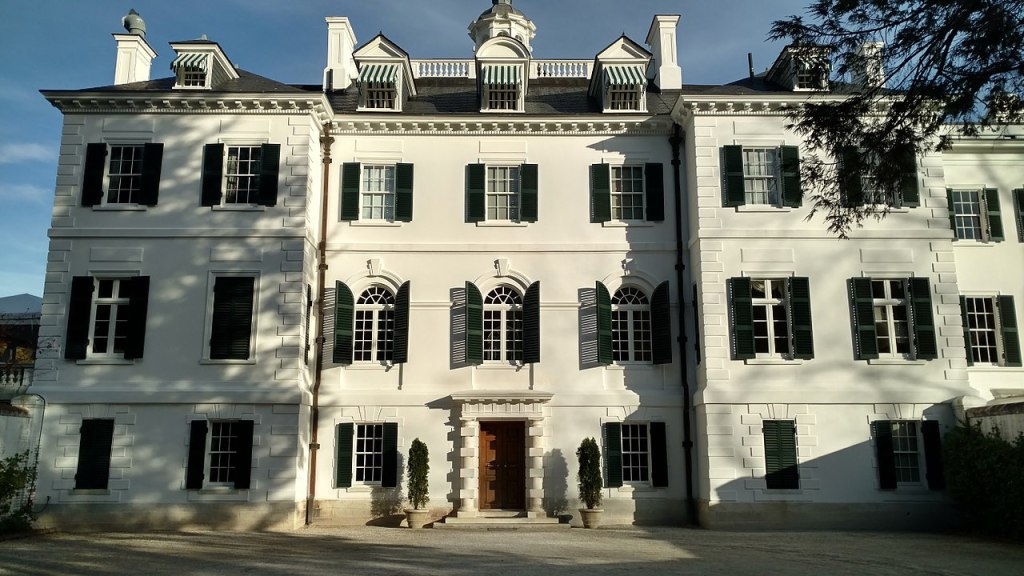
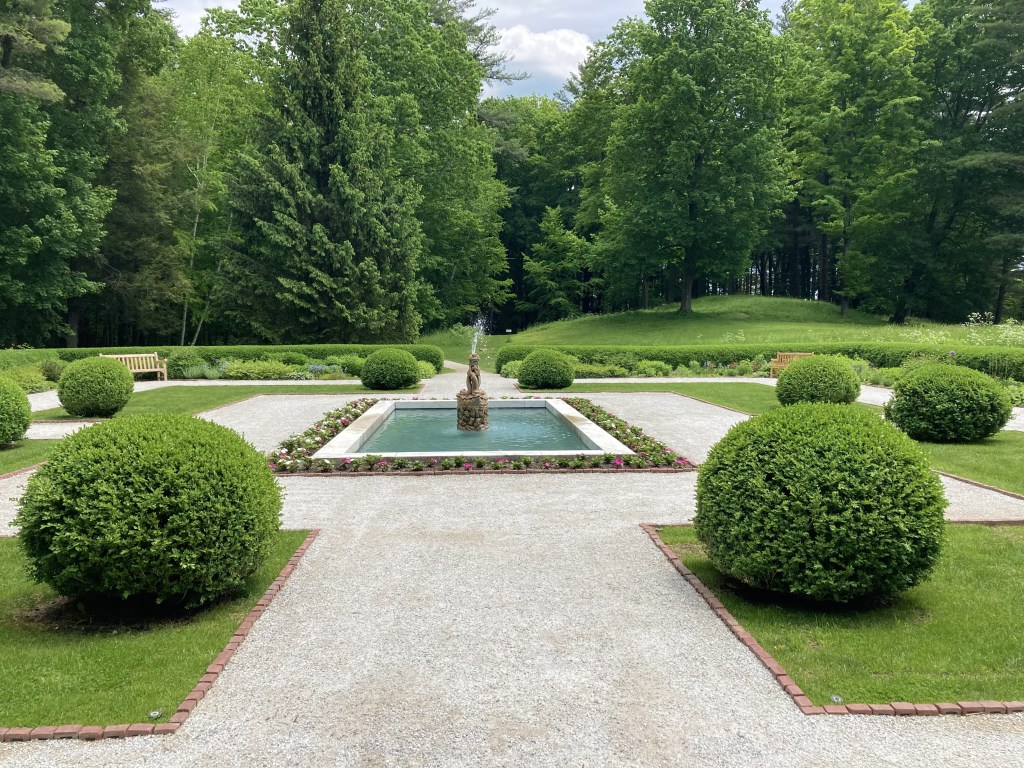
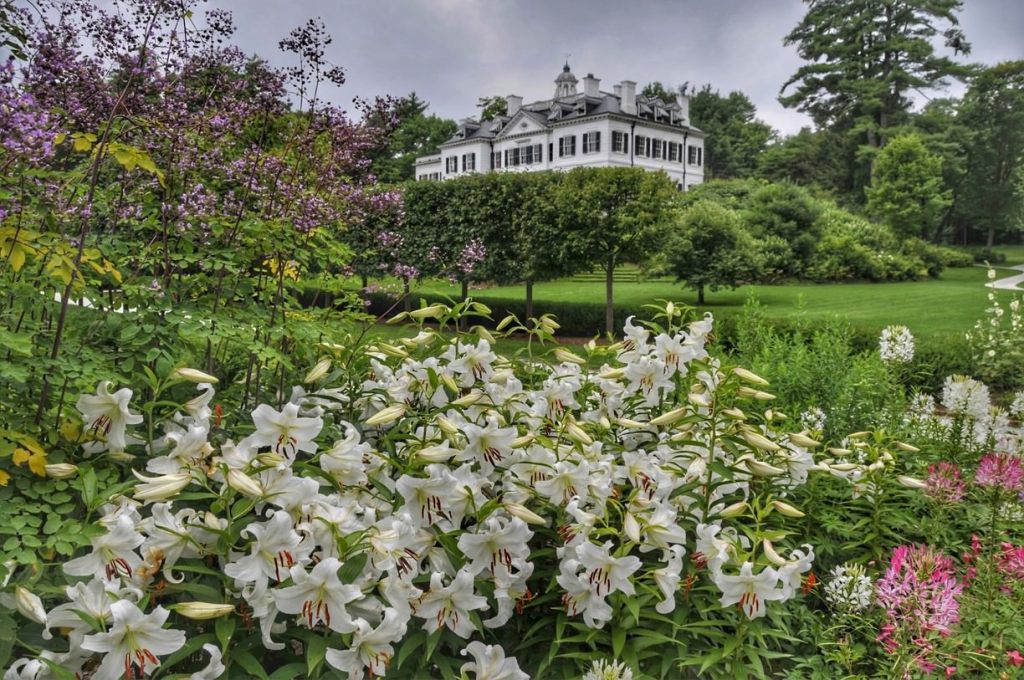
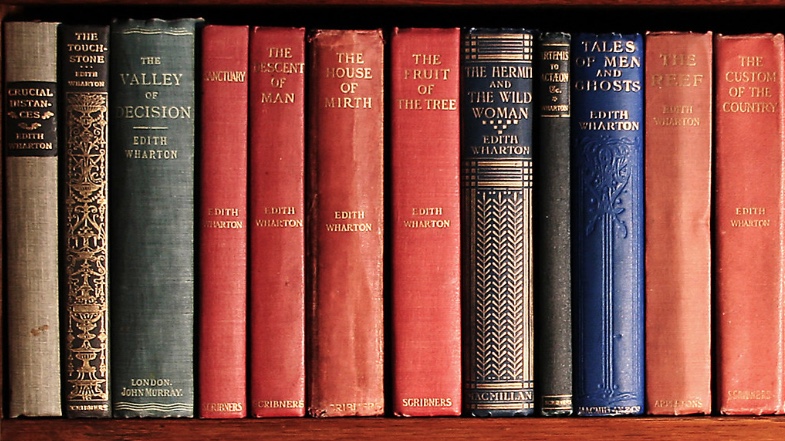
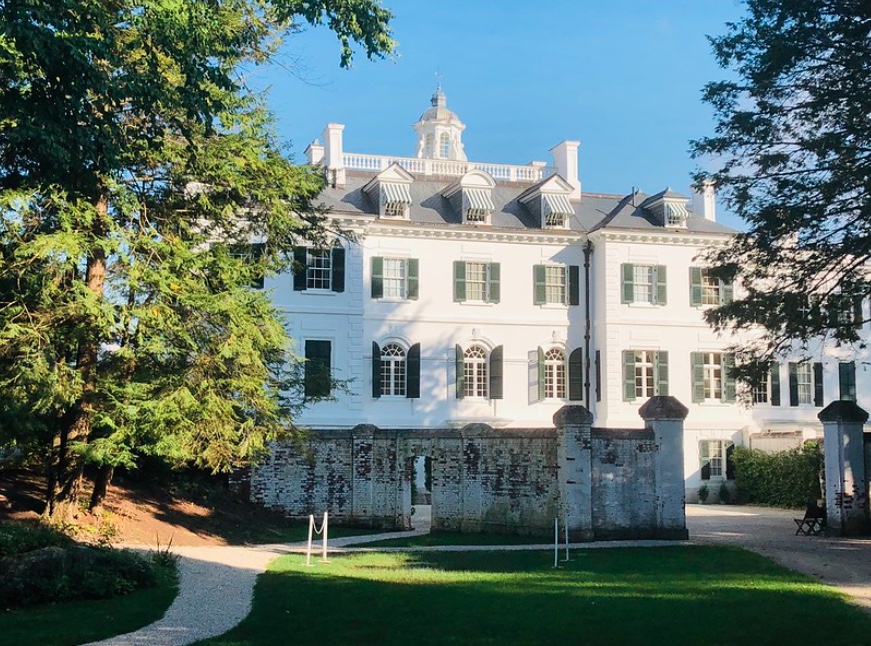
This is The Mount, the well-known home of Pulitzer Prize winning author, Edith Wharton. The house is located just south of Lenox, Massachusetts in the Berkshire Mountains. This area was familiar to gilded age plutocratic families as a more laid back, less pretentious alternative to Newport, Rhode Island. It was this type of setting that attracted Edith and her husband, Teddy, at the turn of the century when they sold their Newport home, Land’s End, and bought 113 acres near Lenox in 1901. In addition to being the author of classic novels such as The Age of Innocence and Ethan Frome, Edith was also an authority on interior decorating and landscape architecture (her book, The Decoration of Houses, is still in print and available on Amazon). The Whartons engaged Edith’s friend and architect, Ogden Codman Jr., to design their new house. Unfortunately, Ogden refused to offer “friend prices” for his services so he was let go. Instead, The Mount was designed by Francis L. V. Hoppin of New York. Edith could either be a difficult client or a very helpful client depending on your perspective and the final look of The Mount reflects much of her input. The finished 17,000 square foot house is a fusion of chateauesque, Palladian and New England architectural styles and was completed in 1902. The grounds were designed by Edith and her niece, the noted landscape architect Beatrix Farrand, in a collaboration that produced the stunning gardens that still exist today. Farrand’s other commissions include the White House grounds and Dumbarton Oaks in Washington D.C. The planning and execution of the gardens left Edith to ponder “Decidedly, I am a better landscape gardener than novelist.” History would show that she was excellent at both.

Entrance front

Edith was no stranger to classical architecture having travelled to Europe extensively. In fact, by the time she was in her late 40s she had traversed the Atlantic Ocean more than 60 times, quite an accomplishment in the days before air travel. She was born into wealth in 1862, her family being among the founders of Chemical Bank, one of the largest banks in the world by the time it merged with Chase Manhattan Bank in 1996 eventually forming today’s JPMorgan Chase Bank. Edith was a reluctant debutante at a time when well-born girls were expected to marry early and well and then just socialize for the rest of their lives rather than become educated and have a profession. The precocious Edith was a voracious reader and writer and her novels are chronicles of the upper class milieu in which she grew up. When Edith did marry, it was to Edward ‘Teddy’ Wharton from Boston. Unfortunately, Teddy suffered from chronic depression and alcoholism and the Whartons drifted apart soon after completing The Mount. In fact, given how much The Mount is associated with Edith Wharton it’s remarkable that she only lived there for seven years. In 1909, Edith left The Mount and Teddy and embarked for France. Other than a trip home in 1923, she lived out her years in France and never saw The Mount again. She passed away in 1937.

After the Whartons left The Mount in 1909, the house was leased out to Albert Shattuck, a New Orleans banker, and his wife Mary. The Shattucks had moved to New York and wanted a summer place in the Berkshires. It was the Shattucks who really got to use The Mount as a home. After renting for a couple of years, the Shattucks bought the house in 1911 for $180,000 and spent their summers there for the next 13 years. Albert passed away in 1924 and Mary followed in 1935. The Shattucks are remembered for a famous robbery at their Manhattan townhouse in 1922. A former servant got together with a few cutthroats, broke into the house, stole $90,000 in valuables and locked the Shattucks and eight servants into a small wine cellar. Suffocating from lack of air, Albert eventually picked the lock with a pen knife and got everyone out. The robbers were eventually nabbed in France after a shootout.

After Mary Shattuck died in 1935, The Mount sat empty for three years before being sold at auction to the former Managing Editor of the New York Times, Carr Van Anda, and his wife, Louise. The tenure of the Van Andas at The Mount was mostly marked by disputes with the local assessor’s office about the value of the property. The Van Andas eventually lost that argument and after Louise passed away in 1942, Carr sold The Mount to the Oxford-educated school mistress, Aileen M. Farrell, who used the house as a dormitory for her private school, the Foxhollow School. By the early 1970s the maintenance costs of The Mount were chewing up the school’s tuition income and in 1976 Foxhollow closed. The house was then sold to developer Donald Altshuler for $655,000 who aimed to convert the house into a conference center/restaurant surrounded by new condos. The town of Lenox successfully fought him off and in 1980 the house was sold for $290,000 to the newly formed Edith Wharton Restoration Corporation. In the meantime, the house had been leased by a newly formed theater company called Shakespeare and Company for use in training actors and presenting Shakespeare productions in the summer. The theater company continued to lease the property from the restoration organization (which was trying to drum up the funds to restore the decaying house) in an uneasy relationship that lasted until 2001. That year the theater company moved out and restoration work was started in earnest. Notable actors who passed through The Mount during the Shakespeare & Co. years include Bill Murray, Andie MacDowell, Keanu Reeves, Richard Dreyfuss and Clueless girl, Alicia Silverstone.

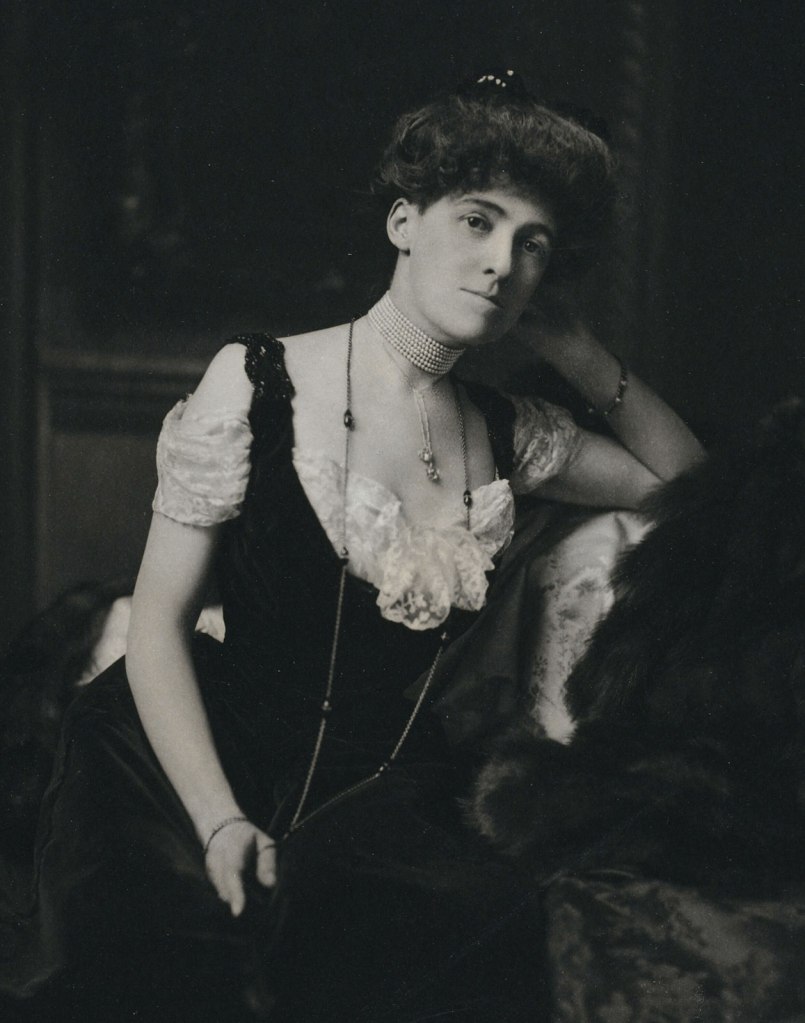
Edith Wharton, the builder of The Mount

This Edith Wharton Restoration Corporation has been restoring The Mount ever since. Today, The Mount is open to the public year round for tours, musical performances and literary events and the house has been restored with period furnishings and decor from the time of Ms. Wharton’s residency. Another notable country estate is located just south of The Mount. High Lawn house, a Vanderbilt mansion which is still occupied by Vanderbilts, is covered by this blog here. For more information on The Mount and how to visit, click here.

Library scene at The Mount
Entrance front
Interior scene