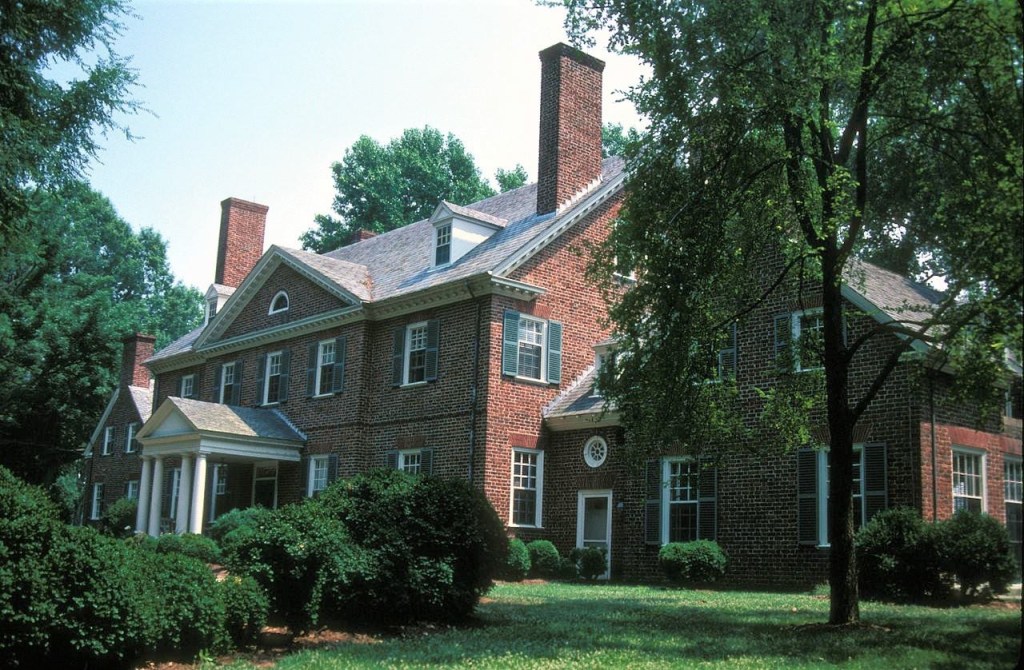
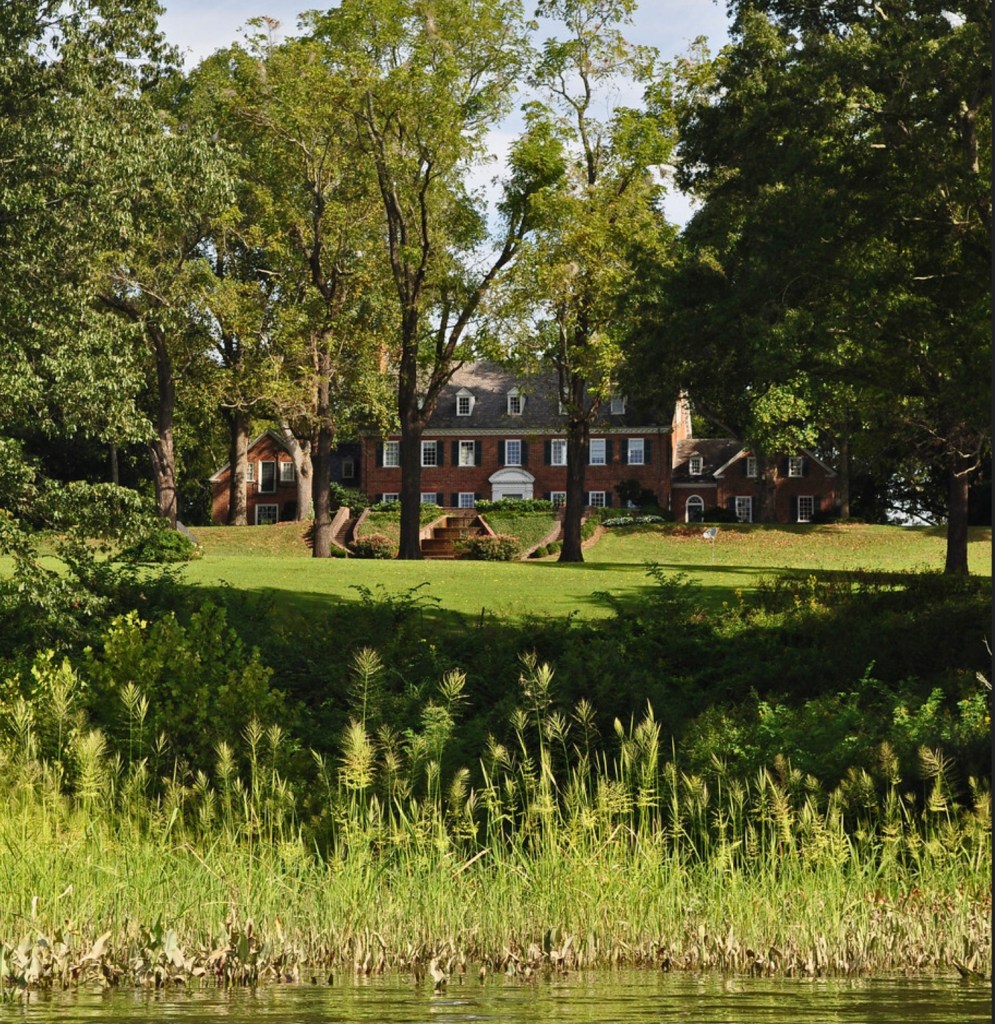
Evelynton Plantation is a 2,500 acre agricultural estate situated on a tributary of the James River in Charles City County, Virginia. Originally a part of the nearby Westover Plantation, Evelynton was carved out and sold to settle the debts of Westover’s profligate master, William Byrd III. After passing through numerous hands, the plantation was purchased at auction in 1847 by Edmund Ruffin, Jr., a member of the aristocratic Ruffin family that traced their history in the Virginia tidewater to the 17th century. Mr. Ruffin named his estate after Evelyn Byrd, the daughter of William Byrd II, the owner of Westover during the early 1700s. The portion of Westover that would become Evelynton had been intended as a dowry for Evelyn when she married. However, Evelyn’s parents were displeased with her choice of husband (a CATHOLIC!!!!!) and refused to allow the marriage. Evelyn retaliated by refusing to marry anyone and she died before the age of 30, some say of a broken heart. Evelyn Byrd is currently a friendly ghost that is occasionally seen at Westover.


Edmund Ruffin’s father, Edmund Sr. was a noted agronomist who pioneered techniques for renewing agricultural land that had been exhausted by decades of tobacco cultivation. Ruffin Sr., a die-hard slave owner and secessionist, fought in the Civil War for the Confederacy while in his sixties. According to contemporary accounts, his outspoken views on slavery and secession were so extreme that they made his fellow Virginia soldiers uncomfortable and he was asked to join another State’s regiment, the South Carolinians. Despondent about the confederate surrender, he wrapped himself in a Confederate flag and shot himself but not before proclaiming his “….unmitigated hatred to Yankee rule and to all political, social and business connections with Yankees, and to the perfidious, malignant and vile Yankee race.” [He might have found solace living amongst Boston Red Sox fans but the historical record is silent on whether he tried that.] Adding insult to injury, his son’s house and plantation buildings at Evelynton were burned by Union forces in 1862. Other than land cultivation, nothing happened at Evelynton for the next seven decades.

The plantation stayed in Ruffin family ownership after the war and in 1937, Edmund Ruffin Jr.’s grandson, John Augustine Ruffin and his wife, Mary Saunders Ruffin, flush with an inheritance from Mary’s family, commissioned Duncan Lee, a Richmond architect noted for his expertise in Georgian revival and Colonial designs, to build the handsome manor house that stands on the site today. John Ruffin passed away in 1945 and Mary opened up Evelynton to public tours in the 1950s to help pay the bills. Mary then passed away in 1967 and the house was taken over by their son, Archer Harrison Ruffin. Archer continued to farm Evelynton until his death in 1976 whereupon his brother, Edmund Saunders Ruffin, took over the estate. Edmund was active in the container business in Richmond but retired at Evelynton for the last years of his life. His daughter, Elizabeth Ruffin Harrison, lived nearby and opened the house for tours and events in the mid 1980s so the public could marvel at the Ruffin’s magnificent collection of 18th century American and English furniture and decorative arts. After Edmund passed away in 2002, Elizabeth became the last of the Ruffins at Evelynton when the estate was sold in 2008 closing the door on 161 years of family ownership.

The estate was purchased by John and Jeanine Hinson of Key Biscayne, Florida. John had been a successful real estate investor in the South. The Hinsons lived at Evelynton and continued to lease out the agricultural land for cultivation. Tragically, John Hinson was killed in an automobile accident in September 2021 and the future status of Evelynton is unclear. Although Evelynton has been open for tours intermittently in the last few decades, it is currently a private home and not open to the public.

 North American Country Estates
One thought on “Evelynton”